
Stablecoin Supply Falls $14.2B in 30 Days: What It Means for Bitcoin

 Prefer us on Google



Stablecoin supply has pulled back meaningfully from its 2026 peak, and that matters because traders often treat stablecoins as the market’s ready cash. As of November 12, 2026, DefiLlama shows total stablecoin market cap at $286.895 billion, down from the year’s peak near $322.4 billion on May 17. That broad backdrop helps explain why fresh reports about a $14.2 billion 30-day contraction are drawing attention. The key question is not whether stablecoin supply alone moves Bitcoin, but how it interacts with exchange liquidity, ETF flows, DeFi demand, and trader positioning.
At a Glance
- Stablecoin supply remains historically high, but it has clearly cooled from its 2026 peak.
- A drop in supply can signal less on-chain buying power, but it does not prove Bitcoin must fall.
- USDT and USDC still dominate the market, together accounting for more than 80% of supply by several 2026 estimates.
- Bitcoin liquidity conditions also depend on exchange balances, ETF flows, and where holders’ cost basis sits.
- The clearest takeaway is to be cautious with simple narratives: correlation is visible, but causation remains unsettled.
What the Data Shows: $14.2B in 30 Days (With Source and Date)
The first point to clarify is methodology. The headline figure of a $14.2 billion decline over 30 days should be treated as a rolling-window metric, not as a statement about the full 2026 market trend. Put simply, it means total tracked stablecoin supply during the latest 30-day period fell by that amount from the start of the same window. While the article title presents that figure as the immediate catalyst, the wider verified data from the cited sources points in the same direction: stablecoin supply has weakened since peaking in May.
On November 12, 2026, DefiLlama reported total stablecoin market cap at $286.895 billion, with a 30-day change of -4.83%. The same dashboard listed USDT at $175.637 billion and USDC at $69.886 billion, putting USDT dominance at 61.22%. Earlier in the year, DefiLlama data cited by Reap showed stablecoin supply at $308.0 billion on August 13, down 4.5% from the May 17 peak of $322.4 billion. Crystal Foresight also found that by July 14, the market had fallen to about $306.5 billion from roughly $318 billion over 90 days, representing a genuine contraction rather than a simple cross-chain reshuffle.
So while the precise $14.2 billion figure is a short-term snapshot and should be verified against the originating dataset before trading on it, the broader pattern is clear. Stablecoin supply has not collapsed, but it has shifted from expansion to contraction before settling into a weaker, choppier plateau.
Why Stablecoin Supply Is Treated as a Liquidity Signal
Stablecoin supply is often described as crypto’s “dry powder” because it represents dollars, or near-dollar claims, that can quickly move into Bitcoin, altcoins, DeFi pools, or derivatives margin. When supply rises, traders generally interpret it as more capital entering the crypto system. When supply shrinks, they may see capital being redeemed, moved back into bank dollars, or at least becoming less active on-chain.
That interpretation is useful, but it needs context. Stablecoins are not all used in the same way. Crystal Foresight’s 2026 analysis showed that USDC and USDS had strong exposure to collateral flows in lending markets, while USDe was more closely tied to yield strategies and USDT was used more heavily for payments and trading transfers. As a result, falling stablecoin supply does not always mean investors are becoming bearish on Bitcoin. It can also reflect lower DeFi yields, reduced borrowing demand, regulatory adjustments, or migration between products.
Market concentration makes the signal even more sensitive. According to Allium, stablecoin supply reached $303 billion in August 2026, with Tether and Circle accounting for 85% of the total. Reap’s August snapshot put the combined share of USDT and USDC at about 82%. When two issuers dominate the market, changes in their issuance, redemptions, or regulatory access can quickly ripple through liquidity conditions.
There is also a macroeconomic dimension. Allium estimated that roughly $295 billion in stablecoin supply supported about $170 billion in genuinely new US Treasury demand. Other 2026 industry estimates placed total stablecoin-driven Treasury demand at around $200 billion to $220 billion. That shows stablecoin supply is no longer solely a crypto metric. It now links crypto liquidity, issuer reserve management, and regulation far more closely than in previous cycles.
-- Price
How Exchange Liquidity, ETF Outflows and BTC Cost Basis Fit In
Stablecoin supply is one liquidity signal, but it is not the only one. Bitcoin trades within a broader market structure, and several other factors can amplify or offset the effects of shrinking stablecoin balances.
Exchange liquidity
Allium reported that exchanges held $89 billion in stablecoins in 2026, compared with $26 billion in DeFi protocols. That distinction matters because stablecoins held on exchanges are closer to spot and derivatives trading activity. If stablecoin supply falls while exchange balances also decline, traders may interpret that as a thinner order-book environment with less immediate buying support. Conversely, if total supply drops while exchange balances remain firm, the effect on tradable liquidity may be less severe than the headline suggests.
ETF outflows
The title asks what this means for Bitcoin, and any answer must account for ETF flow dynamics. Spot ETF outflows reduce direct institutional demand for BTC even if on-chain liquidity remains healthy. In practice, stablecoin contraction and ETF outflows can point in the same direction by tightening market liquidity, but they come through different channels. One reflects activity within crypto-native capital pools; the other reflects investor appetite for regulated investment products. Treating them as identical leads to poor analysis.
BTC cost basis
Cost basis is another factor often overlooked by beginners. If Bitcoin trades near key holder cost-basis zones, the market can become more sensitive to relatively small changes in liquidity. Traders with weak conviction may sell to protect gains or limit losses, while stronger hands may step in if prices reach levels they consider attractive. Stablecoin supply can influence the capital available for those bids, but cost basis helps explain where market reactions may become more acute.
Put simply, stablecoin supply says something about available ammunition. Exchange liquidity shows where that ammunition is located. ETF flows indicate whether outside capital is entering or leaving. BTC cost basis helps explain how the market could react if pressure builds.
Correlation vs Causation: What Can and Can’t Be Concluded
This is where many headlines oversimplify the story. Shrinking stablecoin supply has been associated with tighter crypto liquidity and weaker risk appetite, but that does not prove it directly causes Bitcoin price declines. The causal chain is complex.
For example, Crystal Foresight found that much of the mid-2026 supply decline was concentrated in a handful of assets and driven by specific factors: USDC fell as DeFi collateral demand cooled, USDe and USDS declined after yield changes, and USDT’s movements were relatively small and partly shaped by regulatory choices. In other words, the market did not experience one clean, system-wide dollar exit. It underwent several distinct adjustments at once.
That distinction matters for Bitcoin. If stablecoin supply falls because DeFi leverage is unwinding, the signal for BTC may be more negative than if supply declines because one issuer loses regional distribution or a yield product becomes less attractive. The same headline figure can conceal very different market mechanics.
There is another reason for caution: total stablecoin supply in 2026 remains high by historical standards. Even after the latest pullback, the market is still close to $287 billion. That is well below the May peak, but it does not represent a disappearance of liquidity. The current phase is more accurately described as slower, more selective, and less expansionary.
What Analysts Are Watching Next
Going forward, analysts are likely to focus on whether stablecoin supply stabilizes around current levels or continues to contract. A renewed increase in supply would suggest capital is returning to crypto rails. Continued shrinkage would keep attention on liquidity sensitivity, particularly if exchange balances weaken at the same time.
They are also watching the composition of supply, not just the total. If USDT remains dominant while demand for USDC weakens, that indicates where trading volume and collateral demand are concentrated. Reap noted that USDT accounted for about 74% of stablecoin trading volume on centralized exchanges in 2026, even more than its supply share. That gives Tether’s distribution considerable influence over practical market liquidity.
Regulation is another active variable. The EU’s MiCA transition ended on July 1, 2026, while implementation of the US GENIUS Act has advanced and the OCC final rule is set to take effect on January 18, 2027. That is likely to steer future stablecoin growth toward more transparent reserves, clearer redemption structures, and licensed issuers. It may strengthen the largest players while narrowing the space for weaker or less compliant products.
For Bitcoin traders, the best use of stablecoin supply data is as one component of a wider dashboard. If supply contracts, exchange balances fall, ETF outflows persist, and BTC loses important cost-basis support, the market has less room for error. If only one of those indicators weakens while the others remain resilient, the signal is far less decisive.
The real value of monitoring stablecoin supply is not to force a price call on Bitcoin. It is to understand whether liquidity is becoming easier or tighter, and whether that change is broad-based or linked to a few specific products. In this market, that distinction matters more than the headline number alone.
This content is provided for general informational purposes only and doesn't constitute financial, investment, legal, or tax advice. Any events, rewards, online promotions, or related information mentioned herein should not be considered a recommendation, solicitation, or invitation to purchase, sell, trade, or otherwise deal in any crypto assets. Crypto assets are highly volatile and may result in loss. The availability of WEEX services, products, and related events may vary by region. You are responsible for ensuring that your participation is in accordance with applicable local laws and regulations.
You may also like

USOE Price Drop: Why Did United States Oil Exchange Fall Over 90% in a Week?

What Does the Kalshi–S&P Dow Jones Deal Mean? Event Contracts vs. Index Investing

CLS Stock After Q3 Earnings: Revenue Up 83%, 2027 Outlook and What Investors Should Check
Bloom Crypto Bot Wallet Drains: What Happened and What Users Should Check

TSLA Stock After the Flying Roadster Reveal: What the Q3 Results, SpaceX Merger Talk and Analysts Say
SK Hynix Stock Before Q3 Earnings: Special Dividend Reports, HBM4 and What Investors Want to See on October 28
Exchange Convert vs DEX Swap: What’s the Difference? Try Convert Crypto On WEEX!

Is National Oil Dividend Fund (NODF) Backed by Oil? Reserve and Dividend Claims Checked

WEEX Convert Available Balance: How to Check and Use Max

FTR Coin After the Roadster Hype: Why Flying Tesla Roadster Fell Back and What to Check Before Trading

Flying Tesla Roadster (FTR) Coin: What Is It and What to Check Before Trading a Roadster Memecoin
CoreWeave Stock Plunges 15%: Why a Bond Yield Spooked CRWV
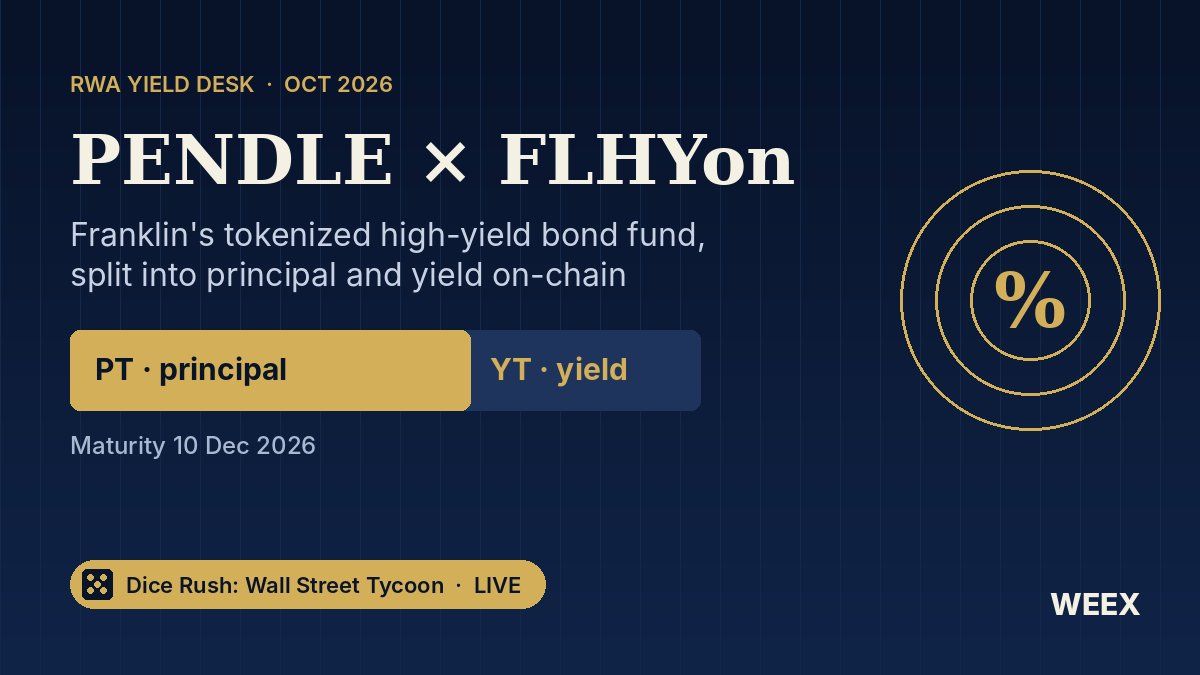
PENDLE Price and FLHYon: What Franklin's Bond Token Changes

WEEX 2026 New User Guide: Register, Complete KYC, and Claim the Welcome Bonus (Step-by-Step)

WEEX Convert Guide: How to Swap Crypto on Web and App and What the Quote Really Means
MU Stock Falls Below $1,000: Is the CXMT Threat Real or Just an Excuse to Take Profits?
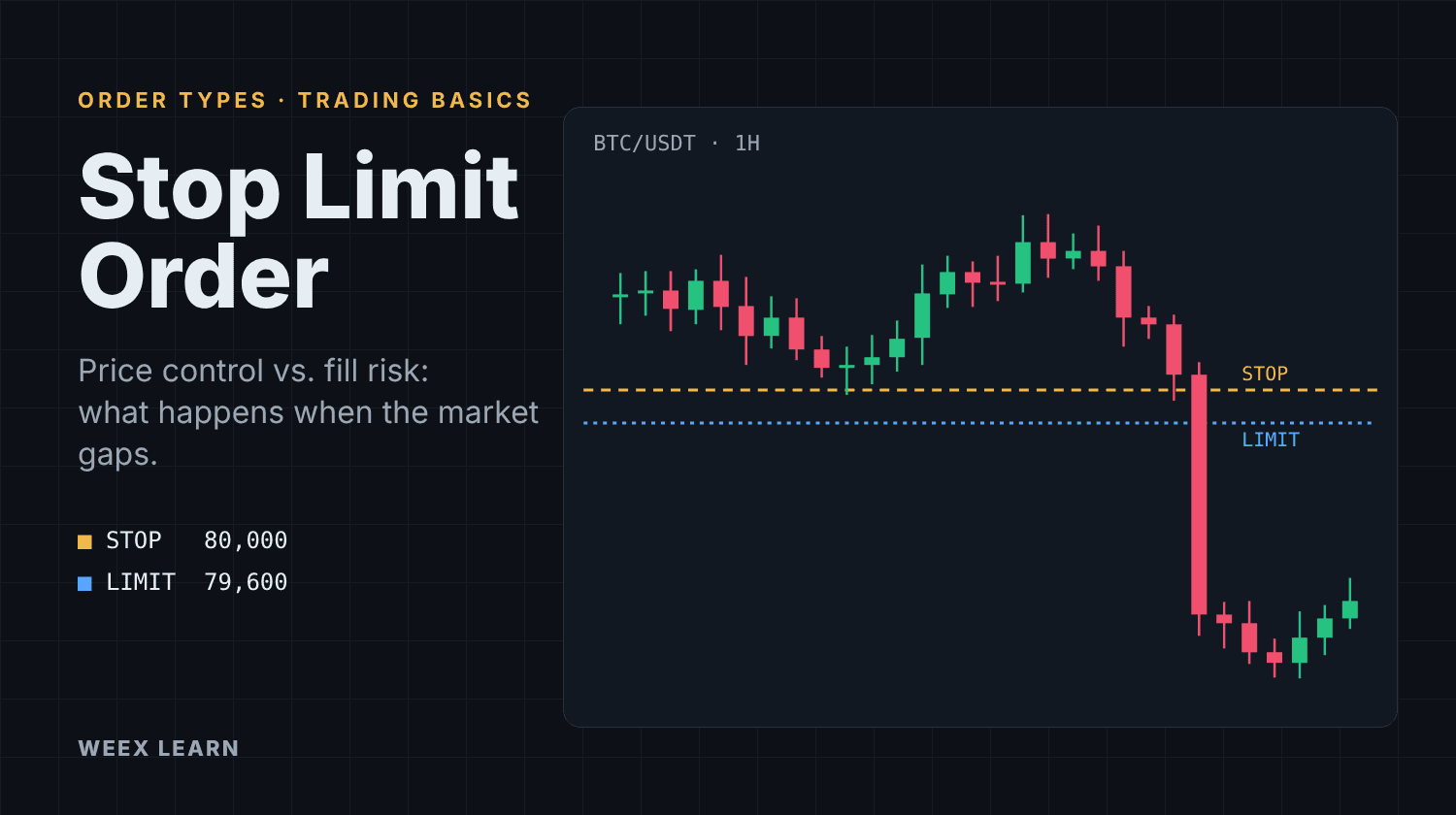
Stop Limit Order: How It Works and Why It Can Fail to Fill

Best Cold Wallet Crypto for Beginners: 5 Picks Under $150

Best Crypto Broker for Beginners: What to Check in Fees, Regulation, Security and Support Before You Deposit

Who Is David Ellison? Skydance’s Strategy, Media Consolidation, and the Investment Case
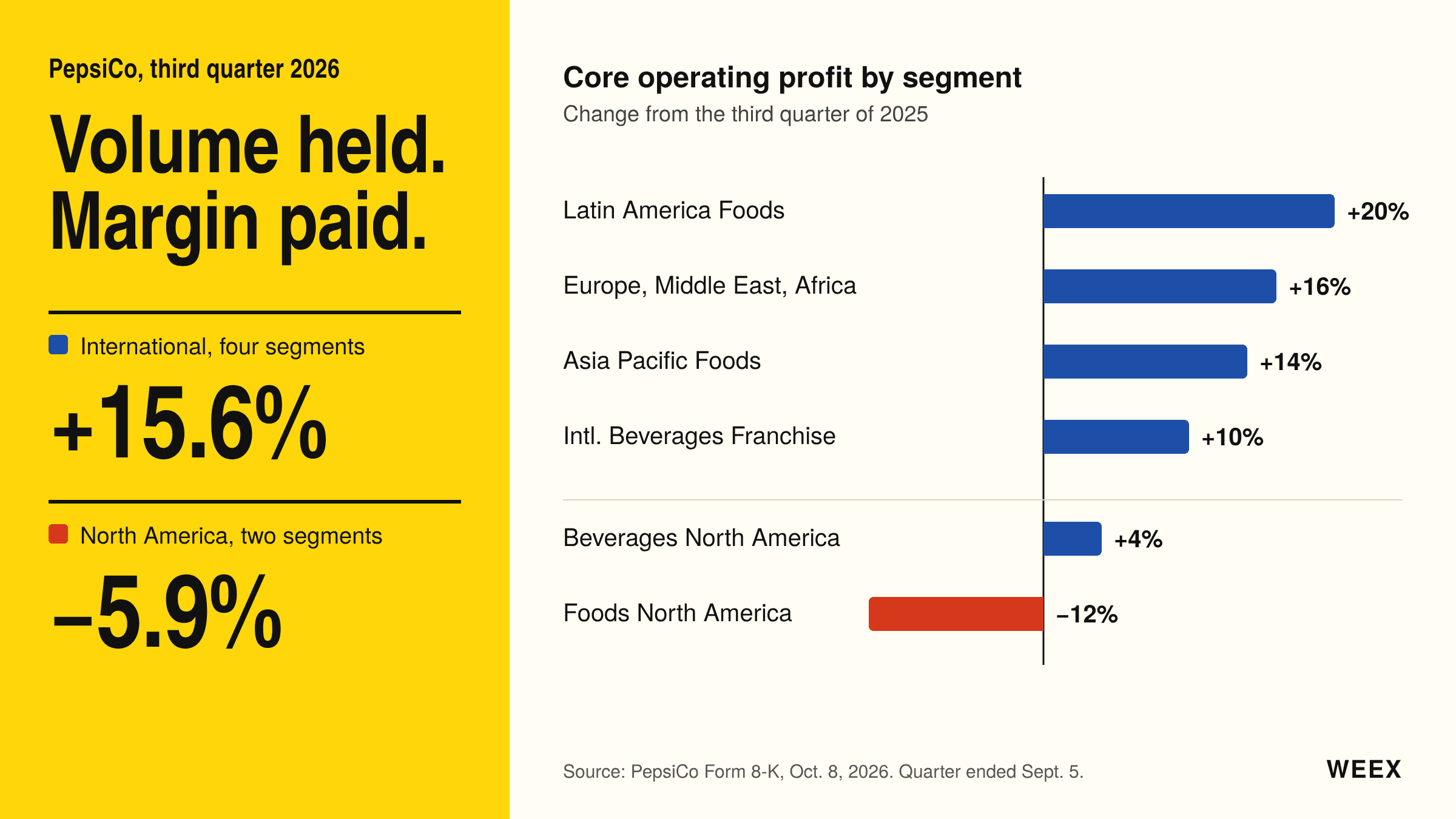
PEP Earnings: PepsiCo Beats Q3, Cuts Guidance on North America
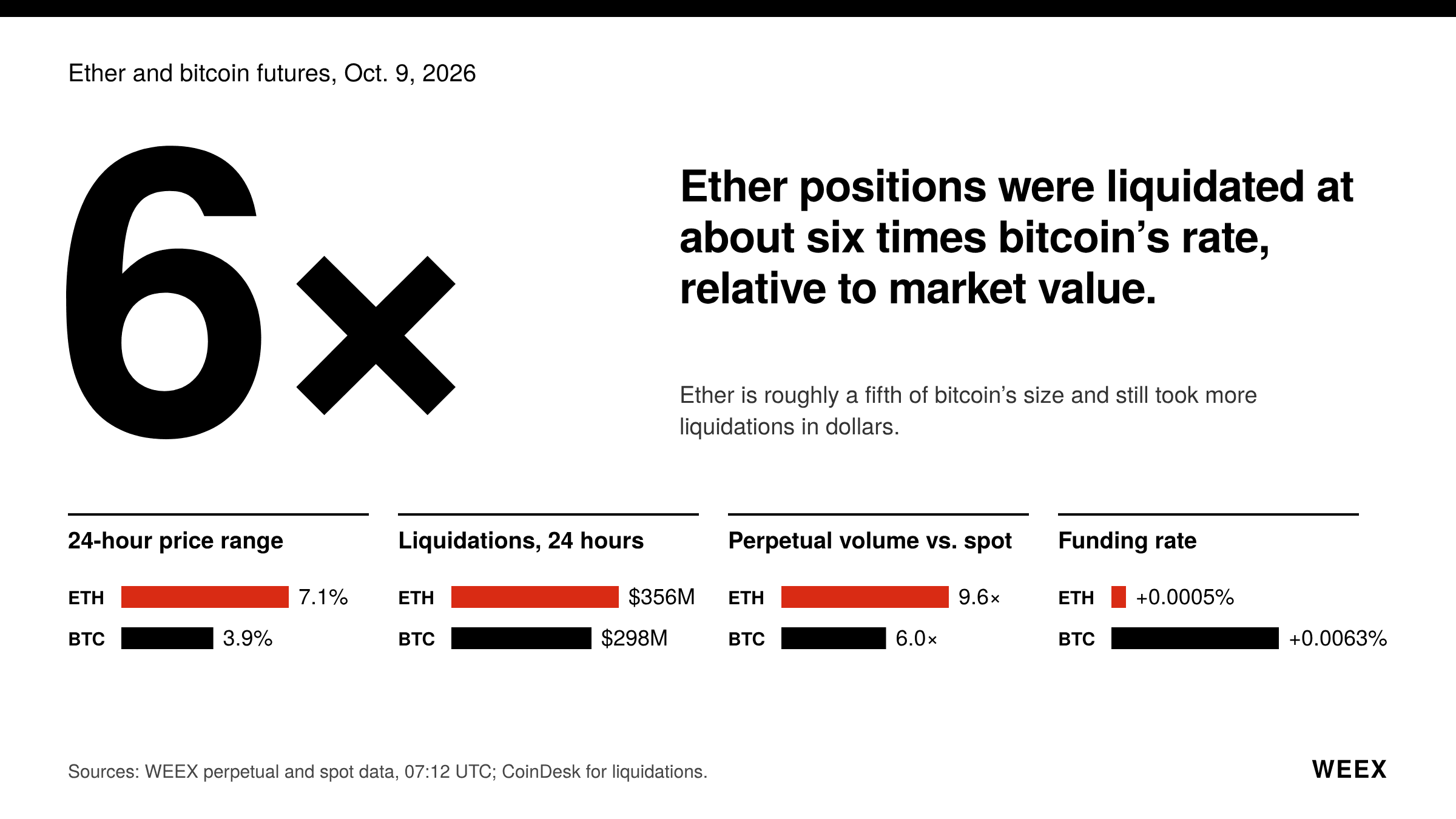
ETH Futures: Why Ether Is Falling Faster Than Bitcoin This Week
How Copy Trading, Signal, and Telegram Trading Tools Can Build With WEEX Broker
How Quant Trading Platforms and Bots Can Build With WEEX Broker

How Trading Platforms and Terminals Can Connect to WEEX Broker
How to Buy USDT in Thailand: Payment Methods, Fees and Transfer Checks

What Is RLC Crypto? How iExec (RLC) Powers Confidential Computing

What Is WEEX Fast Connect? How OAuth Connects Third-Party Trading Platforms

How to Become a WEEX Broker: Application, API Setup and Go-Live
What Is WEEX Broker? API Program, Commissions and How It Works
USOE Price Drop: Why Did United States Oil Exchange Fall Over 90% in a Week?
What Does the Kalshi–S&P Dow Jones Deal Mean? Event Contracts vs. Index Investing
CLS Stock After Q3 Earnings: Revenue Up 83%, 2027 Outlook and What Investors Should Check
Bloom Crypto Bot Wallet Drains: What Happened and What Users Should Check
TSLA Stock After the Flying Roadster Reveal: What the Q3 Results, SpaceX Merger Talk and Analysts Say
SK Hynix Stock Before Q3 Earnings: Special Dividend Reports, HBM4 and What Investors Want to See on October 28


