
24-Hour Liquidation Total Reaches $1.7 Billion, Far Exceeding the "312" Event - Why Was the Liquidation Size So Massive This Time?


Original Article Title: "Bitcoin Plunges to $94,000, $1.7 Billion Liquidated Across the Board: Ethereum and Altcoin Market Deep Dive"
Original Article Author: Alvis, MarsBit
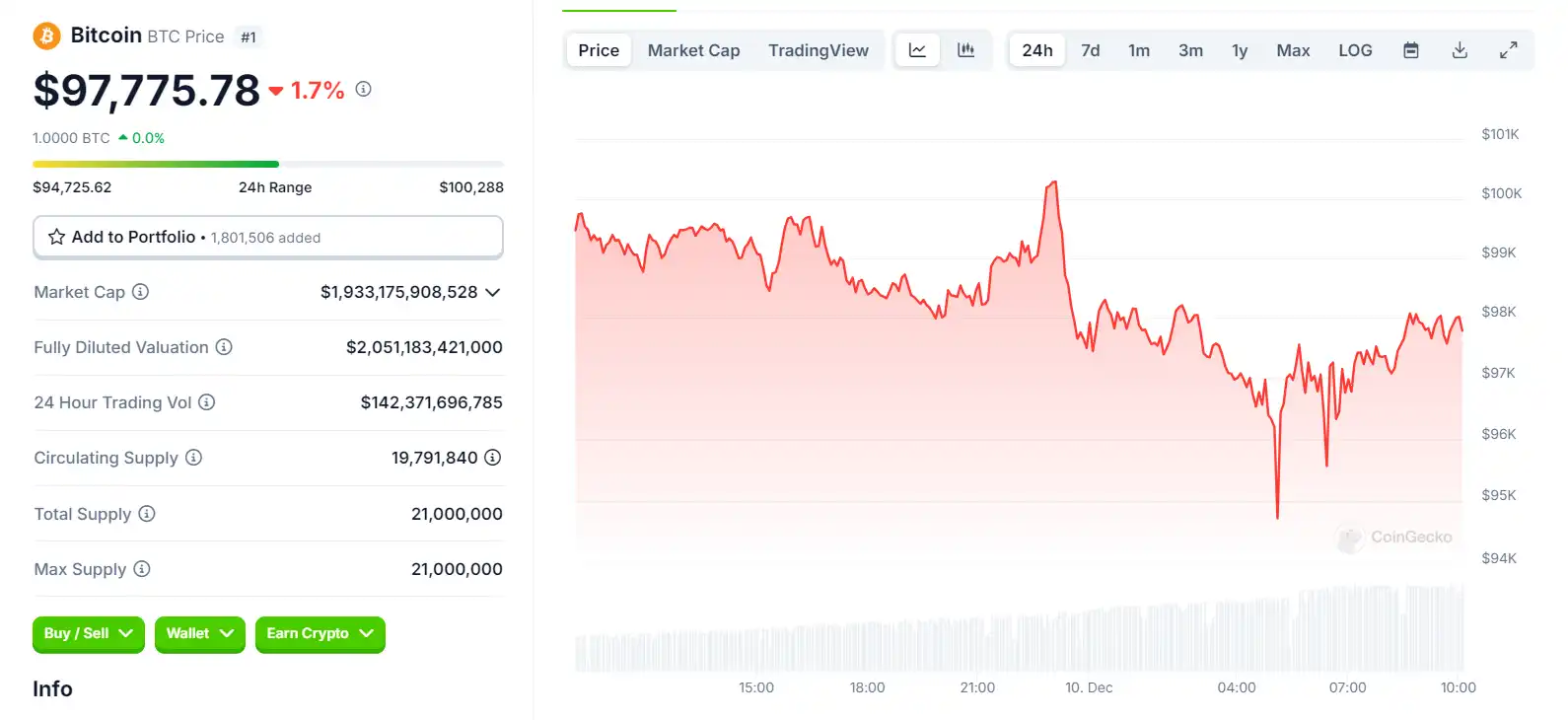
Early this morning, the price of Bitcoin experienced a sharp needle-drop to $94,000, triggering a significant cryptocurrency market turmoil. Altcoins suffered even more, with most tokens seeing a price drop of 20%-30%. At the time of writing, Bitcoin has partially recovered from the dip. This market turmoil led to a total of $1.7 billion being liquidated across the board, affecting 570,876 traders. This event not only marks the largest-scale liquidation event in nearly 2 years but also reflects the current structural risks and emotional swings in the crypto market.
This article will provide an in-depth analysis of the background, data, market impact, and future trends related to this event.
Largest Liquidation Scale in a Year: Leveraged Trading as a Risk Flashpoint
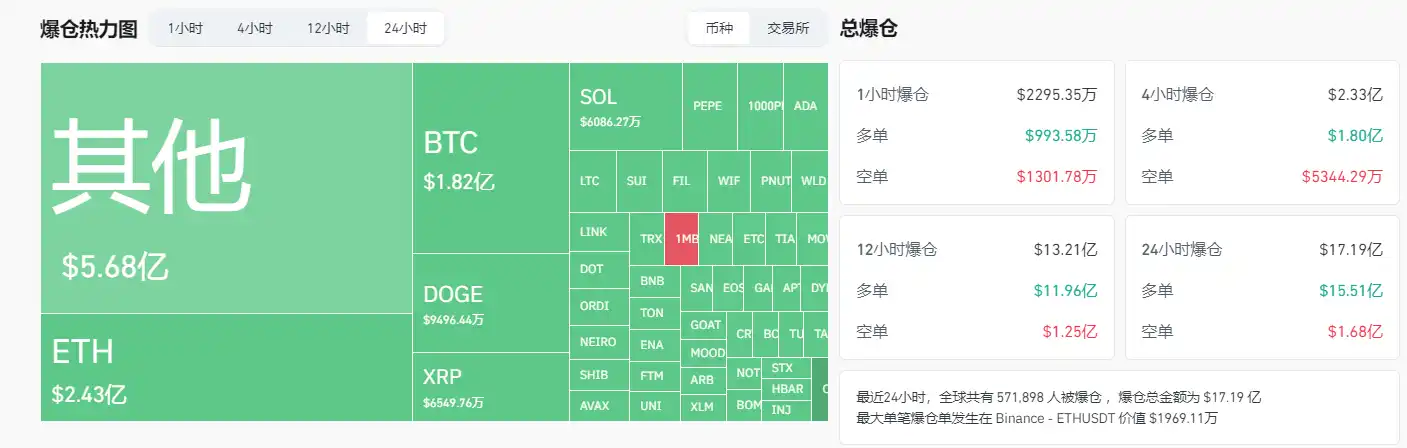
This liquidation event, with a $1.7 billion liquidation amount, has set a new record since 2023, surpassing the approximately $500 million liquidation scale in a single day last month. Long positions suffered heavy losses, totaling $1.53 billion, while short positions lost $155 million. Data shows that small-cap altcoins were the "hardest hit area" in this liquidation event, with a total liquidation amount of $564 million, over 96% of which were long positions.
Liquidation Hotspots: The Logic Behind Platform Data
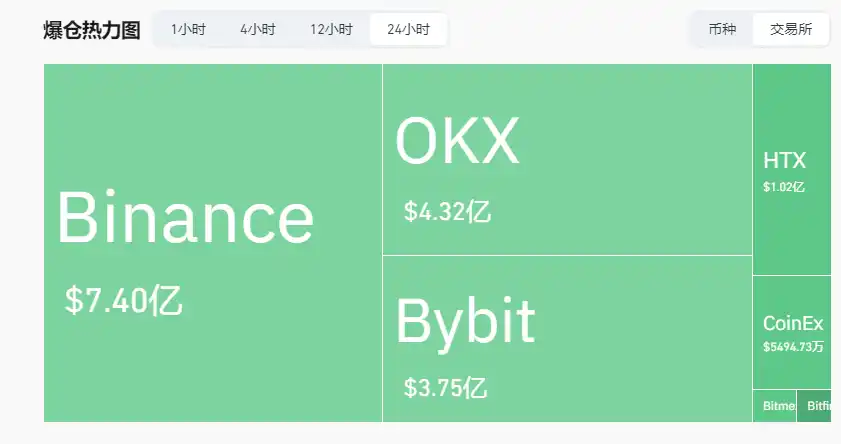
Binance led by a large margin in this liquidation event, with a total liquidation amount of $740 million, accounting for 42% of the total net liquidation.
OKX and Bybit ranked second and third, with liquidation amounts of $422 million and $369 million, respectively. The largest single liquidation trade occurred in Binance's ETH/USDT contract, with an amount of $19.69 million.
Bitcoin and Ethereum, as the two major core assets of the crypto market, were not spared either.
Bitcoin broke below the $100,000 psychological barrier in a short period of time, dropping over $6,000 in a day and resulting in a $182 million liquidation, with long positions accounting for 77% of the losses.
Ethereum retested the $3,500 support after failing to break through the key $4,050 resistance level, recording a $243 million liquidation, with long positions losing $219 million.
Historical Perspective: Why Such a Large-scale Liquidation This Time?
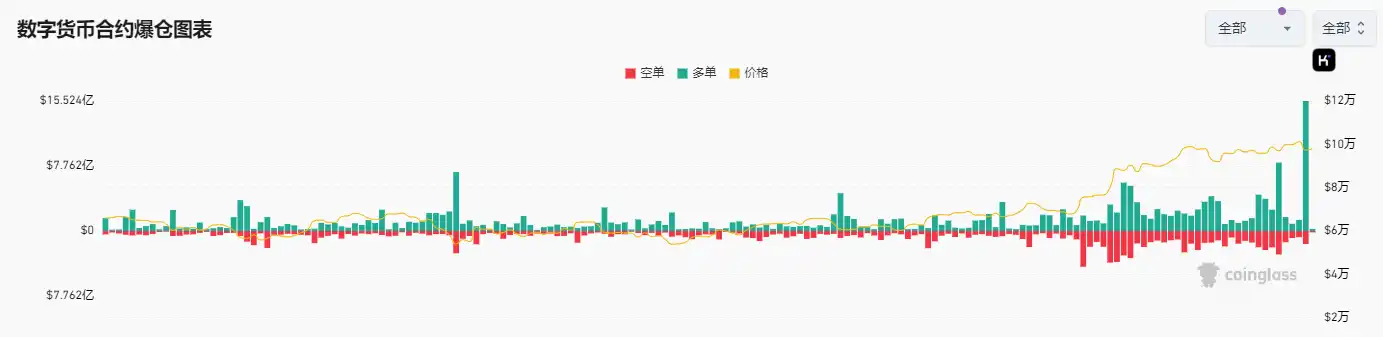
Large-scale liquidation events in the crypto market are not uncommon, but the scale of this liquidation wave is evidently outstanding.
From a trend perspective, since 2022, as the market has expanded and leverage ratios have increased, the total liquidation amount has continued to rise. More importantly, the concentrated risk exposure of leveraged traders has made the market more fragile when facing extreme volatility.
It is worth noting that in the past year, the market has experienced several peaks of liquidation, but the scale has mostly hovered between $500 million and $1 billion. However, the amount this time has surpassed the new high of liquidation amounts since the 2021 May 19th event in the crypto market, potentially setting a record for this bull market, and far exceeding the 2020 March 12th event.
The main reasons for this liquidation wave include: the chain reaction of high leverage positions, the liquidation chain reaction triggered by market turbulence, and the dominant structure of long positions. In particular, the Bitcoin flash crash triggering leveraged liquidations, coupled with the high volatility in the altcoin market, resulted in long liquidation amounts accounting for over 90%. Compared to the external shocks of the March 12th event, this time is more a result of internal leverage imbalance.
This once again warns investors: in a high-volatility market, rational leverage control is key to long-term participation.
Ethereum: From On-chain Activity to Derivatives Market Resilience
On-chain Data and Network Activity
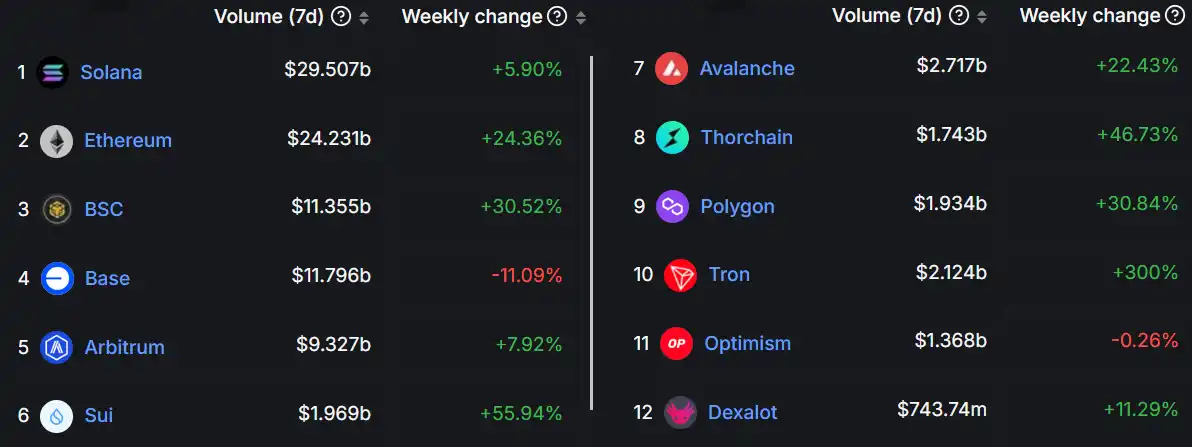
Past 7 days DApp Transaction Volume Ranking
As the second-largest asset in the market, Ethereum has shown some resilience in this liquidation wave. On-chain data shows that in the past week, Ethereum network transaction volume surged by 24% to reach $24.2 billion, and with Layer 2 solutions like Base, Arbitrum, Polygon, the total transaction volume soared to $48.6 billion. This data far exceeds Solana's $29.5 billion, demonstrating Ethereum network's continued high activity.
Furthermore, since November 29, ETH ETF inflows have hit a record high of $1.17 billion, injecting liquidity into the market. Nevertheless, the ETH price has still failed to break through the long-term resistance at $4,050, indicating that the pressure at this technical threshold has evidently constrained the price action.
Derivatives Market Signal: Optimism Not Fully Dissipated
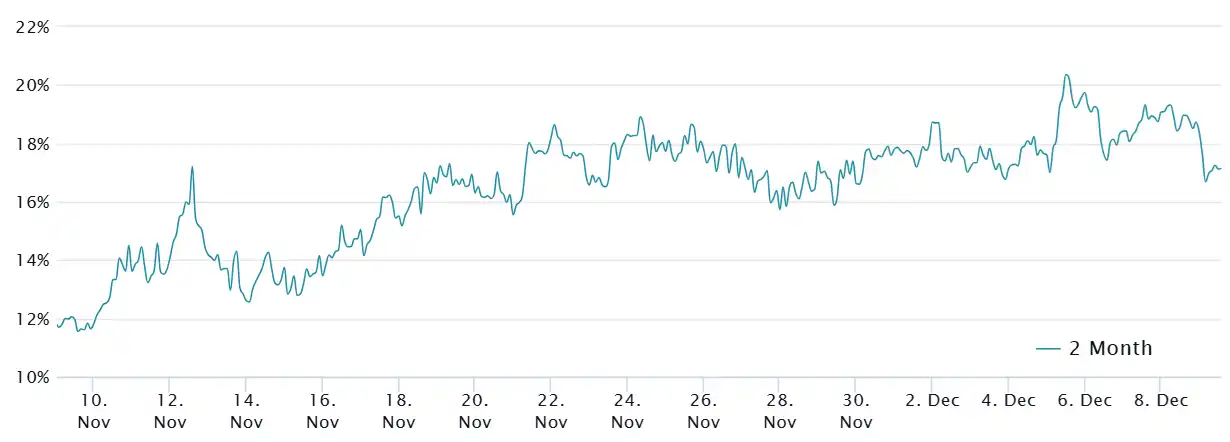
From the futures and options markets, the ETH derivatives market has maintained strong resilience.
The annualized premium of Ethereum futures remains at 17%, well above the 10% neutral level, indicating a continued strong demand for ETH leverage.
Meanwhile, the skewness of Ethereum options has decreased from -7% to -2%, showing a shift in market sentiment from extremely optimistic to neutral, but without any clear bearish signals.
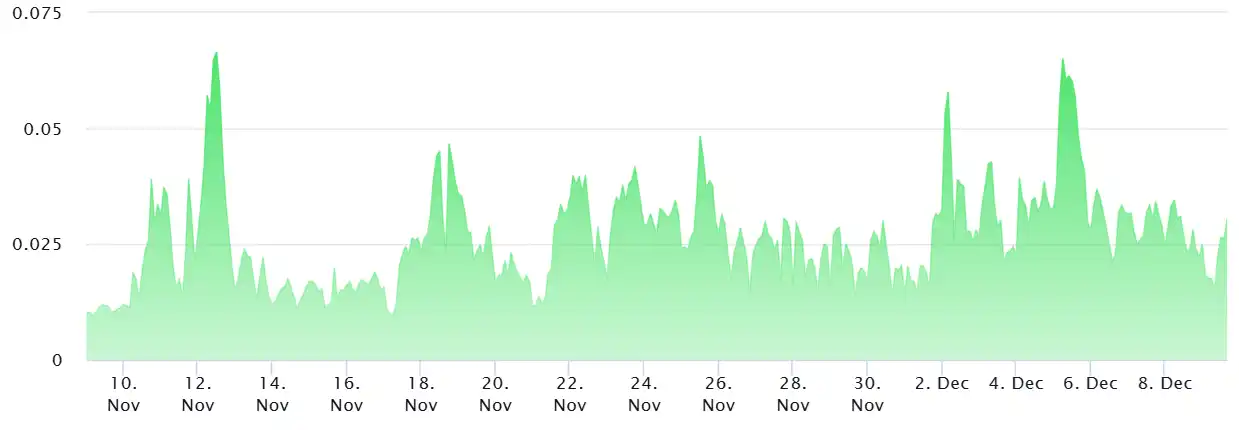
Additionally, the perpetual contract funding rate is currently at 2.7%, above the neutral threshold of 2.1%, indicating that the market's demand for short-term leverage remains strong. However, the funding rate has gradually declined from its peak of 5.4% on December 5, which may also reflect a growing cautiousness among traders towards market volatility.
Macro and Micro: Dual Factors Influencing Market Sentiment
Cryptocurrency market volatility is often accompanied by changes in macroeconomic variables. The recent crash is no exception, as the macroeconomic environment has had a significant impact on investor confidence.
Recently, China's November inflation data showed a 0.6% month-on-month decline, reflecting the risks of global economic slowdown. NVIDIA's stock price fell due to antitrust investigations, exacerbating the downward pressure on the tech sector and indirectly affecting investors' preference for risk assets.
At the same time, the cryptocurrency market's own volatility and structural risks have heightened panic. While on-chain data activity and ETF inflows have provided some support to the market, they have not fully offset the negative impact of the external environment.
Future Outlook: Can Altcoins Find a Breather?
Technical Outlook and Key Support Levels
Bitcoin needs to stabilize above the key psychological level of $100,000 to steady market sentiment; Ethereum, on the other hand, needs to retest the $4,050 resistance level to restore investor confidence. As for altcoins, despite the current high liquidation ratio, there may be a rebound opportunity in the market after experiencing a deep retracement, especially for projects with strong fundamentals and community support.
Structural Opportunities and Risks
The actions of institutional investors in this liquidation event are worth monitoring. ETF inflows and improvements in on-chain data may provide a foundation for future market recovery, but high leveraged activities by retail traders remain a key source of market vulnerability. In the short term, as the market turbulence gradually subsides, professional investors may reallocate their positions, laying the groundwork for the next market trend.
Epilogue: Market Review and Warning After the Clearing Storm
The recent liquidation event once again highlighted the high volatility and risk characteristics of the cryptocurrency market. The sharp drop in Bitcoin and Ethereum not only brought about short-term panic but also reminded investors to prudently manage their leverage positions to avoid falling into uncontrollable risks due to market fluctuations.
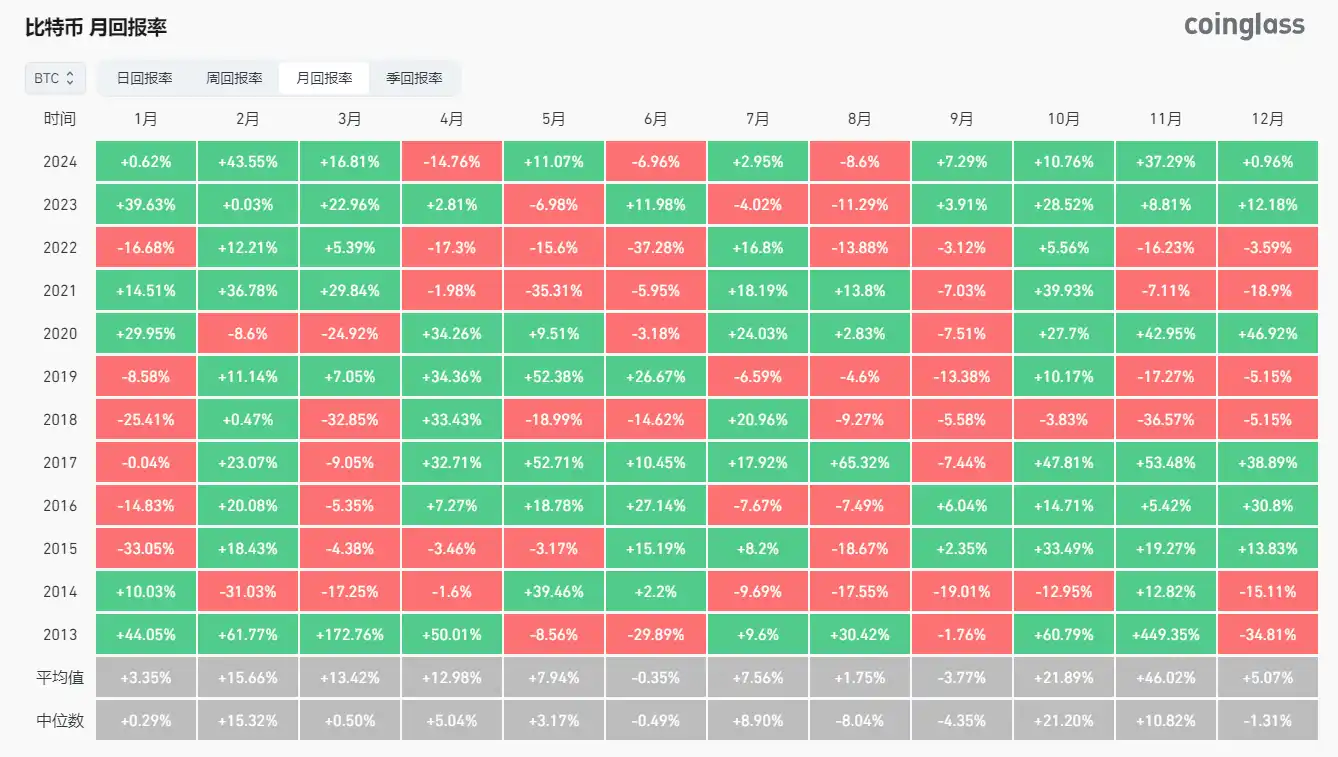
According to CoinGlass data, Bitcoin has had a 50% probability of rising in December and January over the past 12 years. This historical data indicates that the cryptocurrency market's overall performance has been relatively flat at the year-end and beginning, with increased volatility and unclear trends. In the future, investors need to pay more attention to market data, the macro environment, and the dynamic changes in leverage positions, implement effective risk management when strategizing, and support long-term investment strategies.
You may also like

Pantera Capital Partner: How Tokenization is Restructuring the Private Equity and Early Investment Ecosystem?

New York Proposes Stricter Stablecoin Issuer Rules Aligned With Federal GENIUS Act
NYDFS proposed stricter stablecoin issuer rules aligned with the GENIUS Act, covering reserves, custody, redemption timelines, audits, and capital buffers.
Every exchange is a "Universal Exchange."

The counterattack of traditional finance: Alliance chains are quietly reviving

CryptoQuant Says Bitcoin Profitable Supply Is Near 45% Pressure Zone as On-Chain Data Points to Market Repricing
CryptoQuant said Bitcoin’s profitable supply is nearing the 45% pressure zone, signaling rising market stress, unrealized losses, and a possible on-chain repricing phase.

Bitcoin Falls Below 200-Week Moving Average as On-Chain Data Shows Over Half of Supply in Loss
Bitcoin dropped below its 200-week moving average as on-chain data showed over 50% of circulating supply is now in loss, signaling rising market stress.

CFTC Reportedly Plans New Prediction Market Rules Focused on Manipulation Risk and Public Interest Review
The CFTC is reportedly preparing new prediction market rules focused on manipulation risk, public interest review, and retail trader protections.

Meet the new WEEX trial fund—your gateway to greater profits

WEEX Labs Lands at Dutch Blockchain Week: A Disruptive Crypto × AI Conversation Sets Sail in Amsterdam

SK Hynix Reportedly Plans U.S. ADR Listing as Early as August, With SEC Approval Possible in Late June
SK Hynix may pursue a U.S. ADR listing as early as August, with SEC approval reportedly possible in late June amid strong AI chip supply chain demand.

SpaceX vs Tesla vs xAI: Which Elon Musk Trade Has the Biggest Upside in 2026?
OpenAI Reveals It Has Confidentially Submitted an S-1 to the SEC, Keeping the Door Open for a Future IPO
On June 9, according to an OpenAI announcement, the company recently confidentially submitted a draft S-1 registration statement to the U.S. Securities and Exchange Commission (SEC), beginning the preliminary compliance process for a potential initial public offering. OpenAI said it chose to disclose this proactively because it expected the news might leak; however, the company has not yet set a specific listing timeline, and related arrangements may still take some time.

Latest research from 13 top universities including Cornell University: The current state, challenges, and misconceptions of the fusion of Crypto and AI
Deconstructing Anthropic: The Best AI Company, Possibly Also a Type of Organizational Invention
Apollo and Blackstone Reportedly Back $35 Billion Anthropic Chip Financing as Deal Details Remain Unclear
On June 9, according to currently available news alerts, Apollo and Blackstone Group participated in a $35 billion financing for an Anthropic “chip project.” Based on the original wording of the report, the funding has already been raised, but public information remains limited. The financing structure, use of proceeds, project entity, and whether Apollo and Blackstone participated through equity, debt, or project financing have not yet been disclosed.

Humanity Protocol Security Incident Escalates: More Than $31 Million Stolen From Related Addresses as Attacker Continues Selling H for ETH
On June 9, according to monitoring by Onchain Lens, more than $31 million has been stolen from addresses linked to Humanity Protocol, and the attack is still ongoing, with the hacker continuously swapping H tokens for ETH. Project founder Terence Kwok later confirmed the security incident on X, saying the issue involved a private key leak.

Bloomberg: As Bitcoin Weakens, Stablecoins and RWA Continue to Drive Expansion in Crypto Businesses
In June, Bloomberg reported that despite Bitcoin falling below $60,000 last week, wiping out about $235 billion in market value within seven days, and dropping close to 50% from last year’s peak, some core businesses in the crypto industry are still expanding, mainly in stablecoins, real-world asset tokenization (RWA), payments, and infrastructure. The report also noted that overall altcoin activity has contracted significantly: altcoin market capitalization has fallen from a peak of about $431 billion in November 2021 to around $170 billion, and among the tens of millions of tokens issued in recent years, fewer than 1,700 still maintain meaningful trading activity.

Galaxy Deep Research Report: How Hyperliquid's HIP-4 Upgrade Changes the Landscape of Prediction Markets?
Pantera Capital Partner: How Tokenization is Restructuring the Private Equity and Early Investment Ecosystem?
New York Proposes Stricter Stablecoin Issuer Rules Aligned With Federal GENIUS Act
NYDFS proposed stricter stablecoin issuer rules aligned with the GENIUS Act, covering reserves, custody, redemption timelines, audits, and capital buffers.
Every exchange is a "Universal Exchange."
The counterattack of traditional finance: Alliance chains are quietly reviving
CryptoQuant Says Bitcoin Profitable Supply Is Near 45% Pressure Zone as On-Chain Data Points to Market Repricing
CryptoQuant said Bitcoin’s profitable supply is nearing the 45% pressure zone, signaling rising market stress, unrealized losses, and a possible on-chain repricing phase.
Bitcoin Falls Below 200-Week Moving Average as On-Chain Data Shows Over Half of Supply in Loss
Bitcoin dropped below its 200-week moving average as on-chain data showed over 50% of circulating supply is now in loss, signaling rising market stress.


