
 Buy Crypto
- Markets
 Futures
- Spot
- Copy Trade
- Earn
- More
After Two Years of Market Drama, Investors Are Embracing Math Over Hype

Key Takeaways
- Market conditions in 2025 forced investors to reconsider sentiment-driven strategies, opting for a more calculated approach.
- The stability in traditional markets contrasts sharply with crypto volatility, indicating a shift toward more conventional assets.
- There is a noticeable transition from emotional investments to structured, rule-based strategies, emphasizing clarity and risk management.
- Platforms like 8lends are gaining traction by aligning with investor demands for transparency, short loan cycles, and real-world cashflows.
WEEX Crypto News, 2025-12-12 07:47:03
In recent years, the investor community has witnessed profound shifts in the market landscape, highlighting the delicate balance between sentiment-driven highs and the sobering impact of reality checks. Throughout 2025, market dynamics illustrated the importance of steering clear of hype and embracing a more mathematical and systematic approach.
The Unmasking of Sentiment-Driven Market Fragility
The year 2025 began with enthusiasm surrounding AI advancements, big tech growth, retail trading bursts, and rampant crypto speculation. Investors who were previously buoyant were soon met with macroeconomic headwinds and geopolitical interruptions that served as a stark reminder of the market’s volatility. By April, a collective fatigue set in; the exhilarating highs of previous years were replaced with an overwhelming sense that the market roller-coaster was losing its appeal.
A paradigmatic event was the 2024 Bitcoin Halving. Contrary to widespread anticipation of a bullish surge due to Bitcoin’s reduced supply, the market responded with an unexpected downturn. By the second quarter of 2024, the total cryptocurrency market capitalization had shrunk by 14.4%, bringing it down to an estimated $2.43 trillion. Similarly, Donald Trump’s promotion to the ‘crypto president’ and his subsequent tariff announcements, although initially stimulating for the market, culminated in one of the most severe market contractions. The results were unprecedented—crypto suffered liquidations of $19 billion in a mere span of 24 hours.
This period of volatility and the collapse of previously reliable bull narratives took a heavy psychological toll on investors. The traditional optimism once associated with hype-driven rallies dwindled as market participants became more hesitant. The market unrest coincided with a stabilization in conventional assets, suggesting a quiet but deliberate investor pivot back toward lower-risk, traditional assets.
From Emotion-Driven Decisions to Structured Investment Frameworks
The initial cracks in the sentiment-driven market approach became most visible in the early months of 2025. Despite the noise of geopolitical tensions and tariff debates, trading activity intensified, even reaching record figures. The first half of the year saw U.S. investors making equity transactions worth $6.6 trillion, the highest six-month volume ever recorded. Retail investors closely mirrored the S&P 500’s return, indicative of a shift towards a disciplined, index-oriented strategy.
This transformation marks the beginning of an era where investors increasingly favor frameworks and logic over fleeting feelings. Rather than pursuing long-shot bets with indefinite timelines, many are allocating resources into structured risk investments with clear pricing mechanisms. This change is evidenced by a growing interest in short-term Treasuries, dividend-focused strategies, and securely collateralized loans, among others, as they provide more predictability in outcome and sustainability even amidst unstable macro conditions.
Prominent among the new-age investment platforms are those like 8lends. Offering peer-to-peer lending solutions, these platforms meet diverse investor needs with its structured short-term SME loans, backed by real collateral and meticulous borrower assessments. The appeal lies in the predictability of returns, offering clarity and stability during economic uncertainties. According to a 2025 Maclear survey, a substantial portion of European investors demonstrated willingness to accept moderate risks for higher returns, highlighting a preference for short lending durations and legally secured frameworks.
Real Yield Assets Eclipse Emotional Market Choices
Assets tied to tangible economic activities outpaced speculative ventures throughout 2025. Tech rallies, driven by AI excitement, met turbulence as earnings failed to meet lofty projections; simultaneously, electric vehicle and meme stocks continued their descent. On the other hand, assets with steady cashflow, like short-term Treasuries, industrial sectors, private credit portfolios, and utilities, showed superior performance.
As central banks began trimming interest rates, traditional fixed-income assets lost their allure, driving investors to seek alternative, reliable yield sources. This ongoing economic narrative led to a favoring of assets grounded in genuine business operations over mere market sentiment.
Furthermore, tightened credit conditions, exacerbated by regulatory adjustments, minimized the SME lending offerings from conventional banks. This gap created room for structured private-credit opportunities where borrowers, armed with real collateral, provide secure investment opportunities for lenders.
The Dawn of a New Investment Paradigm
As 2026 approaches, a profound realization among investors becomes evident—they are stepping away from story-driven excitement and momentum-chasing antics. The focus now lies on acquiring discipline, investing in clarity, and ensuring measurable returns. Platforms like 8lends, designed on well-oiled, rule-based frameworks, deliver exactly that by offering short-cycled loans with assured real-world cashflow assurance. This transition reflects a broader movement in the marketplace where the upcoming bullish phases are more likely to be inspired by solid mathematics than by mere sentiment.
Frequently Asked Questions (FAQs)
What major market events defined 2025?
In 2025, the market was significantly influenced by geopolitical factors, the Bitcoin Halving, and fluctuating macroeconomic conditions, which combined to create a less sentiment-driven and more cautious investment landscape.
How did the Bitcoin Halving in 2024 impact the market?
The 2024 Bitcoin Halving, rather than sparking a bull run as anticipated, resulted in a sharp decline of the total crypto market, shedding 14.4% of its capitalization by the second quarter.
Why are investors moving toward structured, ruling-based platforms like 8lends?
Structured platforms like 8lends offer predictable outcomes, clarity, and stability in returns even amidst macroeconomic volatility, aligning seamlessly with evolving investor preferences.
What distinguishes real yield assets from emotional market assets?
Real yield assets are backed by actual economic activities and cashflows, providing stable returns, while emotional market assets often rely on hype and investor sentiment, resulting in unpredictability.
How do changing interest rates influence investor choices?
With central banks cutting rates, traditional fixed-income instruments have lost appeal, driving investors toward alternative sources of real yield tied to practical business operations rather than market sentiments.
You may also like
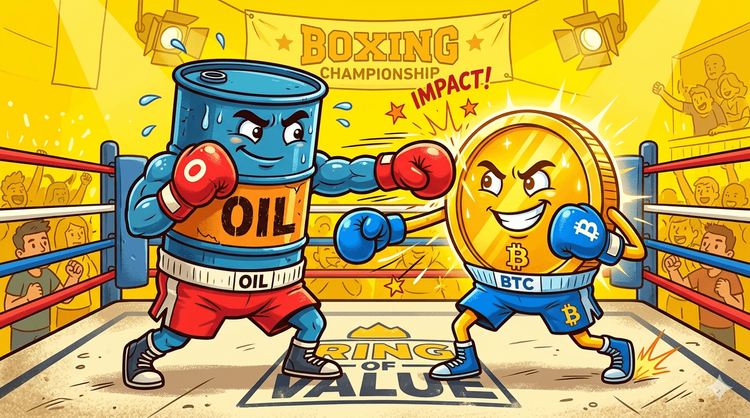
How the US-Iran War Could Affect Oil and Bitcoin Prices (Latest Analysis)
The outbreak of the US-Iran war on February 28, 2026, has provided an unprecedented real-time laboratory for understanding how geopolitical oil shocks interact with an increasingly institutionalized cryptocurrency market. This article examines the relationship between crude oil prices and Bitcoin throughout the conflict, analyzing price movements, correlation patterns, and the underlying transmission mechanisms.

OpenAI Wants to Write Its Own Rules|Rewire News Brief

Chaos Labs Exits, Who Will Pick Up Aave's Risk?
Stealthy Financial War? Iran Collects Strait Transit Fees in Stablecoin

OpenAlice: One Person, That's a Jane Street | Project Overview

The Small-Town Youth Labeling Big AI Models

Morning Report | Strategy increased its holdings by 4,871 BTC last week; Toss plans to develop its own blockchain and issue a native cryptocurrency; OpenAI's CFO privately questioned the timing of the IPO in 2026

Research: Stablecoins have a trading volume of 35 trillion a year, how much of it is real payment?

Galaxy Research: AI agents are giving rise to new species on the blockchain, how zero-human companies activate the financial flywheel

Data Research: How big is the liquidity gap between Hyperliquid and CME crude oil?
Why Are GPU Prices Skyrocketing Out of Control?

How to Master Claude Cowork Completely?

70-Page Confidential Letter Alleges First Charge of 'Lying,' Altman Tells Board 'I Can't Change My Personality'
Is Altcoin Season Starting in 2026? What Traders Should Watch Now
Altcoin season signals are becoming clearer in 2026 as capital rotation across crypto markets accelerates. Here’s what traders should watch and how strategy-based participation is evolving in the current market cycle.
Bitcoin ETF Inflows in 2026: Impact on BTC Price and Crypto Market Trends
Bitcoin ETF inflows are reshaping BTC price trends and crypto market liquidity in 2026. See how institutional capital is influencing volatility, trading behavior, and portfolio allocation strategies across crypto markets.
Visa's Stablecoin Strategy: Cards, Settlement, and the Future

Stock Market Split

How to capture the next Alpha in the narrative of predictive markets?
How the US-Iran War Could Affect Oil and Bitcoin Prices (Latest Analysis)
The outbreak of the US-Iran war on February 28, 2026, has provided an unprecedented real-time laboratory for understanding how geopolitical oil shocks interact with an increasingly institutionalized cryptocurrency market. This article examines the relationship between crude oil prices and Bitcoin throughout the conflict, analyzing price movements, correlation patterns, and the underlying transmission mechanisms.


 App
App