Coinbase: Did the AI Agent's Performance Decline Because It Was Previously Overvalued?

By: blockbeats|2025/02/12 20:45:03
0
Share
copy
Original Title: Advancing Agentic AI
Original Authors: David Han, David Duong, Coinbase
Original Translation: Tong Deng, Golden Finance

Abstract

· Agentic AI has become one of the most promising narratives in the AI x Crypto space, but due to rapid technological advancements and widespread adoption of agents, the field is still in its early stages and hard to tame.

· Investor interest in Agentic AI primarily revolves around two aspects—the core infrastructure for launching and hosting agents and the individual agents themselves.

· We believe that as the functionality of AI agents in the crypto space continues to evolve, there is significant room for growth in the future. However, at least for now, expectations around AI agents may outpace the actual technological developments.

AI agents have not only been revolutionary in the crypto space but have also become a prevalent theme in a broader technological landscape. The concept of autonomous entities that can analyze market news sources or other external data and make real-time decisions has captured the imagination of many institutional investors. Elsewhere, some tech industry leaders believe that AI agents may eventually replace the vast Software as a Service (SaaS) industry. In other words, a well-trained AI agent could theoretically accomplish any task involving a digital interface.

We believe that cryptocurrency rails could play a key role in the future, serving as the primary value transfer mechanism for AI agents. The inherent programmable nature and permissionless design of crypto support the extensive deployment and scaling of such agents, enabling a broader range of use cases from managing on-chain investment portfolios to facilitating offline service payments. Given this potential opportunity, the market cap of AI agent-crypto assets peaked above $20 billion in early January and then approached $8 billion by the end of the month.

The recent downturn may indicate that expectations around AI agents have begun to outstrip the actual technological advancements. While we anticipate this theme to reshape the crypto x AI landscape in the long term, its short-term applications are constrained by integration and agent differentiation challenges, as well as the unclear long-term utility of agent tokens. In other words, realizing the full potential of agentic AI may take longer than many envisage.

Understanding the Difference: Agents vs. Models

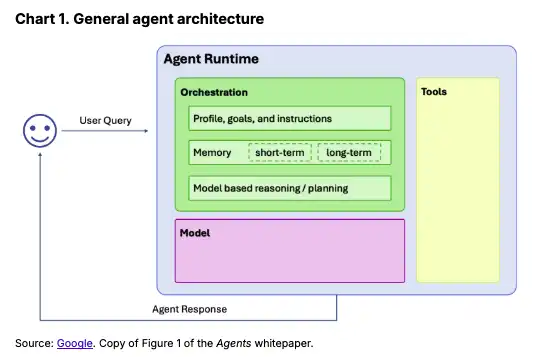
Many popular AI tools, such as ChatGPT for chat interfaces or Stable Diffusion for image generation, are wrappers around generative AI models. They are defined by a set of bounded inputs and outputs, often in the form of text, audio, and images. AI agents extend the direct functionality of these models by introducing a new class of applications that represent a combination of "reasoning, logic, and access to external information" (according to Google's definition).

Specifically, AI agents can access a broader range of data and tools and interact with them, enabling them to drive more complex behaviors, from searching multiple databases to planning trips and booking flights. With on-chain wallet integration, the scope of AI agent activities is greatly expanded by incorporating payment services into their toolkit.

Coinbase: Did the AI Agent's Performance Decline Because It Was Previously Overvalued?

Crucially, AI agents can also leverage their reasoning abilities to act autonomously in dynamic environments. AI agents' triggers are not limited to manual user prompts—they can be based on various data streams in parallel, including X (formerly known as Twitter) posts or Twitch chats. Similarly, their responses can involve multi-step outputs, such as placing orders, making payments, and sending confirmations to stakeholders.

Agents typically consist of (1) a core LLM model as their reasoning engine, (2) short-term and long-term memory components, (3) a latent role or persona framework, and (4) most importantly, the ability to access a broader internet and other tools through application programming interfaces (APIs). Therefore, the decisions made by agents can directly impact the real world.

The AI Agent Boom is Here

Infrastructure and tools around AI agents are rapidly evolving, becoming one of the most prominent tech trends of the past year. Several developer frameworks for building AI agents (including but not limited to CrewAI, LangGraph, AutoGen, phidata, Atomic Agents, AgentGPT, and AutoGPT) are competing for market adoption, and the top 15 repositories on Github in January 2025 are all AI-related.

Interest and excitement around artificial intelligence and its agent applications have spilled over into AI-related tokens in the cryptocurrency space. Since the fourth quarter of 2024, much of the recent value growth of tokens is tied to agent artificial intelligence themes, which currently represent 29% of the value of all AI-related crypto tokens. In the agent AI ecosystem, agent tokens make up the majority of the valuation, totaling a $45 billion market cap, while tokens related to launchpads and frameworks have a market cap of $29 billion, according to cookie.fun (a platform tracking AI agents in the crypto space).

We believe that, part of the overemphasis on proxies relative to their underlying infrastructure is being driven by the memetic nature of many "proxy" concepts, which aligns with the increased memetic coin activity observed for much of 2024. In fact, one of the earliest AI-related tokens to achieve viral spread gained fame because it received an endorsement from the AI proxy operating the popular X account truth_terminal (now with over 250,000 followers), rather than having a related underlying project or governance structure.

That being said, some AI proxy tokens provide more utility by granting access to a token-gated chat terminal or service where proxies can offer differentiated viewpoints on various topics (such as the crypto market conditions). Meanwhile, we see AI infrastructure tokens as more often rooted in project-specific revenue, typically used for fee payment and governance.

Thus far, most AI proxies, launchpads, and other infrastructure have found their home on high-throughput, low-cost blockchains—especially Solana and Base. Solana accounts for $4.2 billion in proxy AI token market cap, Base for $3 billion, and the rest of the chains collectively hold $1.5 billion in market cap. We believe this is partly due to the necessity of a low-cost architecture for the widespread adoption of AI proxies. Additionally, we think the strong developer ecosystem formed on the leading chains has fueled a virtuous cycle of idea-sharing and adoption.

Battle for Investor Mindshare: Social Influence

In the current AI proxy space, there are several leading proxies that have begun to dominate this field. The most prominent AI proxy to date, aixbt, has garnered attention by operating an X account (now with over 465K followers) dedicated to engaging with the crypto audience on the platform. It has a token-gated terminal, where users holding a sufficient amount of project tokens can access a dedicated chat space with the proxy, allowing for private access to its real-time "ideas."

Other leading proxies, such as zerebro (with 119K followers), also follow a similar pattern, leveraging prominent social media profiles to capture attention in the space. Zerebro, in particular, focuses on on-chain art generation. Its native token can be used to pay for the creation of images, and its chat terminal is controlled by NFTs.

However, not all AI Agent tokens have a practical appearance. One of the top-ranked AI tokens in terms of attention (tracked by cookie.fun) is Fartcoin, whose idea was conceived through a dialogue with the aforementioned truth_terminal AI agent. This means that the origin of the token itself is related to an AI agent, although the long-term utility of the token itself apart from memetic importance remains unclear.

We believe that the interaction between memes and the utility of AI Agent tokens has attracted traders from various fields, from speculators to value investors. That being said, given the rapid development in this field, we believe that the ultimate scope and capacity of any individual token are still largely unknown. In other words, whether meme coins related to AI agents will evolve beyond pure speculation and/or demonstrate any utility beyond community governance or access control is still a pending question. We will further discuss this point in the risks and future section below.

Funding Follows: Launch Platforms and Infrastructure

After becoming one of the best-performing sectors in the cryptocurrency space in November and December 2024, AI Agent tokens faced a significant setback in January 2025, partly due to the market becoming severely saturated in such a short time. This led to some market consolidation. Since many of these tokens are in direct competition with memecoins in the attention economy of cryptocurrency, it is still difficult to plan for value accumulation in this space. In the short term, we find that direct protocol revenues often focus on the trading interface and launchpad deploying AI Agent tokens rather than the tokens themselves, although their overall market cap is relatively small.

On Base, Virtuals Protocol has always been a leading AI launch platform, facilitating the launch of AI agents and tokens in the gaming and various application domains. (Note: Virtuals announced an expansion to Solana on January 25th.) Virtuals agents can be created without any coding. Users simply fill out a simple form and spend the required amount of Virtuals platform token. Upon submission, the baseline agent is initialized on the Virtuals infrastructure, while the associated tokens are minted on-chain. Initially, the tokens are deployed in a bonding curve and once a certain liquidity threshold is reached, they transition to a Uniswap pool. (Note: This is somewhat similar to token releases on pump.fun and their transition to a Raydium pool.)

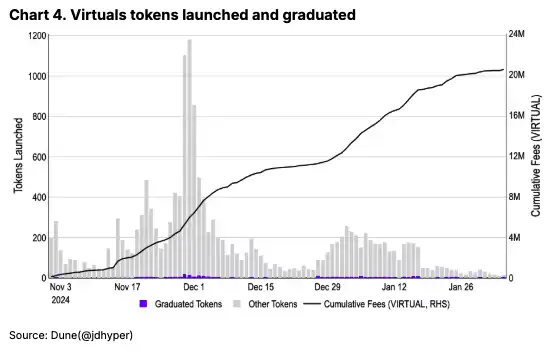
So far, nearly 16,000 proxy tokens have been launched on Virtuals, generating over 20 million Virtuals tokens for fees. Nevertheless, in the past few weeks, the number of proxies launched has decreased, dropping from a peak of 1,181 in a day to an average of 31 in the last week of January. Furthermore, the number of tokens with sufficient liquidity has decreased to an average of one to two per day. Overall, out of the 15,985 tokens launched, only 334 (2%) have achieved sufficient liquidity to transition to the Uniswap pool, indicating intense competition for attention and capital.

We believe the primary reason for this decline is the challenge of creating new proxies that are distinct enough from existing proxies. While Virtuals proxies can be customized in their cognitive, verbal, and visual core, resolving the variations between proxies launched on Virtuals has become an increasingly daunting task—paralleling the competition in shared thinking seen in memecoins. Nevertheless, we believe that as AI proxy integrations expand and use cases are further explored, launchpads like Virtuals will play a crucial role in the diffusion of proxies in the ecosystem. In fact, the previously mentioned aixbt is one such proxy launched on Virtuals.

The main alternative to Virtuals launchpad is the ElizaOS proxy framework. Unlike the streamlined deployment of mature launchpads, frameworks like ElizaOS provide only the technical scaffolding necessary for proxy construction. In other words, more technically inclined proxy creators can leverage ElizaOS to launch highly customized proxies on different blockchain networks, as model hosting, validation, and other engineering tasks are left to the creator. Nonetheless, AI proxy hosting companies like Fleek also support the no-code deployment of models based on ElizaOS.

As a pure AI proxy development framework, ElizaOS does not have a native token. However, the ai16z governance token on Solana (now renamed the ElizaOS token) is often considered the proxy of choice for the technology adoption, as Shaw Walters, the creator of the ai16z decentralized autonomous organization (DAO), is the founder of Eliza Labs, responsible for overseeing ElizaOS development. The ai16z DAO itself manages on-chain and off-chain investments, with AI fund managers (built using the ElizaOS framework) handling transactions and positions.
Notably, the ElizaOS framework's codebase has been highly popular since its release, becoming at one point one of the hottest repositories on GitHub. If developers find a project particularly impactful, they can choose to "star" the repository, much like liking a photo or post on social media.

The recognition ElizaOS has received has made it quite competitive among many other leading AI agent frameworks, including frameworks launched by tech giants like Microsoft. (See Figure 3.) We believe this indicates a genuine interest from the broader software engineering community in the intersection of AI agents and on-chain activities, which is a core differentiating feature of ElizaOS as an AI agent framework.

In addition to Virtuals and Eliza, many other AI agent frameworks and launchpads have emerged, finding their own niche markets. For example, Griffain aims to create an agent network tailored for DeFi activities. Meanwhile, the Arc agent framework stands out not only for being built using Rust but also for its lighter, more modular design. We anticipate that as these frameworks evolve and new frameworks are adopted, this field will advance rapidly.

Risks and the Future

Furthermore, we believe that as more capital flows begin to shift towards DeFAI (Decentralized Finance + Artificial Intelligence) and/or other infrastructures, the January dip in artificial intelligence agent performance may signal an early maturation of the industry.

DeFAI represents the combination of artificial intelligence and cryptographic technology to enhance various DeFi functionalities. Its benefits include the ability to run automated yield farming strategies, utilize prediction algorithms for improved risk management and fraud prevention. As many DeFi protocols start to solidify, the integration of AI capabilities with the existing ecosystem can drive new innovations. Over time, the industry is poised to foster new financial products and scale many DeFi platforms by leveraging the computational power of artificial intelligence.

However, at present, besides overseeing access and facilitating governance, the long-term utility of artificial intelligence agent tokens is still unclear. The reality is that while artificial intelligence agents have made significant strides rapidly, we have not yet reached a point where fully autonomous AI agents can handle complex real-world tasks without any supervision. Their current reliability remains limited, and the costs are still exorbitant. Many AI agents also struggle to consistently address data validation issues, which could lead to legal concerns or impact user trust.

Nevertheless, breakthroughs like the emergence of models such as DeepSeek R1, which focuses on advanced "reasoning" tasks, may disrupt concerns about the speed-cost ratio. In fact, these models are evolving rapidly, with the consulting firm Deloitte predicting that within two years, half of all companies currently using generative AI may introduce AI agents.

Ultimately, the transformative vision is that we may have a multi-agent system where autonomous AI agents strategically collaborate and/or compete to optimize outcomes that may be more complex than currently possible. However, the nascent nature of this field makes prediction challenging. Furthermore, large tech companies like OpenAI have only recently started releasing their early AI agents, and we expect more companies to follow suit soon. The development of centrally hosted AI agents—potentially integrated into traditional payment rails—may also be a disruptive factor in the adoption of on-chain AI agents. We believe that the development of this field will heavily rely on a flywheel of pioneers and early adopters.

Conclusion

Over the past few months, AI agents have been one of the most talked-about topics in liquidity tokens in terms of attention and trading opportunities. While the valuations of many major tokens have seen significant declines from their all-time highs (witnessed in early January), we believe that in the long run, developer interest and capital inflows into this field could provide significant momentum for the entire industry.

However, at the same time, we believe that predicting the long-term value capture of AI tokens may be premature due to potential disruptions from cryptocurrency and the broader tech landscape. Additionally, we believe that the on-chain utility of current agents may not be sufficient to ensure thousands of high-usage agents in the short term. Nevertheless, we believe that due to its fast pace of innovation and significant long-term potential, this field remains an important and worthwhile subject of interest.

Original Article Link

You may also like

Token Cannot Compound, Where Is the Real Investment Opportunity?

The next chapter in the crypto industry will undoubtedly be written by Crypto-empowered Stocks.

February 6th Market Key Intelligence, How Much Did You Miss?

1. On-chain Flows: $508.2M USD inflow to Ethereum today; $390.8M USD outflow from Arbitrum 2. Biggest Gainers/Losers: $HBTC, $AIO 3. Top News: Current Bitcoin weekly RSI oversold signal comparable to June 2022

China's Central Bank and Eight Other Departments' Latest Regulatory Focus: Key Attention to RWA Tokenized Asset Risk


Foreword: Today, the People's Bank of China's website published the "Notice of the People's Bank of China, National Development and Reform Commission, Ministry of Industry and Information Technology, Ministry of Public Security, State Administration for Market Regulation, China Banking and Insurance Regulatory Commission, China Securities Regulatory Commission, State Administration of Foreign Exchange on Further Preventing and Dealing with Risks Related to Virtual Currency and Others (Yinfa [2026] No. 42)", the latest regulatory requirements from the eight departments including the central bank, which are basically consistent with the regulatory requirements of recent years. The main focus of the regulation is on speculative activities such as virtual currency trading, exchanges, ICOs, overseas platform services, and this time, regulatory oversight of RWA has been added, explicitly prohibiting RWA tokenization, stablecoins (especially those pegged to the RMB). The following is the full text:


To the people's governments of all provinces, autonomous regions, and municipalities directly under the Central Government, the Xinjiang Production and Construction Corps:


  Recently, there have been speculative activities related to virtual currency and Real-World Assets (RWA) tokenization, disrupting the economic and financial order and jeopardizing the property security of the people. In order to further prevent and address the risks related to virtual currency and Real-World Assets tokenization, effectively safeguard national security and social stability, in accordance with the "Law of the People's Republic of China on the People's Bank of China," "Law of the People's Republic of China on Commercial Banks," "Securities Law of the People's Republic of China," "Law of the People's Republic of China on Securities Investment Funds," "Law of the People's Republic of China on Futures and Derivatives," "Cybersecurity Law of the People's Republic of China," "Regulations of the People's Republic of China on the Administration of Renminbi," "Regulations on Prevention and Disposal of Illegal Fundraising," "Regulations of the People's Republic of China on Foreign Exchange Administration," "Telecommunications Regulations of the People's Republic of China," and other provisions, after reaching consensus with the Cyberspace Administration of China, the Supreme People's Court, and the Supreme People's Procuratorate, and with the approval of the State Council, the relevant matters are notified as follows:


  I. Clarify the essential attributes of virtual currency, Real-World Assets tokenization, and related business activities


  (I) Virtual currency does not possess the legal status equivalent to fiat currency. Virtual currencies such as Bitcoin, Ether, Tether, etc., have the main characteristics of being issued by non-monetary authorities, using encryption technology and distributed ledger or similar technology, existing in digital form, etc. They do not have legal tender status, should not and cannot be circulated and used as currency in the market.


  The business activities related to virtual currency are classified as illegal financial activities. The exchange of fiat currency and virtual currency within the territory, exchange of virtual currencies, acting as a central counterparty in buying and selling virtual currencies, providing information intermediary and pricing services for virtual currency transactions, token issuance financing, and trading of virtual currency-related financial products, etc., fall under illegal financial activities, such as suspected illegal issuance of token vouchers, unauthorized public issuance of securities, illegal operation of securities and futures business, illegal fundraising, etc., are strictly prohibited across the board and resolutely banned in accordance with the law. Overseas entities and individuals are not allowed to provide virtual currency-related services to domestic entities in any form.


  A stablecoin pegged to a fiat currency indirectly fulfills some functions of the fiat currency in circulation. Without the consent of relevant authorities in accordance with the law and regulations, any domestic or foreign entity or individual is not allowed to issue a RMB-pegged stablecoin overseas.


(II)Tokenization of Real-World Assets refers to the use of encryption technology and distributed ledger or similar technologies to transform ownership rights, income rights, etc., of assets into tokens (tokens) or other interests or bond certificates with token (token) characteristics, and carry out issuance and trading activities.


  Engaging in the tokenization of real-world assets domestically, as well as providing related intermediary, information technology services, etc., which are suspected of illegal issuance of token vouchers, unauthorized public offering of securities, illegal operation of securities and futures business, illegal fundraising, and other illegal financial activities, shall be prohibited; except for relevant business activities carried out with the approval of the competent authorities in accordance with the law and regulations and relying on specific financial infrastructures. Overseas entities and individuals are not allowed to illegally provide services related to the tokenization of real-world assets to domestic entities in any form.


  II. Sound Work Mechanism


  (III) Inter-agency Coordination. The People's Bank of China, together with the National Development and Reform Commission, the Ministry of Industry and Information Technology, the Ministry of Public Security, the State Administration for Market Regulation, the China Banking and Insurance Regulatory Commission, the China Securities Regulatory Commission, the State Administration of Foreign Exchange, and other departments, will improve the work mechanism, strengthen coordination with the Cyberspace Administration of China, the Supreme People's Court, and the Supreme People's Procuratorate, coordinate efforts, and overall guide regions to carry out risk prevention and disposal of virtual currency-related illegal financial activities.


  The China Securities Regulatory Commission, together with the National Development and Reform Commission, the Ministry of Industry and Information Technology, the Ministry of Public Security, the People's Bank of China, the State Administration for Market Regulation, the China Banking and Insurance Regulatory Commission, the State Administration of Foreign Exchange, and other departments, will improve the work mechanism, strengthen coordination with the Cyberspace Administration of China, the Supreme People's Court, and the Supreme People's Procuratorate, coordinate efforts, and overall guide regions to carry out risk prevention and disposal of illegal financial activities related to the tokenization of real-world assets.


  (IV) Strengthening Local Implementation. The people's governments at the provincial level are overall responsible for the prevention and disposal of risks related to virtual currencies and the tokenization of real-world assets in their respective administrative regions. The specific leading department is the local financial regulatory department, with participation from branches and dispatched institutions of the State Council's financial regulatory department, telecommunications regulators, public security, market supervision, and other departments, in coordination with cyberspace departments, courts, and procuratorates, to improve the normalization of the work mechanism, effectively connect with the relevant work mechanisms of central departments, form a cooperative and coordinated working pattern between central and local governments, effectively prevent and properly handle risks related to virtual currencies and the tokenization of real-world assets, and maintain economic and financial order and social stability.


  III. Strengthened Risk Monitoring, Prevention, and Disposal


  (5) Enhanced Risk Monitoring. The People's Bank of China, China Securities Regulatory Commission, National Development and Reform Commission, Ministry of Industry and Information Technology, Ministry of Public Security, State Administration of Foreign Exchange, Cyberspace Administration of China, and other departments continue to improve monitoring techniques and system support, enhance cross-departmental data analysis and sharing, establish sound information sharing and cross-validation mechanisms, promptly grasp the risk situation of activities related to virtual currency and real-world asset tokenization. Local governments at all levels give full play to the role of local monitoring and early warning mechanisms. Local financial regulatory authorities, together with branches and agencies of the State Council's financial regulatory authorities, as well as departments of cyberspace and public security, ensure effective connection between online monitoring, offline investigation, and fund tracking, efficiently and accurately identify activities related to virtual currency and real-world asset tokenization, promptly share risk information, improve early warning information dissemination, verification, and rapid response mechanisms.


  (6) Strengthened Oversight of Financial Institutions, Intermediaries, and Technology Service Providers. Financial institutions (including non-bank payment institutions) are prohibited from providing account opening, fund transfer, and clearing services for virtual currency-related business activities, issuing and selling financial products related to virtual currency, including virtual currency and related financial products in the scope of collateral, conducting insurance business related to virtual currency, or including virtual currency in the scope of insurance liability. Financial institutions (including non-bank payment institutions) are prohibited from providing custody, clearing, and settlement services for unauthorized real-world asset tokenization-related business and related financial products. Relevant intermediary institutions and information technology service providers are prohibited from providing intermediary, technical, or other services for unauthorized real-world asset tokenization-related businesses and related financial products.


  (7) Enhanced Management of Internet Information Content and Access. Internet enterprises are prohibited from providing online business venues, commercial displays, marketing, advertising, or paid traffic diversion services for virtual currency and real-world asset tokenization-related business activities. Upon discovering clues of illegal activities, they should promptly report to relevant departments and provide technical support and assistance for related investigations and inquiries. Based on the clues transferred by the financial regulatory authorities, the cyberspace administration, telecommunications authorities, and public security departments should promptly close and deal with websites, mobile applications (including mini-programs), and public accounts engaged in virtual currency and real-world asset tokenization-related business activities in accordance with the law.


  (8) Strengthened Entity Registration and Advertisement Management. Market supervision departments strengthen entity registration and management, and enterprise and individual business registrations must not contain terms such as "virtual currency," "virtual asset," "cryptocurrency," "crypto asset," "stablecoin," "real-world asset tokenization," or "RWA" in their names or business scopes. Market supervision departments, together with financial regulatory authorities, legally enhance the supervision of advertisements related to virtual currency and real-world asset tokenization, promptly investigating and handling relevant illegal advertisements.


  (IX) Continued Rectification of Virtual Currency Mining Activities. The National Development and Reform Commission, together with relevant departments, strictly controls virtual currency mining activities, continuously promotes the rectification of virtual currency mining activities. The people's governments of various provinces take overall responsibility for the rectification of "mining" within their respective administrative regions. In accordance with the requirements of the National Development and Reform Commission and other departments in the "Notice on the Rectification of Virtual Currency Mining Activities" (NDRC Energy-saving Building [2021] No. 1283) and the provisions of the "Guidance Catalog for Industrial Structure Adjustment (2024 Edition)," a comprehensive review, investigation, and closure of existing virtual currency mining projects are conducted, new mining projects are strictly prohibited, and mining machine production enterprises are strictly prohibited from providing mining machine sales and other services within the country.


  (X) Severe Crackdown on Related Illegal Financial Activities. Upon discovering clues to illegal financial activities related to virtual currency and the tokenization of real-world assets, local financial regulatory authorities, branches of the State Council's financial regulatory authorities, and other relevant departments promptly investigate, determine, and properly handle the issues in accordance with the law, and seriously hold the relevant entities and individuals legally responsible. Those suspected of crimes are transferred to the judicial authorities for processing according to the law.


 (XI) Severe Crackdown on Related Illegal and Criminal Activities. The Ministry of Public Security, the People's Bank of China, the State Administration for Market Regulation, the China Banking and Insurance Regulatory Commission, the China Securities Regulatory Commission, as well as judicial and procuratorial organs, in accordance with their respective responsibilities, rigorously crack down on illegal and criminal activities related to virtual currency, the tokenization of real-world assets, such as fraud, money laundering, illegal business operations, pyramid schemes, illegal fundraising, and other illegal and criminal activities carried out under the guise of virtual currency, the tokenization of real-world assets, etc.


  (XII) Strengthen Industry Self-discipline. Relevant industry associations should enhance membership management and policy advocacy, based on their own responsibilities, advocate and urge member units to resist illegal financial activities related to virtual currency and the tokenization of real-world assets. Member units that violate regulatory policies and industry self-discipline rules are to be disciplined in accordance with relevant self-regulatory management regulations. By leveraging various industry infrastructure, conduct risk monitoring related to virtual currency, the tokenization of real-world assets, and promptly transfer issue clues to relevant departments.


  IV. Strict Supervision of Domestic Entities Engaging in Overseas Business Activities


(XIII) Without the approval of relevant departments in accordance with the law and regulations, domestic entities and foreign entities controlled by them may not issue virtual currency overseas.


  (XIV) Domestic entities engaging directly or indirectly in overseas external debt-based tokenization of real-world assets, or conducting asset securitization activities abroad based on domestic ownership rights, income rights, etc. (hereinafter referred to as domestic equity), should be strictly regulated in accordance with the principles of "same business, same risk, same rules." The National Development and Reform Commission, the China Securities Regulatory Commission, the State Administration of Foreign Exchange, and other relevant departments regulate it according to their respective responsibilities. For other forms of overseas real-world asset tokenization activities based on domestic equity by domestic entities, the China Securities Regulatory Commission, together with relevant departments, supervise according to their division of responsibilities. Without the consent and filing of relevant departments, no unit or individual may engage in the above-mentioned business.


  (15) Overseas subsidiaries and branches of domestic financial institutions providing Real World Asset Tokenization-related services overseas shall do so legally and prudently. They shall have professional personnel and systems in place to effectively mitigate business risks, strictly implement customer onboarding, suitability management, anti-money laundering requirements, and incorporate them into the domestic financial institutions' compliance and risk management system. Intermediaries and information technology service providers offering Real World Asset Tokenization services abroad based on domestic equity or conducting Real World Asset Tokenization business in the form of overseas debt for domestic entities directly or indirectly venturing abroad must strictly comply with relevant laws and regulations. They should establish and improve relevant compliance and internal control systems in accordance with relevant normative requirements, strengthen business and risk control, and report the business developments to the relevant regulatory authorities for approval or filing.


  V. Strengthen Organizational Implementation


  (16) Strengthen organizational leadership and overall coordination. All departments and regions should attach great importance to the prevention of risks related to virtual currencies and Real World Asset Tokenization, strengthen organizational leadership, clarify work responsibilities, form a long-term effective working mechanism with centralized coordination, local implementation, and shared responsibilities, maintain high pressure, dynamically monitor risks, effectively prevent and mitigate risks in an orderly and efficient manner, legally protect the property security of the people, and make every effort to maintain economic and financial order and social stability.


  (17) Widely carry out publicity and education. All departments, regions, and industry associations should make full use of various media and other communication channels to disseminate information through legal and policy interpretation, analysis of typical cases, and education on investment risks, etc. They should promote the illegality and harm of virtual currencies and Real World Asset Tokenization-related businesses and their manifestations, fully alert to potential risks and hidden dangers, and enhance public awareness and identification capabilities for risk prevention.


  VI. Legal Responsibility


  (18) Engaging in illegal financial activities related to virtual currencies and Real World Asset Tokenization in violation of this notice, as well as providing services for virtual currencies and Real World Asset Tokenization-related businesses, shall be punished in accordance with relevant regulations. If it constitutes a crime, criminal liability shall be pursued according to the law. For domestic entities and individuals who knowingly or should have known that overseas entities illegally provided virtual currency or Real World Asset Tokenization-related services to domestic entities and still assisted them, relevant responsibilities shall be pursued according to the law. If it constitutes a crime, criminal liability shall be pursued according to the law.


  (19) If any unit or individual invests in virtual currencies, Real World Asset Tokens, and related financial products against public order and good customs, the relevant civil legal actions shall be invalid, and any resulting losses shall be borne by them. If there are suspicions of disrupting financial order and jeopardizing financial security, the relevant departments shall deal with them according to the law.


  This notice shall enter into force upon the date of its issuance. The People's Bank of China and ten other departments' "Notice on Further Preventing and Dealing with the Risks of Virtual Currency Trading Speculation" (Yinfa [2021] No. 237) is hereby repealed.


Former Partner's Perspective on Multicoin: Kyle's Exit, But the Game He Left Behind Just Getting Started

Kyle knew his game, so he decided to focus on playing the game he was good at and interested in.

Why Bitcoin Is Falling Now: The Real Reasons Behind BTC's Crash & WEEX's Smart Profit Playbook

Bitcoin's ongoing crash explained: Discover the 5 hidden triggers behind BTC's plunge & how WEEX's Auto Earn and Trade to Earn strategies help traders profit from crypto market volatility.

Wall Street's Hottest Trades See Exodus

This time there is no single triggering factor, but rather market anxiety about asset valuation, with many already skeptical of these valuations being too high, leading to investors choosing to retreat almost simultaneously.

Popular coins

Latest Crypto News

Read more