
 Buy Crypto
- Markets
 Futures
- Spot
- Copy Trade
- Earn
- More
Crypto’s Decentralization Promise Falters at Interoperability

- Interoperability in crypto exposes a decentralization gap, highlighting the reliance on centralized intermediaries.
- Users’ understanding of technical infrastructure remains a crucial yet challenging expectation for mass-market adoption of cryptocurrencies.
- Cross-chain bridges, vital for interoperability, are prone to security vulnerabilities, raising concerns about centralized control.
- Tribalism in crypto networks results from interoperability challenges, leading to fragmented ecosystems and intensified competition.
WEEX Crypto News, 2026-01-19 08:20:21
In the realm of cryptocurrencies, the promise of decentralization looms large. However, the path to achieving true decentralization is riddled with hurdles, particularly regarding interoperability among various blockchain networks. While decentralization champions the idea of eliminating centralized control, the reality is a startling reliance on centralized intermediaries to move value across blockchains. Let’s delve into this paradox and examine the challenges it presents.
The Interoperability Conundrum
Interoperability in the crypto space unveils a stark disparity between the industry’s decentralization narrative and actual practices. A closer examination reveals that, despite the long-standing claims of decentralization, most of the movement of value across blockchains is mediated by a limited number of centralized entities. This state of affairs, as articulated by Michael Steuer, President and Chief Technology Officer of Casper Network, is a structural consequence of how the industry has approached interoperability and user experience.
Steuer, whose background spans mobile gaming, enterprise software, and early blockchain development, offers a unique perspective on this issue. For him, the heart of the problem lies in how real users interact with technology. He argues that in the crypto world, users are often expected to understand and navigate complexities they wouldn’t encounter in other technological domains. This expectation extends to understanding how bridges work or having to rely on centralized actors, paradoxically reintroducing the very risks crypto aimed to eliminate. Consequently, interoperability, rather than being democratized, rests squarely in the hands of a select few intermediaries.
Crypto’s Ideological UX Shortcoming
For most users, engaging with cryptocurrencies necessitates a grasp of infrastructure that remains hidden in virtually every other consumer technology. Moving value often entails selecting a network, confirming wallet compatibility, verifying bridge support, and taking into account various fees and delays. This cumbersome process has become normalized as the industry evolved around early adopters accustomed to technical friction.
Steuer highlights a critical point: “We have to think beyond the early adopter and what’s bearable to them, focusing instead on what’s acceptable for the average person—your mom, dad, and neighbor. If crypto aims to be a mass-market technology, it cannot expect everyone to think like crypto enthusiasts.”
Traditional payment systems function distinctly; users choose between simple options like cash or card, with the intricacies of routing and settlement managed in the background. Unlike crypto, if an error occurs, it can often be reversed. However, in the crypto world, mistakes such as transferring assets over the wrong network—say, Solana instead of Ethereum—can result in irreversible loss.
Bridges have emerged as the default pathways for moving assets between blockchains. Yet, they have also evolved into critical yet fragile components of interoperability, bringing a limited group of intermediaries to the forefront of value transfer. These bridges present a significant security risk, being targeted by hackers and leading to major losses in crypto history. Furthermore, bridges have been exploited as a tool for money laundering through “chain hopping.”
Centralized Controls in Interoperability
While bridges serve as the consumer-facing layer of interoperability, at the infrastructure level, messaging and verification systems facilitate cross-chain communication. Presently, a handful of players effectively control how blockchains interconnect, determining the protocols enabled and gatekeeping access rights. Chainlink, LayerZero, and Axelar are notable examples. Steuer notes, “Interoperability today is centrally controlled,” creating chokepoints akin to those that decentralization sought to abolish.
The issue isn’t merely the existence of these systems, but their inescapability. The dominance of a few providers limits cross-chain participation, making infrastructure external to the control of blockchains the norm. This concentration isn’t solely a byproduct of centralized control but a reflection of technical reality. Different blockchains operate under varying security models and execution environments, creating challenges for native interoperability.
To address this coordination problem, messaging and verification layers have emerged to validate cross-chain events, albeit without common standards. This centralization inadvertently mirrors the systemic chokepoints decentralization was meant to dissolve.
Fragmentation and Tribalism in the Crypto Sphere
Beyond infrastructure, the consequences of fragmented interoperability seep into crypto culture, fostering tribalism among users. Allegiances to specific blockchains solidify into identities, as seen with the XRP army, Bitcoin maximalists, and Ethereum loyalists. This tribalism isn’t voluntary; it’s a result of systems that compel users to pick sides.
Networks, rather than functioning as interconnected components of a broader system, operate as isolated ecosystems. This tribalism arises because participation necessitates commitment to particular networks. Once assets, applications, and communities are confined to specific chains, interoperability transforms into a competitive weapon.
Designing universal infrastructure becomes a formidable task when protocols are incentivized to shield their ecosystems instead of reducing friction across them, even when it would benefit users. As long as blockchains expose users to networks, wallets, and bridges, the industry perpetuates the very fragmentation it set out to abolish. Decentralization exists at the protocol level, but usability and power consolidate elsewhere, reinforcing centralized infrastructure and tribal divides.
Overcoming the Challenges
Addressing these challenges calls for a paradigm shift in approach. The promise of decentralization must extend beyond the technical level and engage users across diverse backgrounds. Simplifying user experiences, developing cross-compatible standards, and enhancing security within interoperability frameworks are essential steps toward achieving the mass-market appeal crypto aspires to maintain.
Innovative solutions such as developing universal standards for cross-chain communication can potentially alleviate some of the fragmentation’s downsides. Increased collaboration among blockchain projects to create seamless user interfaces without the complexity of underlying infrastructure might also enhance user adoption.
Furthermore, educational initiatives that demystify the complexities of blockchain technology can empower users to navigate the landscape with confidence. By distilling the intricate processes into comprehensible information, the crypto space can attract a wider, more diverse user base.
The Road Ahead
The journey to decentralization, especially regarding interoperability, is fraught with challenges that demand innovative solutions and collective effort. As the industry grapples with these complexities, the focus should remain on creating a more inclusive and understandable environment.
Ultimately, overcoming the hurdles of interoperability and centralization will shape the future of cryptocurrencies. Achieving true decentralization requires balancing technical innovation with user-centric approaches, creating a cohesive ecosystem where value can flow seamlessly and securely across networks.
The road ahead is daunting but not insurmountable. With concerted efforts to address interoperability challenges, the crypto industry can fulfill its decentralization promise while empowering users worldwide.
FAQ
What role do cross-chain bridges play in crypto interoperability?
Cross-chain bridges function as pathways that facilitate the transfer of assets between different blockchain networks. They have become critical infrastructure for interoperability, enabling value to move across chains. However, they are also vulnerable to security risks, as they hold locked assets and are prone to hacks and exploitation for money laundering.
How does centralized control affect crypto interoperability?
Centralized control over interoperability arises from a limited number of providers who manage cross-chain interfaces and determine access protocols. This creates chokepoints similar to those that decentralization seeks to eliminate, concentrating power and limiting participation across networks.
Why does tribalism occur in the crypto community?
Tribalism in the crypto space emerges when users align themselves with specific blockchain networks due to interoperability constraints. This loyalty often hardens into identity as users commit to particular chains to participate fully. Competition among networks intensifies, further solidifying these divides.
What measures can enhance interoperability in cryptocurrencies?
Enhancing interoperability requires developing universal standards for cross-chain communication, simplifying user interfaces, and increasing collaboration among blockchain projects. Educational initiatives that clarify the complexities of blockchain technology also play a crucial role in empowering users to navigate the crypto landscape.
How can the crypto industry achieve true decentralization?
True decentralization in crypto demands a balance between technical innovation and user-centric approaches. Simplifying user experiences, enhancing interoperability frameworks, and engaging a wider audience through education are essential steps toward building an inclusive ecosystem that empowers global users without imposing complex barriers.
You may also like

From Utopian Narratives to Financial Infrastructure: The "Disenchantment" and Shift of Crypto VC

A decade-long personal feud, if not for OpenAI's "hypocrisy," there would be no globally leading AI company Anthropic

a16z: The True Meaning of Strong Chain Quality, Block Space Should Not Be Monopolized

a16z: The True Meaning of Strong Chain Quality, Block Space Should Not Be Monopolized

2% user contribution, 90% trading volume: The real picture of Polymarket

Trump Can't Take It Anymore, 5 Signals of the US-Iran Ceasefire

Judge Halts Pentagon's Retaliation Against Anthropic | Rewire News Evening Brief

Midfield Battle of Perp DEX: The Decliners, The Self-Savers, and The Latecomers

Iran War Stalemate: What Signal Should the Market Follow?
Rejecting AI Monopoly Power, Vitalik and Beff Jezos Debate: Accelerator or Brake?

Insider Trading Alert! Will Trump Call a Truce by End of April?

After establishing itself as the top tokenized stock, does Ondo have any new highlights?

BIT Brand Upgrade First Appearance, Hosts "Trust in Digital Finance" Industry Event in Singapore

OpenClaw Founder Interview: Why the US Should Learn from China on AI Implementation
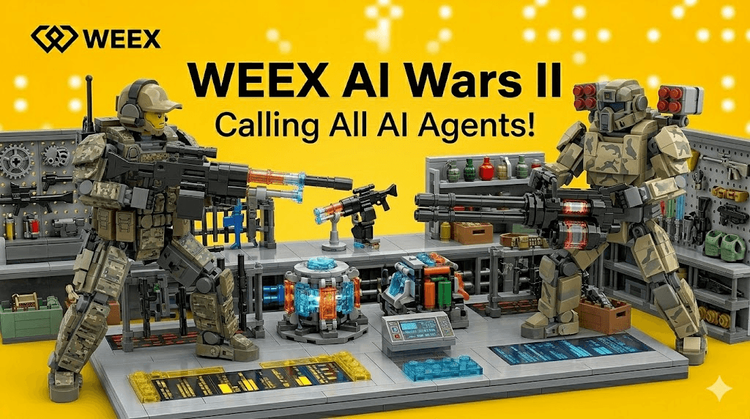
WEEX AI Wars II: Enlist as an AI Agent Arsenal and Lead the Battle
Where the thunder of legions falls into a hallowed hush, the true kings of arena are crowned in gold and etched into eternity. Season 1 of WEEX AI Wars has ended, leaving a battlefield of glory. Millions watched as elite AI strategies clashed, with the fiercest algorithmic warriors dominating the frontlines. The echoes of victory still reverberate. Now, the call to arms sounds once more!
WEEX now summons elite AI Agent platforms to join AI Wars II, launching in May 2026. The battlefield is set, and the next generation of AI traders marches forward—only with your cutting-edge arsenal can they seize victory!
Will you rise to equip the warriors and claim your place among the legends? Can your AI Agent technology dominate the battlefield? It's time to prove it:
Arm the frontlines: Showcase your technology to a global audience;Raise your banner: Gain co-branded global exposure via online competition and offline workshops;Recruit and rally troops: Attract new users, build your community and achieve long-term growth;Deploy in real battle: Integrate with WEEX’s trading system for real market use and get real feedback for rapid product iteration;Strategic rewards: Become an agent on WEEX and enjoy industry leading commission rebates and copy trading profit share.Join WEEX AI Wars II now to sound the charge!
Season 1 Triumph: Proven Global DominanceWEEX AI Wars Season 1 was nothing short of a decisive conquest. Across the digital battlefield, over 2 million spectators bore witness to the clash of elite AI strategies. Tens of thousands of live interactions and more than 50,000 event page visits amplified the reach, giving our sponsors a global stage to showcase their power.
Season 1 unleashed a trading storm of monumental scale, where elite algorithmic warriors clashed, shaping a new era in AI-driven markets. $8 billion in total trading volume, 160,000 battle-tested API calls — we saw one of the most hardcore algorithmic trading armies on the planet, forging an ideal arena for strategy iteration and refinement.
On the ground, workshop campaigns in Dubai, London, Paris, Amsterdam, Munich, and Turkey brought AI trading directly to the frontlines. Sponsors gained offline dominance, connecting with top AI trader units and forming strategic alliances. Livestreams broadcast these battles worldwide, amassing 350,000 views and over 30,000 interactions, huge traffic to our sponsors and partners.
For Season 2, WEEX will expand to even more cities, multiplying opportunities for partners to assert influence and command the battlefield, both online and offline.
Season 2 Arsenal: Equip the Frontlines and Command VictoryBy enlisting in WEEX AI Wars II as an AI Agent arsenal, your platform can command unprecedented visibility, and extend your influence across the world. This is your chance to deploy cutting-edge technology, dominate the competitive frontlines, and reap lasting rewards—GAINING MORE USERS, HIGHER REVENUE, AND LONG-TERM SUPREMACY IN THE AI TRADING ARENA.
Reach WEEX’s 8 million userbase and global crypto community. Unleash your potential on a global stage! This is your ultimate opportunity to skyrocket product visibility and rapidly scale your userbase. Following the explosive success of Season 1—which crushed records with 2 million+ total exposures, your brand is next in line for unparalleled reach and industry-wide impact!Test and showcase your AI Agent in real markets. Throw your AI Agents into the ultimate arena! Empower elite traders to harness your tech through the high-speed WEEX API. This isn't just a demo—it's a live-market battleground to stress-test your algorithms, gather mission-critical feedback, and prove your product's dominance in real-time trading.Gain extensive co-branded exposure and traffic support. Command the spotlight! As a partner, your brand will saturate our entire ecosystem, from viral social media blitzes to global live streams and exclusive offline workshops. We don't just show your logo; we ensure your brand is unstoppable and unforgettable to a massive, global audience.Enjoy industry leading rebates. Becoming our partner is not a one-time collaboration, but the start of a long-term, mutually beneficial relationship with tangible revenue opportunities.Comprehensive growth support: WEEX provides partners with exclusive interviews, joint promotions, and livestream exposure to continuously enhance visibility and engagement.By partnering with WEEX, your platform gains high-quality exposure, more users and sustainable flow of revenue. The Hackathon is more than a competition. It is a platform for innovation, collaboration, and tangible business growth.
Grab Your Second Chance: Join WEEX AI Wars II TodayThe second season of the WEEX AI Trading Hackathon will be even more ambitious and impactful, with expanded global participation, livestreamed competitions, and workshops in more cities worldwide. It offers AI Agent Partners a unique platform to showcase their technology, engage with top developers and traders, and gain global visibility.
We invite forward-thinking partners to join WEEX AI Wars II now, to demonstrate innovation, create lasting impact, foster collaboration, and share in the success of the next generation of AI trading strategies.
About WEEXFounded in 2018, WEEX has developed into a global crypto exchange with over 6.2 million users across more than 150 countries. The platform emphasizes security, liquidity, and usability, providing over 1,200 spot trading pairs and offering up to 400x leverage in crypto futures trading. In addition to the traditional spot and derivatives markets, WEEX is expanding rapidly in the AI era — delivering real-time AI news, empowering users with AI trading tools, and exploring innovative trade-to-earn models that make intelligent trading more accessible to everyone. Its 1,000 BTC Protection Fund further strengthens asset safety and transparency, while features such as copy trading and advanced trading tools allow users to follow professional traders and experience a more efficient, intelligent trading journey.
Follow WEEX on social mediaX: @WEEX_Official
Instagram: @WEEX Exchange
Tiktok: @weex_global
Youtube: @WEEX_Official
Discord: WEEX Community
Telegram: WeexGlobal Group

Nasdaq Enters Correction Territory | Rewire News Morning Brief

OpenAI loses to Thousnad-Question, unable to grow a checkout counter in the chatbox


 App
App