
Decoding SynFutures, the Base Layer Aggregator

 Prefer us on Google


SynFutures is currently the leading derivative project in the Base protocol ecosystem. It recently announced its post-TGE roadmap, revealing that in addition to entering the derivatives space, it will also expand into the spot aggregator track in the future. In the author's opinion, this is a very bold yet highly imaginative business expansion by the team, reminiscent of the Solana ecosystem leader Jupiter.
The Rise of Jupiter
If you have used Solana, you most likely have used Jupiter. Jupiter is the first stop for most users entering the Solana ecosystem, and it can be said to be the **gateway to the Solana ecosystem**. Users can trade spot, trade contracts, purchase JLP, participate in cross-chain activities, and join Launchpad here. Those familiar with Jupiter will know that Jupiter initially only had the spot aggregator business. After the success of this business, it launched contract trading before TGE. Leveraging the impact of airdrops and JLP rewards after TGE, it helped achieve tremendous success in contract trading, becoming a giant spanning multiple tracks in today's Solana ecosystem.
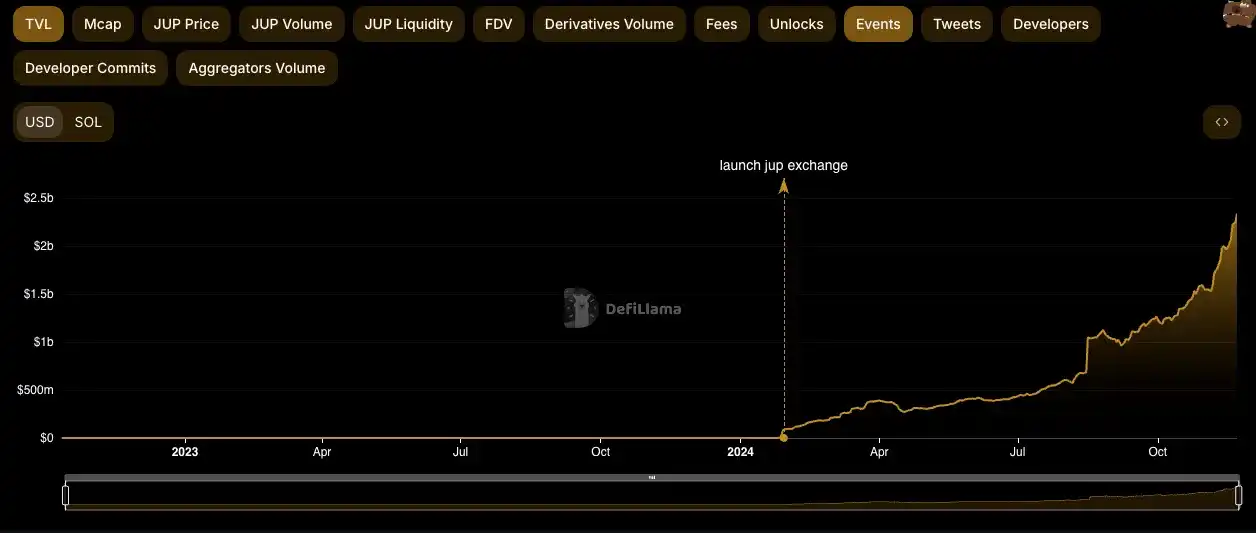
So how did Jupiter achieve such great success today? A significant reason lies in its "diversification strategy," which is not limited to success in one track but rather uses its advantages, resources, brand, and traffic in the original track to horizontally expand into other businesses. Due to its significant first-mover advantage in the Solana ecosystem, it has rapidly become a leader in new fields.
SynFutures at the Core of the Base Ecosystem
From the roadmap currently announced by SynFutures, its current market position and post-TGE development strategy bear many similarities to Jupiter. Firstly, SynFutures is currently the leading derivative track project in the Base ecosystem, and Base can be said to be the hottest project in the L2 ecosystem with the most funds, traffic, and popularity. As the derivative leader SynFutures and the spot leader Aerodrome, there is no doubt that these two projects are best positioned to receive the overflow of public chain momentum, making them the reservoirs of resources in the Base ecosystem. The rapid growth of SynFutures in the Base ecosystem and its importance to the Base ecosystem can also be seen from the data after SynFutures launched on Base:
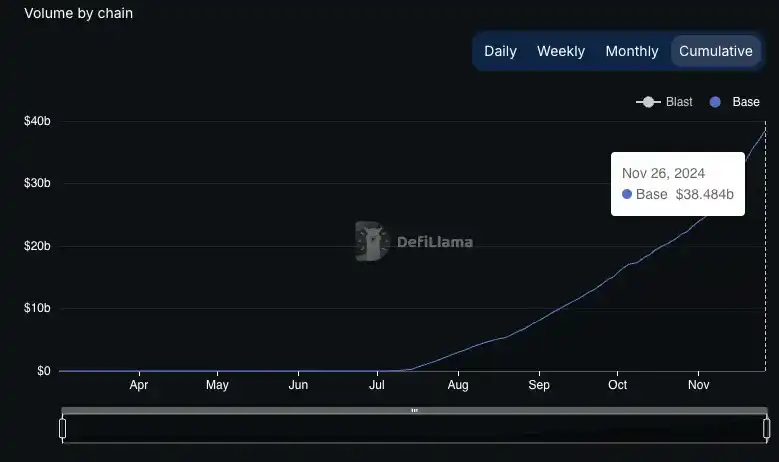
· Base was launched on July 1st, and its trading volume exceeded $1 billion just 10 days after launch
· The cumulative trading volume is close to $35 billion, with a daily average volume of $230 million
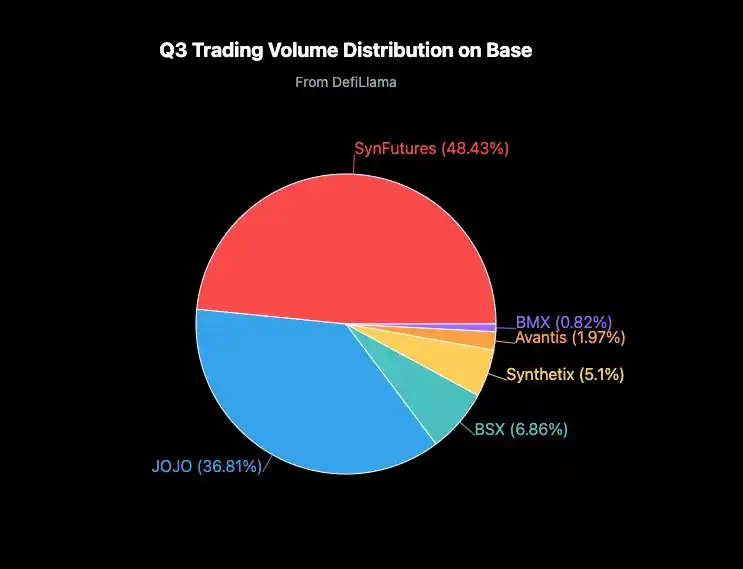
· Q3 trading volume accounts for nearly 50% of the Base network
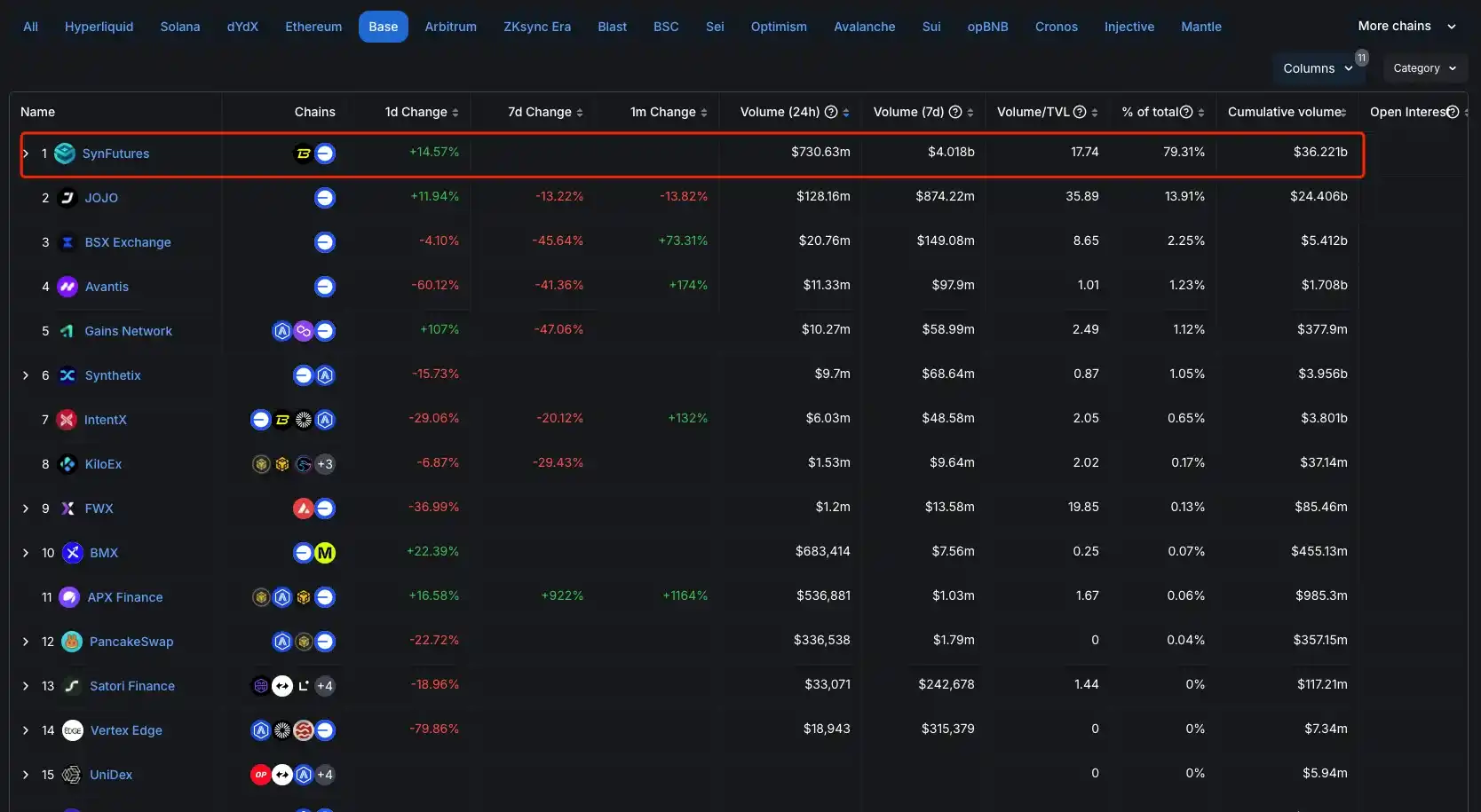
· The trading volume in the past 24 hours accounts for 72% of the Base network, six times that of the second-place
Becoming the Super App of the Base Ecosystem
Benefiting from its first-mover advantage in various aspects such as users, community, and the market, SynFutures also has the potential to excel in the field of spot aggregation in the Base ecosystem. In the author's view, what SynFutures values is not the trading volume of spot aggregation business but rather the customer acquisition capability in the spot aggregator track. After all, most users do not directly interact with spot DEXs but rather execute trades through aggregators. Spot aggregators are essential tools for on-chain players and serve as hubs for traffic and users. Success in this business can further drive the growth of its futures trading business in terms of users, trading volume, and TVL, as derivative businesses are the most profitable.
Similar to its Jupiter Launchpad business, SynFutures also has the Perp Launched business. In the future, as the demand for listing from projects increases, SynFutures may receive a certain token reward from projects and airdrop them to SynFutures' token stakers. This will incentivize more users to stake, attract more projects to participate in the perp launchpad, and create a positive feedback loop.
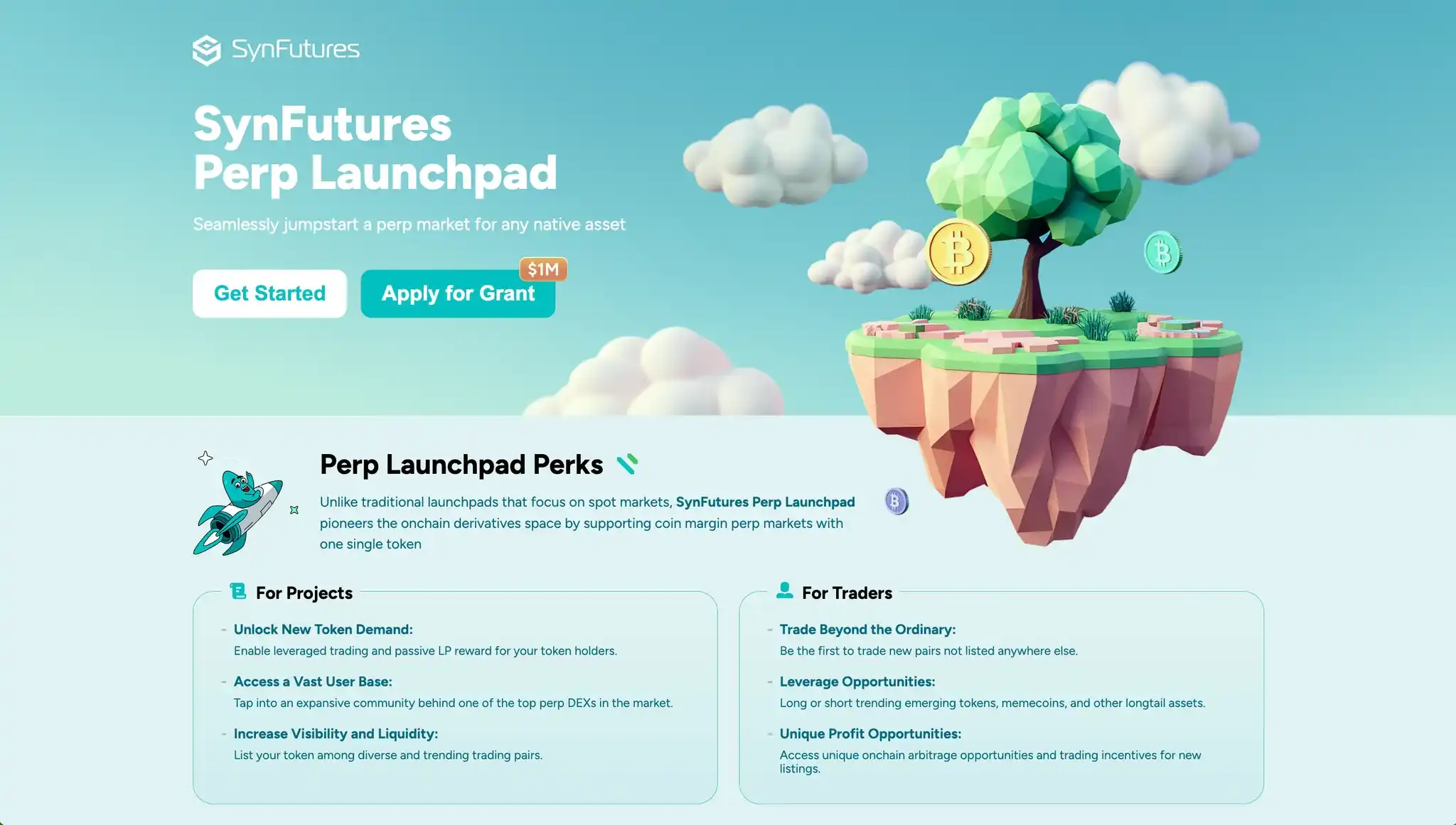
Previously, SynFutures has successfully engaged in pilot collaborations for Perp Launchpad with well-known LST, LRT projects such as Lido, Solv Protocol, PumpBTC, top-tier MEME projects such as Cat in a Dogs World (MEW), Degen, and the recently popular AI+MEME project Virtual Protocol on Base. These collaborations have helped projects expand their user base and visibility on the Base chain, receiving rewards from projects and distributing them to SynFutures users. Meanwhile, SynFutures has also established a $1 million Perp Launchpad Grant Program to support emerging projects with listings, event support, etc., helping projects increase their on-chain user base, exposure, and activity.


Base Ecosystem Value Capture Black Hole
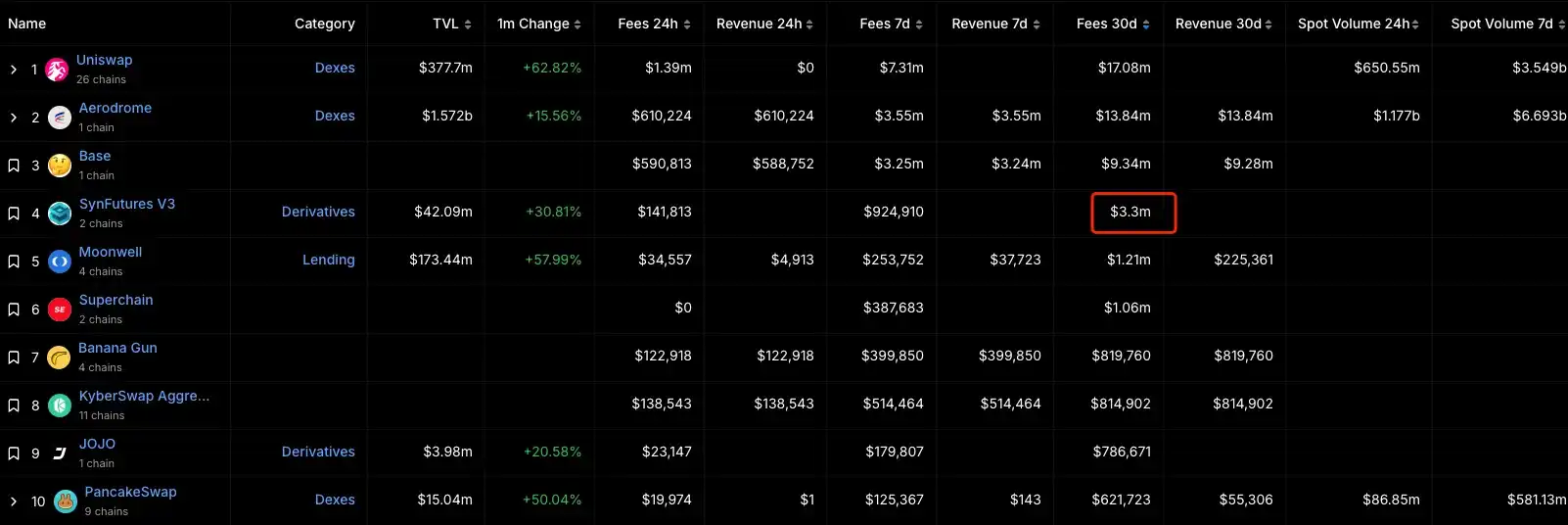
And as SynFutures becomes the most crucial reservoir of traffic, users, and funds in the Base ecosystem, its value capture will also reach astonishing levels. In the current scenario of contract-based trading only, its fee revenue in the past 30 days has already surpassed 3.3 million USD, ranking third in the protocol (the third rank being Base Network's Sequencer). As revenue grows with the maturity of its Perp Launchpad and other businesses, SynFutures has a significant opportunity to stand shoulder to shoulder with top protocols like AAVE, MakerDAO, and have more incentive to buy back tokens compared to other protocols.
And we all know that Base is most likely not going to mint tokens due to compliance reasons. But this is actually a good thing for projects in the Base ecosystem because ecosystem valuation and premium will be transferred to other projects within the Base ecosystem. As the flagship of the Base ecosystem, SynFutures, if given the opportunity to be listed on Coinbase like AERO, could potentially be the biggest beneficiary. After all, for the Base ecosystem to grow, it cannot do without Coinbase's support, and the most crucial factor in this process is to find a foothold in this ecosystem. Given that derivatives are a flagship on Base alongside spot trading, its importance to Base is self-evident, and Coinbase is more likely to provide resources to support its further growth, becoming the Killer App of the Base chain.
SynFutures, the Synthesis of the Base Ecosystem
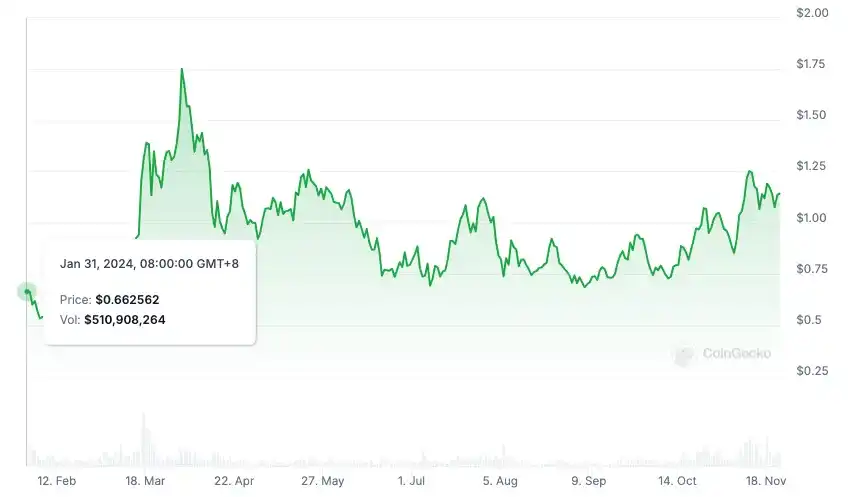
In this scenario, as Jupiter of the Base ecosystem, what is the value proposition of SynFutures? Considering that its official website hints at an upcoming TGE, this is a very interesting question. Taking a spot dex as an example, the valuation of a Solana ecosystem project is approximately twice that of the Base ecosystem.
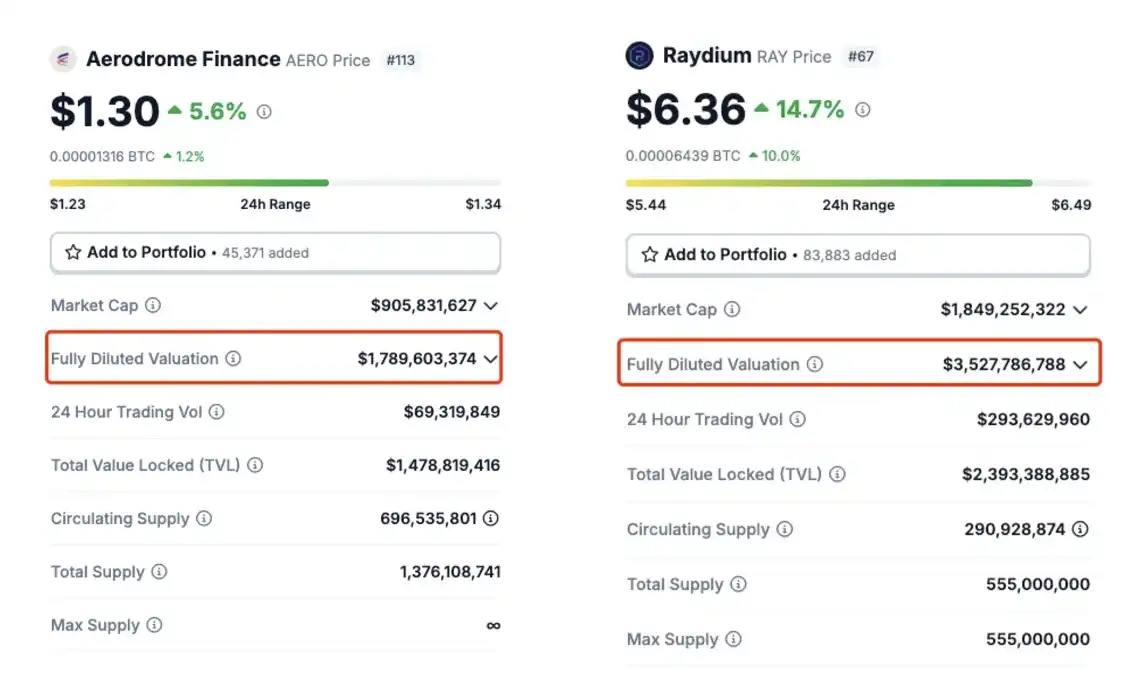
Therefore, a reasonable valuation of SynFutures on Base would be half of Jupiter's current valuation, roughly reaching around a 5.5 billion USD valuation.
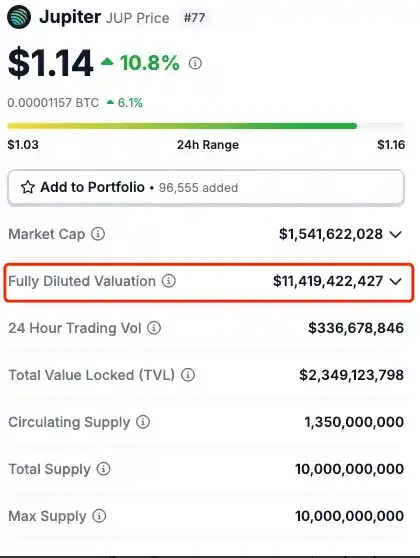
If we take Jupiter's potential into account, some of its businesses are still in the early stage of development, carrying a certain level of unknown risk. Therefore, a calculation based on Jupiter's opening price may be more reasonable. Considering that we are now at the beginning of a bull market and the market sentiment is quite enthusiastic, a valuation of 3 billion US dollars may be a more reasonable price.
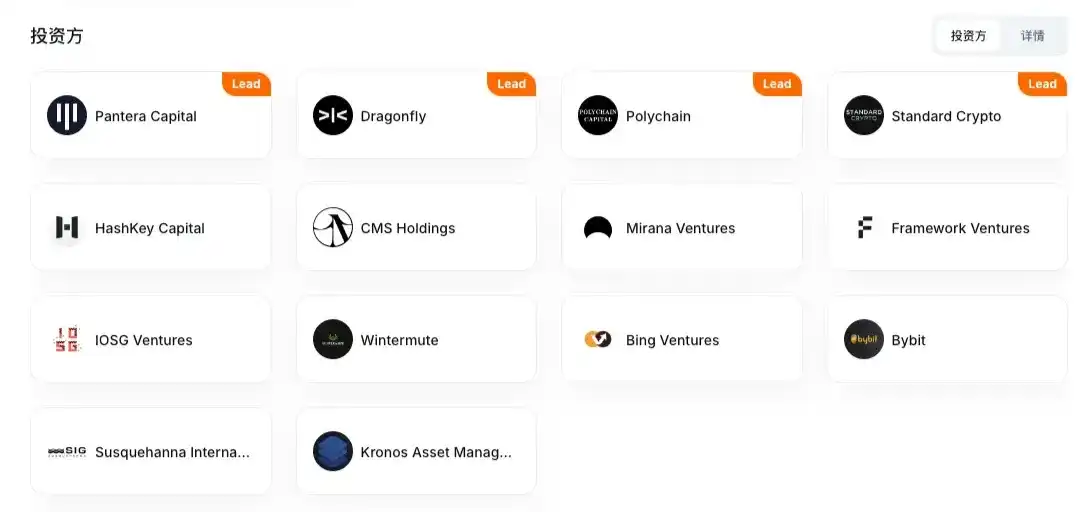
From their Discord, it is evident that their Korean community is exceptionally active. SynFutures, backed by well-known investors from both the East and the West such as Pantera, Polychain, Dragonfly, and SIG, has raised over $37.4 million. If there is an opportunity in the future to list on Korean exchanges like Upbit, then this valuation could potentially go even higher, especially considering that we are only at the beginning of a raging bull market.
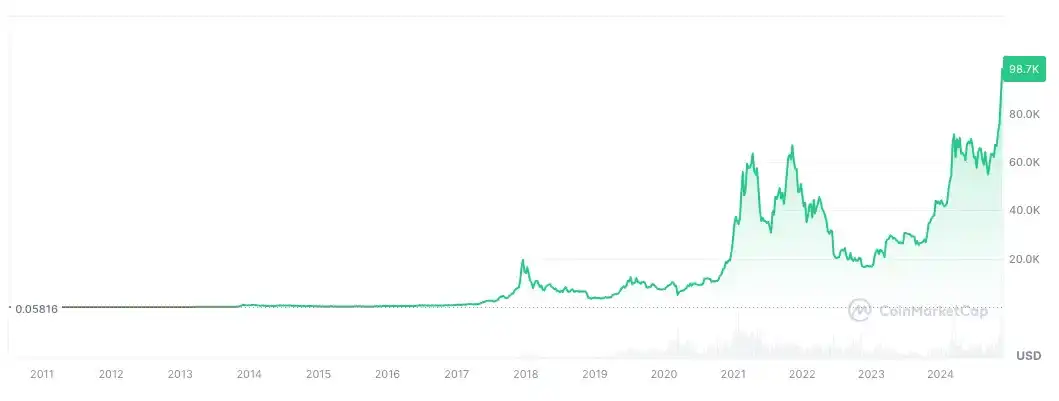
Epilogue: As We Witness the $100,000 Bitcoin
Bitcoin has finally reached this historic moment, gradually turning the future into reality. With Bitcoin's liquidity overflowing and new funds entering the market, the structural issues in the current altcoin market will change, ushering in a new season of altcoins. In this season, the most anticipated projects are those that can earn real profits, especially those that have found their positioning, have a clear strategy, and are rapidly rising projects, such as Jupiter on Base and the derivatives leader, SynFutures, discussed today.
This article is a contributed submission and does not represent the views of BlockBeats.
Disclaimer: This content is provided for general branding and informational purposes only and doesn't constitute financial, investment, legal, or tax advice. Any events, rewards, online events, or related information mentioned herein should not be considered a recommendation, solicitation, or invitation to purchase, sell, trade, or otherwise deal in any crypto assets or to use any services. Crypto assets are highly volatile and may result in loss. WEEX services and online events may not be available in all regions and are subject to applicable laws, regulations, and eligibility requirements. You are responsible for ensuring that your use of WEEX services complies with local laws and for carefully assessing the risks before participating in any crypto-related activities.
You may also like

What is SCEX? The Cryptocurrency Exchange for Vietnam's Market by Sacombank

Major Update for ChatGPT: Cross-Platform Functionality, One-Click Website Creation, and Lower Costs

BTC Challenges 64,000 After Breaking 63,000, Market Trading 'Manageable Risks'

As the Bubble Bursts, Who Dominates Attention in the AI Era? A 2026 Guide to Influential AI KOLs in China and the UK

Old Money in Crypto Shifts: Paradigm Raises $1.2 Billion, Half Bet on AI and Robotics

Bitdeer unveils $36M Nevada factory to shake up Bitcoin mining

Perplexity Fine-Tuned a Chinese AI Model to Match Claude Opus 4.8 at One-Third the Cost

Bank of Korea defends bank-first stablecoin plan amid bill deadlock
JPMorgan says bitcoin's main risk isn't Strategy, but blockchain adoption that doesn't benefit public chains and tokens

Fear & Greed Index Today: What Extreme Fear Means for Crypto, Stocks and Gold
Labour MPs Push to Make UK Crypto Donation Ban Permanent

Supreme Court ruling expanding Trump's authority over federal agencies raises questions for SEC, CFTC as crypto rulemaking advances

'Bottom building in progress': Analysts say bitcoin holder capitulation signals late-stage bear market

A Comprehensive Analysis: Starting from 1996, Who is Laying the Foundation for the Next Generation of Capital Markets
Luke Dashjr, the Biggest Anti-Spammer of Bitcoin, Inscribed Phrases on the Network in 2011

Whales bought 270,000 BTC while ETFs bled $7 billion. One side is wrong

The crypto IPO class of 2025-26 is down as much as 89%. Autopsy of a listing boom
Robinhood Chain Mining Guide: A Comprehensive Tutorial from Cross-Chain to Memecoin
BitGo CEO says single-digit percentages of bitcoin's supply are 'probably right' for large holders amid Strategy's sale

Beyond Private Keys: How to Safeguard the Security Boundaries of Web3 from Wallets, L2 to Supply Chains?

Vanguard Enters the Market, Opening a New Crypto Gateway for 50 Million Traditional Investors

Why the OUSD Alliance of 150 Companies Still Cannot Shake USDT and USDC?
Citigroup Analysis: Is There Still 47% Upside for Nvidia? Can Rubin and CPO Deliver?

WEEX API Fast Connect: Turn Every Sign-In Into a Live Trader in Under 10 Seconds
WEEX API Fast Connect is a one-click OAuth authorization system that lets your users link their WEEX account without ever touching an API key. Frictionless onboarding, faster conversions, higher retention — built for WEEX Broker partners.
Bitcoin's dwindling exchange reserves don't pack the same bullish punch anymore

From Le Mans to the Rollercoaster: Carl Moon Takes On Portimão
Crypto world renowned KOL and racing driver Carl Moon, backed by WEEX, heads to the Ferrari Challenge Portugal round at the Algarve International Circuit, July 16–19, fresh off a podium finish at Le Mans. Here's why this race is one to watch.
Fast execution. Split-second accuracy. Security that never blinks. That's WEEX — and that's exactly how Carl races.

The Downfall of a Public Company: A $1.46 Billion Bet on WLFI, $540 Million Went to the Trump Family
Dragonfly Partner: BTC is Intergenerational Wealth, Optimistic About ETH and SOL
Goldman Sachs Calls to Go Long on Chinese AI: $4 Trillion Market Value Behind, Global Funds Only Allocated 1.2%
The New Landscape of Cryptocurrency in Europe: Why Germany Takes Center Stage?
What is SCEX? The Cryptocurrency Exchange for Vietnam's Market by Sacombank
Major Update for ChatGPT: Cross-Platform Functionality, One-Click Website Creation, and Lower Costs
BTC Challenges 64,000 After Breaking 63,000, Market Trading 'Manageable Risks'
As the Bubble Bursts, Who Dominates Attention in the AI Era? A 2026 Guide to Influential AI KOLs in China and the UK
Old Money in Crypto Shifts: Paradigm Raises $1.2 Billion, Half Bet on AI and Robotics
Bitdeer unveils $36M Nevada factory to shake up Bitcoin mining

Contents
Latest articles





Latest coin listings on WEEX


