
For $3.3 Billion Loan, El Salvador May Drop Mandatory Business Acceptance of BTC Payment


Original Article Title: "El Salvador Plans to Repeal Mandate for Businesses to Accept BTC Payments in Exchange for $3.3B IMF, World Bank Loan"
Original Article Author: DaFi Weaver, Dynamic Trend at BlockTempo
El Salvador became the world's first country to adopt Bitcoin (BTC) as legal tender in mid-2021, a decision that was met with strong criticism and pressure from the International Monetary Fund (IMF) at the time.
Prior to this, the Salvadoran government had been seeking an IMF credit line to address its fiscal issues, but the IMF demanded that El Salvador amend its Bitcoin law, stating that Bitcoin's legal tender status was a major obstacle to the country receiving credit support. As a result, negotiations between the two parties stalled for two years.
El Salvador Plans to Repeal Mandate for Businesses to Accept Bitcoin Payments
However, according to a report by the Financial Times citing sources familiar with the matter, El Salvador is currently in negotiations with the IMF and is considering taking a step back by repealing the legal requirement for businesses to accept Bitcoin as a form of payment. Instead, businesses would autonomously decide whether to accept Bitcoin payments in exchange for a $1.3 billion loan from the IMF.
The agreement is expected to be reached in the next two to three weeks. The report states that an IMF delegation has arrived in El Salvador to finalize the details of the agreement with President Nayib Bukele's government.
It is worth noting that the agreement with the IMF will also unlock two additional loans, one of $1 billion from the World Bank, and another of $1 billion from the Inter-American Development Bank. Therefore, in total, El Salvador plans to relax the Bitcoin acceptance requirement, with the opportunity to receive up to $3.3 billion in loans.
In order to reach an agreement with the IMF, El Salvador will also need to take measures to reduce the government deficit. Sources revealed that the Salvadoran government plans to reduce the budget deficit by 3.5 percentage points of GDP over the next three years through spending cuts and tax increases. Additionally, the government will pass an anti-corruption law and increase foreign reserves from $11 billion to $15 billion.
In response to this news, an IMF spokesperson declined to comment, citing the organization's policy of not discussing ongoing negotiations.
IMF Calls for Abandoning Bitcoin Strategy
The IMF has consistently opposed El Salvador's adoption of digital currency, citing risks to financial stability and integrity, and has often called on the Bukele government to cease accepting cryptocurrency as legal tender.
In October of this year, the IMF once again recommended that El Salvador scale back its Bitcoin-related policies and strengthen the regulatory framework for digital assets. Julie Kozack, Director of the IMF Communications Department, said at the time:
“We recommend narrowing the scope of the Bitcoin Law, strengthening supervision and regulation of the Bitcoin ecosystem, and limiting the government's exposure to Bitcoin.”
As early as two years ago, when El Salvador adopted BTC as legal tender, an IMF spokesperson criticized the country's Bitcoin law, warning of “macroeconomic, financial, and legal issues” it would raise. The IMF has repeatedly highlighted the volatility and potential risks of Bitcoin, which could threaten El Salvador's economic stability, hence the call for a reassessment of related policies.
However, in August of this year, the IMF also stated that many of the risks of El Salvador's Bitcoin experiment have “not materialized” yet. While the tone seems to have softened, the statement added that El Salvador needs to minimize the risks associated with adopting Bitcoin as legal tender as much as possible.
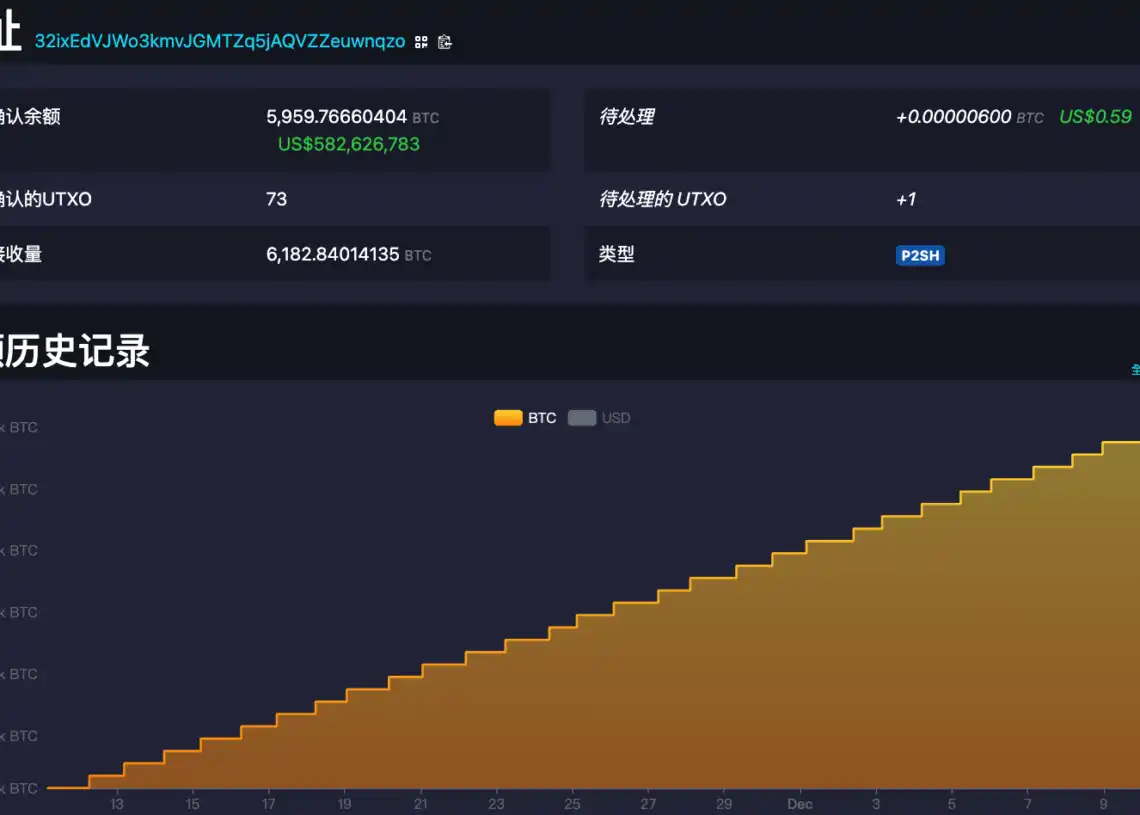
El Salvador Holds Nearly $600 Million in Bitcoin
Currently, El Salvador continues to purchase one Bitcoin per day, with a total Bitcoin holding of 5,960 coins valued at over $580 million.
As Bitcoin reached the $100,000 milestone, El Salvador's sovereign bonds also rebounded from a significant discount to near-par trading. Bukele commented last week on the simultaneous rise in bond prices and Bitcoin, stating:
“For the first time in history, Bitcoin has driven a sovereign bond up in traditional markets.”
You may also like

Pantera Capital Partner: How Tokenization is Restructuring the Private Equity and Early Investment Ecosystem?

New York Proposes Stricter Stablecoin Issuer Rules Aligned With Federal GENIUS Act
NYDFS proposed stricter stablecoin issuer rules aligned with the GENIUS Act, covering reserves, custody, redemption timelines, audits, and capital buffers.
Every exchange is a "Universal Exchange."

The counterattack of traditional finance: Alliance chains are quietly reviving

CryptoQuant Says Bitcoin Profitable Supply Is Near 45% Pressure Zone as On-Chain Data Points to Market Repricing
CryptoQuant said Bitcoin’s profitable supply is nearing the 45% pressure zone, signaling rising market stress, unrealized losses, and a possible on-chain repricing phase.

Bitcoin Falls Below 200-Week Moving Average as On-Chain Data Shows Over Half of Supply in Loss
Bitcoin dropped below its 200-week moving average as on-chain data showed over 50% of circulating supply is now in loss, signaling rising market stress.

CFTC Reportedly Plans New Prediction Market Rules Focused on Manipulation Risk and Public Interest Review
The CFTC is reportedly preparing new prediction market rules focused on manipulation risk, public interest review, and retail trader protections.

Meet the new WEEX trial fund—your gateway to greater profits

WEEX Labs Lands at Dutch Blockchain Week: A Disruptive Crypto × AI Conversation Sets Sail in Amsterdam

SK Hynix Reportedly Plans U.S. ADR Listing as Early as August, With SEC Approval Possible in Late June
SK Hynix may pursue a U.S. ADR listing as early as August, with SEC approval reportedly possible in late June amid strong AI chip supply chain demand.

SpaceX vs Tesla vs xAI: Which Elon Musk Trade Has the Biggest Upside in 2026?
OpenAI Reveals It Has Confidentially Submitted an S-1 to the SEC, Keeping the Door Open for a Future IPO
On June 9, according to an OpenAI announcement, the company recently confidentially submitted a draft S-1 registration statement to the U.S. Securities and Exchange Commission (SEC), beginning the preliminary compliance process for a potential initial public offering. OpenAI said it chose to disclose this proactively because it expected the news might leak; however, the company has not yet set a specific listing timeline, and related arrangements may still take some time.

Latest research from 13 top universities including Cornell University: The current state, challenges, and misconceptions of the fusion of Crypto and AI
Deconstructing Anthropic: The Best AI Company, Possibly Also a Type of Organizational Invention
Apollo and Blackstone Reportedly Back $35 Billion Anthropic Chip Financing as Deal Details Remain Unclear
On June 9, according to currently available news alerts, Apollo and Blackstone Group participated in a $35 billion financing for an Anthropic “chip project.” Based on the original wording of the report, the funding has already been raised, but public information remains limited. The financing structure, use of proceeds, project entity, and whether Apollo and Blackstone participated through equity, debt, or project financing have not yet been disclosed.

Humanity Protocol Security Incident Escalates: More Than $31 Million Stolen From Related Addresses as Attacker Continues Selling H for ETH
On June 9, according to monitoring by Onchain Lens, more than $31 million has been stolen from addresses linked to Humanity Protocol, and the attack is still ongoing, with the hacker continuously swapping H tokens for ETH. Project founder Terence Kwok later confirmed the security incident on X, saying the issue involved a private key leak.

Bloomberg: As Bitcoin Weakens, Stablecoins and RWA Continue to Drive Expansion in Crypto Businesses
In June, Bloomberg reported that despite Bitcoin falling below $60,000 last week, wiping out about $235 billion in market value within seven days, and dropping close to 50% from last year’s peak, some core businesses in the crypto industry are still expanding, mainly in stablecoins, real-world asset tokenization (RWA), payments, and infrastructure. The report also noted that overall altcoin activity has contracted significantly: altcoin market capitalization has fallen from a peak of about $431 billion in November 2021 to around $170 billion, and among the tens of millions of tokens issued in recent years, fewer than 1,700 still maintain meaningful trading activity.

Galaxy Deep Research Report: How Hyperliquid's HIP-4 Upgrade Changes the Landscape of Prediction Markets?
Pantera Capital Partner: How Tokenization is Restructuring the Private Equity and Early Investment Ecosystem?
New York Proposes Stricter Stablecoin Issuer Rules Aligned With Federal GENIUS Act
NYDFS proposed stricter stablecoin issuer rules aligned with the GENIUS Act, covering reserves, custody, redemption timelines, audits, and capital buffers.
Every exchange is a "Universal Exchange."
The counterattack of traditional finance: Alliance chains are quietly reviving
CryptoQuant Says Bitcoin Profitable Supply Is Near 45% Pressure Zone as On-Chain Data Points to Market Repricing
CryptoQuant said Bitcoin’s profitable supply is nearing the 45% pressure zone, signaling rising market stress, unrealized losses, and a possible on-chain repricing phase.
Bitcoin Falls Below 200-Week Moving Average as On-Chain Data Shows Over Half of Supply in Loss
Bitcoin dropped below its 200-week moving average as on-chain data showed over 50% of circulating supply is now in loss, signaling rising market stress.


