
- Buy Crypto
- Markets
 Futures
- Spot
- Copy Trade
- Earn
- More
Forbes: On Oscar Night, the Real Winner Was Kalshi?

Original Article Title: And The Winner Is… Kalshi? Prediction Markets Soar On Oscars
Original Article Author: Jason Brett, Forbes
Original Article Translation: Saoires, Foresight News
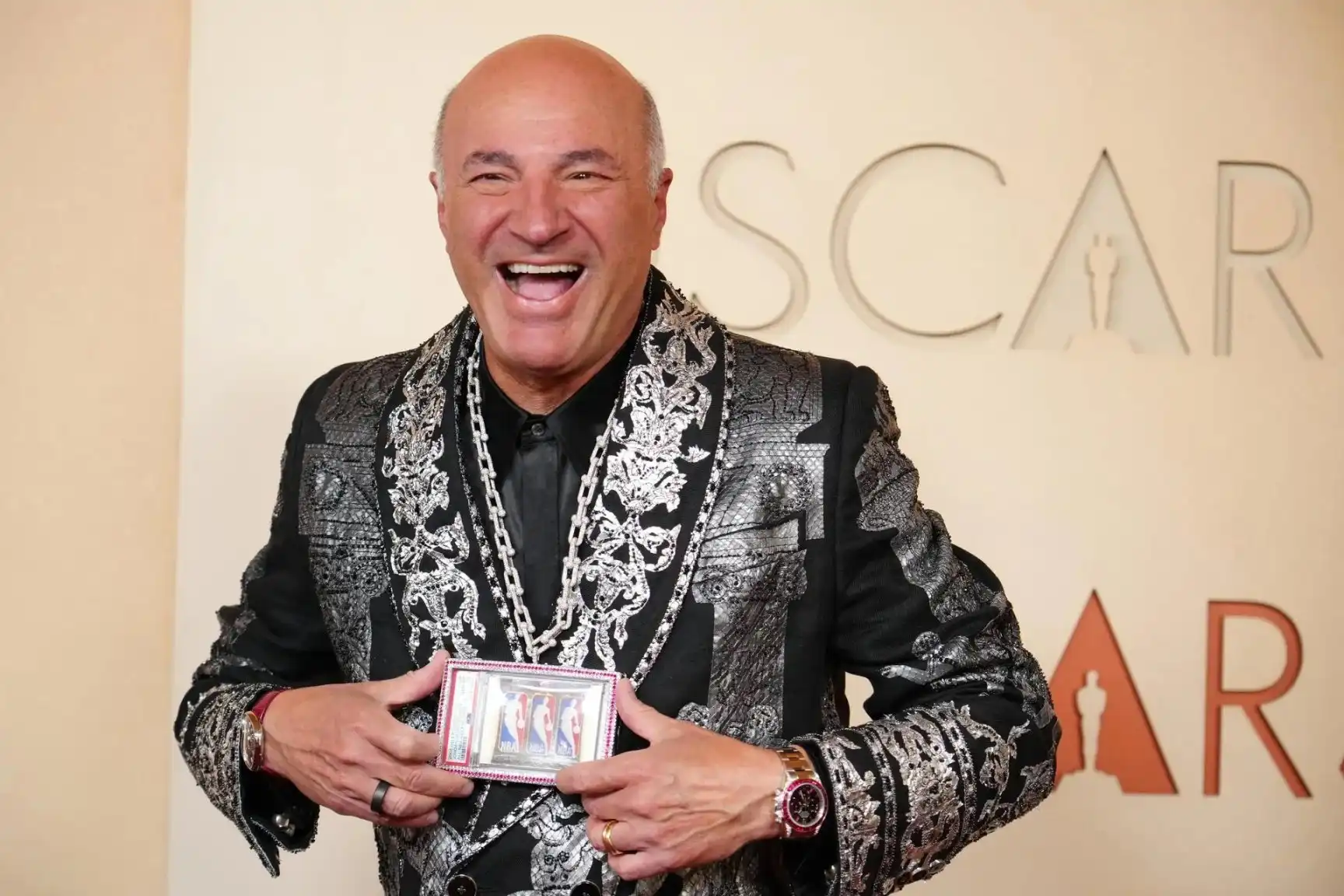
Reality TV star Kevin O'Leary from "Shark Tank," also known as "Mr. Wonderful," walks the red carpet at the 98th Academy Awards at the Dolby Theatre in Los Angeles. The investor later publicly stated that he personally bet $1000 on the Kalshi platform, wagering on Timothée Chalamet to win the Oscar for Best Actor. (Image source: Getty Images)
On the evening of March 15th, local time in the U.S., the 98th Academy Awards took place at the Dolby Theatre in Los Angeles. However, outside of this grand event, there was one platform that stole the spotlight — and that was Kalshi.
While Conan O'Brien hosted the awards ceremony live on ABC and Hulu, traders on Kalshi and Polymarket had already poured over $120 million into Oscar-related event contracts. This marked the largest-ever betting frenzy on a regulated prediction market during the awards season. Driving this all was the milestone guidance and regulatory rules issued by the U.S. Commodity Futures Trading Commission (CFTC) just three days prior.
Alone, Kalshi's trading volume had surpassed $58 million and was still rising in real-time during the ceremony; Polymarket contributed the remaining trading volume, pushing the total scale past $120 million. This figure is approximately 6 to 7 times Kalshi's entire trading volume from last year's awards season, representing a significant leap from 2025.
Elisabeth Diana, PR Manager at Kalshi, told me via email: "The reason the Oscars are so hot on the trading market is because it is considered the ultimate test of 'collective intelligence.'"
Many celebrities even personally participated. At the Oscars red carpet that evening, reality TV star Kevin O'Leary from "Shark Tank" — who also appeared in the movie "Don't Look Up" starring Timothée Chalamet — publicly announced that he personally bet $1000 on Kalshi, betting on Timothée Chalamet to win Best Actor. This action was entirely voluntary and was not part of any commercial agreement, paid promotion, or prearrangement.
The funding flow on the Kalshi platform clearly shows a heavy prize pool concentration:
· Best Actor: Around $25 million (most competitive, also Kevin O'Leary's betted category);
· Best Picture: Around $24 million (market more bullish on "Once Again War");
· Best Director: Around $7 million;
· Best Supporting Actor, Best Supporting Actress: Each around $5 million.
This collective intelligence was fully displayed that evening, even integrating into the awards ceremony itself.
Host Conan O'Brien, in his opening monologue, deliberately joked about artificial intelligence and Timothée Chalamet's February controversial remarks on ballet and opera. This incident briefly flipped the odds for Best Actor on Kalshi until traders remembered that the Oscar voting had already closed, prompting the market to readjust.
Similar real-time price fluctuations played out in each award category, turning passive viewers into active players participating in real-time from a market perspective.
The timing of this eruption was perfect. The Commodity Futures Trading Commission (CFTC) staff guidance and proposed rule pre-announcement issued on March 12 provided clear federal regulatory pathways for Kalshi-type licensed platforms. Traders finally gained the long-awaited regulatory certainty and responded with record-breaking trading volumes.
Kalshi's integration with Rotten Tomatoes movie ratings, along with its user-friendly mobile app, made it easier than ever for the general public to participate. The result: Oscar night was no longer just about the red carpet and acceptance speeches; it became a regulated, data-driven event where collective intelligence collided with Hollywood glamour.
As the final few awards were revealed one by one, each envelope opening instantly affected market trends. Whether "Once Again War" swept the major awards or a dark horse emerged in the end, one thing was very clear:
The true winner of the 2026 Oscars was the compliant prediction market experiencing explosive growth.
You may also like

Particle Founder: The entrepreneurial insights I have gained the most from in the past year

Huang Renxun's latest podcast transcript: The future of Nvidia, the development of embodied intelligence and agents, the explosion of inference demand, and the public relations crisis of artificial intelligence

OKX Ventures Research Report: AI Agent Economic Infrastructure Research Report (Part 1)

The migration of settlement rights: B18 and the institutional starting point of on-chain banks

From Tencent and Circle: Looking at the Simple and Difficult Questions of Investment

The second half of stablecoins no longer belongs to the crypto circle

Cursor "Shell" Kimi Controversy Reversed: From Copyright Infringement Allegations to Authorized Collaboration, China's Open Source Model Once Again Becomes a Global AI Foundation

The Real Reason Tokens Don't Sell: 90% of Crypto Projects Overlook Investor Relations

Is the income of pump.fun real, earning a million dollars a day despite the market downturn?

The real reason why tokens are not selling: 90% of crypto projects neglect investor relations

Who is the true winner of the "Tokenization" narrative?

Moss: The Era of AI-Traded by Anyone | Project Introduction

Chip Smuggling Case Exposes Regulatory Loophole | Rewire News Evening Update

How a Structured AI Crypto Trading Bot Won at the WEEX Hackathon
Ritmex demonstrates how disciplined risk control and structured signals can make an AI crypto trading bot more stable and reliable on WEEX, highlighting the importance of combining execution discipline with scalable AI trading systems.

Old Indicator Fails, Three Major New Signals Emerge: BTC True Bottom May Still Be Below $60K

Meeting OpenClaw Founder at a Hackathon: What Else Can Lobsters Do?
Huang Renxun's Latest Podcast Transcript: NVIDIA's Future, Embodied Intelligence and Agent Development, Soaring Demand for Inferencing, and AI's PR Crisis

How a Structured AI Crypto Trading Bot Won at the WEEX Hackathon
Crypto_Trade shows how structured inputs and controlled adaptability can build a more stable and reliable AI crypto trading bot within the WEEX AI Trading Hackathon, highlighting a practical path toward scalable AI trading systems.


 App
App