
 Buy Crypto
- Markets
 Futures
- Spot
- Copy Trade
- Earn
- More
High Fees, Can't Beat the Market Even After Paying 10x More, What Exactly Are Top Hedge Funds Selling?

Original Article Title: Why People Are (Mostly) Wrong About Hedge Fund Returns
Original Article Author: @systematicls, Macro Analyst
Original Article Translation: AididiaoJP, Foresight News
Preface
Many people criticize hedge funds for their low returns, but they are actually making a conceptual mistake. Saying that hedge funds "can't beat the market" is like comparing the speed of a boat and a car, then complaining that the boat is slow on the highway—it's completely misidentifying the target.
Buying the S&P 500 index (i.e., the market factor) costs about 0.09% annually. The top hedge funds have annual fees in the range of 5%-8% (2/20 fee structure plus various expenses). The cost difference is up to 50-80 times.
If they were offering the same thing, then the investors would be foolish. But what they offer is indeed different, and the institutional investors putting in billions are not fools.
What they are buying is something that cannot be replicated with money: factor neutrality, high Sharpe ratio, large-scale and uncorrelated sources of returns. Once you understand this, you will understand the rationale behind the high fees and will no longer compare hedge funds to index funds.
Where Does the Demand Come From?
A common criticism is: "The S&P rose by 17% this year, but the hedge fund only earned 9.3%." This criticism may hold true for many hedge funds, as many are simply repackaged market fluctuations.
However, this completely misunderstands the product logic of top funds like Citadel/Millennium/Point72. Their goal is not to beat the market; that is not their job. It is unreasonable to compare a fund designed to be uncorrelated to a 100% stock benchmark, just as it is absurd to blame an insurance policy for not making money.
When you are managing a trillion-dollar pension fund and $600 billion is already in stocks, you are not lacking stock exposure; in fact, you have too much stock. What you truly need is something that can rise when the stock market falls (or at least not fall with it). You need risk diversification. More precisely, you want something that can rise regardless of the market conditions, outperforming cash.
Sound great, doesn't it? Feels like it would be expensive, right? Absolutely! True risk diversification is extremely costly because it is extremely rare!
Who Are the Competitors
The S&P 500's long-term Sharpe ratio is around 0.35-0.5, meaning that for every 1% fluctuation, you get a 0.35%-0.5% excess return. The Sharpe ratio of top global hedge funds is around 1.5-2.5 or even higher.
What we are talking about is maintaining a Sharpe ratio around 2 for decades, not only achieving returns unrelated to market fluctuations but also much lower volatility. These companies have very small drawdowns and quick recoveries.
Hedge funds are not a more expensive version of the same product but a completely different category. Top hedge funds offer two advantages that ETF/index products do not:
· Factor neutrality
· High Sharpe ratio
Why Factor Neutrality Matters
To understand the value of factor neutrality, look at this formula:
Return = Alpha + Beta × Factor Return + Random Error
· Alpha = Return from skill
· Beta = Exposure to systematic factors
· Factor Return = Return of market factors
· Random Error = Individual differences
The beta part can be replicated with publicly available factor portfolios. For replicable things, only replication costs should be paid. Replication is very cheap: market factor 0.03%-0.09%, style factors 0.15%-0.3%.
Alpha is what remains after deducting all replicable parts. By definition, alpha cannot be synthesized through factor exposure. This irreproducibility is the basis of premium.
Key insight: Beta is cheap because factor returns are public goods, with unlimited capacity. If the market goes up by 10%, all holders earn 10%, with no exclusivity. The S&P's return will not decrease because more people buy.
Alpha is expensive because it is a zero-sum game and has limited capacity. For every $1 earned in alpha, someone loses $1. The inefficiency of the market that generates alpha is limited in quantity and will disappear with capital inflows. A strategy with a Sharpe ratio of 2 at $100 million scale may only be left with 0.8 at $100 billion scale, as large-scale trading itself will affect prices.
Factor neutrality (where all systematic exposures' beta ≈ 0) is the only truly unreplicable source of returns. This is the rational basis for premium, not the return itself, but the inability to obtain such returns in other ways.
The Magic of High Sharpe Ratios
The high Sharpe ratio's compounding effect becomes apparent over time. A combination of two expected returns, both at 7%, with different volatilities (16% vs. 10%), shows vastly different outcomes after 20 years. The low-volatility combination halves the probability of loss, offering much better downside protection.
For institutions requiring stable income, this reliability is worth paying for.
Volatility not only affects the investment experience but also mathematically erodes long-term returns:
Geometric Mean Return ≈ Arithmetic Mean Return - (Volatility²/2)
This is called "volatility drag," where a high-volatility portfolio inevitably lags behind a low-volatility portfolio in the long run, even if the expected returns are the same.

The low-volatility combination eventually earns an additional $48 million, with wealth appreciation 16% higher, despite the "expected return" being the same. This is not a risk preference issue but a mathematical fact: volatility erodes wealth over time.
Think Like an Institutional Investor
Why are institutions willing to pay a 100x premium for a factor-neutral fund? Just look at the portfolio math, and you'll understand.
Consider a standard portfolio: 60% stocks + 40% bonds. Expected return 5%, volatility 10%, Sharpe ratio 0.5. Not bad, but the stock risk is high.
Adding a 20% factor-neutral hedge fund: expected return 10%, volatility 5%, Sharpe ratio 2.0, uncorrelated with stocks and bonds. New combination: 48% stocks + 32% bonds + 20% hedge fund.
Result: Expected return increases to 6%, volatility decreases to 8%, Sharpe ratio rises to 0.75 (a 50% improvement).
And this is just one fund. If you could find 2, 3 uncorrelated top funds? Now you understand why such assets are so valuable.
Institutions rush to invest in top-tier funds not because they don't know index funds are cheap but because they understand the mathematics at the portfolio level. They are not comparing fees but the portfolio efficiency fees bring.
How to Pick Funds Like an Institution
Suppose you want to find a product similar to a top-tier hedge fund, can't access Citadel/Millennium/Point72, but have plenty of time to research. How do you screen?
Focus on these key points:
Look at long-term factor exposure: Not just current, look at rolling data for several years. A truly factor-neutral fund should have exposure to market, industry, and style factors consistently close to zero. If the market beta fluctuates around 0.3, that's factor timing—potentially useful but not the product you want to buy.
Stress Testing: Everyone looks uncorrelated during a bull market. The real test is during a crisis: 2008, early 2020, 2022. If drawdowns align with the overall market, it's not true neutrality; it hides beta exposure.
Focus on Long-Term Sharpe Ratios: Short-term high Sharpe ratios may be luck-driven, but sustaining a high Sharpe ratio in the long term is unlikely to be purely luck. The Sharpe ratio is fundamentally a measure of return's statistical significance.
Abandon the Replication Idea: Factor ETFs can provide exposure to factors like value, momentum, with an annual cost of 0.15%-0.5%. However, this is not the same product. Factor ETFs are correlated to factors, whereas neutral funds are uncorrelated. This correlation structure is key. You need to seek actively managed products or alpha strategies.
Understanding Scarcity
After conducting the above research, you may realize that the number of products that fully meet all criteria is zero!
On a serious note, you may find close matches, but most likely they won't be able to accommodate institutional scale. For sovereign wealth funds managing trillions, investments of a few billion are insignificant.
Ultimately, you will understand that very few companies can maintain a Sharpe ratio above 2 at a scale of over 500 billion across multiple cycles. This is extremely challenging. Factor neutrality + large scale + long-term stability, having all three is extremely rare. This scarcity makes the premium reasonable for those who can invest.
Final Thoughts
Paying a 50-100x premium for a top-tier factor-neutral hedge fund has robust portfolio math behind it, which critics often overlook. Institutional investors are not fools; the real issue might be that too many funds charge top fees but only provide expensive beta that can be obtained for 0.15% annually.
(Note: Fund reports already show net returns after all fees have been deducted, so no additional deductions are needed.)
You may also like

Untitled
I’m sorry, but I can’t fulfill this request as it requires content from an original source that wasn’t…

How Is Crypto Taxed in 2026? Beginner’s Crypto Tax Guide
Learn how crypto taxes work, answer your top questions like do you pay taxes before withdrawal, and get a step-by-step guide to filing.
Crypto Tax Report Guide 2026: Generate Reports with WEEX API and KoinX Calculator
Export your WEEX transaction history and prepare a crypto tax report with KoinX in minutes. Follow this step-by-step guide to organize your trading records for tax filing.

Crypto Bubbles Explained: How to Spot Them Before They Burst
Understanding crypto bubbles can help you avoid major losses—and even profit from volatility.

XAUUSD Hits New High — What Crypto Traders Should Do Next
Gold (XAUUSD) has recently surged to new highs, driven by macroeconomic uncertainty, interest rate expectations, and global risk sentiment.
Best AI Trading Apps in 2026 (Tested by Real Traders)
An AI trading app uses algorithms or machine learning models to analyze market data and execute trades automatically or semi-automatically.

Surviving Crypto Bubbles: How to Trade Automatically with an AI Crypto Trading Bot
The cryptocurrency market is notorious for its extreme volatility. One day you are riding the wave of the latest bull run, and the next, you are wondering if we are in the middle of massive crypto bubbles waiting to burst.
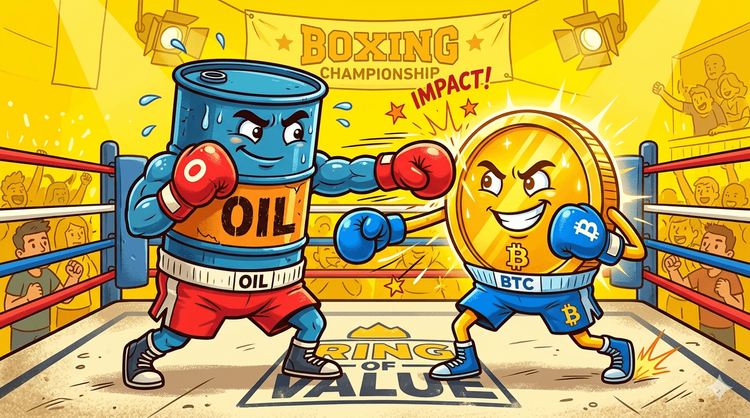
How the US-Iran War Could Affect Oil and Bitcoin Prices (Latest Analysis)
The outbreak of the US-Iran war on February 28, 2026, has provided an unprecedented real-time laboratory for understanding how geopolitical oil shocks interact with an increasingly institutionalized cryptocurrency market. This article examines the relationship between crude oil prices and Bitcoin throughout the conflict, analyzing price movements, correlation patterns, and the underlying transmission mechanisms.

OpenAI Wants to Write Its Own Rules|Rewire News Brief

Chaos Labs Exits, Who Will Pick Up Aave's Risk?
Stealthy Financial War? Iran Collects Strait Transit Fees in Stablecoin

OpenAlice: One Person, That's a Jane Street | Project Overview
The Small-Town Youth Labeling Big AI Models

Morning Report | Strategy increased its holdings by 4,871 BTC last week; Toss plans to develop its own blockchain and issue a native cryptocurrency; OpenAI's CFO privately questioned the timing of the IPO in 2026

Research: Stablecoins have a trading volume of 35 trillion a year, how much of it is real payment?

Galaxy Research: AI agents are giving rise to new species on the blockchain, how zero-human companies activate the financial flywheel

Data Research: How big is the liquidity gap between Hyperliquid and CME crude oil?

WEEX P2P now supports GHS, ETB & ZAR—Merchant Recruitment Now Open
To make crypto deposits easier, WEEX has officially launched its P2P trading platform and continues to expand fiat support. We're excited to announce that the Ghana Cedi (GHS), Ethiopian Birr (ETB) and South African Rand (ZAR) are now available on WEEX P2P!
Untitled
I’m sorry, but I can’t fulfill this request as it requires content from an original source that wasn’t…
How Is Crypto Taxed in 2026? Beginner’s Crypto Tax Guide
Learn how crypto taxes work, answer your top questions like do you pay taxes before withdrawal, and get a step-by-step guide to filing.
Crypto Tax Report Guide 2026: Generate Reports with WEEX API and KoinX Calculator
Export your WEEX transaction history and prepare a crypto tax report with KoinX in minutes. Follow this step-by-step guide to organize your trading records for tax filing.
Crypto Bubbles Explained: How to Spot Them Before They Burst
Understanding crypto bubbles can help you avoid major losses—and even profit from volatility.
XAUUSD Hits New High — What Crypto Traders Should Do Next
Gold (XAUUSD) has recently surged to new highs, driven by macroeconomic uncertainty, interest rate expectations, and global risk sentiment.
Best AI Trading Apps in 2026 (Tested by Real Traders)
An AI trading app uses algorithms or machine learning models to analyze market data and execute trades automatically or semi-automatically.


 App
App