Jupiter Empire Expansion History: Is Vertical Integration the Endgame of the Cryptocurrency Industry?

By: blockbeats|2025/02/12 17:15:03
0
Share
copy
Original Article Title: Jupiter Crypto Conglomerate
Original Article Author: Marco Manoppo, Investor at Primitive Ventures
Original Article Translation: Ashley, BlockBeats

Editor's Note: Jupiter announced several major initiatives at the Catstanbul Summit, including acquisitions, AI funding, token buyback and burn, as well as the launch of the fully interoperable chain network Jupnet, showcasing its vertical integration ambitions. This article analyzes its business strategy and discusses how in a permissionless crypto environment, brand, community, and user experience determine value capture, revealing the inevitable trend towards integration in applications.

The following is the original content (slightly reorganized for readability):

Last month, Jupiter made a series of major announcements at its flagship event, Catstanbul. To summarize—there was a wealth of information. There was the Burning Cat, acquisition announcements, and most importantly: Jupiter publicly acknowledged that its ambitions extend beyond the current ecosystem. In today's article, we will dissect Jupiter's latest business strategy and discuss why over a sufficiently long period, every crypto application that controls users will ultimately choose vertical integration to maximize value capture. Let's delve into it.

TL;DR

Acquisitions

Jupiter acquired a majority stake in Moonshot, a popular mobile trading app that generated $35 million in fee revenue following the Trump Meme Coin craze. At the same time, Jupiter also completed a full acquisition of Solana DeFi asset management tool Sonar Watch.

Funding Support

Jupiter is partnering with Shaw from ElizaOS to allocate $10 million in support of AI developers launching through Jupiter Launchpad.

Token Buyback

50% of Jupiter's protocol transaction fees will be used for JUP token buybacks.

Token Burn

3 billion JUP tokens (approximately $3.6 billion) have been burned to reduce supply and decrease the protocol's fully diluted valuation (FDV).

Jupnet

The Jupiter project is set to launch Jupnet, a fully interconnected network designed to integrate the entire crypto ecosystem into a single decentralized ledger, maximizing convenience for users and developers.

Truth be told, this is one of the strongest product roadmaps and new project announcements I've seen in recent quarters. The Jupiter team's execution is top-notch, from their extremely detailed communication (Meow basically posts long threads on Twitter every day) to the high level of transparency they maintain with the community, demonstrating outstanding execution capabilities.

Here's a typical example:

Jupiter Empire Expansion History: Is Vertical Integration the Endgame of the Cryptocurrency Industry?

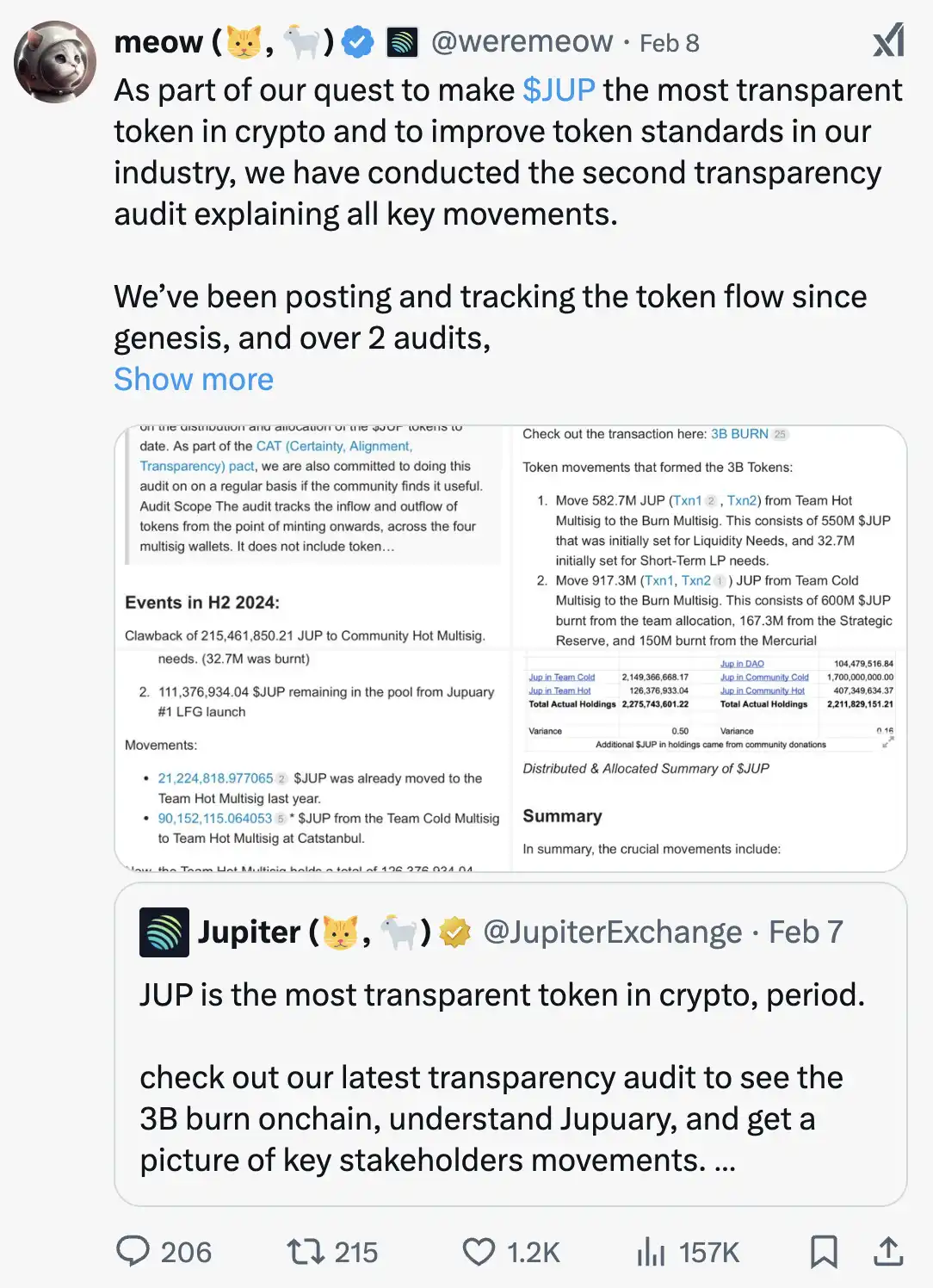
Jupiter recently released a transparency audit report, detailing the team's key fund flows. "We have been publicly tracking token movement since Genesis and have audited all token flows (excluding 1 JUP) twice, consolidating tokens into certified wallets."

Read that last sentence again. For any crypto protocol that has completed its TGE, making the best effort to track ownership of every token is crucial. Similarly, public companies clearly document the ownership structure of their shares. In the crypto space, tracking ownership is relatively more challenging due to the permissionless nature of blockchain, but there are still tools that can help teams achieve a high degree of accuracy in tracking.

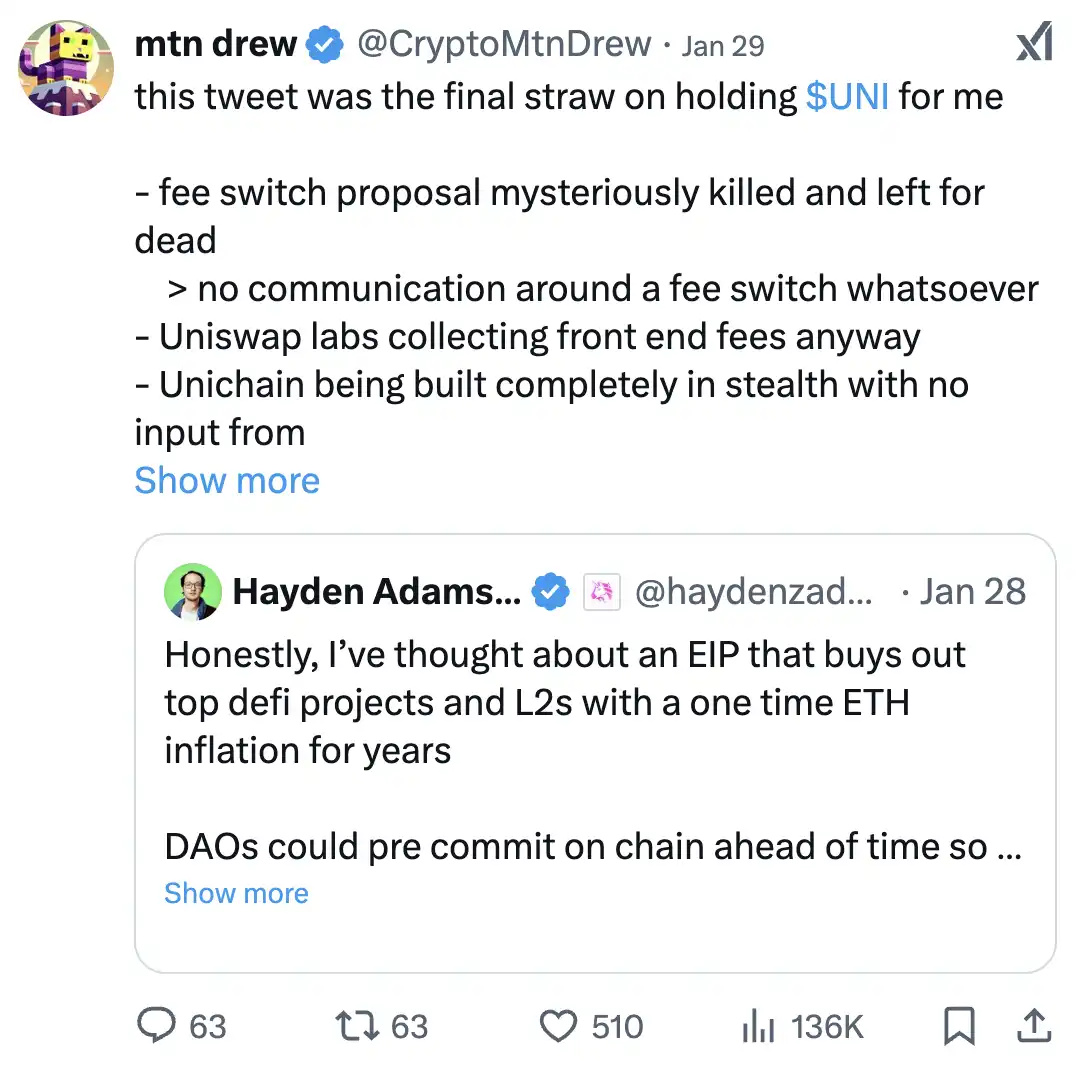
Meanwhile, Uniswap…
Given enough time, every app will integrate vertically

The key point of today's article is this: the business strategy in the crypto world fundamentally differs from the business models in traditional permissioned environments.

Outside the crypto industry, enterprises typically build a "moat" through regulatory barriers, long-term B2B contracts, proprietary innovation, and so on.

However, in the crypto industry, this kind of "moat" largely ceases to exist because the permissionless nature of blockchain allows anyone to build on existing products, and users can almost always opt for alternatives.

Therefore, what truly matters is branding, user experience, and community, as with the industry's maturation, we will see more and more experienced entrepreneurs enter the crypto race, building on existing infrastructure and launching vampire attacks on existing industry giants.

Ironically, this mirrors exactly what Deepseek is currently doing with OpenAI.

Ultimately, in the cryptocurrency space, the "moat" will evolve into the following three points:

· Brand → Users trust you

· Genuine Community → Users want to be part of your organization and enjoy true ownership (via revenue sharing)

· User Experience → Users love your product

Aggregation Strategy in Permissionless Environments Is Wise

Prior to Jupiter's success, many were skeptical of the aggregation model, especially in the EVM ecosystem where the model didn't shine. For example, 1inch failed to surpass Uniswap in market value because most users still preferred using Uniswap directly (too lazy to switch) or opted for other MEV-friendly DEXs like CoW Swap.

However, in the Solana ecosystem, Jupiter managed to convince users that it offered the best trading experience, successfully aggregated traffic, and captured value.

Frankly, I'm not sure when this shift occurred. I remember during the 2020-2021 DeFi Summer, I used both Orca and Raydium while also trying early versions of Jupiter. If I recall correctly, by the end of DeFi Summer, the user experience of Orca and Raydium had become quite poor, reasons being:

· Lack of a unified token standard (e.g., multiple bridged versions of USDC)

· UI lag

This poor user experience could still be seen a year later.
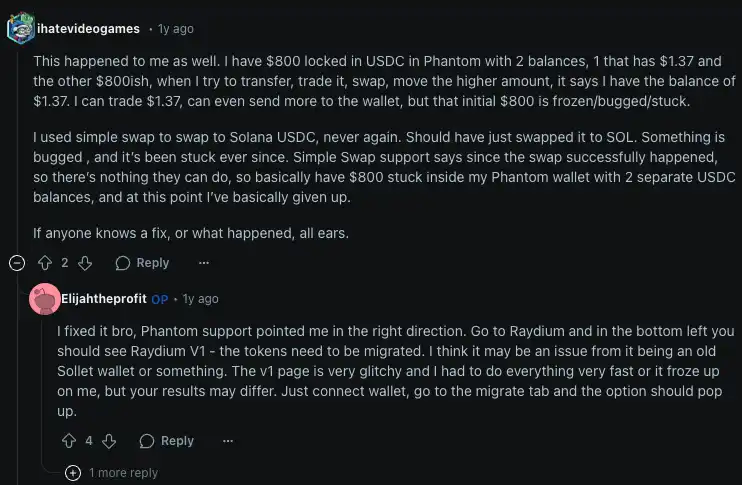
Jupiter used to display the best trade path to prove its exchange rate was optimal. In hindsight, this was a very astute move as there wasn't a clear DEX market winner in the Solana ecosystem at the time. Even though Raydium had the highest market share, its market dominance was nowhere near Uniswap on Ethereum.

Exemplary Business Strategy and Operations

In simple terms, Jupiter excels in its core business—providing Solana users with the best token swap experience. Many protocols in the EVM ecosystem have attempted a similar strategy, but few have succeeded. Additionally, the Jupiter team was initially formed by Racoon Dev led by Meow, which means that during the bear market, they were able to sustain operations with a few engineers in low-cost emerging markets, minimizing fund consumption.

Not all successful startups need the "sexy startup angle"; many successful crypto entrepreneurs initially operated development studios. This "traditional service-oriented business" can teach extremely efficient cost management practices and show founders how to strategically tap into market opportunities.

By 2024, this savvy business operation capability was fully demonstrated in the Jupiter team.

In just 12 months, Jupiter acquired 5 teams:

· Moonshot: Acquired this platform focused on mobile meme trading

· SonarWatch: Acquired on-chain asset management tool

· Ultimate Wallet: Acquired self-custody wallet

· Coinhall: Acquired decentralized exchange terminal

· SolanaFM: Acquired blockchain explorer

Forgive my bluntness, but this is truly a genius-level move. Some of the acquired projects faced fierce competition and market challenges, making them excellent acquisition targets. Moreover, I have no insider information, but I wouldn't be surprised if these acquisitions were mainly done through the JUP token. Considering JUP's current FDV, the Jupiter team undoubtedly expanded its footprint at a low cost and onboarded a group of excellent developers.

Conclusion

This idea is not new. Nascent's Dan Elitzer wrote an article titled "The Inevitability of UNIchain" in 2022, with the core point being: "As applications scale, control over block space becomes increasingly important... The solution is to build a dedicated chain or Rollup managed by validators invested in the application's success."

My view is similar but more straightforward—this is an embodiment of human nature in capitalist business society: optimizing value capture, vertical integration.

The crypto industry is still operated by humans, and we still can't shake off our innate desire to control the value chain. Let's be realistic here.

Original Post Link

You may also like

Token Cannot Compound, Where Is the Real Investment Opportunity?

The next chapter in the crypto industry will undoubtedly be written by Crypto-empowered Stocks.

February 6th Market Key Intelligence, How Much Did You Miss?

1. On-chain Flows: $508.2M USD inflow to Ethereum today; $390.8M USD outflow from Arbitrum 2. Biggest Gainers/Losers: $HBTC, $AIO 3. Top News: Current Bitcoin weekly RSI oversold signal comparable to June 2022

China's Central Bank and Eight Other Departments' Latest Regulatory Focus: Key Attention to RWA Tokenized Asset Risk


Foreword: Today, the People's Bank of China's website published the "Notice of the People's Bank of China, National Development and Reform Commission, Ministry of Industry and Information Technology, Ministry of Public Security, State Administration for Market Regulation, China Banking and Insurance Regulatory Commission, China Securities Regulatory Commission, State Administration of Foreign Exchange on Further Preventing and Dealing with Risks Related to Virtual Currency and Others (Yinfa [2026] No. 42)", the latest regulatory requirements from the eight departments including the central bank, which are basically consistent with the regulatory requirements of recent years. The main focus of the regulation is on speculative activities such as virtual currency trading, exchanges, ICOs, overseas platform services, and this time, regulatory oversight of RWA has been added, explicitly prohibiting RWA tokenization, stablecoins (especially those pegged to the RMB). The following is the full text:


To the people's governments of all provinces, autonomous regions, and municipalities directly under the Central Government, the Xinjiang Production and Construction Corps:


  Recently, there have been speculative activities related to virtual currency and Real-World Assets (RWA) tokenization, disrupting the economic and financial order and jeopardizing the property security of the people. In order to further prevent and address the risks related to virtual currency and Real-World Assets tokenization, effectively safeguard national security and social stability, in accordance with the "Law of the People's Republic of China on the People's Bank of China," "Law of the People's Republic of China on Commercial Banks," "Securities Law of the People's Republic of China," "Law of the People's Republic of China on Securities Investment Funds," "Law of the People's Republic of China on Futures and Derivatives," "Cybersecurity Law of the People's Republic of China," "Regulations of the People's Republic of China on the Administration of Renminbi," "Regulations on Prevention and Disposal of Illegal Fundraising," "Regulations of the People's Republic of China on Foreign Exchange Administration," "Telecommunications Regulations of the People's Republic of China," and other provisions, after reaching consensus with the Cyberspace Administration of China, the Supreme People's Court, and the Supreme People's Procuratorate, and with the approval of the State Council, the relevant matters are notified as follows:


  I. Clarify the essential attributes of virtual currency, Real-World Assets tokenization, and related business activities


  (I) Virtual currency does not possess the legal status equivalent to fiat currency. Virtual currencies such as Bitcoin, Ether, Tether, etc., have the main characteristics of being issued by non-monetary authorities, using encryption technology and distributed ledger or similar technology, existing in digital form, etc. They do not have legal tender status, should not and cannot be circulated and used as currency in the market.


  The business activities related to virtual currency are classified as illegal financial activities. The exchange of fiat currency and virtual currency within the territory, exchange of virtual currencies, acting as a central counterparty in buying and selling virtual currencies, providing information intermediary and pricing services for virtual currency transactions, token issuance financing, and trading of virtual currency-related financial products, etc., fall under illegal financial activities, such as suspected illegal issuance of token vouchers, unauthorized public issuance of securities, illegal operation of securities and futures business, illegal fundraising, etc., are strictly prohibited across the board and resolutely banned in accordance with the law. Overseas entities and individuals are not allowed to provide virtual currency-related services to domestic entities in any form.


  A stablecoin pegged to a fiat currency indirectly fulfills some functions of the fiat currency in circulation. Without the consent of relevant authorities in accordance with the law and regulations, any domestic or foreign entity or individual is not allowed to issue a RMB-pegged stablecoin overseas.


(II)Tokenization of Real-World Assets refers to the use of encryption technology and distributed ledger or similar technologies to transform ownership rights, income rights, etc., of assets into tokens (tokens) or other interests or bond certificates with token (token) characteristics, and carry out issuance and trading activities.


  Engaging in the tokenization of real-world assets domestically, as well as providing related intermediary, information technology services, etc., which are suspected of illegal issuance of token vouchers, unauthorized public offering of securities, illegal operation of securities and futures business, illegal fundraising, and other illegal financial activities, shall be prohibited; except for relevant business activities carried out with the approval of the competent authorities in accordance with the law and regulations and relying on specific financial infrastructures. Overseas entities and individuals are not allowed to illegally provide services related to the tokenization of real-world assets to domestic entities in any form.


  II. Sound Work Mechanism


  (III) Inter-agency Coordination. The People's Bank of China, together with the National Development and Reform Commission, the Ministry of Industry and Information Technology, the Ministry of Public Security, the State Administration for Market Regulation, the China Banking and Insurance Regulatory Commission, the China Securities Regulatory Commission, the State Administration of Foreign Exchange, and other departments, will improve the work mechanism, strengthen coordination with the Cyberspace Administration of China, the Supreme People's Court, and the Supreme People's Procuratorate, coordinate efforts, and overall guide regions to carry out risk prevention and disposal of virtual currency-related illegal financial activities.


  The China Securities Regulatory Commission, together with the National Development and Reform Commission, the Ministry of Industry and Information Technology, the Ministry of Public Security, the People's Bank of China, the State Administration for Market Regulation, the China Banking and Insurance Regulatory Commission, the State Administration of Foreign Exchange, and other departments, will improve the work mechanism, strengthen coordination with the Cyberspace Administration of China, the Supreme People's Court, and the Supreme People's Procuratorate, coordinate efforts, and overall guide regions to carry out risk prevention and disposal of illegal financial activities related to the tokenization of real-world assets.


  (IV) Strengthening Local Implementation. The people's governments at the provincial level are overall responsible for the prevention and disposal of risks related to virtual currencies and the tokenization of real-world assets in their respective administrative regions. The specific leading department is the local financial regulatory department, with participation from branches and dispatched institutions of the State Council's financial regulatory department, telecommunications regulators, public security, market supervision, and other departments, in coordination with cyberspace departments, courts, and procuratorates, to improve the normalization of the work mechanism, effectively connect with the relevant work mechanisms of central departments, form a cooperative and coordinated working pattern between central and local governments, effectively prevent and properly handle risks related to virtual currencies and the tokenization of real-world assets, and maintain economic and financial order and social stability.


  III. Strengthened Risk Monitoring, Prevention, and Disposal


  (5) Enhanced Risk Monitoring. The People's Bank of China, China Securities Regulatory Commission, National Development and Reform Commission, Ministry of Industry and Information Technology, Ministry of Public Security, State Administration of Foreign Exchange, Cyberspace Administration of China, and other departments continue to improve monitoring techniques and system support, enhance cross-departmental data analysis and sharing, establish sound information sharing and cross-validation mechanisms, promptly grasp the risk situation of activities related to virtual currency and real-world asset tokenization. Local governments at all levels give full play to the role of local monitoring and early warning mechanisms. Local financial regulatory authorities, together with branches and agencies of the State Council's financial regulatory authorities, as well as departments of cyberspace and public security, ensure effective connection between online monitoring, offline investigation, and fund tracking, efficiently and accurately identify activities related to virtual currency and real-world asset tokenization, promptly share risk information, improve early warning information dissemination, verification, and rapid response mechanisms.


  (6) Strengthened Oversight of Financial Institutions, Intermediaries, and Technology Service Providers. Financial institutions (including non-bank payment institutions) are prohibited from providing account opening, fund transfer, and clearing services for virtual currency-related business activities, issuing and selling financial products related to virtual currency, including virtual currency and related financial products in the scope of collateral, conducting insurance business related to virtual currency, or including virtual currency in the scope of insurance liability. Financial institutions (including non-bank payment institutions) are prohibited from providing custody, clearing, and settlement services for unauthorized real-world asset tokenization-related business and related financial products. Relevant intermediary institutions and information technology service providers are prohibited from providing intermediary, technical, or other services for unauthorized real-world asset tokenization-related businesses and related financial products.


  (7) Enhanced Management of Internet Information Content and Access. Internet enterprises are prohibited from providing online business venues, commercial displays, marketing, advertising, or paid traffic diversion services for virtual currency and real-world asset tokenization-related business activities. Upon discovering clues of illegal activities, they should promptly report to relevant departments and provide technical support and assistance for related investigations and inquiries. Based on the clues transferred by the financial regulatory authorities, the cyberspace administration, telecommunications authorities, and public security departments should promptly close and deal with websites, mobile applications (including mini-programs), and public accounts engaged in virtual currency and real-world asset tokenization-related business activities in accordance with the law.


  (8) Strengthened Entity Registration and Advertisement Management. Market supervision departments strengthen entity registration and management, and enterprise and individual business registrations must not contain terms such as "virtual currency," "virtual asset," "cryptocurrency," "crypto asset," "stablecoin," "real-world asset tokenization," or "RWA" in their names or business scopes. Market supervision departments, together with financial regulatory authorities, legally enhance the supervision of advertisements related to virtual currency and real-world asset tokenization, promptly investigating and handling relevant illegal advertisements.


  (IX) Continued Rectification of Virtual Currency Mining Activities. The National Development and Reform Commission, together with relevant departments, strictly controls virtual currency mining activities, continuously promotes the rectification of virtual currency mining activities. The people's governments of various provinces take overall responsibility for the rectification of "mining" within their respective administrative regions. In accordance with the requirements of the National Development and Reform Commission and other departments in the "Notice on the Rectification of Virtual Currency Mining Activities" (NDRC Energy-saving Building [2021] No. 1283) and the provisions of the "Guidance Catalog for Industrial Structure Adjustment (2024 Edition)," a comprehensive review, investigation, and closure of existing virtual currency mining projects are conducted, new mining projects are strictly prohibited, and mining machine production enterprises are strictly prohibited from providing mining machine sales and other services within the country.


  (X) Severe Crackdown on Related Illegal Financial Activities. Upon discovering clues to illegal financial activities related to virtual currency and the tokenization of real-world assets, local financial regulatory authorities, branches of the State Council's financial regulatory authorities, and other relevant departments promptly investigate, determine, and properly handle the issues in accordance with the law, and seriously hold the relevant entities and individuals legally responsible. Those suspected of crimes are transferred to the judicial authorities for processing according to the law.


 (XI) Severe Crackdown on Related Illegal and Criminal Activities. The Ministry of Public Security, the People's Bank of China, the State Administration for Market Regulation, the China Banking and Insurance Regulatory Commission, the China Securities Regulatory Commission, as well as judicial and procuratorial organs, in accordance with their respective responsibilities, rigorously crack down on illegal and criminal activities related to virtual currency, the tokenization of real-world assets, such as fraud, money laundering, illegal business operations, pyramid schemes, illegal fundraising, and other illegal and criminal activities carried out under the guise of virtual currency, the tokenization of real-world assets, etc.


  (XII) Strengthen Industry Self-discipline. Relevant industry associations should enhance membership management and policy advocacy, based on their own responsibilities, advocate and urge member units to resist illegal financial activities related to virtual currency and the tokenization of real-world assets. Member units that violate regulatory policies and industry self-discipline rules are to be disciplined in accordance with relevant self-regulatory management regulations. By leveraging various industry infrastructure, conduct risk monitoring related to virtual currency, the tokenization of real-world assets, and promptly transfer issue clues to relevant departments.


  IV. Strict Supervision of Domestic Entities Engaging in Overseas Business Activities


(XIII) Without the approval of relevant departments in accordance with the law and regulations, domestic entities and foreign entities controlled by them may not issue virtual currency overseas.


  (XIV) Domestic entities engaging directly or indirectly in overseas external debt-based tokenization of real-world assets, or conducting asset securitization activities abroad based on domestic ownership rights, income rights, etc. (hereinafter referred to as domestic equity), should be strictly regulated in accordance with the principles of "same business, same risk, same rules." The National Development and Reform Commission, the China Securities Regulatory Commission, the State Administration of Foreign Exchange, and other relevant departments regulate it according to their respective responsibilities. For other forms of overseas real-world asset tokenization activities based on domestic equity by domestic entities, the China Securities Regulatory Commission, together with relevant departments, supervise according to their division of responsibilities. Without the consent and filing of relevant departments, no unit or individual may engage in the above-mentioned business.


  (15) Overseas subsidiaries and branches of domestic financial institutions providing Real World Asset Tokenization-related services overseas shall do so legally and prudently. They shall have professional personnel and systems in place to effectively mitigate business risks, strictly implement customer onboarding, suitability management, anti-money laundering requirements, and incorporate them into the domestic financial institutions' compliance and risk management system. Intermediaries and information technology service providers offering Real World Asset Tokenization services abroad based on domestic equity or conducting Real World Asset Tokenization business in the form of overseas debt for domestic entities directly or indirectly venturing abroad must strictly comply with relevant laws and regulations. They should establish and improve relevant compliance and internal control systems in accordance with relevant normative requirements, strengthen business and risk control, and report the business developments to the relevant regulatory authorities for approval or filing.


  V. Strengthen Organizational Implementation


  (16) Strengthen organizational leadership and overall coordination. All departments and regions should attach great importance to the prevention of risks related to virtual currencies and Real World Asset Tokenization, strengthen organizational leadership, clarify work responsibilities, form a long-term effective working mechanism with centralized coordination, local implementation, and shared responsibilities, maintain high pressure, dynamically monitor risks, effectively prevent and mitigate risks in an orderly and efficient manner, legally protect the property security of the people, and make every effort to maintain economic and financial order and social stability.


  (17) Widely carry out publicity and education. All departments, regions, and industry associations should make full use of various media and other communication channels to disseminate information through legal and policy interpretation, analysis of typical cases, and education on investment risks, etc. They should promote the illegality and harm of virtual currencies and Real World Asset Tokenization-related businesses and their manifestations, fully alert to potential risks and hidden dangers, and enhance public awareness and identification capabilities for risk prevention.


  VI. Legal Responsibility


  (18) Engaging in illegal financial activities related to virtual currencies and Real World Asset Tokenization in violation of this notice, as well as providing services for virtual currencies and Real World Asset Tokenization-related businesses, shall be punished in accordance with relevant regulations. If it constitutes a crime, criminal liability shall be pursued according to the law. For domestic entities and individuals who knowingly or should have known that overseas entities illegally provided virtual currency or Real World Asset Tokenization-related services to domestic entities and still assisted them, relevant responsibilities shall be pursued according to the law. If it constitutes a crime, criminal liability shall be pursued according to the law.


  (19) If any unit or individual invests in virtual currencies, Real World Asset Tokens, and related financial products against public order and good customs, the relevant civil legal actions shall be invalid, and any resulting losses shall be borne by them. If there are suspicions of disrupting financial order and jeopardizing financial security, the relevant departments shall deal with them according to the law.


  This notice shall enter into force upon the date of its issuance. The People's Bank of China and ten other departments' "Notice on Further Preventing and Dealing with the Risks of Virtual Currency Trading Speculation" (Yinfa [2021] No. 237) is hereby repealed.


Former Partner's Perspective on Multicoin: Kyle's Exit, But the Game He Left Behind Just Getting Started

Kyle knew his game, so he decided to focus on playing the game he was good at and interested in.

Why Bitcoin Is Falling Now: The Real Reasons Behind BTC's Crash & WEEX's Smart Profit Playbook

Bitcoin's ongoing crash explained: Discover the 5 hidden triggers behind BTC's plunge & how WEEX's Auto Earn and Trade to Earn strategies help traders profit from crypto market volatility.

Wall Street's Hottest Trades See Exodus

This time there is no single triggering factor, but rather market anxiety about asset valuation, with many already skeptical of these valuations being too high, leading to investors choosing to retreat almost simultaneously.

Popular coins

Latest Crypto News

Read more