
 Buy Crypto
- Markets
 Futures
- Spot
- Copy Trade
- Earn
- More
Juventus Football Club Owner Rejects Tether’s Takeover Bid

Key Takeaways
- Juventus’ owner Exor rejected Tether’s $1 billion acquisition proposal.
- Exor insists on maintaining long-held ownership over Juventus, a club part of their family history for over 102 years.
- Tether aimed to strengthen its stake and support Juventus with substantial financial backing.
- The discourse highlights the clash between financial opportunities and heritage values.
WEEX Crypto News, 2025-12-15 09:47:08
In a resounding declaration of intent to preserve heritage against financial overtures, Exor, the holding company stewarded by the Agnelli family, has decisively turned down an unsolicited takeover proposal from Tether, a prominent issuer of stablecoin, aimed at acquiring Juventus Football Club. This prospective deal, involving a sum of over $1 billion, was poised to be a giant stride for Tether in expanding its non-cryptocurrency ventures, as the company attempted to capture the controlling interest in one of Italy’s most storied soccer clubs.
Exor’s Firm Stance Against Selling Juventus
Exor’s Board of Directors vociferously rejected the proposal submitted by Tether, marking a steadfast commitment to retaining its shares in Juventus. On behalf of the Agnelli family, who have held proprietorship of the club for more than a century, CEO John Elkann articulates the sentiment underpinning this resolute decision: “Values are not for sale.” This succinct statement reflects more than just a business decision; it resonates with an enduring legacy intertwined with sporting glory, familial pride, and cultural tradition.
The proposal from Tether offered an all-cash deal at 2.66 euros per share, which saw Juventus’ market value hovering around 944.49 million euros at the time. Tether’s intention was to secure Exor’s 65.4% controlling stake. Despite the substantial financial allure, Exor’s priority remained firmly anchored in the principle rather than profit, prioritizing legacy and long-term strategic interest over immediate financial gain.
The Cultural and Historical Value of Juventus
For many, Juventus is not merely a football club; it is a profound emblem of Italian sportsmanship and an integral component of national identity. Owned by the Agnelli family for 102 years, the club is steeped in history, having collected numerous accolades and championships. This amalgamation of tradition, success, and family ties illustrates why the Agnelli family views Juventus as an extension of their own family lore, making the concept of selling anathema to their ethos.
As articulated by Elkann, the current state of affairs is not just about financial transactions but touches on significant aspects of family and heritage that cannot be quantify. Exor, in its formal statement, reaffirmed its dedication to propelling the club forward, both on the pitch and beyond, under the aegis of its freshly assembled management team.
Tether’s Ambitions in the Juventus Deal
On the opposite end, Tether saw a thrilling opportunity to diversify its investments, anchoring its pursuit on a robust foundation. Propelled by a vision of ushering in financial stability for Juventus through long-term capital input, Tether’s CEO Paolo Ardoino characterizes the offer as an embodiment of personal and organizational passion for Juventus.
Tether’s strategy extends beyond secure cryptocurrencies like their Tether (USDT), seeking to navigate the expanding intersections between sports and digital finance. The acquisition bid was not merely a financial investment but an effort to interlace cryptocurrency with mainstream sectors, such as international sports, potentially reaping broader acceptance and integration of digital assets.
However, while Tether’s intentions may align with future trends in economic collaboration, it represents a direct juxtaposition against Exor’s historical approach, which perceives such modern undertakings as unnecessary departures from centennial cultural heritage.
Implications for Juventus and Tether
The juxtaposition of Exor’s commitment to tradition against Tether’s forward-thinking vision underscores an intriguing discourse on the influences and intersections of historical heritage versus modern financial opportunities. Juventus, under Exor’s stewardship, continues to represent far more than just a sporting franchise; it embodies a storied tradition resonant across generations. Retaining Juventus ensures continuity of spirit and identity that transcends the financial domain.
Conversely, for Tether, while the immediate setback limits its expansion strategy to influence sports, the move indicates an active pursuit of diversified investments beyond the cryptocurrency purview. Despite the rejection, Tether’s efforts demonstrate a growing inclination among digital asset firms to engage in cross-industry ventures, likely heralding further endeavors to integrate finances with established international cultural icons.
This scenario typifies not just a refusal of financial transaction but emphasizes the strategic role heritage and cultural values play within business decisions. As Tether seeks avenues for expansion, understanding the critical narratives that accompany assets like Juventus remains essential.
Future Prospects for Juventus and Tether
For Juventus, the path forward remains uninterrupted under the investments and strategic approaches of Exor, with the club looking ahead towards achieving comprehensive success both on and off the field. Indeed, as Exor pledges continued support for the management and team, Juventus is poised to blend its historical success with new strategic frameworks developed within the team.
For Tether, despite the current thwart, the company continues to illustrate the transformation of digital finance enterprises seeking inclusivity and acceptance within mainstream sectors. This episode might act as a precursor to exploring innovative collaborations across varied domains, highlighting the crypto industry’s adaptability and keen interest in progressive synergies.
Ultimately, the narrative exemplifies the delicate balance between preserving legacy and embracing change. While Exor prioritizes firm historical foundations for Juventus, Tether’s efforts display a progressive financial narrative — one where valorizing traditional institutions with modern financial stability remains a central narrative direction for digital finance enterprises today.
Frequently Asked Questions (FAQ)
Why did Exor reject Tether’s acquisition proposal for Juventus?
Exor rejected Tether’s acquisition proposal due to its strong commitment to preserving the cultural and historical values associated with Juventus. The Agnelli family, having owned the club for over a century, perceives it as a vital component of their familial and cultural legacy, making the notion of selling inconceivable.
What was Tether’s proposal for acquiring Juventus?
Tether proposed a binding all-cash offer of over $1 billion to acquire Exor’s 65.4% controlling stake in Juventus, alongside intentions to make a public offer for the remaining shares. The offer reflected Tether’s plan to integrate digital finance into mainstream sectors like sports.
How does Juventus embody cultural and historical significance?
Juventus, owned by the Agnelli family for more than 100 years, represents not only a successful football club but also a deep-rooted part of Italy’s sporting heritage. It stands as an emblem of tradition and excellence, attracting tremendous cultural history and national identity.
What was Tether’s vision for Juventus?
Tether envisioned providing financial stability and investment to bolster Juventus’ growth and development. Intending to cross-promote digital finance with well-established sports sectors, Tether saw Juventus as an ideal vehicle for fostering broader acceptance of cryptocurrency.
Will Tether pursue other similar opportunities in the future?
Tether is likely to continue exploring diverse investment avenues beyond its cryptocurrency offerings. The company aims to engage with varied industries, potentially pursuing innovation-led and cross-sector alliances that reflect its financial interests and growth strategy for mainstream acceptance.
You may also like

Morning Report | Strategy increased its holdings by 4,871 BTC last week; Toss plans to develop its own blockchain and issue a native cryptocurrency; OpenAI's CFO privately questioned the timing of the IPO in 2026

Research: Stablecoins have a trading volume of 35 trillion a year, how much of it is real payment?

Galaxy Research: AI agents are giving rise to new species on the blockchain, how zero-human companies activate the financial flywheel

Data Research: How big is the liquidity gap between Hyperliquid and CME crude oil?

Why Are GPU Prices Skyrocketing Out of Control?

How to Master Claude Cowork Completely?

70-Page Confidential Letter Alleges First Charge of 'Lying,' Altman Tells Board 'I Can't Change My Personality'
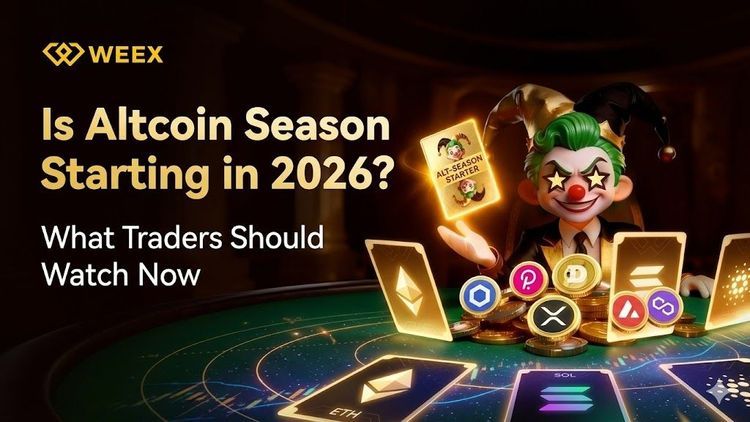
Is Altcoin Season Starting in 2026? What Traders Should Watch Now
Altcoin season signals are becoming clearer in 2026 as capital rotation across crypto markets accelerates. Here’s what traders should watch and how strategy-based participation is evolving in the current market cycle.

Bitcoin ETF Inflows in 2026: Impact on BTC Price and Crypto Market Trends
Bitcoin ETF inflows are reshaping BTC price trends and crypto market liquidity in 2026. See how institutional capital is influencing volatility, trading behavior, and portfolio allocation strategies across crypto markets.
Visa's Stablecoin Strategy: Cards, Settlement, and the Future

Stock Market Split

How to capture the next Alpha in the narrative of predictive markets?

"Legal" Ponzi scheme? Unveiling the circular lending of Gemini exchange and its founder

The first stock of stablecoins, Circle, has officially launched the new public chain ARC points system, and the interactive guide is here

Oil prices are approaching a critical point. What will happen in mid-April?
The oil price is approaching a critical point, what will happen in mid-April?

Mechanism drives value, deflation leads the future: MIAU will officially launch on PancakeSwap on April 13



 App
App