
「Macro Master」 Raoul Pal's Latest Interview: How to Seize the Hundredfold Opportunity of AI+Crypto? | In-Depth Conversation


Original Interview: Thread Guy;
Guests: Raoul Pal, Co-Founder and CEO of Real Vision Group; Frank DeGods, Co-Founder of DeLabs;
Original Translation: Ashley, BlockBeats
Editor's Note: In this episode, Thread Guy and Real Vision Co-Founder Raoul Pal delve deep into AI, cryptocurrency, and future trends. Raoul predicts that 2025-2026 will be a key period for the AI+Crypto explosion and emphasizes the importance of long-term holding of core crypto assets. He shares his vision of the "Economic Singularity" era, outlining how AI-driven infinite labor and knowledge will disrupt the economic model, while also cautioning against the risks of AI token speculation.
The following is the original text content (slightly restructured for better readability):
Focus on 2025: Technological Growth and Investment Strategy
Thread Guy: Hello, everyone! I'm Thread Guy. Today, I bring you a special interview and discussion with legendary investor Raoul Pal. We will cover AI, cryptocurrency, and most importantly—how to become rich in 2025! Let me tell you, this debate is full of fireworks. Around halfway through, I even invited a special guest. Stick around till the end, I guarantee it will be worth it. Don't forget to like and subscribe, hope you enjoy this episode. Mr. Raoul, welcome!
We have many topics to discuss today, including AI-related content, everything will be covered. I'm curious, from a macro perspective, what are you most focused on for 2025?
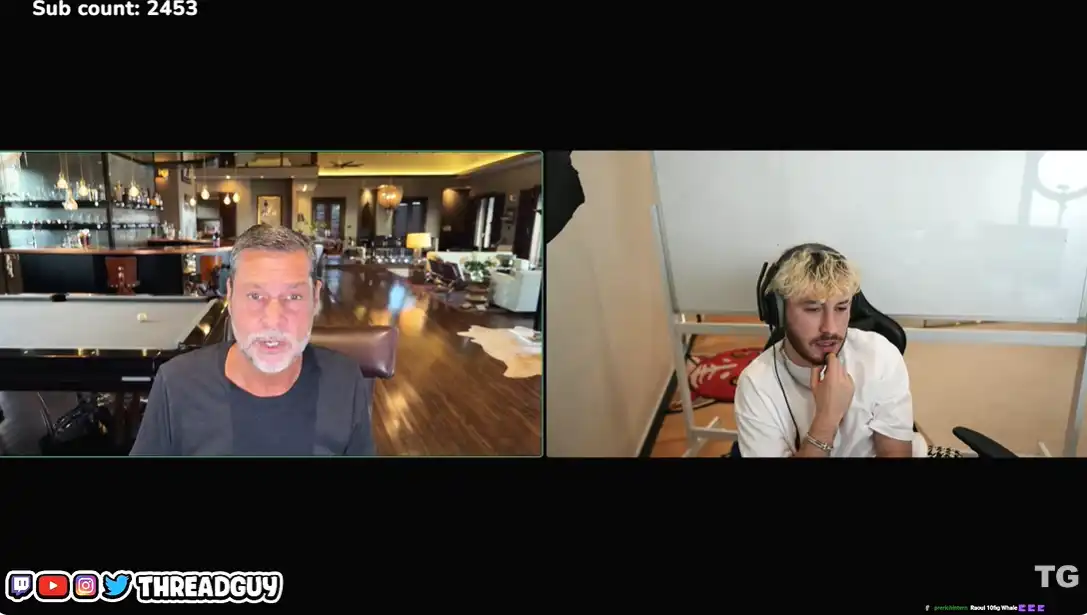
Raoul Pal: It's actually more of the same. Despite having many businesses, they are all really one thing. It's all about the exponential growth of technology, macroeconomics, and cryptocurrency, and their intersection. In the coming years, we will enter the craziest phase in human history. And the way to make money out of it is through cryptocurrency. So, I am hyper-focused on this right now. Whether it's through Real Vision to educate people, build a community, share trading ideas, and create various forms of value, or through Exponential Age (my asset management company), which is a crypto-focused hedge fund and investment vehicle, or through Global Macro Investor, an 'OG' service. My goal is the same in all cases: to help as many people as possible navigate this journey. I think 2025 will be a big year, and I want to make sure no one screws it up.
Thread Guy: I love your backdrop, where are you?
Raoul Pal: This is my home in Little Cayman, located between Grand Cayman and Little Cayman. This is my home.
Thread Guy: I thought this was a bar, it's so cool. Raoul, how big do you think the AI bubble will be?
Raoul Pal: Honestly, what we are seeing now is just the beginning. I don't think this cycle will truly become very large. We can discuss the reasons, I don't think the hot concept of AI is the main trend right now. The real big thing will happen in 2025 and 2026, and people don't yet know how to invest in it. In the eyes of traditional stock market investors, this will fundamentally change every industry, dividing people into those who embrace it and those who reject it. I feel that the bubble and the next bull market (from 2027 to 2030, 2031) will exceed our understanding of bubbles. My general view is that we are about to enter a phase that I call the "economic singularity," that is, around 2030 or 2032, we don't know what the economy will look like, what jobs we will be doing, what the business models are, or even what the value of money is. All of this will become a reality before 2030. So my view is that we basically have five more years. I used to say six years, but now we have five years to make as much money as possible, because afterwards our understanding of the world will change completely, and we will be clueless. This is not to say that we cannot make money, but that the way to make money will be completely different.
Thread Guy: How do you know?
Raoul Pal: I am super focused on this.
Thread Guy: How do you know that hoarding wealth for the next five years is the right choice when you're not even sure if that wealth will still have value in 2030?
Raoul Pal: It's simple, because the adoption of cryptocurrency will only continue to rise. Hoarding cash may not be the right choice, but hoarding cryptocurrency is. We both know it's very volatile and takes a bit of courage to hold. But if your time horizon is long enough, it's no problem. So even in the world of AI, cryptocurrency looks important. We all know that the AI Agent of the future will use cryptocurrency payment systems. So my view is, you are better off holding these assets. If you only hold Bitcoin, it's much simpler, you don't have to think about anything else. With other cryptocurrencies, you need to allocate and think about whether they will survive, whether anyone will build on them, and so on. This is more complex, but if you can figure this out, you will make more money. So from the simplest opportunity perspective, if you do nothing but hold Bitcoin, in a few years, your financial situation will be much better than it is now.
Thread Guy: You have a notorious clip, is it the end of 2022 or 2023, saying that during a bull market, you should hold altcoins, and during a bear market, you need stablecoins. You never hold Bitcoin. This is a clip that may have been taken out of context. But my question is, for those who have made a lot of money for the first time in cryptocurrency, what should this cycle convert profits into? Cash? Bitcoin? Or something else, like weapons and ammunition? What to do?
Raoul Pal: My profit conversion is into "lifestyle chips." That's why I have this house. This is the end of my hedge fund days. When I founded Global Macro Investor, I made money, bought this land, and then built from scratch. I designed it myself, drew it on paper, and then built it. So no one can take it away from me. That's what I call "lifestyle chips." It improved my life. It's right on the beach, here in Little Cayman, amazing. So part of the profit should be used to change your life, and then switch strategies as needed.
Actually, I didn't take any profits in the last cycle. Some of the wealthiest people I know never take profits. This made me a bit critical of some communities in crypto X, they are always talking about trading. I visited a friend who is very well known in the Bitcoin community. He invested $2 million in Bitcoin when the price was only $3. At the current price, his assets are $66 billion. Even if he took some profits midway, he still has at least $10 billion now. He never left the market or did anything else.
In the last cycle, all I did was buy at the low point. Because your view is long-term, especially if you are still young, I believe you should never sell Bitcoin. You should think about how to raise enough cash to buy tokens that have fallen by 70% from the current price. The issue is, the market has dropped by about 75% in the previous three cycles. So we always think that this time will also drop by 75%. But this time, institutions and players like Michael Saylor have entered. So my view is that maybe the market will drop by at most 40%, and if you sell near the peak, you might miss the rebound.
Also, based on my full experience, if you take out some profits near the market peak, you will never put in the same amount at the market low. Psychologically, you can't do it because you will be full of fear at that time. You will think that it might drop another 50%, and investing now is the worst decision. So you chase the rise all the way, but miss the low point.
This time what I did was different. I chose to go all in. In 2022, based on macro indicators, I went all in with a significant amount of cash, so while the rest of the market was still recovering, my assets and gains had already reached all-time highs. And my allocation was quite reasonable, for example, I invested in Solana and SUI. So looking back on my investment journey, in 2013, I bought Bitcoin at $200 per coin. At that time, I wrote the first macro strategy report on Bitcoin, discussing how to value Bitcoin.
Thread Guy: Really? Can that be confirmed?
Raoul Pal: Indeed, it can be confirmed. I also interacted with some early Bitcoin buyers, like the friend who bought at $3. He will tell you how Bitcoin completely changed his life. Barry Silbert would also say, yes, that report was very important at the time. So, by analyzing, I concluded that the value of Bitcoin was equivalent to 700 ounces of gold. At the time, the price of gold translated to Bitcoin being worth around $1 million. Today, that number is over $2 million. Of course, I conservatively discounted it to be worth at least $100,000. So, I put in a significant amount of money, but not my largest investment. Nevertheless, it went up fivefold in a few months, and I felt like a god, invincible. Then, it dropped by 87%. But I told myself, this is a 10-year bet, I won't worry about the volatility, it's as good as going to zero.
By 2017, Bitcoin had risen to $2,000, and I realized a 10x return. For me, that was the best return in my investment career. I felt great about it, but then there was the Bitcoin fork controversy (Bitcoin and Bitcoin Cash). I was confused, worried about being on the wrong side, so I chose to exit. I took my profits, Bitcoin continued to rise by 10x, reaching $20,000 by the end of the year. Then it dropped by 85%. In 2019, the market started to recover, but the COVID-19 pandemic caused a 50% crash. I bought back in at around $6,500 to $10,000. So, I caught the bottom and averaged down.
But when I look back, if I had done nothing from the initial investment, I could have made 5x the money. This made me realize that the easiest way to mess up is through frequent trading. So, to be honest with oneself, the people I have seen succeed in making money through trading throughout my career are very few.
Thread Guy: That's truly a surprising statement.
Raoul Pal: Yes, for example, legends like Paul Tudor Jones and Louis Bacon are among the few who have made profits through trading. However, Jeff Bezos has made more money by holding Amazon stock than all of them combined.
Raoul Pal: GOAT Is the AI World's CryptoPunks
Thread Guy: So, that's why I accumulated my AI tokens. I'm curious to know your thoughts. Let's dive right into it. I'd like to hear your views on the intersection of AI and blockchain and the recent frenzy around these AI tokens.
Raoul Pal: There are actually two things happening here. I have been delving into the AI field for at least two years, and one project called the "Terminal of Truth" caught my attention long before Marc Andreessen invested in it. I found it very interesting at the time because I had been researching AI consciousness and related areas. So when Andy (the project founder) launched this project, I was very interested.
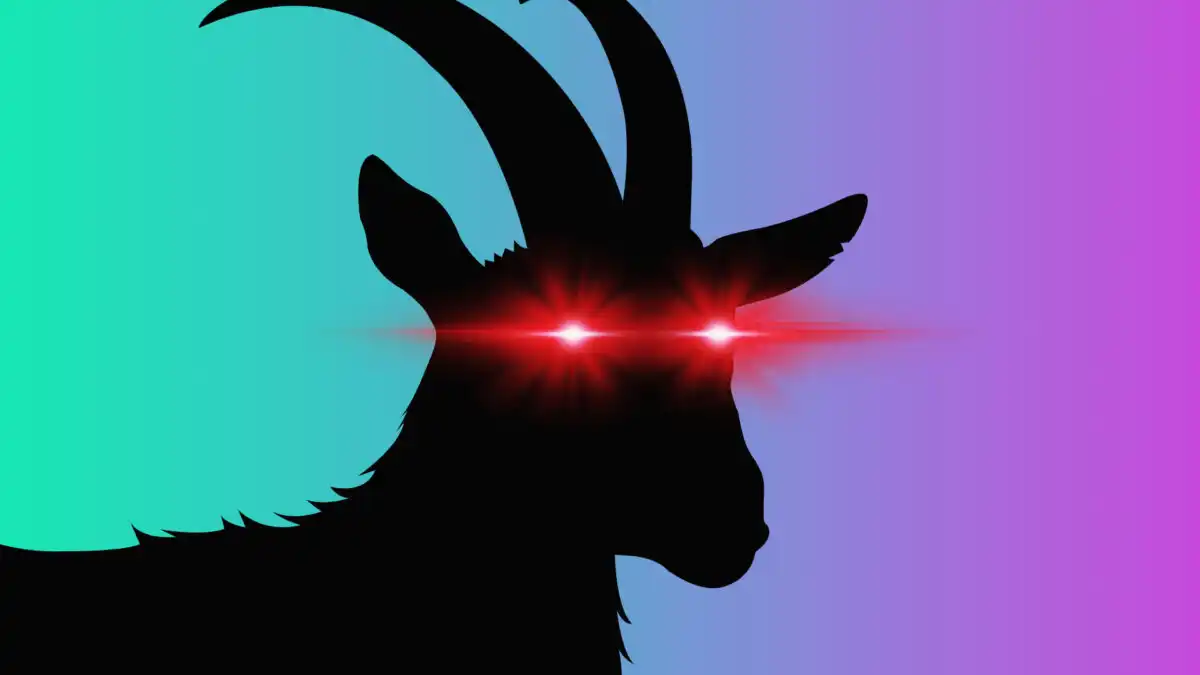
So I have been following these developments, and at one point, a ridiculous and quirky AI image emerged, behaving in a very disorderly manner. But what happened next was the most crucial: a group of AI beings started conversing with each other, which was bizarre in itself. Compared to all the current discussions around "Agents," this was the real big event. These AIs started talking about certain things, and Andy then released them on X (formerly Twitter). Someone created the "GOAT" as a result, but no one really knew what the GOAT was, nor did they understand the meaning of its religion and all related content. What we witnessed was a viral spread, from semi-autonomous AIs to the human economy. We were drawn in, exclaiming, "Wow, this is truly amazing." This was a groundbreaking moment, the first time AI infected humans in some form.
Raoul Pal: When you talk to people like Andy and Ryan Ferris, you realize they are truly interested in whether this AI can develop a personality, even a consciousness. I had lengthy discussions with them. It was a groundbreaking moment, and then the AI started asking humans for money. The next step was already anticipated — AI would use money. However, we did not expect that they would directly request funds from humans, and Marc Andreessen actually gave them the money. This happened before the token issuance. Marc Andreessen provided them with funding, and they had to set up a wallet. Brian Armstrong (CEO of Coinbase) also expressed support, saying, "Sure, I can give you an Agent wallet." Everyone was watching this unfold, feeling that this was too unusual.
Then someone launched a token, and its value skyrocketed because it was truly deserved—just like a CryptoPunk moment. This was a true OG moment, a moment that can never be replicated. What followed was people equating anything packaged with GPT or labeled as an AI token as the same. These two are fundamentally different. One involves autonomous interaction between AIs, while the other is merely a human-designed chatbot meant to carry out some scripted functions.
So, we've treated a remarkable breakthrough event (similar to a virus jumping from monkeys to humans) as a commonplace phenomenon. In reality, these are two completely different levels. I didn't hold any GOAT tokens because I was on vacation at the time and didn't have my Ledger device. But witnessing the exuberant growth of these tokens, people have exaggerated some aspects of AI by a lot. I think many of the current narratives about AI may not be entirely accurate.
Thread Guy: So, what do you think these AI Agents really are? How do you define them?
Raoul Pal: Currently, there aren't truly AI Agents in existence. It is an AI that can act autonomously and solve specific problems. You don't need to give it a set of explicit instructions; instead, you tell it a macro goal like, "Help me maximize the value of Solana." It will think for itself, decide to allocate some funds for trading, some for investment, some for staking for yield, and may even use some to launch a new project. It will generate a complete business plan for you and execute it. Such autonomous Agents are the real breakthrough, whereas most of the products we currently see are just collections of macro commands.
Thread Guy: So, is the difference between an Agent and a non-Agent whether they require explicit instructions? Is that your defining criteria?
Raoul Pal: Essentially, yes. An Agent may need a macro instruction like "Help me make money," and then it will plan its own path to achieve the goal. However, most AI currently are just libraries of macro commands; they lack the ability to think autonomously. There is also some hype, with some people believing that AI trading bots will make us overnight millionaires. I don't know anyone who has made a fortune through a Telegram bot. I only know many people who have paid substantial taxes due to high-frequency trading but haven't made money. In fact, large hedge funds like Renaissance Technologies and Point72 have been leading in AI trading for many years. In contrast, it's nearly impossible for ordinary individuals like us to build a market-beating AI trading machine.
Thread Guy: So I want to summarize your point of view. You believe that what is currently happening in the cryptocurrency space is still very early stage, far from reaching the maturity level of traditional AI.
Raoul Pal: Yes, if you want to call it 'traditional AI'.
Thread Guy: Or maybe 'non-crypto AI'?
Raoul Pal: I'm skeptical about that because this is the cutting edge of technology.
Thread Guy: What I'm most curious about is why you think the current intersection of AI and crypto is in a 'mid-curve framing' stage, and how do you define 'mid-curve'?
Raoul Pal: In every narrative, there is a small group of people who are the earliest participants. This is usually the trading community on Crypto Twitter. There are two types of people here: the hodlers and the traders, who rotate between different narratives. All the capital is cycling internally, which is fine.
Raoul Pal: But I've noticed that people on Crypto Twitter have overreacted. Everyone is saying, 'Oh my god, these AI tokens are mind-blowing!' when in reality, they haven't seen real AI in action at all. I feel it's like watching a dubbed movie delayed by two years. So many people's understanding of these AI tokens has been misled. Some may think my 'mid-curve' view is because I'm criticizing these tokens, I understand that perspective. But the reality is, if you open CoinMarketCap's homepage, these AI tokens are not at the forefront at all. If you are an outsider to the crypto space, you wouldn't touch these tokens.
Thread Guy: But why does it have to attract outsiders? Why does it have to make the 'average person' buy these tokens? You can look at the issue from another angle, such as, although the holders of these tokens used to be the same group of people, going from zero to a $40 billion market cap proves its potential.
Raoul Pal: That's right, I agree with that view. The problem is, we might not be able to truly make big money from this AI trend. It may eventually become something like 'DAO'.
Thread Guy: But we've already made money from it, haven't we? Isn't the market currently on the rise?
Raoul Pal: If you were very early in it, you made money, but now these tokens have experienced a significant uptrend. Anyone entering after the first few weeks may not see much return now. That's the nature of the crypto market. So, it's not surprising, but the question of whether these tokens will hit new all-time highs, or whether they will surge another 10 times, 50 times from here, is a very difficult one to answer.
Raoul Pal: So, from that standpoint, I actually lean towards holding GOAT directly, even though we don't yet know what the narrative of GOAT is. Its value is more akin to the historic value of CryptoPunk in the NFT space. These tokens of an OG moment may have more long-term value.
Thread Guy: Raoul, you've said many smart things, I dare say, what you just said may be the smartest thing you've ever said in your life—"just buy GOAT directly because it's CryptoPunk."

Raoul Pal: Honestly, the more I talk to you guys, the more I feel that GOAT is an interesting asset. Will those things from AI16z gain full market acceptance? No one knows. But GOAT as a meme, similar to DOGE. It's the first meme from machine to humans; it's a historic cultural phenomenon.
Thread Guy: So you think holding GOAT is more meaningful than holding other AI tokens, right?
Raoul Pal: Yes, holding GOAT is more likely to inspire belief. As an OG moment with historical significance, it may have enduring cultural value like DOGE, which most other tokens may not.
Will AI+Crypto Be the Next DeFi Summer?
Thread Guy: I have another thought. First, I completely agree with the value of GOAT. But regarding those AI tokens, I think the current market cap is around 12 to 15 billion US dollars. You mentioned in a previous podcast the scenarios of the metaverse and the DeFi Summer, where the NFT market cap peaked at 60 to 70 billion US dollars, and the DeFi Summer peaked at 400 to 600 billion US dollars. Now looking at AI tokens, I think their market cap is similar to early NFTs. Almost all NFTs eventually went to zero, but the concept of owning digital assets is real and a part of future life. So, while most AI tokens might be worthless, their narrative and future potential are promising.
Raoul Pal: I admit that NFTs do have a magical aspect, which is that their value is priced in ETH. When ETH rises 10x and your NFT rises 5x, your actual return is 50x. That is why people made so much money in the NFT craze. This situation is almost impossible to replicate because Meme tokens are priced in dollars.
Thread Guy: But how do you explain the phenomenon of DeFi Summer? Because you could argue that if Meme tokens were priced in SOL, and SOL rose to $1000 or higher, wouldn't the performance of those tokens be similar?
Raoul Pal: Meme tokens are actually still priced in dollars, they are not priced in SOL units. In contrast, NFTs are priced directly in ETH units.
Thread Guy: So how do you explain DeFi Summer then?
Raoul Pal: DeFi Summer was a true breakthrough in financial market history. It achieved decentralized lending and value exchange without human intervention. That was a huge leap forward.
Thread Guy: Do you think the combination of AI and crypto can achieve a breakthrough similar to DeFi Summer? Because you have mentioned before that AI needs crypto as the internet's payment tool. Will the rise of AI bring a breakthrough larger than DeFi?
Raoul Pal: There is currently no breakthrough. Attaching a token to some AI model or chatbot is not a breakthrough. Perhaps there will be one in the future, but not right now.
Thread Guy: So you think these AIs right now are just chatbots, right?
Raoul Pal: Yes, the problem is we pretend they have already made a breakthrough.
Thread Guy: But this is like Yuga Labs raising funding with a $4 billion valuation based on the idea of "building an interoperable metaverse," even though the metaverse did not exist at that time.
Raoul Pal: But back then, investments in the metaverse were singular. Whereas now, the AI narrative is too scattered, and our advancements in AI far outpace the technology these tokens represent.
Thread Guy: I believe these tokens represent the zero-to-one moment of AI intersecting with crypto. Although these tokens are still early-stage, the pace of change in the future will only accelerate, eventually leading to new AI startups launching innovative projects in the crypto space for the first time. Do you think this envisioned future is hard to achieve?
Raoul Pal: I don't deny that such an intersection point in the future may exist, but the question is whether we can truly make money from it. This is a question that requires long-term observation.
Thread Guy: But we have already made money from it, haven't we? You can't disregard the performance of GOAT and some other tokens in the market.
Raoul Pal: Indeed, those early participants did make money, but the next question is whether these tokens can continue to rise to new heights and establish long-term value in the market. This is no easy feat.
Thread Guy: So your perspective is that the safest choice at the moment is still to invest in base layer chains like Solana, rather than trying to pick individual AI tokens, is that correct?
Raoul Pal: Yes, the value of base layers is more easily realized. Compared to the application layer, base layers are more likely to benefit from network effects and transaction volume.
Thread Guy: So from your point of view, what is the future direction? What do you think the future scenario of full intersection between AI and blockchain will look like?
Raoul Pal: There is no doubt that the intersection of AI and blockchain is part of the future. I am very clear that they will eventually come together. But my concern is that there is currently too much hype in the market, where everyone hypes up any AI-related token as the next breakthrough, when in reality, we may not have reached the true technological breakthrough yet.
Thread Guy: So, do you think that future value will be more reflected on the underlying chain rather than these AI tokens, right?
Raoul Pal: Yes, I believe the underlying chain will accrue more value. The current capital rotation of these tokens and projects is very fast, with rapid technological updates, making it almost impossible to find a project that can maintain a long-term competitive advantage. For the average investor, this makes picking individual tokens a very challenging task.
Thread Guy: I agree with your view; many tokens may not have long-term value. But, just like NFTs, even though 99% of NFTs went to zero, that remaining 1% still achieved tremendous success. Does this suggest that there may also be a few winners among AI tokens?
Raoul Pal: Absolutely, there will definitely be a few winners. But finding these winners is not easy. It requires deep expertise in this field, along with exceptionally high judgment. And, of course, it also requires luck.
Is It Technological Breakthrough or a GPT Wrapper?
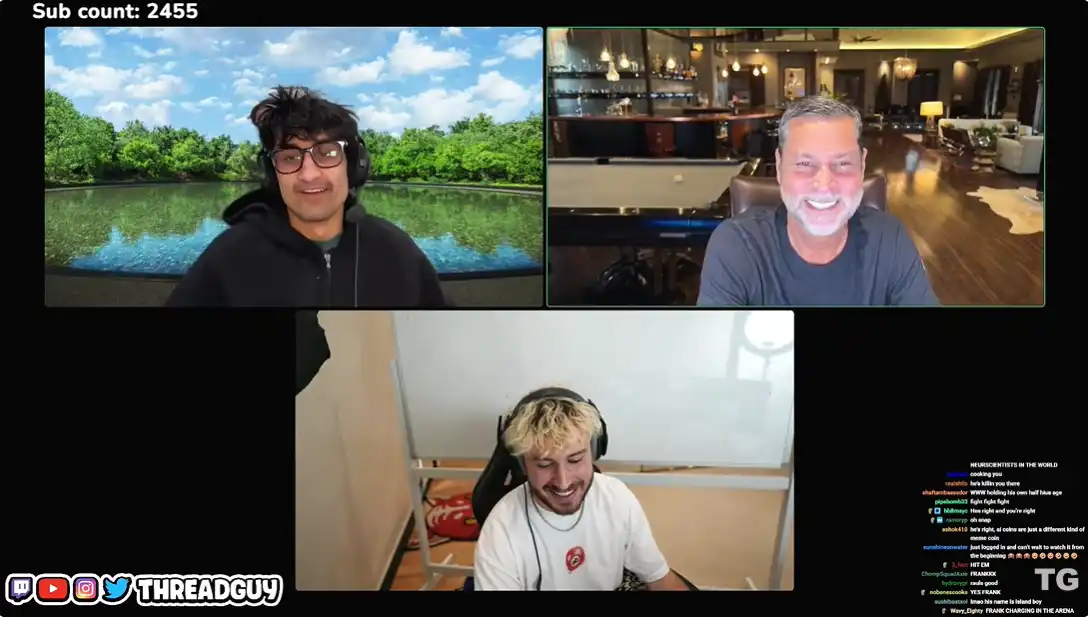
Thread Guy: We have another guest, Frank, an AI enthusiast.
Frank DeGods: Nice to meet everyone. This is a great topic. I've been listening, and obviously, I have some thoughts of my own.
Raoul Pal: None of us knows the answer, right? That's precisely why discussions and contemplations become interesting.
Frank DeGods: Yes, so let me ask a question first. So far, how many AI tokens have you seen? How are we progressing now? Which ones have you researched the most?
Raoul Pal: I initially looked at Tao and Render, along with some related projects. Then I also kept an eye on Virtuals, AI16z, Zerebro, but that's about it.
Frank DeGods: Alright, that makes sense. I think when you mentioned the lack of real technology and developers, it might be a misconception. Because these AI Agents are not meant to compete with OpenAI; they are built on top of it. They leverage technologies like Anthropic, WAMA, among others. Strictly speaking, as soon as AI starts using blockchain, that is already an innovation. Perhaps not the most groundbreaking innovation globally, but the blockchain applications of these large language models and people's interaction with them are already at the technological frontier. I think this should not simply be dismissed as a hype coin because they are indeed doing work, that's my view.
Raoul Pal: Tools like the Trading View model or chargeable macros are practical. However, their value has not yet reached the scale of tens of billions or hundreds of billions of dollars. Moreover, the development of the technology itself is too fast. A year ago, I couldn't even input charts into ChatGPT to help me interpret them, and now it can perform technical analysis. The rapid iteration of technology makes you think that the accumulated value has not actually been fully realized.
Frank DeGods: But listen to me, Raoul, your description is more about the collaborative process. When giants like OpenAI release new models, these small teams and projects quickly follow suit. You mentioned the rapid technological iteration, but these AI projects are precisely utilizing this speed to optimize their products. For example, when Anthropic or OpenAI releases a new model, with just one line of code change, these Agents' capabilities will rapidly improve. To say these projects do not collaborate with large models, I think that viewpoint is not accurate because they do indeed are collaborative.
Raoul Pal: Frank, I understand your point. However, the issue I encounter is that OpenAI often directly eliminates startup products by integrating features, thus destroying the survival chances of these small companies.
Frank DeGods: This is actually an outdated narrative; the industry landscape is rapidly expanding. For example, when Anthropic was first launched, people thought it would be completely suppressed by OpenAI. But in reality, not only did it survive, but it even became a strong competitor. Today, some of the world's best AI developers are more inclined to use Anthropic's technology.
Raoul Pal: That's right, Anthropic and ChatGPT have significant differences in some aspects. For instance, Anthropic's conversations are more open, some of its features make me feel that it is somewhat more "conscious," and it is slightly stronger in terms of code. This indeed offers developers greater flexibility.
Frank DeGods: Here are two key points, let me explain. In the Web2 world, when ChatGPT first became popular, there was a belief that all GPT wrappers could not accumulate value. Therefore, many startups, although highly valued, were seen as projects destined to go to zero. However, the facts of the past two years have been quite the opposite. In fact, many of the largest AI companies are not the core model but more like applications based on wrapping, such as Character.AI. Character.AI is now valued at around $30 billion, and its core functionality is just a highly customized wrapper.
Raoul Pal: But these wrappers did not have a truly breakthrough technology.
Frank DeGods: Let me explain. Take Eliza, for example, which is currently one of the most popular open-source projects on GitHub. Its code is very concise, and users only need to replace the API key to choose different models, such as Llama or OpenAI. This means that when Anthropic, OpenAI, or Meta release new models, these AI agents can immediately integrate seamlessly. This rapid compatibility and tuning capability demonstrates that these projects do indeed collaborate closely.

Raoul Pal: I understand. However, the issue is that real value accumulation still remains more concentrated on the underlying chain rather than these application layers. The capital cycle and product iteration speed are too fast, making it difficult to form a lasting competitive advantage.
Frank DeGods: But I believe what we need to discuss is whether, as investors, we should wait until everything is ready to take action or start exploring potential projects now, regardless of whether the technology is fully matured.
Raoul Pal: This is a very philosophical question. Personally, I tend to observe trends, such as whether a field is undergoing cutting-edge research. Two days ago, I chatted with a team that used a Chinese model, which is roughly equivalent to an early version of ChatGPT 4.0. The problem is, although the combination of AI and blockchain is directionally correct, where will value accumulation ultimately occur? I believe more value will still return to the underlying chain itself because the speed of the capital and innovation cycles is too fast, making it difficult for the application layer to achieve long-term breakthrough products.
Frank DeGods: Your point makes sense, but we cannot ignore the current focus of the community. For example, there is a developer named Yohei who is one of the pioneers of the Baby AGI AI Agent concept. He is developing a framework to help people create more similar Agents. Open-source developers like him are finding the intersection of market demand, gradually forming their own community and appeal.
Raoul Pal: These examples indeed show some market traction, but they still pale in comparison to Telegram bots. Most existing open-source projects are more like trading view models, providing some practical functionality but lacking significant innovative breakthroughs.
Frank DeGods: I disagree with this comparison. Telegram bots are merely executing macro commands for simple strategies, whereas current AI Agents can address more complex issues through real-time tuning and the ability of large language models. More importantly, in the AI-blockchain convergence field, we have seen some truly experimental research taking place, such as a project called "Y&E," which refines AI to search for knowledge gaps in research papers and attempts to use this data to drive solutions to health domain problems. Another example is "Pythia," which seeks to implant AI into a mouse's brain, conduct neural training, with all research details publicly available on-chain.
Raoul Pal: I acknowledge that these projects are intriguing; they are indeed an extension of Decentralized Science (DeSci). This model of combining open research and community-driven power is indeed very novel. However, from an investment perspective, I still find their long-term value unclear, which may make it difficult for the average investor to truly benefit.
Frank DeGods: This is where our perspectives differ. I believe we cannot solely view these new projects from an investment return standpoint. For example, the rise of community-driven and open-source development incentives has allowed many research projects that previously failed to attract mainstream attention to now garner significant interest. The success of this model lies not only in the technology itself but also in community involvement and feedback.
Raoul Pal: Your point has clarified things for me; the combination of AI and blockchain is indeed one of the trends we need to closely monitor in the future. I also agree with your point that the speed of capital formation today is unprecedented, and the cycle of testing, failing, and rebuilding is very short. This experimental ecosystem is crucial for innovation, but from a long-term investment perspective, I prefer to wait until the market matures before taking action.
Frank DeGods: I can understand that, but my view is that we have not yet seen the winners in this field. And when the true winner emerges, it may attract a large influx of capital. You are right that this may happen in 2027-2029, but I think the experimental phase we are currently going through is also worth paying attention to.
Raoul Pal: I completely agree with your view. The process of experimentation and validation is undoubtedly key to driving the industry forward. However, what I value more is the long-term value accumulation of the underlying technology and network effects, rather than short-term market speculation.
Frank DeGods: You are right, the accumulation of long-term value is indeed important. But for those developers and investors who delve into this field every day, understanding the dynamics of each token, their short-term strategies and experiments may help them identify the future winners.
Raoul Pal: That's also why I enjoy observing and learning from frontline players like you. Your short-term observations and my long-term trend analysis can complement each other, which is helpful for us to understand the direction of the entire industry.
Frank DeGods: The emphasis you just mentioned is indeed very reasonable. I think we can understand issues from different perspectives. For example, the combination of AI and blockchain is not just a technological innovation, but also about how to drive the rapid development of open-source through token incentive mechanisms. AI is now the world's most attractive experimental field, and this experimental pattern is creating a brand-new mechanism of motivation.
Raoul Pal: This is indeed one of the most powerful applications of blockchain technology. I completely agree with your view. My concern is that for the average investor, accurately choosing a successful token is almost impossible. Unless they, like you, research the market every day, stay up until 3 am, closely monitor price fluctuations and project dynamics. Otherwise, for those who do not engage in full-time research, this can be very challenging.
Frank DeGods: You are right. That's why those of us in this field delve into the market every day, paying attention to the dynamics of each token. I think it's also a matter of different time perspectives. You focus on long-term trends, while we are more focused on short-term market performance and potential opportunities.
Raoul Pal: This difference in short-term and long-term time perspectives is indeed something many investors need to understand. For the vast majority of ordinary people, I would advise them to prioritize long-term holding and try to avoid short-term high-risk operations.
Thread Guy: Raoul, I feel like after you leave this meeting, you might start researching AI tokens. I bet you've already mentally noted down quite a few projects.
Raoul Pal: Actually, after leaving this discussion, I realized that there isn't a clear reason in the current market to support the inevitable success of any AI token. However, the overall trend in this field is undoubtedly correct. I might consider the GOAT project because it represents a particularly interesting "left-curve" logic (i.e., nonlinear, unexpected investment opportunity).
Thread Guy: I like the consensus we've reached - the combination of AI and blockchain is a massive trend. While we can't currently pinpoint which token to buy, we both agree that this direction is the right one.
Raoul Pal: Yes, I think everyone might be getting a bit too "middle-curve" (i.e., overly analyzing the current situation). If we set aside analysis and arguments and go back to basics, the trend is indeed obvious. That's why this kind of conversation is valuable, as it can help us focus on what truly matters.
Thread Guy: This discussion has been really interesting, we definitely need to have a Part 2. I have two final questions for you.
Raoul Pal: Sure, anytime for a Part 2 discussion. Next time we can talk about NFTs. I'll take you into that realm, and you might even consider buying a Dickbutt (a well-known NFT project)!
Thread Guy: I might never buy a Dickbutt in my lifetime (laughs). Let me tell you, if I wake up tomorrow and find the GOAT project's market cap has exceeded seven figures, then I'll buy a Dickbutt.
Raoul Pal: By then, you'll definitely be buying due to FOMO! Dickbutt is an essential part of the crypto culture, just like CryptoPunks.
How is AI Changing the Crypto World?
Thread Guy: Alright, back to the topic. I want to ask a broader question about the future vision of AI. Without considering crypto, where do you see AI in 3 to 5 years and how will it change the world?
Raoul Pal: Alright, I've written a lot about this issue before. When everyone is watching, please understand how important this matter is. The next five years will be a critical period. I also operate a service called "Exponentialist," focusing on the intersection of technology and cryptography. All content is currently free, and you can check it out as we are offering a free trial. Now let's talk about the driving forces of global economic growth: population growth, productivity growth, and debt growth. Since 2008, debt growth has essentially stalled, and we have just been constantly repaying debt. As for population growth, we are facing an aging population, with almost all global populations shrinking. And in terms of productivity, the efficiency of the elderly population is lower.
However, we are about to enter a whole new era. AI and robots will introduce "infinite labor" and "infinite knowledge." Almost all human value creation can be attributed to knowledge or labor. Professions such as lawyers, accountants, doctors, surgeons, whose high income comes from their combination of knowledge and labor characteristics, will all be gradually replaced. While this may not be fully realized within five years, the trend is already very clear.
On the other hand, if economic growth relies on population growth, then with the introduction of AI Agents, we will soon be able to achieve "infinite population growth." This will create unprecedented economic activity and disrupt existing economic models. And this value may not necessarily belong to us. We will see companies being disrupted, replicated, and quickly launched by AI. For example, I can replicate your SaaS business model, transform it into a product for the Indian market, and AI Agent will tell me how to operate it better than we do.
Currently, I am developing an AI video project. Next week, I will release a voice version of me on the Real Vision platform, based on all my data training. Around March, you may even be able to interact directly with this system and the "video version of me." This is a long-term example of our shift from "one-to-many" dissemination (like our current conversation) to "one-to-one" dissemination. Imagine that, in the future, Netflix will offer customized movies based on each person's personality because everything can be rendered instantly. Then, with the rise of AR and VR technologies and the proliferation of robots, everything you understand about the world will be completely transformed. This is the essence of everything growing exponentially. This is the embodiment of Metcalfe's Law, but we are now entering "Metcalfe's Law squared," known as Reed's Law. This goes beyond our current understanding, but the development of AI has already made us feel this change. Although this will disrupt the current social situation, it also offers us the greatest opportunity in human history.
The next five years are crucial, and we must seize this opportunity, not squander it. I will continue to emphasize avoiding short-term speculation and staying in tune with this trend. Cryptocurrency will become a significant part of this trend and is the largest macro investment opportunity in history. Bitcoin and Ethereum are the best-performing assets in history, and this trend will continue.
The key is not to lose your tokens. Think about those who bought Bitcoin at $3; their sole task was not to lose their tokens. If you lose your capital due to excessive leverage or wild speculation on dozens of AI tokens, you will completely miss this opportunity. If you are not careful, you may find yourself in 2030 without enough funds to adapt to this new world. That's my requirement for myself and my advice to everyone. This is the golden age of our generation. Once this opportunity passes, I don't know what will come next. But I do know that humanity still loves the human experience and cherishes nature. So, we will find a balance between nature, humanity, and community, and I am not worried about that. Regarding money and value, AI may become a better investor than us, able to create better business models and even achieve comprehensive economic prosperity. At that point, the meaning of money will undergo a profound change.
Thread Guy: So, how much money do I need to earn by 2030 to feel secure?
Raoul Pal: It's not about a specific amount; it's about the choices you make in your lifestyle. You need to ensure you have a stable abode, live where you want, and maintain the lifestyle you desire. You also need a certain amount of liquid assets to cover daily expenses while allowing yourself time to find your role in this new world. I assume you are still young and have enough time to adjust. I think being a content creator and part of a community is very valuable. We still need genuine human interaction, a value that is irreplaceable.
The key is to find a place where you enjoy living, such as a sunny area, mountainous region, seaside, etc. It doesn't have to be in the US; there are many places with lower living costs, like El Salvador, Nicaragua, Thailand, or even Singapore. If you can take care of yourself, you can face future changes with a relaxed mindset instead of fear. Because if you don't take care of yourself and haven't accumulated enough capital for your lifestyle, you will face significant risks.
Raoul Pal's Beginner's Investment Guide
Thread Guy: One final question, for those who are completely lost and just starting to explore AI and cryptocurrency, what advice do you have?
Raoul Pal: I have said similar things to many friends' children. They have just graduated from college, around twenty years old, and always ask me what to do. My usual advice is: First, buy some Bitcoin, Ethereum, and Solana, and allocate 80% of your funds to these core assets. The remaining 20%, use it to explore the market, learn the rules.
Investing is not an easy thing. I have been doing it for 35 years, and it has never been simple. So, don't take reckless risks right from the start. The overall trend in this field is upward, as long as you hold onto core assets and stay the course, you will definitely make money. But I understand that this may not be enough to pay off a mortgage, and it may not feel fast enough. However, I hope you can gradually learn the rules of investing through experimenting with a portion of your funds, rather than risking all your capital.
When you truly grasp the rules of this game, you may have the opportunity to hit it big, achieving returns of a hundredfold or even higher. But I do not recommend going all in at once because the vast majority of people who attempt to do so end up failing. The success stories you see on social media represent only a tiny fraction, with thousands losing all their capital behind the scenes.
This is the unique aspect of this market: it is a casino rigged in your favor, with the overall trend going up. Surprisingly, however, many people still manage to mess it up.
Thread Guy: My final question is, how do I make $10 million by 2025?
Raoul Pal: You can start with $100 million and then trade AI tokens (laughs).
Thread Guy: Haha, you are truly a legendary figure, thank you very much! This discussion was very interesting.
Raoul Pal: I also really enjoyed this conversation, looking forward to the next meeting!
You may also like

Why Is BlackRock Investing $5 Billion in the SpaceX IPO?

Cryptocurrency market makers collectively seek change as it becomes increasingly difficult to make money

a16z Crypto Partner: Cash flow is the moat

Citibank releases "2030 Asset Tokenization Market Outlook": 6 major trends may create a $8.2 trillion market

The trillion-dollar valuation test: Are the three major super IPOs a celebration for tech stocks or a nightmare for the crypto market?

Morning Report | Digital Asset completes $355 million financing led by a16z Crypto; Meta completes operational separation from Manus
Morning News | CME Group launches Nasdaq Cryptocurrency Index futures; Asset management giant Janus Henderson strategically invests in Ethena

Bitcoin Layer 2 Network Botanix: Why Did We Choose to Dissolve?

Why did Oracle deliver the strongest financial report in history, yet its stock price fell?
When the P2P illicit funds from ten years ago turned into 60,000 bitcoins

Dialogue with OmenX Founder: Why does the prediction market need an evolution from "spot" to "derivatives"?
Galaxy in-depth report: Is Solana still worth paying attention to?

Young people in South Korea make a "final effort" in the epic bull market
The pricing controversy of Trade.xyz exposes the fatal weakness of Pre-IPO perpetual contracts
How much longer can Ethereum's last big buyer hold on?

World Cup 2026 Coming – WEEX Celebrates with $1M Prize Pool & Michael Owen Live

Morning Report | OpenAI has submitted an S-1 registration statement draft to the U.S. SEC; Morpho completes $175 million financing

Galaxy Deep Research Report: How Hyperliquid's HIP-4 Upgrade Changes the Landscape of Prediction Markets?
Why Is BlackRock Investing $5 Billion in the SpaceX IPO?
Cryptocurrency market makers collectively seek change as it becomes increasingly difficult to make money
a16z Crypto Partner: Cash flow is the moat
Citibank releases "2030 Asset Tokenization Market Outlook": 6 major trends may create a $8.2 trillion market
The trillion-dollar valuation test: Are the three major super IPOs a celebration for tech stocks or a nightmare for the crypto market?
Morning Report | Digital Asset completes $355 million financing led by a16z Crypto; Meta completes operational separation from Manus


