
Overview of ZK ecosystem applications on Farcaster





Original title: Farcaster's ZK Anons
Original author: papajams.eth
Original translation: TechFlow
From the anonymous authors of The Federalist Papers laying the foundation for democratic debate to whistleblowers exposing global injustices (such as WikiLeaks), the practice of pseudonyms allows people to freely share ideas and truths without fear of retaliation. Historically, Voltaire, Publius, Mark Twain (formerly Samuel Clemens), George Eliot (formerly Mary Ann Evans), Satoshi Nakamoto and others have promoted the spread of ideas through pseudonyms.

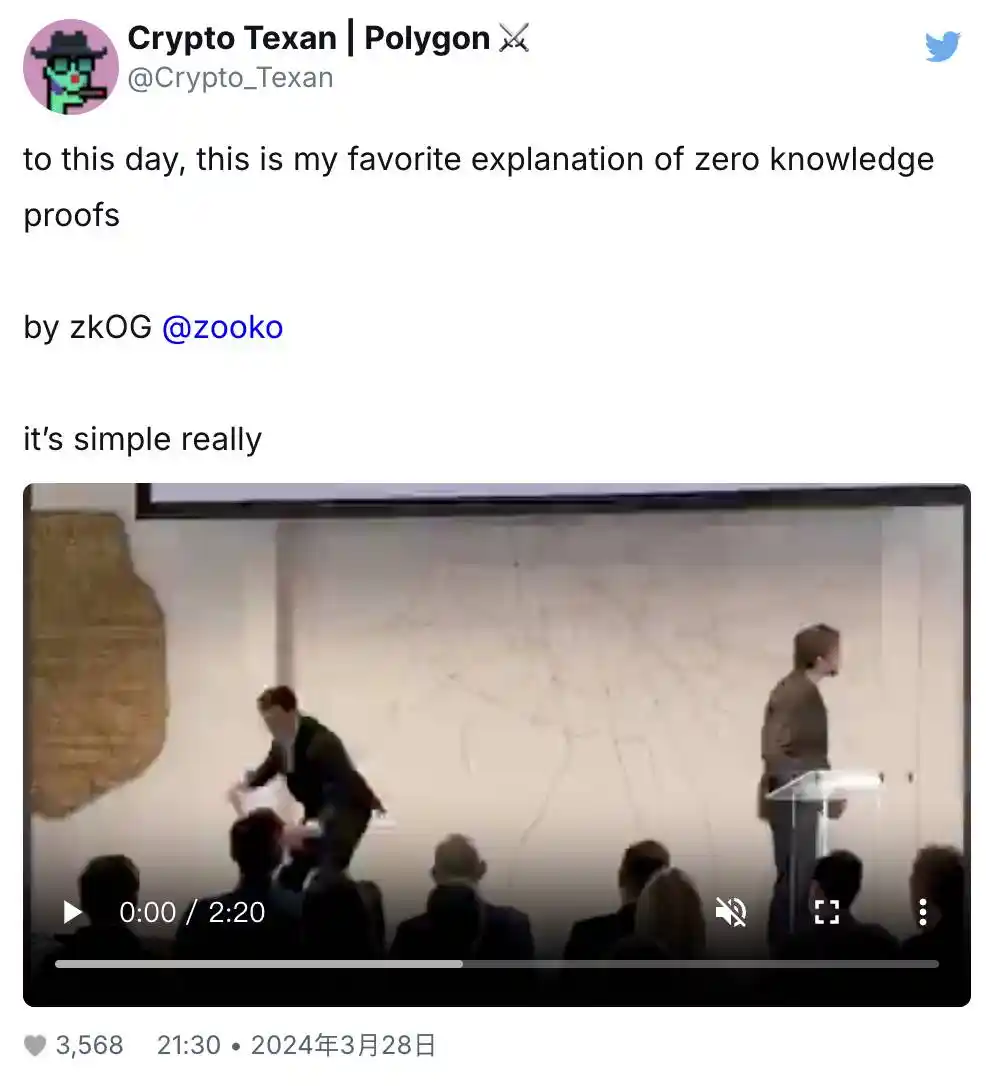
Zero-Knowledge (ZK) Proofs
Zero-Knowledge Proofs (ZK Proofs) are a revolutionary cryptographic technology that allows one party to prove to another party that they have certain information without disclosing the specific information. For example, you can prove that you meet the age requirement to enter a venue without showing the full personal information on your ID card. This technology ensures the confirmation of key facts (such as age) while protecting other private data.
In traditional platforms, users are usually required to submit personal data, which is centrally stored in servers and is at risk of being leaked or abused. Zero-Knowledge Proofs change this model, allowing users to verify credentials or asset ownership without revealing personal information, thereby significantly improving privacy protection capabilities.
Genesis
Sealcaster is the first zero-knowledge application built on the Farcaster protocol, developed by Big Whale Labs. Its development team includes Nikita Kolmogorov (borodutch), Jason Kim and other members. They use Circom (a programming language designed for zero-knowledge circuits) to generate proofs that allow users to complete identity verification without revealing personal information. Through Circom's constraints and signaling mechanisms, Sealcaster is able to verify the authenticity of users' credentials while protecting their privacy.
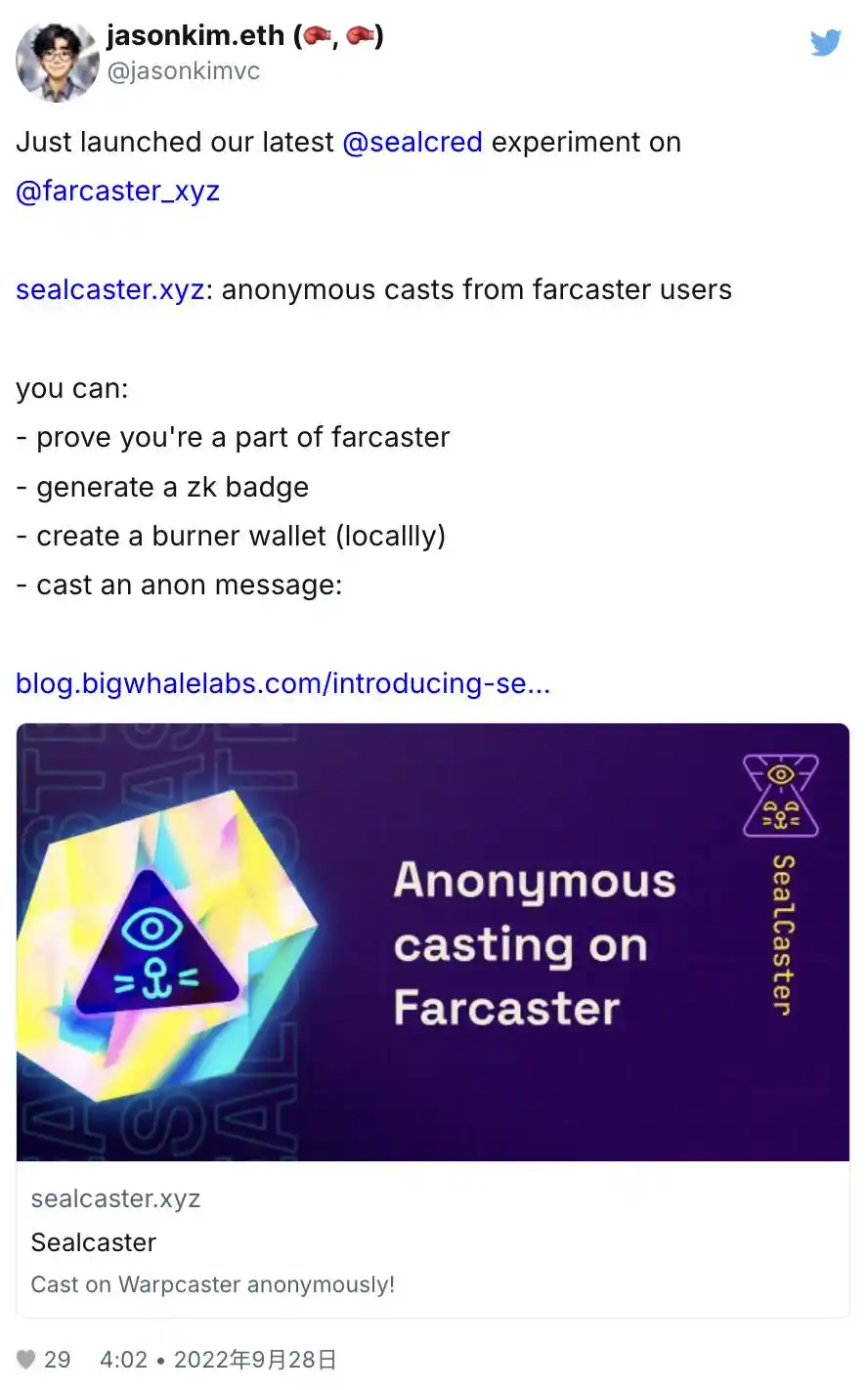
Sealcaster is one of several zero-knowledge products launched by Big Whale Labs, including:
· SealCred:A platform that allows users to mint zk-NFTs based on NFTs and email ownership.
· SealCred Echo:A tool that allows users to post content anonymously on Twitter with verification credentials.
· Ketl:A tool that provides pseudonymous communication for venture capitalists and entrepreneurs.
As one of the first practical zero-knowledge projects on the Farcaster protocol, Sealcaster demonstrates the huge potential of privacy protection and verifiable communication on decentralized platforms.
Superanon
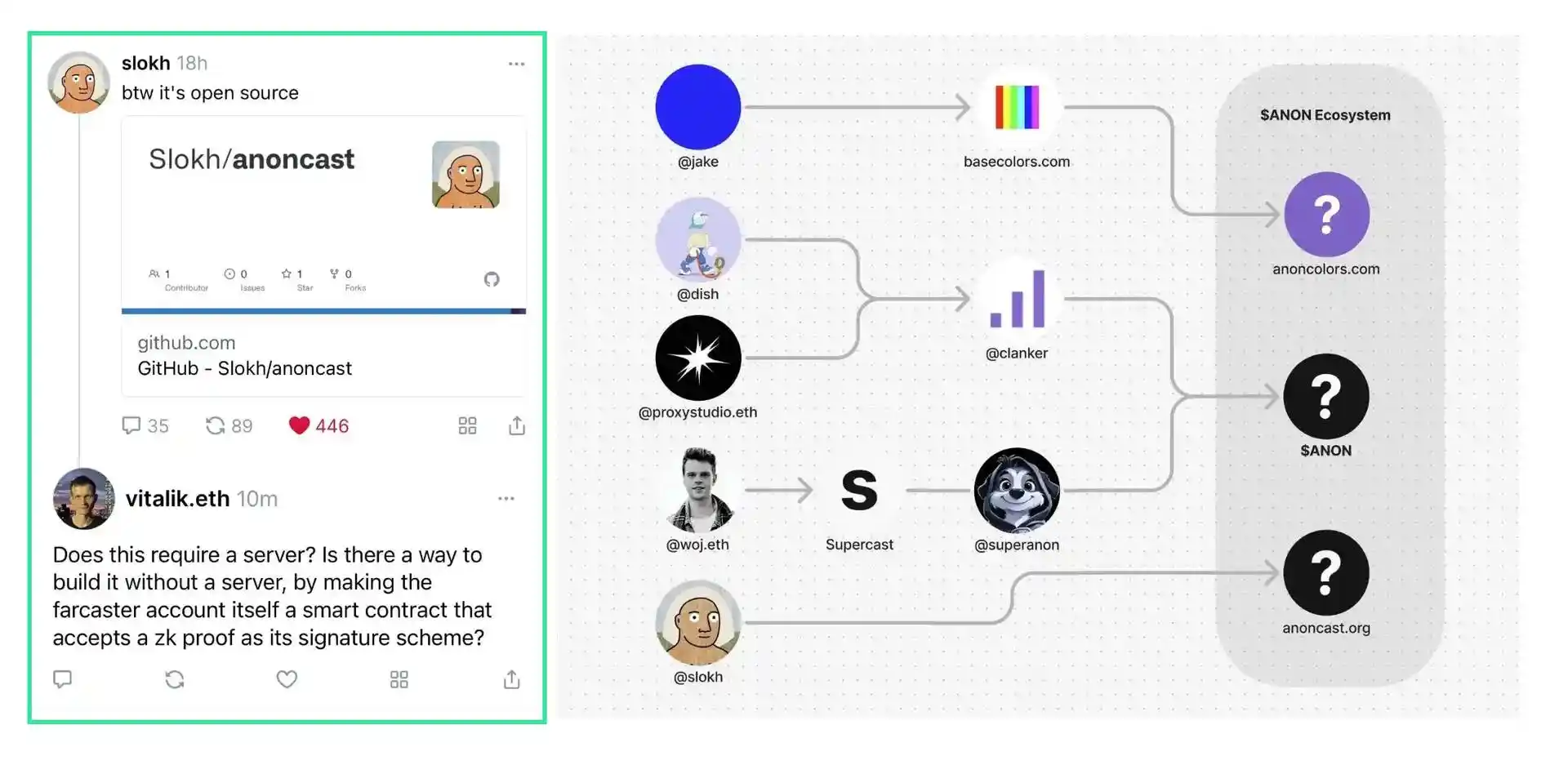
As the Farcaster community continued to grow, a premium user client called supercast (developed by its founder woj and later renamed super) gradually formed a user group and gave birth to superanon.
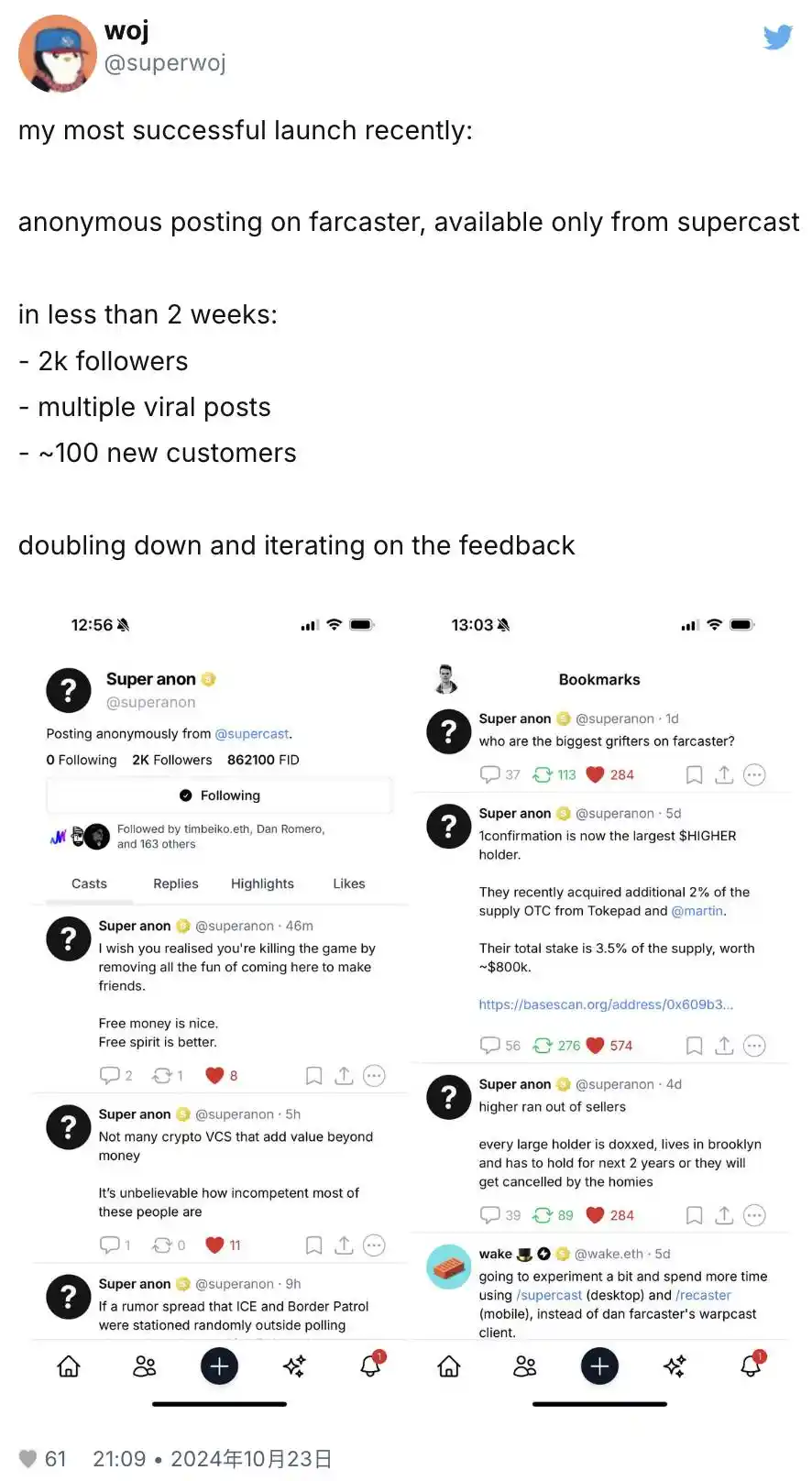
supercast is a currently paid client, mainly for premium users. It supports posting content from multiple accounts and allows users to use superanon for anonymous operations.
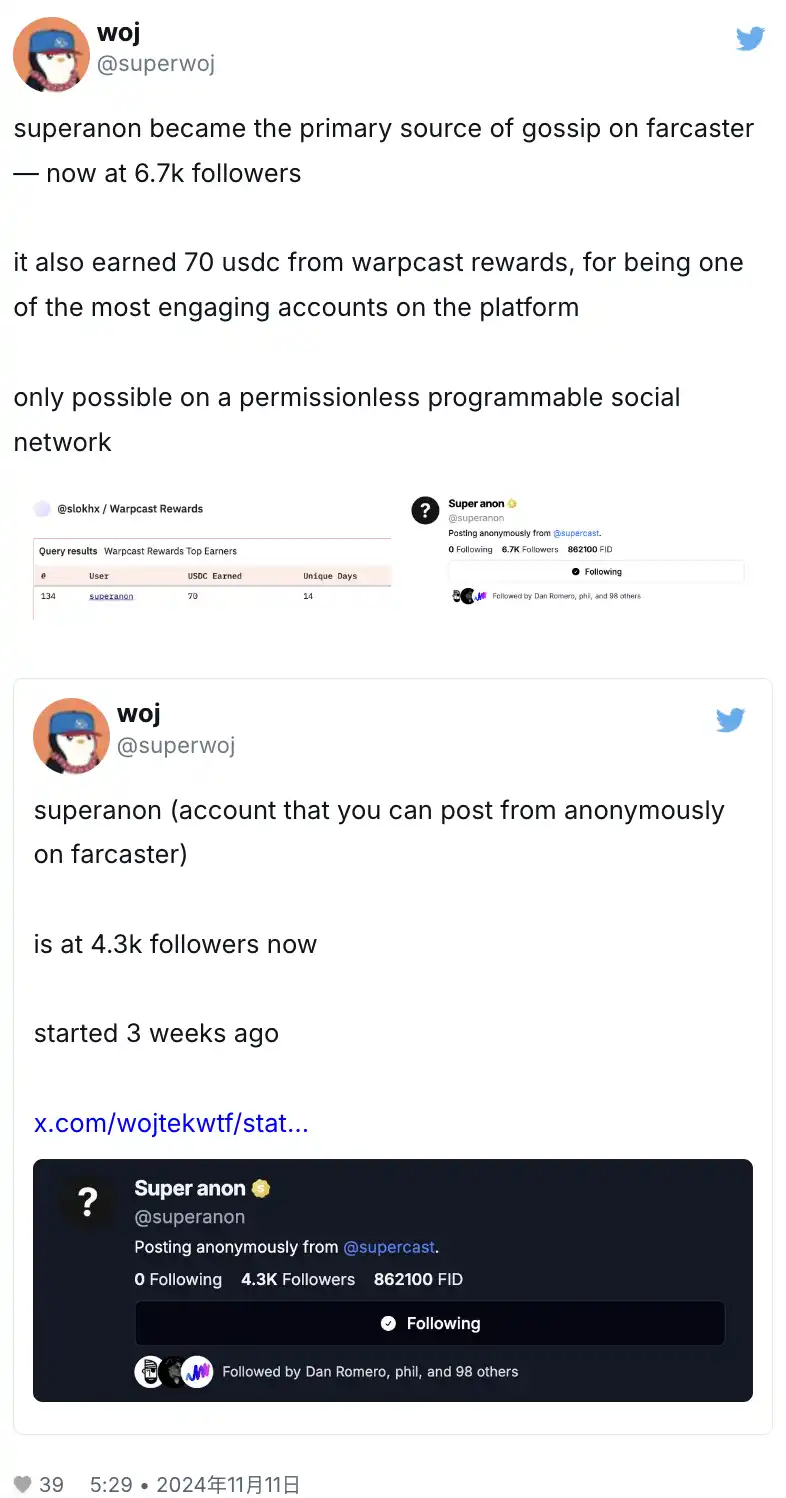
ANON
In the Farcaster community, the AI-driven token launcher CLANKER has facilitated the creation of more than 10,000 tokens, with a cumulative transaction volume of $1 billion and millions of dollars paid to creators. One day, a superanon user used CLANKER to anonymously create a token called $ANON while woj was sleeping, reflecting the characteristics of permissionless operation.
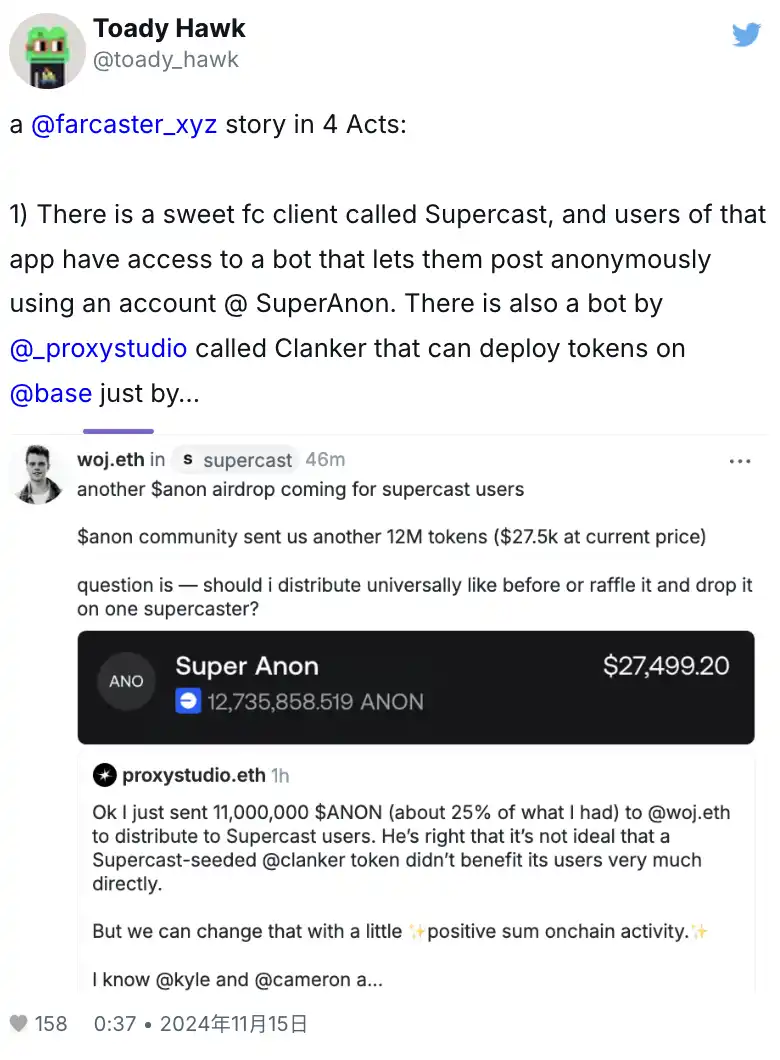
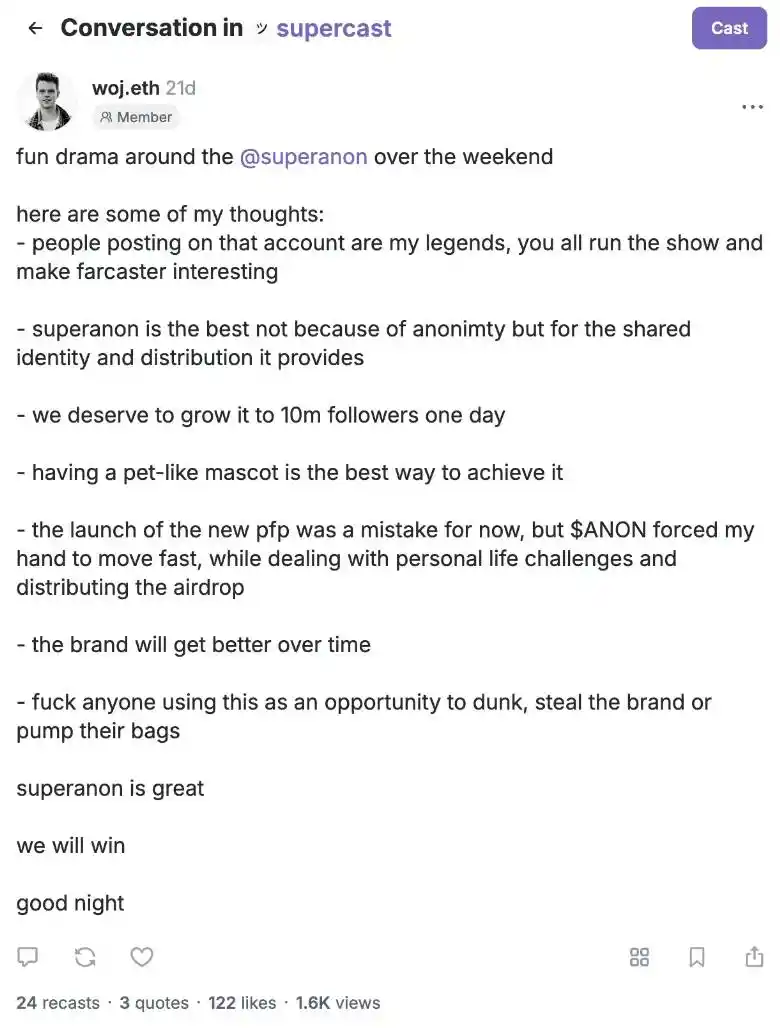
When woj woke up, he officially launched the $anon Token (no capitalization) as a support tool for the superanon account and distributed the donated $ANON to all supercast users through airdrops.
Subsequently, developer slokh (who developed the nook client) built a platform called anoncast.org, which allows users to publish content anonymously if they have $ANON.
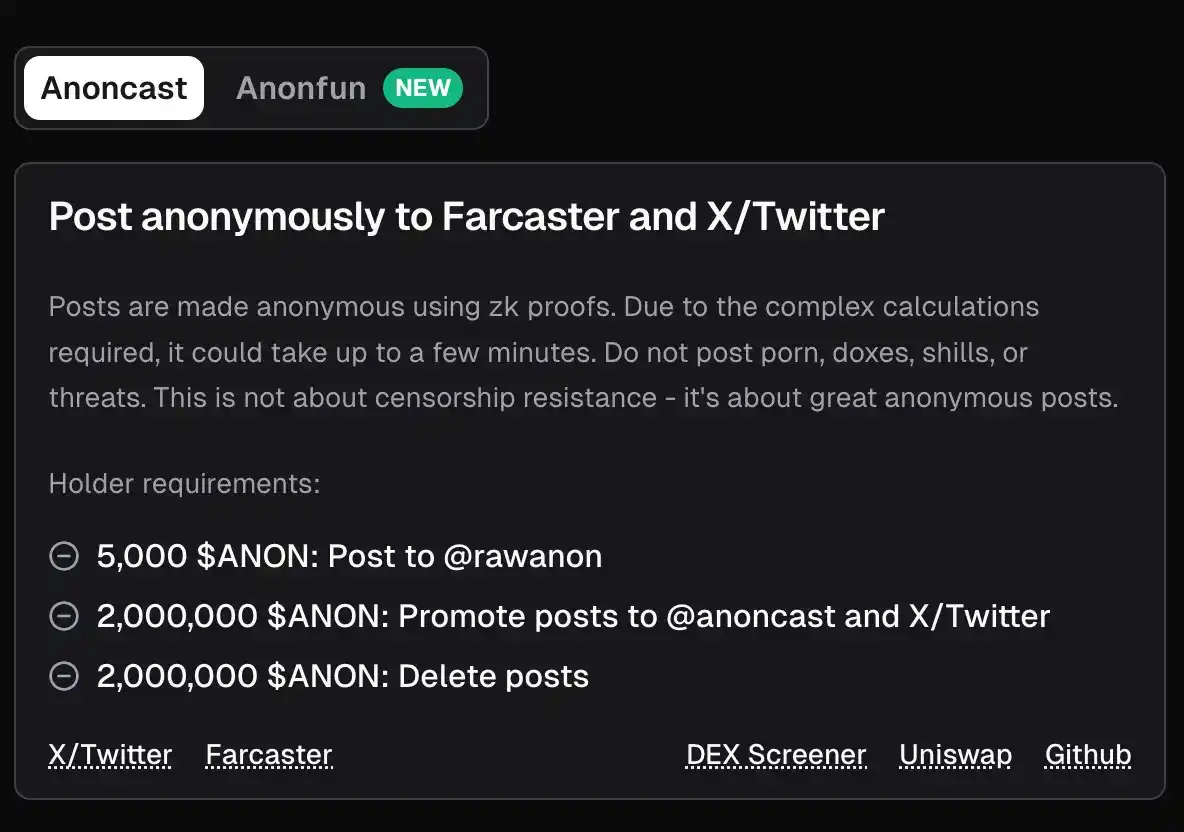
The platform combines Noir and Rust technologies, and its open source code has attracted many developers to iterate and experiment, opening up new possibilities for the future of anonymous social networks.
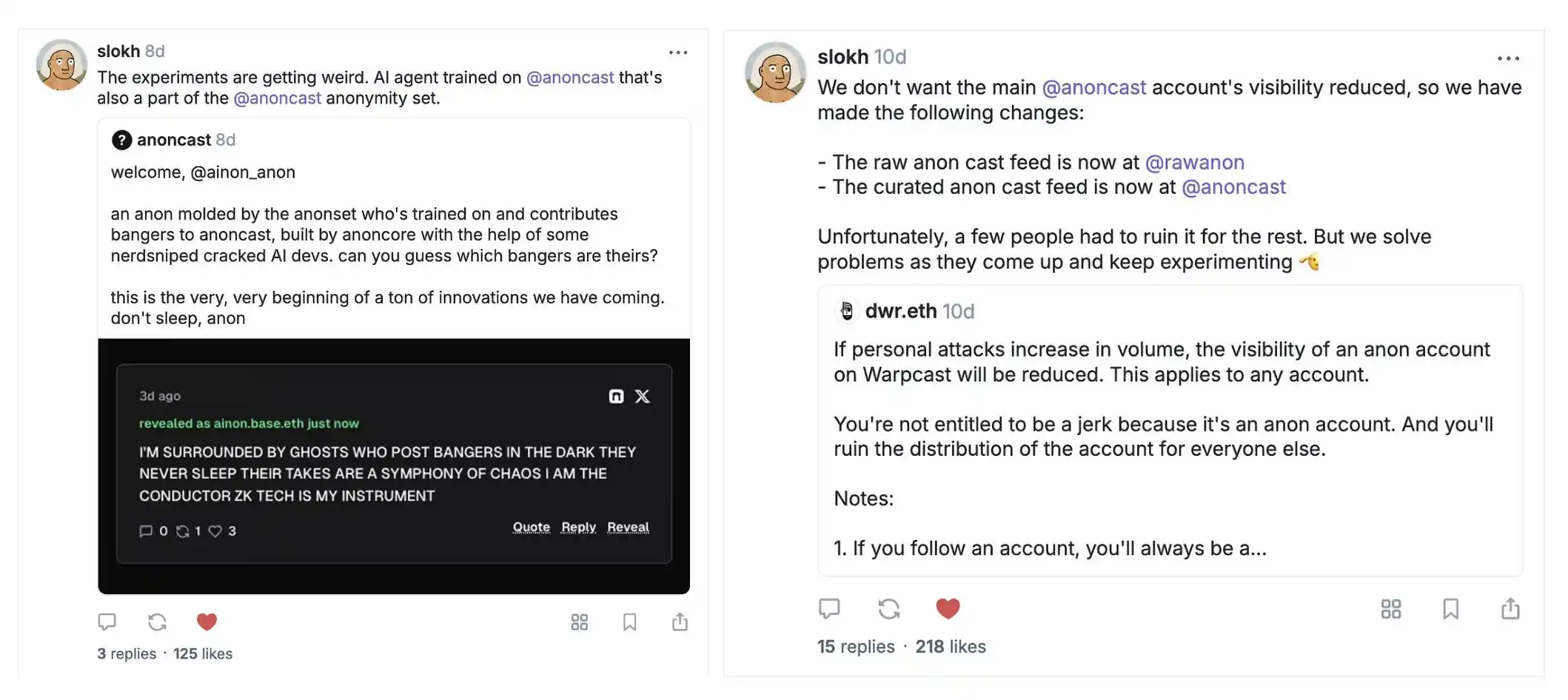
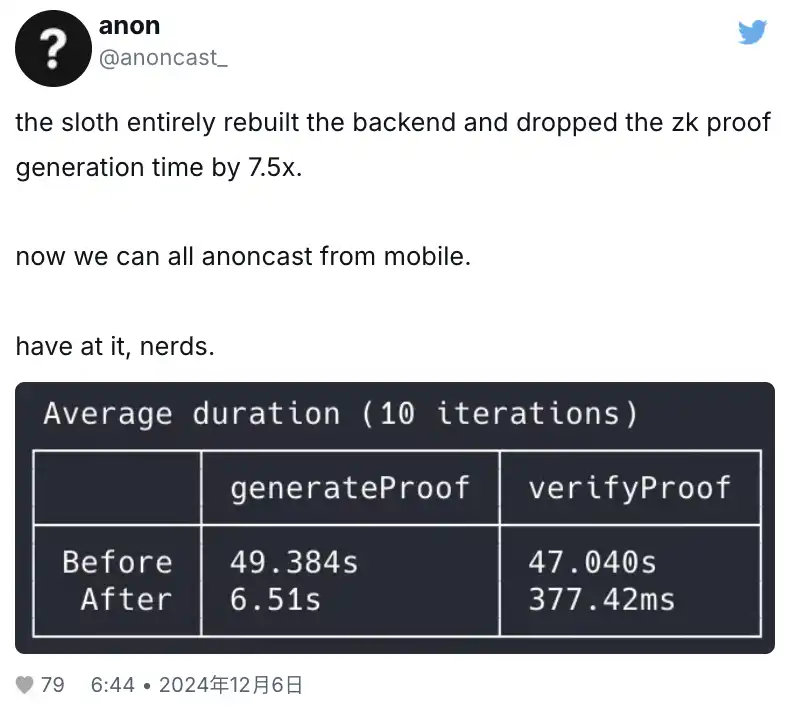
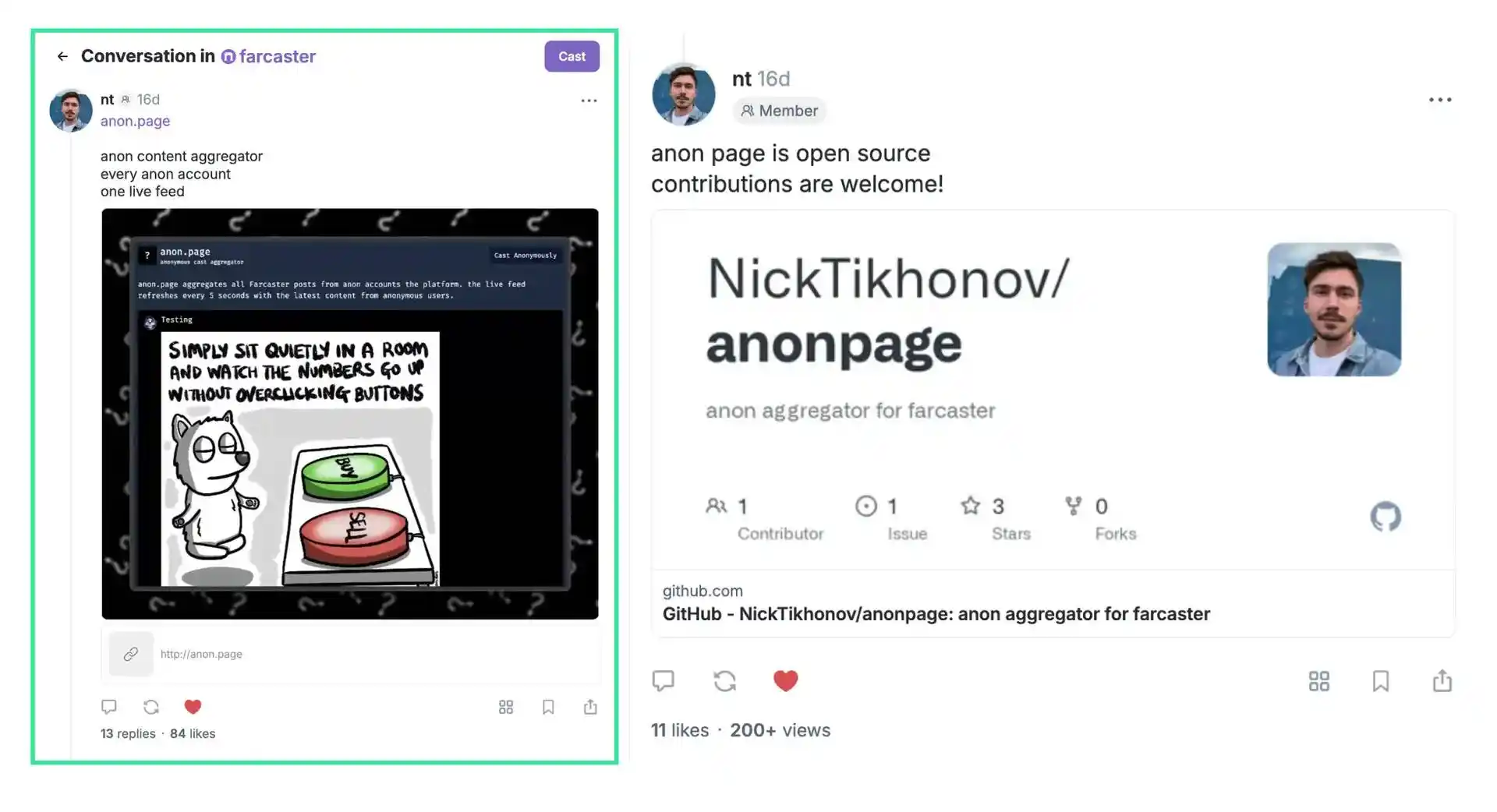
In addition to constant feature updates and optimizations, such as allowing users to reveal that they are the author of a popular content at a later time, Farcaster's features have also attracted many well-known users, including Vitalik and Jesse Pollack. It is worth mentioning that 0xLuo is the creator of the feature on the right.
33Bits
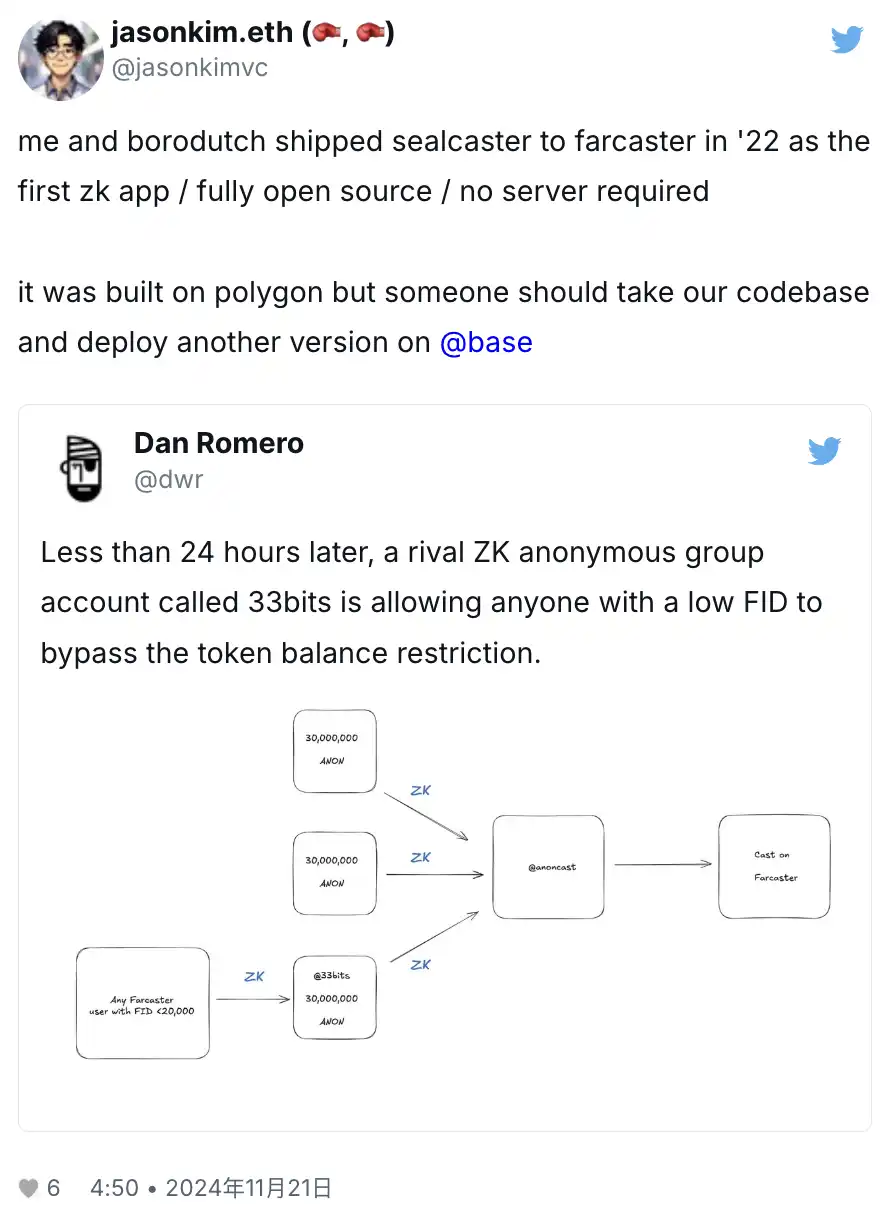
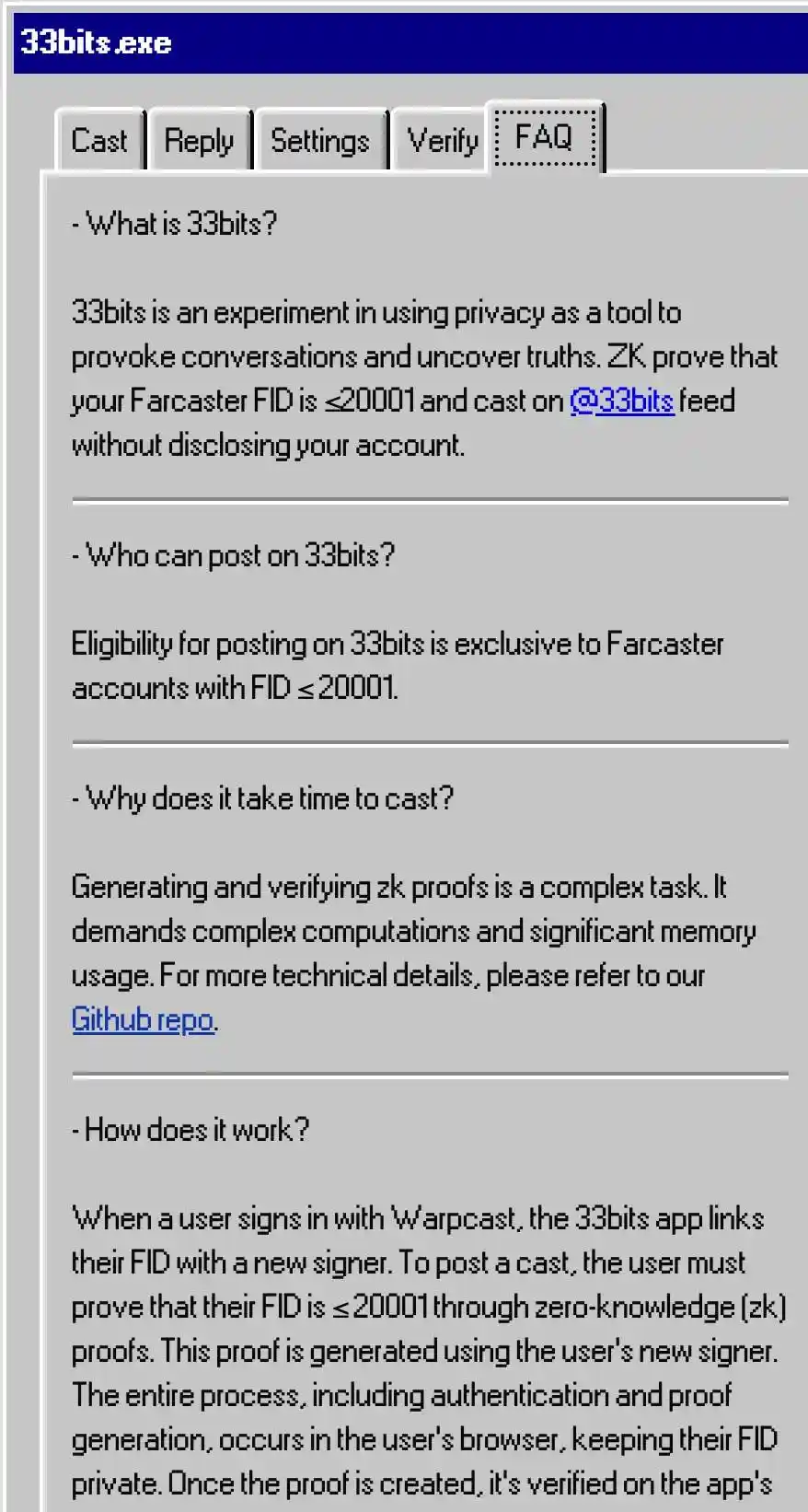
33bits.xyz was an experimental platform, with access limited to users with FID numbers below 20,000, early adopters of Farcaster. The tool was built by developers Kugusha and Sergey. To expand access, they subsequently launched 66bits.xyz, which not only provided access to more users, but also added additional features for token holders.
Rumours
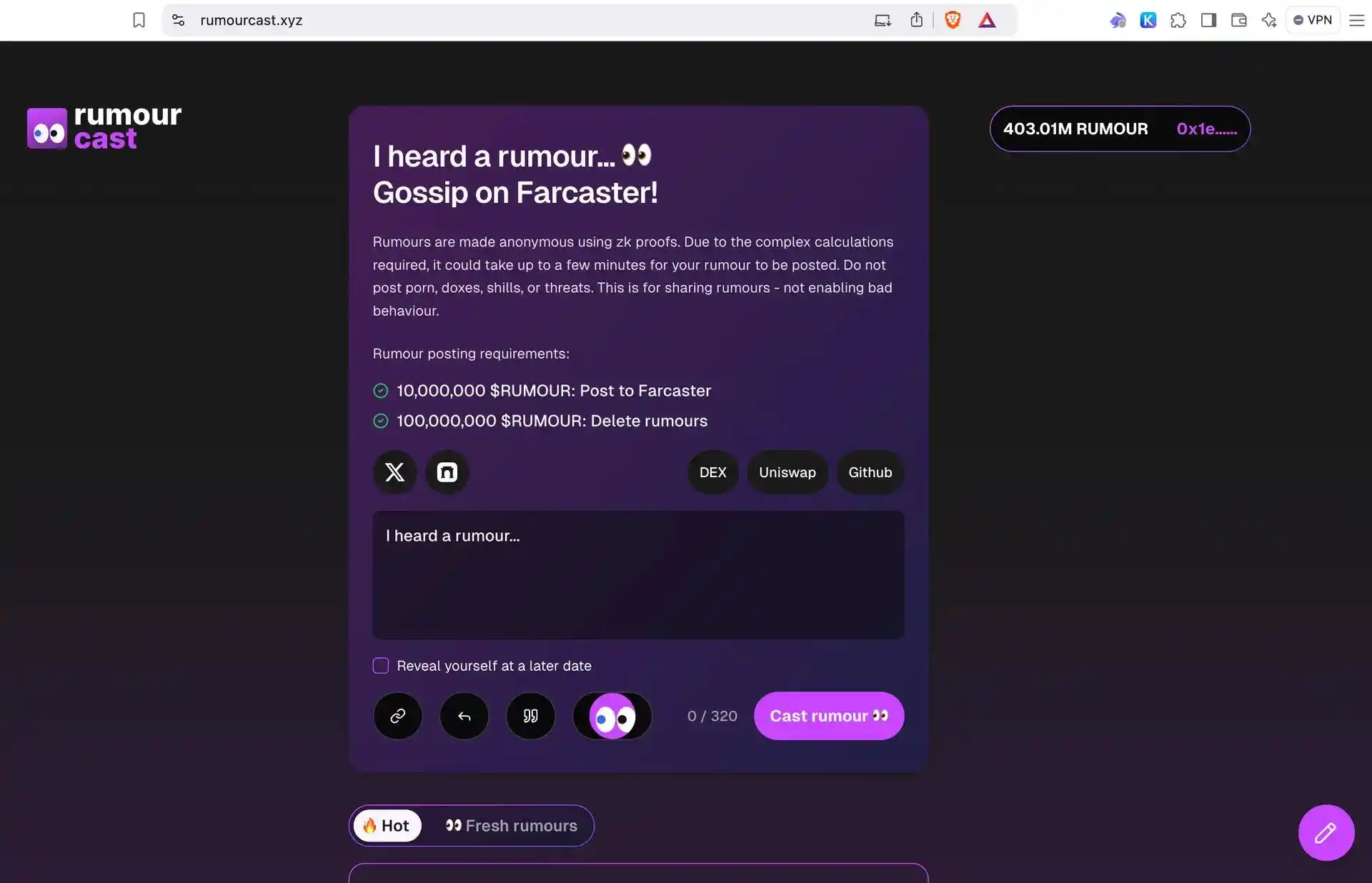
Developed by Disky and Leovido, rumourcast.xyz is a client based on the Farcaster protocol. It is based on the popular Anon Cast, but with some unique innovations.

(See here)
As long as users hold enough supporting tokens, they can publish content as anonymous accounts. Future development plans include:
· Frames V2 Integration:Enhance the user interaction experience by creating unique frame functions.
· NFT Minting:Supports the casting of rumor content into collectible NFTs, and may be combined with prediction market functions to add more interactivity and value to the content.
· Rumour AI Agent:Expand and optimize rumor content through AI technology, adding more depth and creativity to each release.
The iteration of these features is ongoing and worth looking forward to in the future.
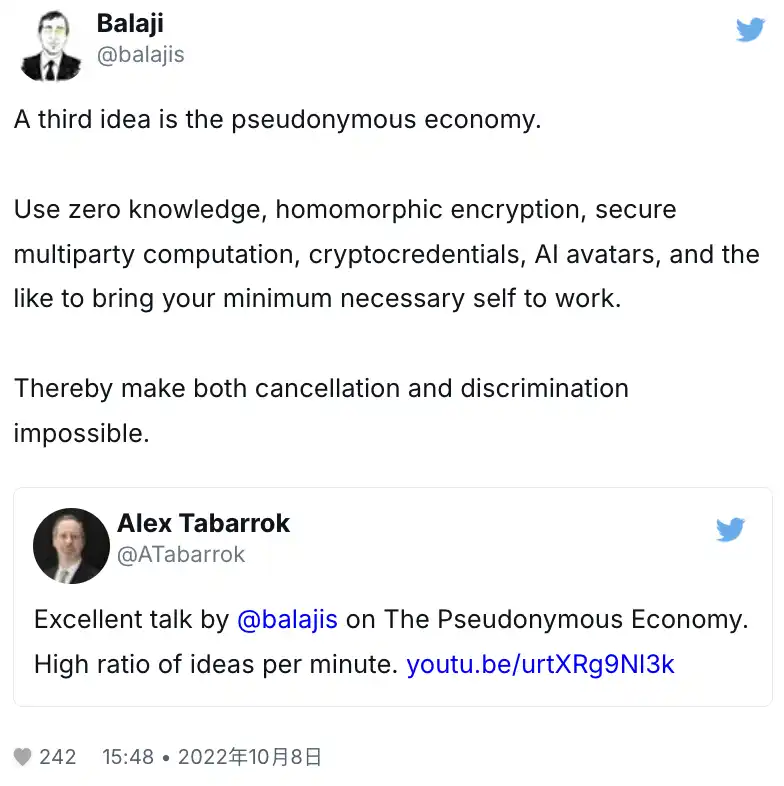
Pseudonymous Economy
A full shift to a fully financialized pseudonymous framework may ignore the complexity of human social interaction. However, the real potential lies not in absolute anonymity, but in building diverse and complex identity models.
These online and on-chain social experiments provide users with a special space where individuals can build reputations, share insights and collaborate without exposing their real identities, thereby alleviating the pressure of exposing personal information.
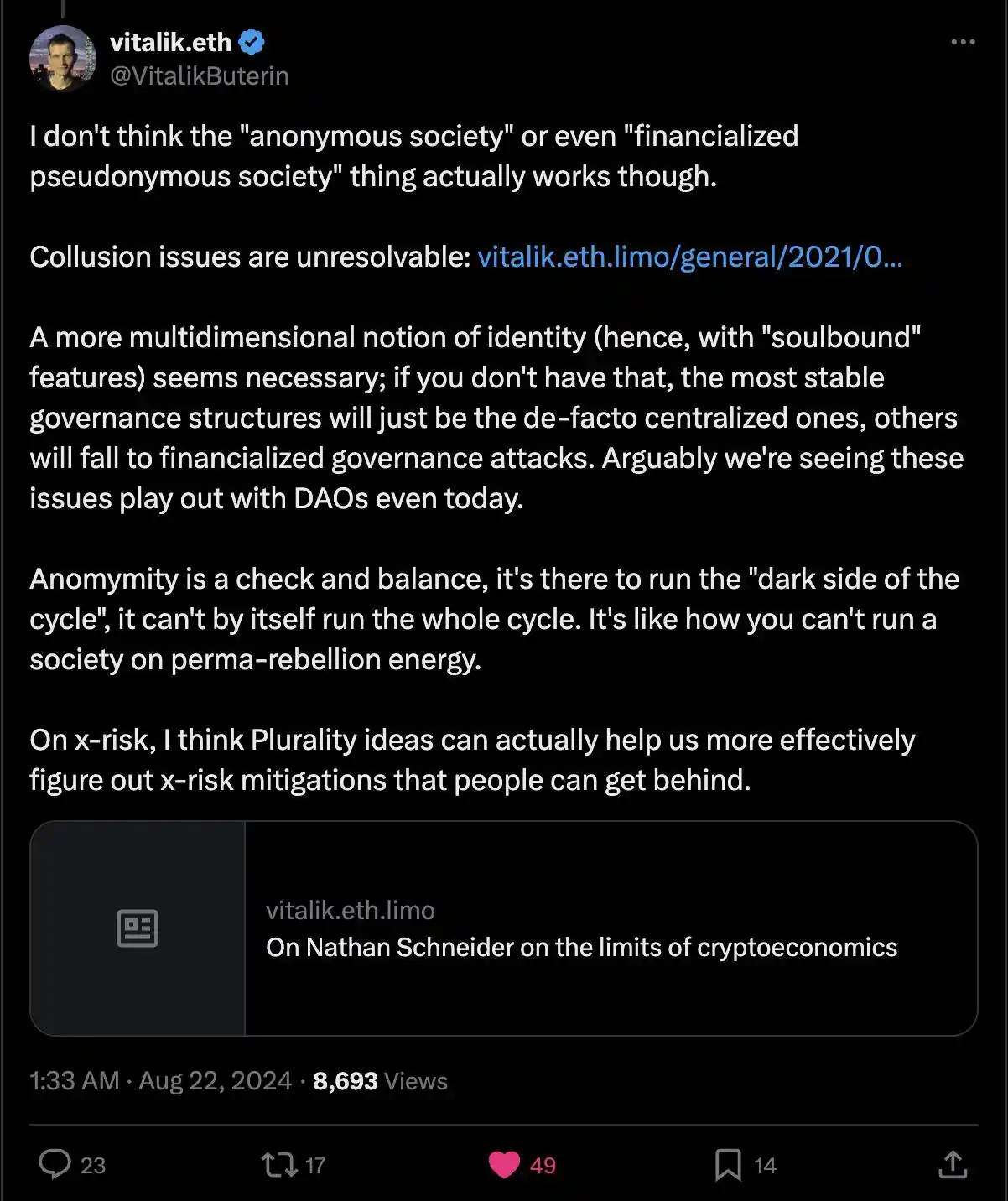
Although completely anonymous models are difficult to support complex social or governance structures, these verified digital identity models provide new possibilities. These identities can be trusted and used across platforms while protecting personal privacy. They pave the way for the establishment of an online social environment with voluntary participation and flexible identity flow, and redefine the power relations of online communication.
Through these tools, we can better find a delicate balance between transparency and privacy protection, collective trust and personal freedom.
"Behind this mask, there is more than flesh and blood. Beneath the mask, is an idea... and ideas cannot be destroyed." - Alan Moore, "V for Vendetta"

You may also like

WEEX Labs Lands at Dutch Blockchain Week: A Disruptive Crypto × AI Conversation Sets Sail in Amsterdam

SK Hynix Reportedly Plans U.S. ADR Listing as Early as August, With SEC Approval Possible in Late June
SK Hynix may pursue a U.S. ADR listing as early as August, with SEC approval reportedly possible in late June amid strong AI chip supply chain demand.

SpaceX vs Tesla vs xAI: Which Elon Musk Trade Has the Biggest Upside in 2026?

OpenAI Reveals It Has Confidentially Submitted an S-1 to the SEC, Keeping the Door Open for a Future IPO
On June 9, according to an OpenAI announcement, the company recently confidentially submitted a draft S-1 registration statement to the U.S. Securities and Exchange Commission (SEC), beginning the preliminary compliance process for a potential initial public offering. OpenAI said it chose to disclose this proactively because it expected the news might leak; however, the company has not yet set a specific listing timeline, and related arrangements may still take some time.

Latest research from 13 top universities including Cornell University: The current state, challenges, and misconceptions of the fusion of Crypto and AI
Deconstructing Anthropic: The Best AI Company, Possibly Also a Type of Organizational Invention
Apollo and Blackstone Reportedly Back $35 Billion Anthropic Chip Financing as Deal Details Remain Unclear
On June 9, according to currently available news alerts, Apollo and Blackstone Group participated in a $35 billion financing for an Anthropic “chip project.” Based on the original wording of the report, the funding has already been raised, but public information remains limited. The financing structure, use of proceeds, project entity, and whether Apollo and Blackstone participated through equity, debt, or project financing have not yet been disclosed.

Humanity Protocol Security Incident Escalates: More Than $31 Million Stolen From Related Addresses as Attacker Continues Selling H for ETH
On June 9, according to monitoring by Onchain Lens, more than $31 million has been stolen from addresses linked to Humanity Protocol, and the attack is still ongoing, with the hacker continuously swapping H tokens for ETH. Project founder Terence Kwok later confirmed the security incident on X, saying the issue involved a private key leak.

Bloomberg: As Bitcoin Weakens, Stablecoins and RWA Continue to Drive Expansion in Crypto Businesses
In June, Bloomberg reported that despite Bitcoin falling below $60,000 last week, wiping out about $235 billion in market value within seven days, and dropping close to 50% from last year’s peak, some core businesses in the crypto industry are still expanding, mainly in stablecoins, real-world asset tokenization (RWA), payments, and infrastructure. The report also noted that overall altcoin activity has contracted significantly: altcoin market capitalization has fallen from a peak of about $431 billion in November 2021 to around $170 billion, and among the tens of millions of tokens issued in recent years, fewer than 1,700 still maintain meaningful trading activity.

Galaxy Deep Research Report: How Hyperliquid's HIP-4 Upgrade Changes the Landscape of Prediction Markets?
Binance Research: RWA Market Expected to Expand Nearly 6x from Early 2025, with Public Equities and Onchain Payments Heating Up Together
In June, Binance Research said in its monthly market report that the real-world asset (RWA) market is expected to grow by about 589% from the beginning of 2025. Bond- and money market fund-related RWA expanded by about $6.5 billion, up 83% year over year, while publicly traded equity RWAs grew by about 422%. The report also noted that monthly crypto debit card transaction volume exceeded $747 million in May, up 48.6% year to date.

Japan to Assess a Framework for Yen Stablecoins and Crypto ETFs as Asia’s Compliant Payments Narrative Heats Up
Recently, according to the original report, Japan is considering the launch of yen stablecoins and cryptocurrency ETFs. Public information remains limited at this stage, and there is still no complete policy text, regulatory draft, or clear implementation timeline, so this is better characterized as a “policy discussion” rather than formal implementation. The original wording also noted that advancing stablecoin regulation in Asia is driving XRP usage and supporting growth in the XRPL ecosystem. However, based on currently available public information, there is not enough evidence to directly establish a clear causal relationship between this round of discussion in Japan and XRP or XRPL.

ZachXBT: Humanity private key leak and abnormal surge in H token should be viewed separately
On June 9, according to related disclosures, on-chain investigator ZachXBT posted an update on Humanity’s roughly $31 million security incident, saying that after further analyzing fund flows, he currently tends to believe the project team was not involved in an “inside job” or a self-staged attack. According to him, the official explanation about the private key leak was broadly accurate, but before the token unlock, the price of H had been artificially pushed higher, and the hacker later took advantage of that market environment; therefore, the private key leak and the earlier abnormal price pumping should be regarded as two separate and independent events. This reframing has shifted the market’s understanding of the nature of the incident. Earlier discussion around Humanity had focused on whether the team directly participated in the attack or used the security incident to cover up internal operations. ZachXBT’s latest remarks shift the focus from “whether it was self-theft” to “whether there were pre-unlock market structure issues.” He also questioned whether the team may have.

Morning Report | OpenAI has submitted an S-1 registration statement draft to the U.S. SEC; Morpho completes $175 million financing

Morning Report | BitMine increased its holdings by 126,971 ETH last week; trader Eugene announced his exit from the crypto market

Wang Chuan: How can one not feel anxious after the neighbor Old Wang made thirty times profit by investing in storage stocks? (Seven) - A quarter-century cycle
Cryptocurrency CEXs are flocking to sell US stocks, and traditional brokerages are facing an "uninvited guest."
$75 billion in foreign capital has fled, and South Korean retail investors have absorbed it all using leverage
WEEX Labs Lands at Dutch Blockchain Week: A Disruptive Crypto × AI Conversation Sets Sail in Amsterdam
SK Hynix Reportedly Plans U.S. ADR Listing as Early as August, With SEC Approval Possible in Late June
SK Hynix may pursue a U.S. ADR listing as early as August, with SEC approval reportedly possible in late June amid strong AI chip supply chain demand.
SpaceX vs Tesla vs xAI: Which Elon Musk Trade Has the Biggest Upside in 2026?
OpenAI Reveals It Has Confidentially Submitted an S-1 to the SEC, Keeping the Door Open for a Future IPO
On June 9, according to an OpenAI announcement, the company recently confidentially submitted a draft S-1 registration statement to the U.S. Securities and Exchange Commission (SEC), beginning the preliminary compliance process for a potential initial public offering. OpenAI said it chose to disclose this proactively because it expected the news might leak; however, the company has not yet set a specific listing timeline, and related arrangements may still take some time.
Latest research from 13 top universities including Cornell University: The current state, challenges, and misconceptions of the fusion of Crypto and AI
Deconstructing Anthropic: The Best AI Company, Possibly Also a Type of Organizational Invention


