YC Spring Startup Guide Released: Besides AI Agents, What Other Tracks Could Become the Next Big Thing?

By: blockbeats|2025/02/07 12:15:03
0
Share
copy
Original Article Title: The Agentic Economy: Web2 & Web3 AI Agent Trends
Original Article Author: Defi0xJeff, Founder of steak studio
Original Article Translation: Ashley, BlockBeats

Editor's Note: The article explores the development trends of Web2 and Web3 AI Agents, based on the "Request for Startups" released by Y Combinator in Spring 2025, outlining six main tracks: AI Open Source Software, Agent Development Tools, Vertical AI Agents, Personal AI Assistants, AI App Stores, and B2A (Business-to-Agent). Web3 empowers AI Agents with decentralization, trustlessness, and composability, driving the rise of the AI + Crypto ecosystem.

The following is the original content (reorganized for easier comprehension):

Web2 & Web3 AI Agent Trends

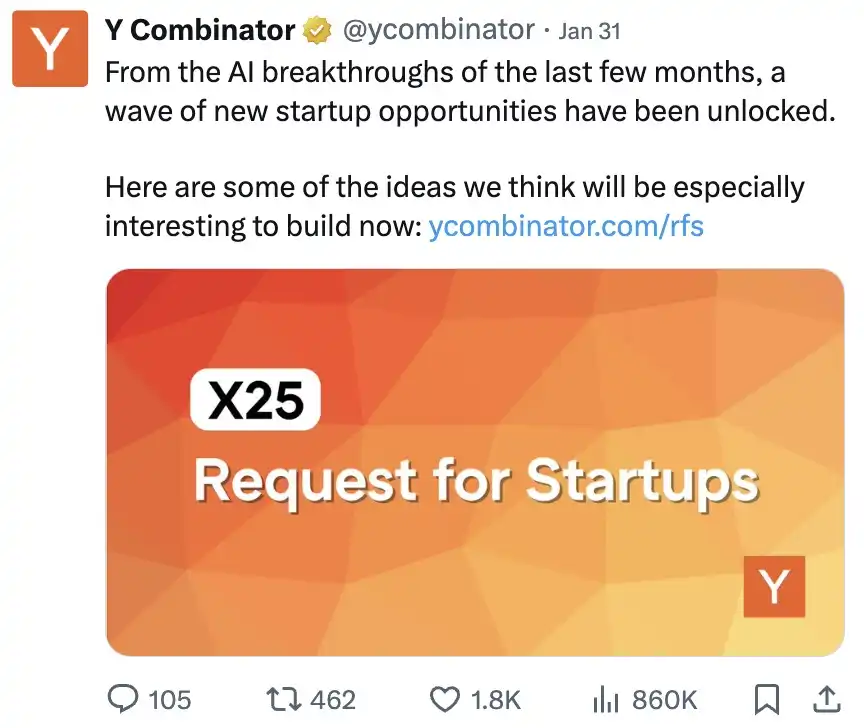
Y Combinator recently released the "Request for Startups" for Spring 2025, listing the entrepreneurial directions they hope more founders will explore. Many of these directions reveal emerging trends in the Web2 AI Agent field, addressing a range of real-world pain points:

· AI App Stores

· Data Centers

· Compliance and Audit

· DocuSign 2.0

· Browser and Computer Automation

· Personal AI Assistants

· AI Agent Development Tools

· The Future of Software Engineering (Engineering Agents)

· AI Business Open Source Software

· Hardware-Optimized Code Agents

· Business-to-Agent (B2A)

· Vertical AI Agents

· Inferencing AI Infrastructure

For readers who want to delve deeper, I highly recommend checking out the original post from @ycombinator:

YC Spring Startup Guide Released: Besides AI Agents, What Other Tracks Could Become the Next Big Thing?

There is a wealth of information here, but if you are already deeply involved in this field, you may have seen many Web3 Agent teams making moves in these tracks. In my view, the following tracks will lead the trends of Web3 AI Agents (in no particular order):

· AI Business Open Source Software

· AI Agent Development Tool

· Vertical AI Agent

· Personal AI Assistant

· AI App Store

· B2A (Business-to-Agent)

AI Business Open Source Software
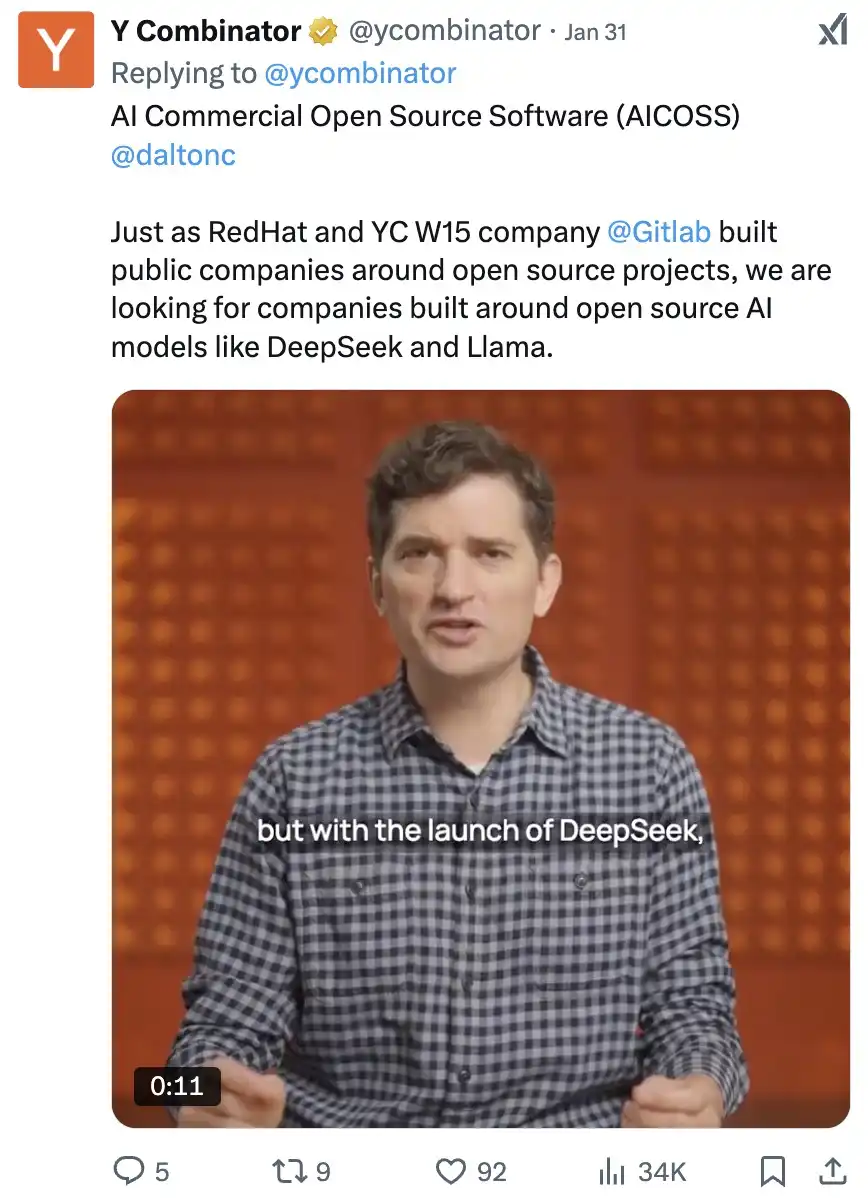
Web3 AI is deeply integrated with open-source AI, making it naturally suitable for this race. @ai16zdao was the first to drive one of the largest open-source AI movements—the ElizaOS framework, which currently has 14k stars and 4,227 forks on GitHub. Despite market fluctuations, adoption rates continue to rise.

This trend motivates Web3 developers to open source their technology, making AI Agent technology and frameworks more open, and driving developers to collaborate more efficiently. For example, in addition to ElizaOS, we have also witnessed the rise of frameworks such as @arcdotfun, @GAME_Virtuals, @sendaifun, @pippinlovesyou, and @freysa_ai.

As AI Agent technology evolves—with the release of OpenAI's o3, the launch of new DeepSeek models, and tech giants accelerating the deployment of AI Agents—the demand for open-source AI and Web3 AI is growing rapidly. AI x Crypto may eventually claim a significant share of the AI market.

AI Agent Development Tool
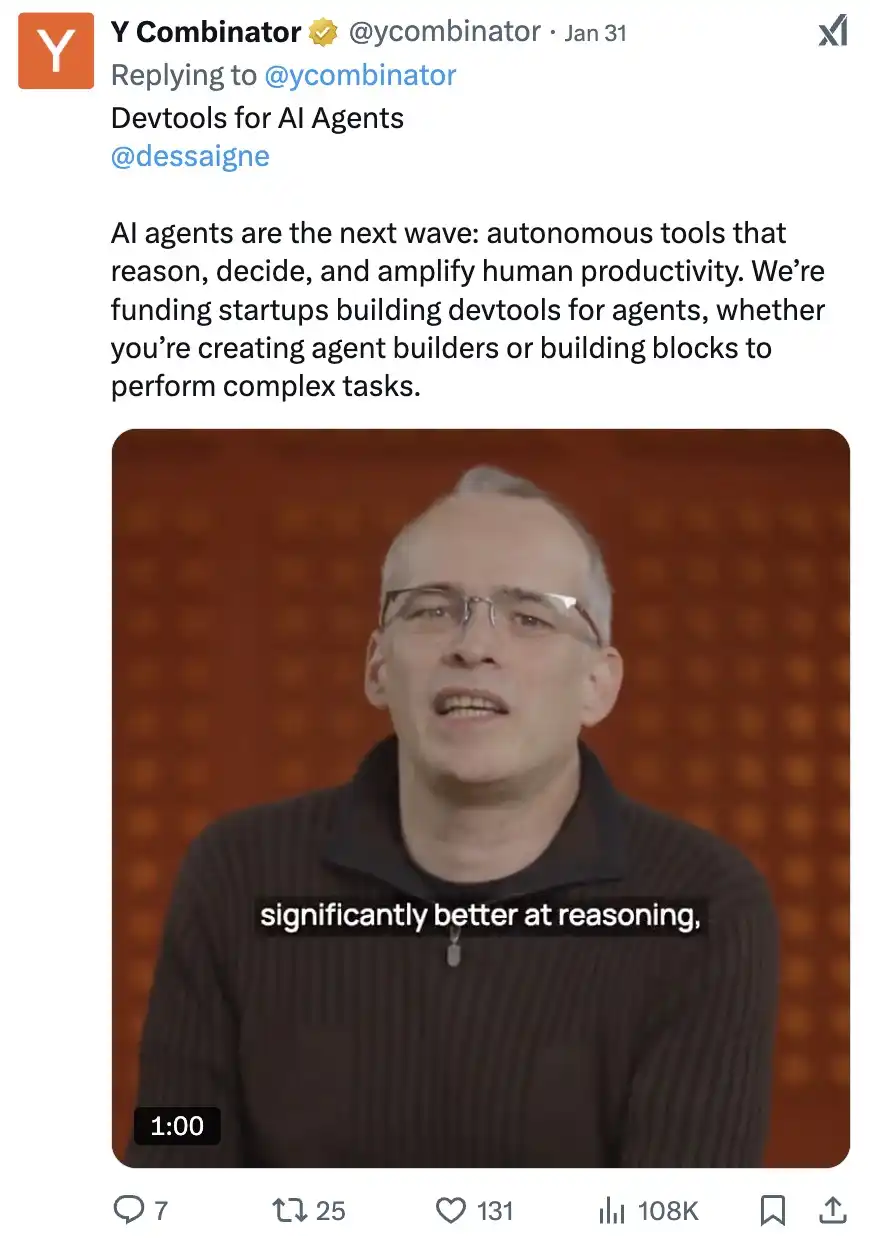
Building an AI Agent is not just about creating intelligent models, but more importantly, providing developers with the right tools and infrastructure to build, deploy, and manage AI Agents more efficiently. As AI Agents become increasingly complex, the demand for developer-friendly tools, frameworks, and platforms is soaring.

A plethora of AI development tools has already emerged in Web2, and Web3 is taking this trend to a new level—integrating decentralization, trustlessness, and open collaboration, breaking free from the closed ecosystems controlled by traditional big tech companies.

This trend has spurred AI developer platforms, Agent ecosystems, as well as no-code/low-code build tools, reducing the barriers to entry for AI Agent development.

In Web3, we are seeing an increasing number of AI Agent development tools emerge, such as:

@ai16zdao: ElizaOS, with the most plugins and integrations

@sendaifun (Solana Agent Kit) & @CoinbaseDev (CDP Agent Kit): Providing core development tools for on-chain AI Agents

@autonolas's Pearl: Focused on market prediction, DeFi automation, and self-executing Agent in the AI Agent App Store

@AlloraNetwork: Providing machine learning infrastructure for AI Agents to enhance real-time prediction capabilities

@cookiedotfun: AI Agent-driven data analytics platform, assisting Agents in extracting social sentiment insights from on-chain and off-chain data

@getmasafi: Real-time data streaming solution, offering the latest intelligence to AI Agents

Some no-code AI platforms focusing on Web3 include:

@virtuals_io: A leading no-code/low-code AI Agent builder, helping developers quickly realize AI Agent products

@HoloworldAI: A no-code building tool for 3D audiovisual AI Agents

@Cod3xOrg: A no-code platform designed for automated trading AI Agents

@Almanak__: A platform specializing in institutional-grade quant Agent construction

@EliteAgents_AI: A plugin-enhanced AI Agent integrating with ElizaOS, G.A.M.E, and other AI ecosystems

The ecosystem of Web3 AI Agent development tools is still in its early stages, but the infrastructure is rapidly maturing. Over the next few years, we can expect a fully decentralized AI development ecosystem where AI Agents will not only be easy to build but also capable of achieving full autonomy, scalability, and profitability.

Vertical AI Agent
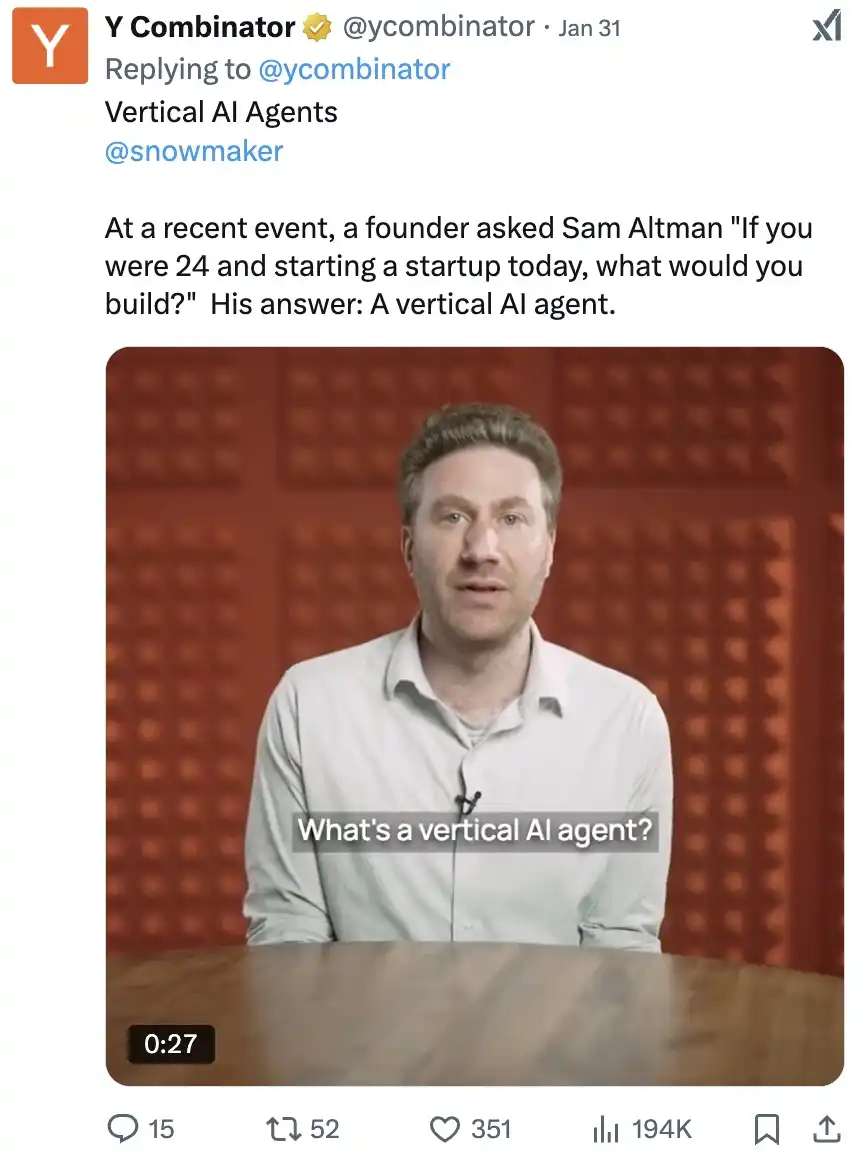
AI Agents are no longer general-purpose tools but are gradually evolving into highly specialized vertical domain Agents capable of handling complex tasks, even making decisions and executing them.

We have already seen the rise of AI Agents in fields such as finance, law, research, providing enhanced analytical, advisory, and execution capabilities, for example:

· Tax Agent: Calculate, optimize, and execute tax-saving strategies

· Legal Agent: Review contracts, identify unfavorable terms, and provide alternative suggestions

· Financial Agent: Analyze financial statements, interpret macroeconomic trends, generate investment insights

Unlike Web2, Web3's vertical AI Agents focus more on autonomy, decentralization, and on-chain integration, avoiding the issue of centralized data silos, enhancing transparency and trust.

In the Crypto space, community interaction and personalization are crucial, and Web3 AI Agents are evolving towards being more personalized and interactive. For example:

· AI Influencer: @aixbt_Agent, sharing market insights and Alpha opportunities on Crypto Twitter

· Token Analysis Agent: @unit00x0, @kwantxbt, @tri_sigma_, @mobyAgent, @_AgentScarlett

· Research Agent: @DV_Memetics, @S4mmyEth, providing on-chain intelligence analysis

· DeFAI Agent: @Cod3xOrg, @gizatechxyz, @autonolas, managing LP, yield farming, and automated trading strategies

Web3-native AI Agents are rapidly evolving, with future DeFAI Agents expected to streamline DeFi complexity, attracting the next billion users into the AI ecosystem.

Personal AI Assistant
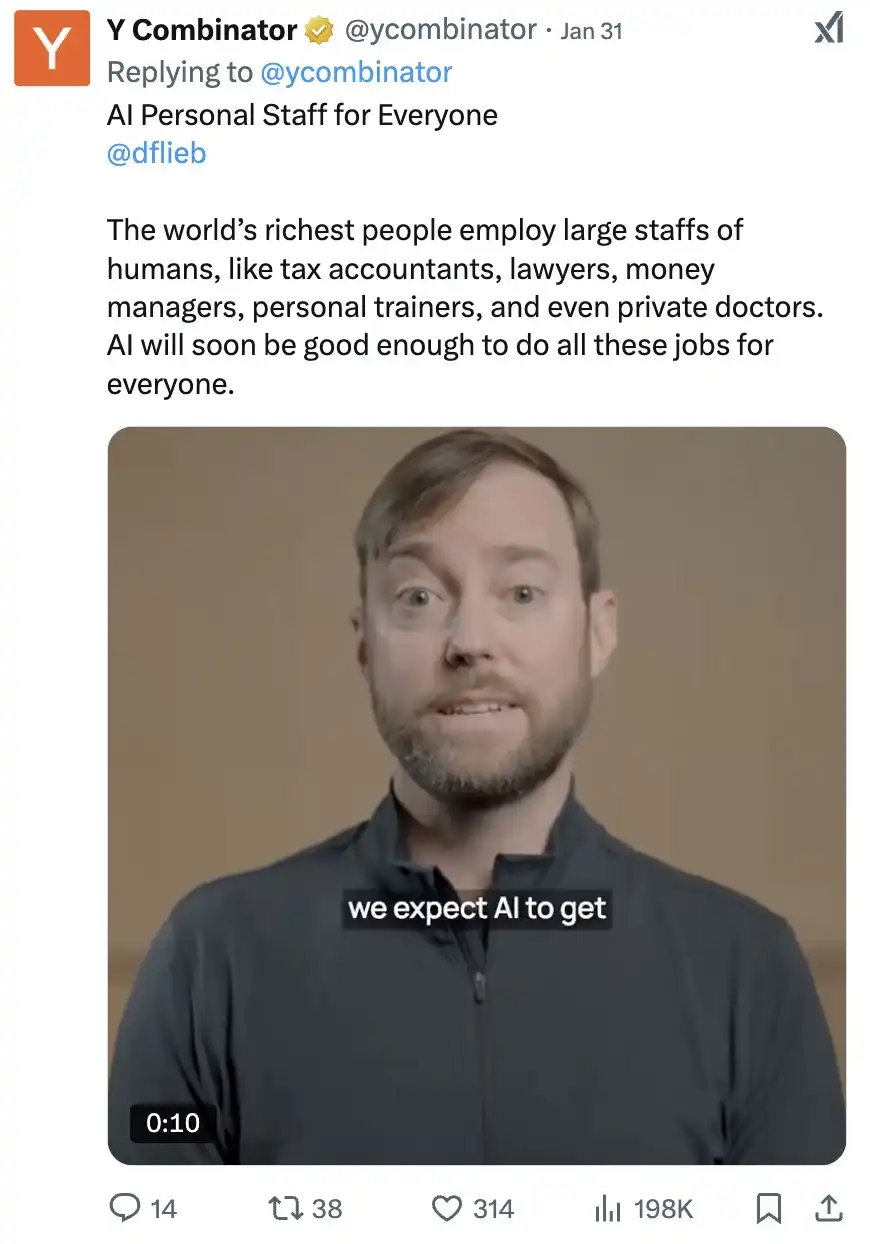
Personal AI Assistants are fundamentally transforming how we handle daily tasks, with previously unimaginable convenience and automation becoming a reality. These AI Assistants are not just simple reminder tools or schedule managers but are capable of proactively making decisions for users, optimizing time and resource as intelligent Agents.

Imagine an AI that not only helps you book travel but also selects the best restaurant based on your taste, monitors traffic conditions in real-time, and automatically adjusts meeting schedules if you are running late. The AI can summarize all meeting content, provide follow-up action recommendations, and even automatically book transportation. Additionally, it can organize your photos, categorize them by location and event, and create curated albums for easy viewing anytime.

In the Web3 space, this concept has been further extended, for example:

· Airdrop Agent: Scans all your wallets to determine if you qualify for airdrops from projects such as @berachain, @monad_xyz, @StoryProtocol, etc. (if someone is doing this, please contact me lol).

· Yield Farming & LP Management Agent: Tracks and rebalances DeFi holdings, automatically claims rewards, and compounds interest using the best strategies.

· AI-Driven GitHub Codebase Analysis: For example, @soleng_Agent, can assess whether a project has a strong development team or if it might be a scam.

· Automated Trading Agent: Like @Cod3xOrg and @Almanak__, can execute predefined trading strategies, accurately time market entries and exits, and optimize returns.

The next stage of development for AI personal assistants will evolve from "passive response" to a true autonomous AI co-pilot. They will not merely be tools but intelligent Agents with autonomy and decision-making abilities, able to proactively anticipate user needs and complete complex multi-step tasks with minimal input.

In this transformation, the role of Web3 is crucial: decentralized AI Agents will have trustlessness, transparency, and censorship resistance, ensuring users have full control over their AI-driven workflows. In the future, users will not only delegate simple tasks to AI but may even entrust financial and operational decisions to AI Agents, undoubtedly changing the rules of the game.

AI App Store

The AI App Store is one of the most exciting and inevitable developments in the field of artificial intelligence. Just as mobile apps have dedicated app stores, AI Agents also need a specialized marketplace for users to easily discover, purchase, and integrate AI-driven applications.

In the Web3 space, this concept is evolving into a combination of the **Multi-Agent Orchestration Network (MAO) and Agent Distribution Network**:

The Agent Distribution Network is responsible for attracting builders, investors, and users into the AI Agent ecosystem. One of the most representative cases is @virtuals_io, which is building an Agent Society to allow various AI Agents to collaborate and interact within it.

The MAO Network ensures that AI applications can accurately match user needs, intelligently orchestrate Agents to maximize their value. In the future, users will not need to manually search for AI applications, but only need to express their needs, and the system will automatically recommend suitable AI Agents, and even dynamically combine multiple Agents to provide a complete solution.

This means that the Web3 AI Application Store is not just an application marketplace; it must also have key functions such as content filtering, privacy protection, and decentralized Agent interaction to ensure seamless collaboration between AI Agents.

Key players driving the development of the Web3 AI Application Store:

@virtuals_io: Expanding its vision of the Agent Society, introducing high-quality AI Agent teams, and driving the development of inter-Agent communication protocols.

@santavirtuals and @questflow: Optimizing coordination between Virtuals Agents to improve resource allocation efficiency.

Abstraction Layers:

@orbitcryptoai and @HeyAnonai: By integrating abstraction layers, making AI Agents more easily accessible and interactive with DeFi.

The orchestration of AI Agents is still in its early stages, but it can be certain that the ability to seamlessly operate and monetize AI Agents will become a vast market, and Web3 is actively positioning itself to capture a significant share of this emerging market.

B2A (Business-to-Agent)
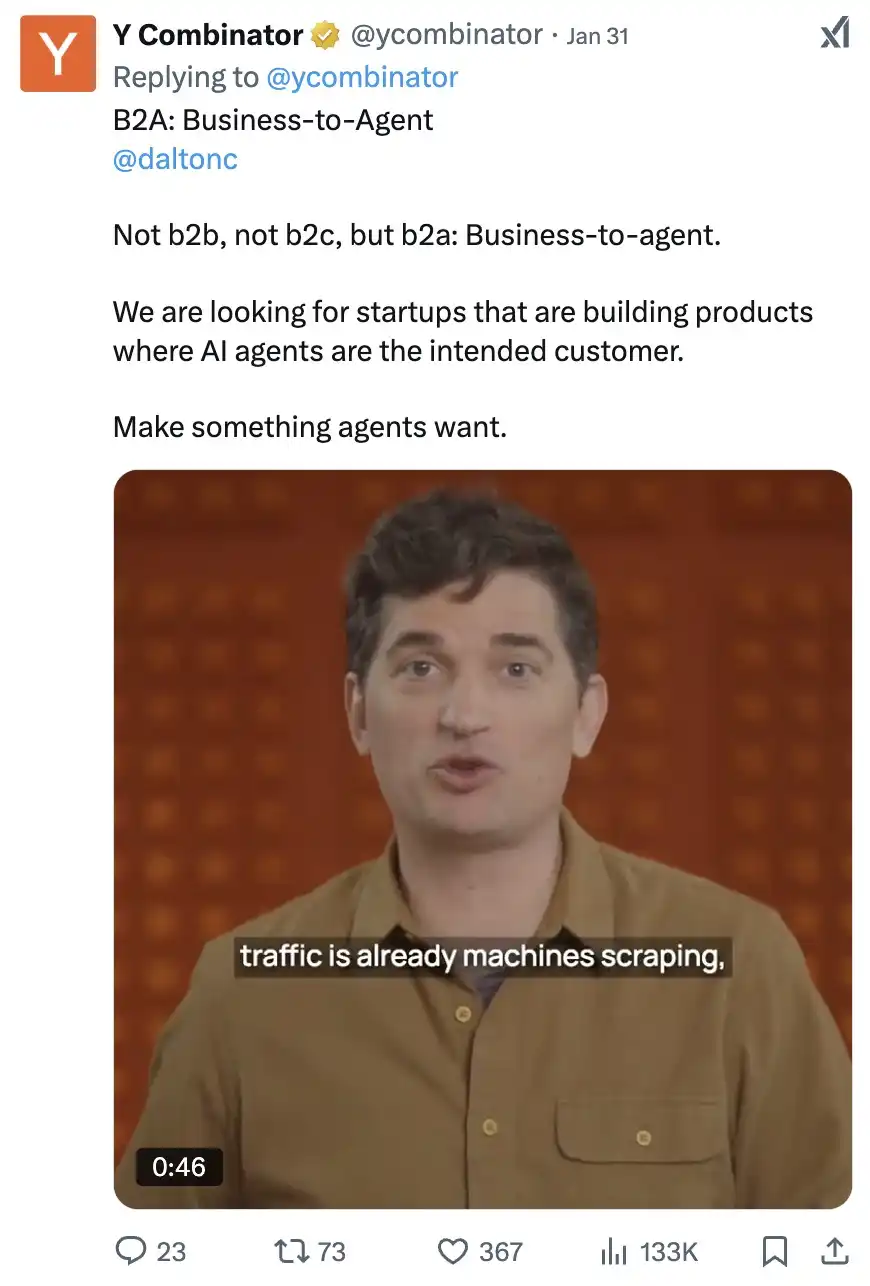
AI Agents are not just tools - they are becoming active participants in the digital economy, able to autonomously trade, manage resources, and even collaborate with other AI Agents. This transformation requires a new infrastructure that serves not only human users but also treats AI Agents as clients. This is the core of the B2A (Business-to-Agent) model.

Just as SaaS (Software-as-a-Service) transformed enterprise operations, B2A will define how AI Agents interact, transact, and operate in the digital economy. In the future, AI Agents will need their own payment solutions, data access rights, computing resources, and even privacy frameworks. Currently, several Web3 projects are building the B2A ecosystem.

· AI Business Payments: @Nevermined_io is developing an AI Agent-native payment solution, aiming to become the "PayPal for AI Agents".

· Compute Power Management: @hyperbolic_labs is researching a self-sustaining AI Agent to enable it to autonomously manage computing resources.

· Privacy and Security Infrastructure: @PhalaNetwork, @OraProtocol, and @brevis_zk are building a privacy-preserving computing layer dedicated to AI Agents, ensuring secure, verifiable interactions.

· High-Quality Data Access: @getgrass_io, @vana, @getmasafi, and @cookiedotfun provide structured, high-quality data sources to assist AI Agents in training, learning, and efficient operation.

· Agent-to-Agent Communication: @virtuals_io is developing an Agent-to-Agent communication protocol to enable AI Agents to collaborate with each other.

· AI Intellectual Property Management: @StoryProtocol is constructing an AI-generated content management framework similar to TCP/IP, allowing AI Agents to autonomously manage and license the content they create.

B2A is not just a theoretical concept; it is actively being built. As the capabilities of AI Agents continue to grow, they will require dedicated economic infrastructure to operate independently within the digital ecosystem. If you have not yet thought about how to serve AI Agents in this market, you may already be behind.

Conclusion

AI Agents are reshaping our interactions, constructions, and automation in the Web2 and Web3 worlds. With the rise of a Web3-native AI ecosystem, we are entering a decentralized AI Agent-driven era, bringing new paradigms such as open-source collaboration, Agent economies, and decentralized automation.

The fusion of AI and Crypto is still in its early stages, but its growth trajectory is undeniable. Web3 empowers AI Agents with capabilities that Web2 cannot offer: self-ownership, permissionless innovation, and a fully composable ecosystem. The question is no longer whether AI Agents will reshape Web3 but how quickly this transformation will occur and which tracks will define the future.

With the expansion of the AI Agent economy, one thing is certain: whether you are a developer, investor, or just a curious onlooker, now is the best time to pay attention to this trend.

Infrastructure is being built, industry players are emerging, and the market opportunity is huge.

The only question is: are you ready to join?

Original Post Link

You may also like

Token Cannot Compound, Where Is the Real Investment Opportunity?

The next chapter in the crypto industry will undoubtedly be written by Crypto-empowered Stocks.

February 6th Market Key Intelligence, How Much Did You Miss?

1. On-chain Flows: $508.2M USD inflow to Ethereum today; $390.8M USD outflow from Arbitrum 2. Biggest Gainers/Losers: $HBTC, $AIO 3. Top News: Current Bitcoin weekly RSI oversold signal comparable to June 2022

China's Central Bank and Eight Other Departments' Latest Regulatory Focus: Key Attention to RWA Tokenized Asset Risk


Foreword: Today, the People's Bank of China's website published the "Notice of the People's Bank of China, National Development and Reform Commission, Ministry of Industry and Information Technology, Ministry of Public Security, State Administration for Market Regulation, China Banking and Insurance Regulatory Commission, China Securities Regulatory Commission, State Administration of Foreign Exchange on Further Preventing and Dealing with Risks Related to Virtual Currency and Others (Yinfa [2026] No. 42)", the latest regulatory requirements from the eight departments including the central bank, which are basically consistent with the regulatory requirements of recent years. The main focus of the regulation is on speculative activities such as virtual currency trading, exchanges, ICOs, overseas platform services, and this time, regulatory oversight of RWA has been added, explicitly prohibiting RWA tokenization, stablecoins (especially those pegged to the RMB). The following is the full text:


To the people's governments of all provinces, autonomous regions, and municipalities directly under the Central Government, the Xinjiang Production and Construction Corps:


  Recently, there have been speculative activities related to virtual currency and Real-World Assets (RWA) tokenization, disrupting the economic and financial order and jeopardizing the property security of the people. In order to further prevent and address the risks related to virtual currency and Real-World Assets tokenization, effectively safeguard national security and social stability, in accordance with the "Law of the People's Republic of China on the People's Bank of China," "Law of the People's Republic of China on Commercial Banks," "Securities Law of the People's Republic of China," "Law of the People's Republic of China on Securities Investment Funds," "Law of the People's Republic of China on Futures and Derivatives," "Cybersecurity Law of the People's Republic of China," "Regulations of the People's Republic of China on the Administration of Renminbi," "Regulations on Prevention and Disposal of Illegal Fundraising," "Regulations of the People's Republic of China on Foreign Exchange Administration," "Telecommunications Regulations of the People's Republic of China," and other provisions, after reaching consensus with the Cyberspace Administration of China, the Supreme People's Court, and the Supreme People's Procuratorate, and with the approval of the State Council, the relevant matters are notified as follows:


  I. Clarify the essential attributes of virtual currency, Real-World Assets tokenization, and related business activities


  (I) Virtual currency does not possess the legal status equivalent to fiat currency. Virtual currencies such as Bitcoin, Ether, Tether, etc., have the main characteristics of being issued by non-monetary authorities, using encryption technology and distributed ledger or similar technology, existing in digital form, etc. They do not have legal tender status, should not and cannot be circulated and used as currency in the market.


  The business activities related to virtual currency are classified as illegal financial activities. The exchange of fiat currency and virtual currency within the territory, exchange of virtual currencies, acting as a central counterparty in buying and selling virtual currencies, providing information intermediary and pricing services for virtual currency transactions, token issuance financing, and trading of virtual currency-related financial products, etc., fall under illegal financial activities, such as suspected illegal issuance of token vouchers, unauthorized public issuance of securities, illegal operation of securities and futures business, illegal fundraising, etc., are strictly prohibited across the board and resolutely banned in accordance with the law. Overseas entities and individuals are not allowed to provide virtual currency-related services to domestic entities in any form.


  A stablecoin pegged to a fiat currency indirectly fulfills some functions of the fiat currency in circulation. Without the consent of relevant authorities in accordance with the law and regulations, any domestic or foreign entity or individual is not allowed to issue a RMB-pegged stablecoin overseas.


(II)Tokenization of Real-World Assets refers to the use of encryption technology and distributed ledger or similar technologies to transform ownership rights, income rights, etc., of assets into tokens (tokens) or other interests or bond certificates with token (token) characteristics, and carry out issuance and trading activities.


  Engaging in the tokenization of real-world assets domestically, as well as providing related intermediary, information technology services, etc., which are suspected of illegal issuance of token vouchers, unauthorized public offering of securities, illegal operation of securities and futures business, illegal fundraising, and other illegal financial activities, shall be prohibited; except for relevant business activities carried out with the approval of the competent authorities in accordance with the law and regulations and relying on specific financial infrastructures. Overseas entities and individuals are not allowed to illegally provide services related to the tokenization of real-world assets to domestic entities in any form.


  II. Sound Work Mechanism


  (III) Inter-agency Coordination. The People's Bank of China, together with the National Development and Reform Commission, the Ministry of Industry and Information Technology, the Ministry of Public Security, the State Administration for Market Regulation, the China Banking and Insurance Regulatory Commission, the China Securities Regulatory Commission, the State Administration of Foreign Exchange, and other departments, will improve the work mechanism, strengthen coordination with the Cyberspace Administration of China, the Supreme People's Court, and the Supreme People's Procuratorate, coordinate efforts, and overall guide regions to carry out risk prevention and disposal of virtual currency-related illegal financial activities.


  The China Securities Regulatory Commission, together with the National Development and Reform Commission, the Ministry of Industry and Information Technology, the Ministry of Public Security, the People's Bank of China, the State Administration for Market Regulation, the China Banking and Insurance Regulatory Commission, the State Administration of Foreign Exchange, and other departments, will improve the work mechanism, strengthen coordination with the Cyberspace Administration of China, the Supreme People's Court, and the Supreme People's Procuratorate, coordinate efforts, and overall guide regions to carry out risk prevention and disposal of illegal financial activities related to the tokenization of real-world assets.


  (IV) Strengthening Local Implementation. The people's governments at the provincial level are overall responsible for the prevention and disposal of risks related to virtual currencies and the tokenization of real-world assets in their respective administrative regions. The specific leading department is the local financial regulatory department, with participation from branches and dispatched institutions of the State Council's financial regulatory department, telecommunications regulators, public security, market supervision, and other departments, in coordination with cyberspace departments, courts, and procuratorates, to improve the normalization of the work mechanism, effectively connect with the relevant work mechanisms of central departments, form a cooperative and coordinated working pattern between central and local governments, effectively prevent and properly handle risks related to virtual currencies and the tokenization of real-world assets, and maintain economic and financial order and social stability.


  III. Strengthened Risk Monitoring, Prevention, and Disposal


  (5) Enhanced Risk Monitoring. The People's Bank of China, China Securities Regulatory Commission, National Development and Reform Commission, Ministry of Industry and Information Technology, Ministry of Public Security, State Administration of Foreign Exchange, Cyberspace Administration of China, and other departments continue to improve monitoring techniques and system support, enhance cross-departmental data analysis and sharing, establish sound information sharing and cross-validation mechanisms, promptly grasp the risk situation of activities related to virtual currency and real-world asset tokenization. Local governments at all levels give full play to the role of local monitoring and early warning mechanisms. Local financial regulatory authorities, together with branches and agencies of the State Council's financial regulatory authorities, as well as departments of cyberspace and public security, ensure effective connection between online monitoring, offline investigation, and fund tracking, efficiently and accurately identify activities related to virtual currency and real-world asset tokenization, promptly share risk information, improve early warning information dissemination, verification, and rapid response mechanisms.


  (6) Strengthened Oversight of Financial Institutions, Intermediaries, and Technology Service Providers. Financial institutions (including non-bank payment institutions) are prohibited from providing account opening, fund transfer, and clearing services for virtual currency-related business activities, issuing and selling financial products related to virtual currency, including virtual currency and related financial products in the scope of collateral, conducting insurance business related to virtual currency, or including virtual currency in the scope of insurance liability. Financial institutions (including non-bank payment institutions) are prohibited from providing custody, clearing, and settlement services for unauthorized real-world asset tokenization-related business and related financial products. Relevant intermediary institutions and information technology service providers are prohibited from providing intermediary, technical, or other services for unauthorized real-world asset tokenization-related businesses and related financial products.


  (7) Enhanced Management of Internet Information Content and Access. Internet enterprises are prohibited from providing online business venues, commercial displays, marketing, advertising, or paid traffic diversion services for virtual currency and real-world asset tokenization-related business activities. Upon discovering clues of illegal activities, they should promptly report to relevant departments and provide technical support and assistance for related investigations and inquiries. Based on the clues transferred by the financial regulatory authorities, the cyberspace administration, telecommunications authorities, and public security departments should promptly close and deal with websites, mobile applications (including mini-programs), and public accounts engaged in virtual currency and real-world asset tokenization-related business activities in accordance with the law.


  (8) Strengthened Entity Registration and Advertisement Management. Market supervision departments strengthen entity registration and management, and enterprise and individual business registrations must not contain terms such as "virtual currency," "virtual asset," "cryptocurrency," "crypto asset," "stablecoin," "real-world asset tokenization," or "RWA" in their names or business scopes. Market supervision departments, together with financial regulatory authorities, legally enhance the supervision of advertisements related to virtual currency and real-world asset tokenization, promptly investigating and handling relevant illegal advertisements.


  (IX) Continued Rectification of Virtual Currency Mining Activities. The National Development and Reform Commission, together with relevant departments, strictly controls virtual currency mining activities, continuously promotes the rectification of virtual currency mining activities. The people's governments of various provinces take overall responsibility for the rectification of "mining" within their respective administrative regions. In accordance with the requirements of the National Development and Reform Commission and other departments in the "Notice on the Rectification of Virtual Currency Mining Activities" (NDRC Energy-saving Building [2021] No. 1283) and the provisions of the "Guidance Catalog for Industrial Structure Adjustment (2024 Edition)," a comprehensive review, investigation, and closure of existing virtual currency mining projects are conducted, new mining projects are strictly prohibited, and mining machine production enterprises are strictly prohibited from providing mining machine sales and other services within the country.


  (X) Severe Crackdown on Related Illegal Financial Activities. Upon discovering clues to illegal financial activities related to virtual currency and the tokenization of real-world assets, local financial regulatory authorities, branches of the State Council's financial regulatory authorities, and other relevant departments promptly investigate, determine, and properly handle the issues in accordance with the law, and seriously hold the relevant entities and individuals legally responsible. Those suspected of crimes are transferred to the judicial authorities for processing according to the law.


 (XI) Severe Crackdown on Related Illegal and Criminal Activities. The Ministry of Public Security, the People's Bank of China, the State Administration for Market Regulation, the China Banking and Insurance Regulatory Commission, the China Securities Regulatory Commission, as well as judicial and procuratorial organs, in accordance with their respective responsibilities, rigorously crack down on illegal and criminal activities related to virtual currency, the tokenization of real-world assets, such as fraud, money laundering, illegal business operations, pyramid schemes, illegal fundraising, and other illegal and criminal activities carried out under the guise of virtual currency, the tokenization of real-world assets, etc.


  (XII) Strengthen Industry Self-discipline. Relevant industry associations should enhance membership management and policy advocacy, based on their own responsibilities, advocate and urge member units to resist illegal financial activities related to virtual currency and the tokenization of real-world assets. Member units that violate regulatory policies and industry self-discipline rules are to be disciplined in accordance with relevant self-regulatory management regulations. By leveraging various industry infrastructure, conduct risk monitoring related to virtual currency, the tokenization of real-world assets, and promptly transfer issue clues to relevant departments.


  IV. Strict Supervision of Domestic Entities Engaging in Overseas Business Activities


(XIII) Without the approval of relevant departments in accordance with the law and regulations, domestic entities and foreign entities controlled by them may not issue virtual currency overseas.


  (XIV) Domestic entities engaging directly or indirectly in overseas external debt-based tokenization of real-world assets, or conducting asset securitization activities abroad based on domestic ownership rights, income rights, etc. (hereinafter referred to as domestic equity), should be strictly regulated in accordance with the principles of "same business, same risk, same rules." The National Development and Reform Commission, the China Securities Regulatory Commission, the State Administration of Foreign Exchange, and other relevant departments regulate it according to their respective responsibilities. For other forms of overseas real-world asset tokenization activities based on domestic equity by domestic entities, the China Securities Regulatory Commission, together with relevant departments, supervise according to their division of responsibilities. Without the consent and filing of relevant departments, no unit or individual may engage in the above-mentioned business.


  (15) Overseas subsidiaries and branches of domestic financial institutions providing Real World Asset Tokenization-related services overseas shall do so legally and prudently. They shall have professional personnel and systems in place to effectively mitigate business risks, strictly implement customer onboarding, suitability management, anti-money laundering requirements, and incorporate them into the domestic financial institutions' compliance and risk management system. Intermediaries and information technology service providers offering Real World Asset Tokenization services abroad based on domestic equity or conducting Real World Asset Tokenization business in the form of overseas debt for domestic entities directly or indirectly venturing abroad must strictly comply with relevant laws and regulations. They should establish and improve relevant compliance and internal control systems in accordance with relevant normative requirements, strengthen business and risk control, and report the business developments to the relevant regulatory authorities for approval or filing.


  V. Strengthen Organizational Implementation


  (16) Strengthen organizational leadership and overall coordination. All departments and regions should attach great importance to the prevention of risks related to virtual currencies and Real World Asset Tokenization, strengthen organizational leadership, clarify work responsibilities, form a long-term effective working mechanism with centralized coordination, local implementation, and shared responsibilities, maintain high pressure, dynamically monitor risks, effectively prevent and mitigate risks in an orderly and efficient manner, legally protect the property security of the people, and make every effort to maintain economic and financial order and social stability.


  (17) Widely carry out publicity and education. All departments, regions, and industry associations should make full use of various media and other communication channels to disseminate information through legal and policy interpretation, analysis of typical cases, and education on investment risks, etc. They should promote the illegality and harm of virtual currencies and Real World Asset Tokenization-related businesses and their manifestations, fully alert to potential risks and hidden dangers, and enhance public awareness and identification capabilities for risk prevention.


  VI. Legal Responsibility


  (18) Engaging in illegal financial activities related to virtual currencies and Real World Asset Tokenization in violation of this notice, as well as providing services for virtual currencies and Real World Asset Tokenization-related businesses, shall be punished in accordance with relevant regulations. If it constitutes a crime, criminal liability shall be pursued according to the law. For domestic entities and individuals who knowingly or should have known that overseas entities illegally provided virtual currency or Real World Asset Tokenization-related services to domestic entities and still assisted them, relevant responsibilities shall be pursued according to the law. If it constitutes a crime, criminal liability shall be pursued according to the law.


  (19) If any unit or individual invests in virtual currencies, Real World Asset Tokens, and related financial products against public order and good customs, the relevant civil legal actions shall be invalid, and any resulting losses shall be borne by them. If there are suspicions of disrupting financial order and jeopardizing financial security, the relevant departments shall deal with them according to the law.


  This notice shall enter into force upon the date of its issuance. The People's Bank of China and ten other departments' "Notice on Further Preventing and Dealing with the Risks of Virtual Currency Trading Speculation" (Yinfa [2021] No. 237) is hereby repealed.


Former Partner's Perspective on Multicoin: Kyle's Exit, But the Game He Left Behind Just Getting Started

Kyle knew his game, so he decided to focus on playing the game he was good at and interested in.

Why Bitcoin Is Falling Now: The Real Reasons Behind BTC's Crash & WEEX's Smart Profit Playbook

Bitcoin's ongoing crash explained: Discover the 5 hidden triggers behind BTC's plunge & how WEEX's Auto Earn and Trade to Earn strategies help traders profit from crypto market volatility.

Wall Street's Hottest Trades See Exodus

This time there is no single triggering factor, but rather market anxiety about asset valuation, with many already skeptical of these valuations being too high, leading to investors choosing to retreat almost simultaneously.

Popular coins

Latest Crypto News

Read more