TradFi vs. Crypto: Why Banks Are No Longer Fighting Blockchain

 Prefer us on Google
Just a few years ago, the relationship between the traditional financial system and the crypto industry looked like an open war. Banks criticized Bitcoin, regulators increased pressure on crypto exchanges, and financial sector representatives called digital assets a bubble and a threat to the global economy.
However, by 2026, the situation has changed radically. Instead of conflict, the market is witnessing a gradual convergence of TradFi and the crypto industry. Major banks are launching blockchain products, institutional investors are entering digital assets, and stablecoins are beginning to compete with traditional payment systems.
Today, the question is no longer whether crypto will replace banks. The main question is how exactly traditional finance will integrate blockchain into the existing system.
What is TradFi
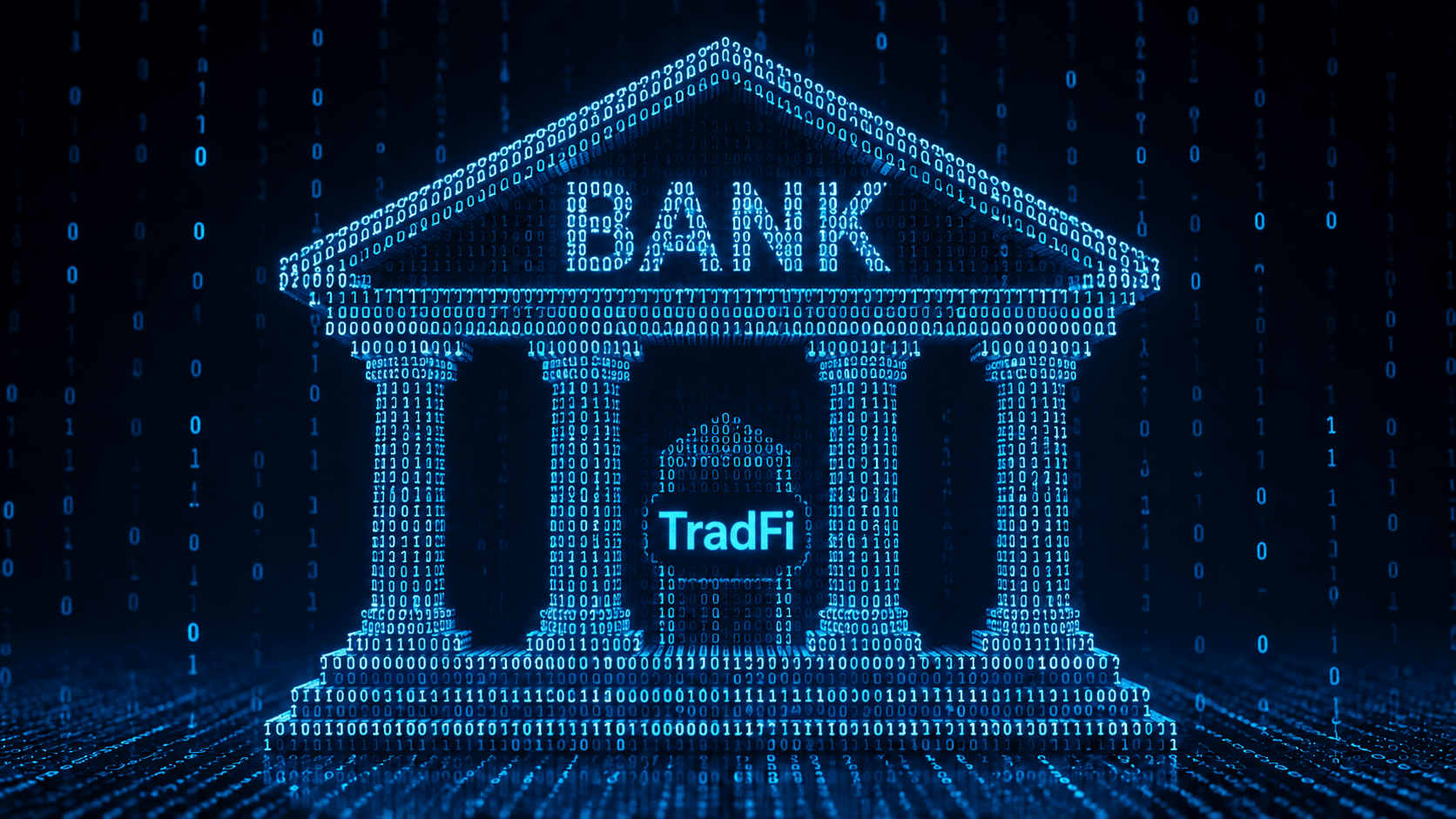
TradFi (Traditional Finance) is the traditional financial system:
- banks
- stock markets
- brokers
- payment systems
- government regulators
This model is built on intermediaries and centralized management. Every financial transaction passes through organizations that verify transactions, hold funds, and ensure compliance with rules.
The crypto industry was originally created as an alternative to this system. Bitcoin emerged after the 2008 financial crisis as an attempt to remove intermediaries from money transfers and return control over assets to users.
But instead of completely destroying TradFi, the market has gradually moved toward integration.
Why banks stopped fighting crypto
1. A market too big to ignore
Cryptocurrencies are no longer a niche industry. By 2026:
- digital assets have become part of the global financial system
- institutional funds are actively investing in Bitcoin and Ethereum
- major exchanges are working with millions of users
After the launch of Bitcoin ETFs, the crypto market gained additional legitimacy. It became obvious to banks that the demand for digital assets would not disappear.
Instead of trying to ban the market, financial organizations began looking for ways to profit from it.
2. Stablecoins are changing international payments
One of the main factors in the convergence of TradFi and crypto has been stablecoins.
USDT and USDC have effectively become digital equivalents of the dollar:
- international transfers are faster
- fees are lower than bank fees
- access to settlements has become global
This is especially noticeable in CIS countries, Asia, and Latin America, where stablecoins are already used for:
- P2P settlements
- salary payments
- cross-border trade
For banks, this was a signal: blockchain is capable of competing with classic financial infrastructure.
Tokenization — the main trend of 2026
While banks previously viewed blockchain as a threat, they are now actively using it for asset tokenization.
Tokenization is the conversion of real-world assets into digital form on a blockchain.
Assets that can be tokenized include:
- stocks
- bonds
- real estate
- gold
- funds
Why this is beneficial:
- faster settlements
- reduced costs
- increased liquidity
- simplified access to investments
Many analysts believe that tokenization will become the primary bridge between TradFi and the crypto industry.
Banks begin using blockchain
Large financial organizations have stopped perceiving blockchain solely as a "technology for crypto."
Today, banks use it for:
- international transfers
- inter-organizational settlements
- digital asset custody
- issuing tokenized products
In parallel, crypto storage infrastructure is developing. Banks are launching custodial services that allow institutional clients to work with digital assets securely.
In effect, the market is moving toward a model where crypto becomes another asset class within the traditional financial system.
Why DeFi has not yet replaced TradFi
Despite the growth of DeFi, traditional finance maintains a strong position.
The reasons are clear:
- government support
- legal protection for clients
- clear regulation
- high stability
DeFi remains an innovative but risky segment:
- protocol hacks
- lack of insurance
- high volatility
- uncertain regulation
Therefore, most major players prefer not to replace TradFi, but to integrate specific blockchain solutions into the existing system.
The end of the fight between TradFi and crypto
In 2026, it is clear that the era of confrontation is coming to an end.
Banks have realized that blockchain:
- does not destroy the financial system
- but makes it faster and more efficient
The crypto industry, in turn, has begun to adopt elements of traditional finance:
- regulation
- KYC
- institutional standards
- compliance procedures
As a result, a hybrid model is forming where TradFi and crypto are gradually merging.
Conclusion
Just a few years ago, it seemed that traditional banks and cryptocurrencies were on opposite sides of a financial revolution. However, the market has shown a different scenario.
Today, TradFi is not fighting blockchain — it is adapting to it.
Stablecoins, tokenization, and institutional investments are changing the financial system faster than expected. Banks are no longer trying to stop crypto because they have realized that blockchain technologies are becoming part of the new global economy.
That is why the main trend of the coming years is not the conflict between TradFi and crypto, but their gradual merger.
Where to trade TradFi in 2026?
- KYC and 2FA for security
- Low fees
- Support for many cryptocurrencies: ETH, SOL, ADA, and others
- Instant order execution
- Bonuses and coupons for new users - up to 30,000 USDT!
Disclaimer: This content is provided for general branding and informational purposes only and doesn't constitute financial, investment, legal, or tax advice. Any events, rewards, online events, or related information mentioned herein should not be considered a recommendation, solicitation, or invitation to purchase, sell, trade, or otherwise deal in any crypto assets or to use any services. Crypto assets are highly volatile and may result in loss. WEEX services and online events may not be available in all regions and are subject to applicable laws, regulations, and eligibility requirements. You are responsible for ensuring that your use of WEEX services complies with local laws and for carefully assessing the risks before participating in any crypto-related activities.
You may also like
How to Set the Right Trailing Stop Percentage
A trailing stop helps you ride a crypto trend while automatically locking in gains as price moves in…
Trailing Stop vs Stop Loss: What’s the Difference
This guide breaks down the trailing stop and the classic stop-loss so you can choose the right order…
What Is a Trailing Stop Order? A Beginner’s Guide
A trailing stop is a dynamic exit tool that moves up with the market to protect gains and…

Copy Trading Platforms Compared: Which One Is Right for You?
The right copy trading platform depends on your experience, the markets you want to mirror (spot, futures, DeFi),…
Copy Trading Risks You Should Know Before You Start
Copy trading makes it easy to mirror the moves of experienced traders, but convenience can hide real risk.…

How to Choose the Right Trader to Copy
Copy trading lets you mirror another trader’s positions automatically, but the right choice hinges on more than a…
What is Roundhill Memory ETF Tokenized ETF (Ondo)(DRAMON) Coin? Everything You Need to Know Before Trading DRAMON/USDT
This guide explains what DRAMON is, how Ondo tokenizes the Roundhill Memory ETF exposure, how it works on-chain,…
Oil Trading Rewards: Share $100,000 Bonus on WEEX
WEEX is running a limited-time oil and energy trading campaign with a $100,000 reward pool. This guide explains…
Is Tangem Safe? Security Features Explained
Tangem is a card-based hardware wallet that stores your private keys inside a certified secure chip and signs…
SafePal vs Ledger: Which Wallet Should You Choose
Hardware wallets protect private keys off the internet, reducing the chance of remote hacks. This guide compares SafePal…
How to Set Up and Use SafePal Wallet? A Complete Beginner’s Guide
This beginner-friendly guide explains how to set up the SafePal app and S1 hardware wallet, create or import…
What Is SafePal Wallet? A Complete Beginner’s Guide
SafePal is a beginner-friendly crypto wallet brand that offers both a hardware wallet and a mobile software wallet…
Is Your Trailing Stop Costing You Money? Common Mistakes to Avoid
Have you noticed that after setting a trailing stop, you often get shaken out just before the real…
What Is Copy Trading? A Beginner’s Guide
Copy trading lets you automatically mirror another trader’s positions in real time. You choose a trader to follow,…
How to Set Up a DCA Strategy for Crypto
Dollar-cost averaging (DCA) helps crypto investors spread buys over time to reduce timing risk. This guide shows how…
What is Credo Technology Group Holding Tokenized Stock (Ondo)(CRDOON) Coin? Everything You Need to Know Before Trading CRDOON/USDT
This article explains what Credo Technology Group Holding Tokenized Stock (Ondo) (CRDOON) is, how it works, who stands…
Is DCA a Good Strategy for Beginners?
Short answer: for most beginners, DCA (dollar-cost averaging) is a sensible starting point—simple, steady, and less stressful—though it…
Does DCA Actually Work? What the Data Shows
DCA (dollar-cost averaging) means investing a fixed amount on a set schedule, regardless of price. This article looks…
What is Astera Labs Tokenized Stock (Ondo)(ALABON) Coin? Everything You Need to Know Before Trading ALABON/USDT
This article explains what Astera Labs Tokenized Stock (Ondo) (ticker: ALABON) is, how tokenized stocks work, where to…
USA Rare Earth Stock (USAR): Bull Case, Risks, and the 2028 Bet
USA Rare Earth stock (USAR) explained — what the company does, why shares slumped in 2026, the Round Top bull case, the MP Materials lawsuit, and key risks.
USAR Stock Price Prediction: Can USA Rare Earth Reclaim $40?
USAR stock price prediction: USA Rare Earth trades near $19 vs a $36–$39 analyst target. Bull case, bear case, and 2026–2030 scenarios.
Meta Stock in 2026: Price, Forecast, and How to Trade It
Meta stock near $630 in July 2026, down YTD on AI capex fears. See the price, analyst forecast, bull vs bear case, and how to trade META exposure.
Costco Stock (COST): Price, Forecast, and Is It a Buy in 2026
Costco stock (COST) trades near $915–950 in July 2026 at ~48x earnings. See the latest price, analyst forecast, dividend, and how to buy.
SK Hynix Stock: Inside the AI Memory Giant's Nasdaq Debut
SK Hynix stock lists on Nasdaq July 10 as SKHY in the biggest ADR debut ever. Price, 2026 forecast, HBM bull/bear case, and how to buy.
Risks of Shorting Bitcoin You Should Know Before You Trade
Shorting can look simple: you profit when price falls. But the bitcoin short is different from buying because…
Shorting Bitcoin vs Buying Put Options: What’s the Difference
This guide breaks down two ways to express a bearish view on BTC: opening a bitcoin short with…
Prismevm (PP) Airdrop on WEEX: How to Unlock New User Rewards
This guide explains what Prismevm (PP) is, how the Prismevm (PP) airdrop on WEEX works, and a simple,…
How to Short Bitcoin: Methods and Platforms Compared
A bitcoin short lets you profit if BTC falls. This guide explains how to short bitcoin using futures,…
What Is Dollar-Cost Averaging (DCA)? A Beginner’s Guide
Dollar-cost averaging (DCA) is a simple strategy: invest a fixed amount on a fixed schedule, no matter the…
What Does It Mean to Short Bitcoin? A Beginner’s Guide
Shorting is the opposite of buying. Instead of hoping Bitcoin goes up, you take a bitcoin short to…
How to Set the Right Trailing Stop Percentage
A trailing stop helps you ride a crypto trend while automatically locking in gains as price moves in…
Trailing Stop vs Stop Loss: What’s the Difference
This guide breaks down the trailing stop and the classic stop-loss so you can choose the right order…
What Is a Trailing Stop Order? A Beginner’s Guide
A trailing stop is a dynamic exit tool that moves up with the market to protect gains and…
Copy Trading Platforms Compared: Which One Is Right for You?
The right copy trading platform depends on your experience, the markets you want to mirror (spot, futures, DeFi),…
Copy Trading Risks You Should Know Before You Start
Copy trading makes it easy to mirror the moves of experienced traders, but convenience can hide real risk.…
How to Choose the Right Trader to Copy
Copy trading lets you mirror another trader’s positions automatically, but the right choice hinges on more than a…