
Anthropic IPO: ANT Date, Price Range and Valuation

 Prefer us on Google


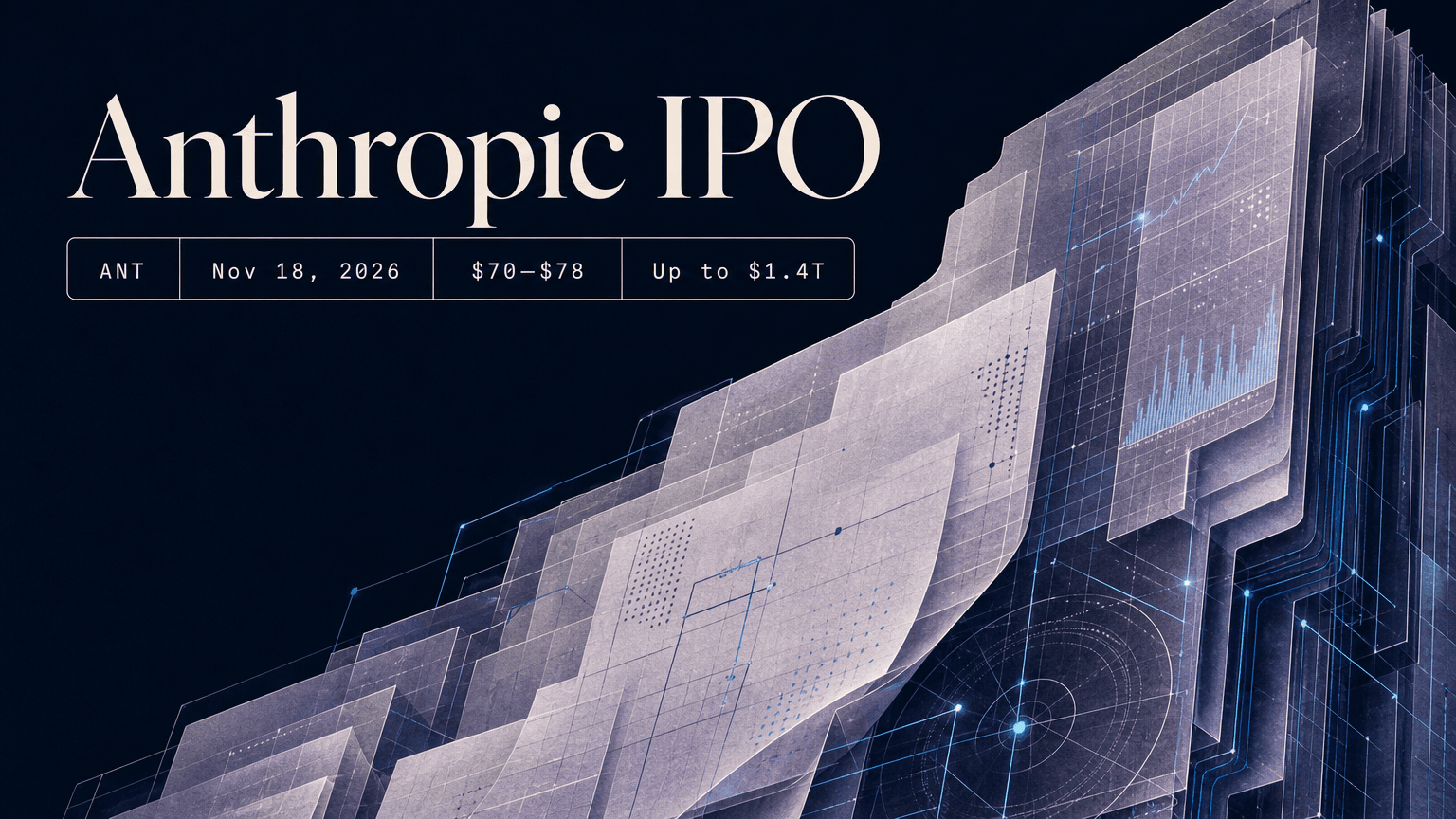
The Anthropic IPO is expected to price on Wednesday, November 18, 2026, and begin trading on Nasdaq under the ticker ANT on Thursday, November 19, at a marketed range of $70 to $78 per share and a valuation of up to about $1.4 trillion on a fully diluted basis.
The Anthropic IPO offers 825 million shares and could raise up to $64.4 billion at the top of the range, according to Fortune. This article sets out the dates, price range, valuation and prospectus figures that are confirmed, the numbers that come only from secondary sources, and the questions that remain open about the Anthropic IPO until ANT starts trading.
When Does the Anthropic IPO Start and Where Will ANT Trade?
Anthropic is expected to price its shares on Wednesday, November 18, 2026, and to begin trading on the Nasdaq Stock Market on Thursday, November 19, under the ticker symbol ANT. The dates were reported by CNBC on November 10, citing sources, and repeated in crypto.news’s week-ahead preview on November 16 and in TradingKey’s coverage. Pricing is the step at which the company and its underwriters set the final offer price after collecting orders from investors, and it normally happens the evening before the first trade.
The sequence matters for anyone following the listing. The price set on November 18 is the IPO price, which is what institutions and any retail participants who receive shares will pay. The price at which ANT trades on November 19 is a separate number, set by buyers and sellers in the open market, and it can open well above or below the IPO price. Opening prints for large listings often come later than the start of the trading session, because the exchange runs an opening auction to balance orders before the first trade.
The timeline has been visible for several months. According to Fortune, Anthropic filed confidentially in June 2026 and made its prospectus public on October 26. TradingKey reported that an amended Form S-1 was filed on November 10, the same day the price range was set. Dates in a public IPO can still change if markets move sharply or the company chooses to delay, and no delay had been announced in the sources reviewed.
What Is the ANT Price Range and How Many Shares Are Offered?
The marketed range is $70 to $78 per share, and the offering covers 825 million shares of Class A common stock, according to Fortune and Mitrade. TradingKey, citing the S-1, reported that 801.35 million of those shares are new shares sold by Anthropic and about 23.649 million are sold by existing shareholders. Proceeds from new shares go to the company, while proceeds from the secondary shares go to the selling shareholders.
At the top of the range, the offering would raise about $64.4 billion, the figure given by Fortune. Based on the author’s arithmetic, 825 million shares at $70 would raise about $57.75 billion, so the base deal falls between roughly $57.8 billion and $64.4 billion depending on where it prices. The range can change before pricing, and the final price can land inside it, above it or below it, depending on demand.
TradingKey also reported that up to 20% of the shares may be set aside for individual investors, but that figure is not attributed to a filing, so it should be treated as unconfirmed. Mitrade repeated the same retail allocation. Brokerages decide which customers qualify and how shares are distributed, so an investor who wants shares at the IPO price needs to check with their own broker. Most retail investors buy in the open market after trading starts, at whatever price the market sets.
What Valuation Does the Anthropic IPO Imply?
Fortune reported that the range values Anthropic at up to $1.4 trillion on a fully diluted basis. A fully diluted valuation counts not only the shares outstanding but also options, restricted stock units and other securities that could become shares, so it is higher than a valuation based only on shares currently outstanding. TradingKey estimated an implied market capitalization of about $917 billion to $1.02 trillion at $70 to $78 per share, and a fully diluted figure of about $1.3 trillion to $1.4 trillion. Those figures are TradingKey’s estimates, not numbers attributed to the S-1.
The $1.4 trillion figure is lower than some earlier reports. Fortune noted that it is well below the $2 trillion that some outlets reported weeks before the range was set. Fortune also noted that SpaceX, which listed in June 2026, had sought a valuation of about $1.75 trillion. These comparisons give context for the size of the deal, but this article does not describe the Anthropic IPO as the largest ever, because no source reviewed provides a verified ranking of deal sizes.
A valuation at the IPO price is not a price target. It measures what the offering implies about the company at one price, and the market can value the shares higher or lower from the first trade onward. Because valuation depends on the share count used, any article quoting a single “Anthropic valuation” should say whether the figure is basic or fully diluted and who calculated it.
-- Price
What Do the Anthropic Prospectus Numbers Show?
The prospectus shows very fast revenue growth alongside large costs. According to TradingKey’s summary of the filing, revenue for the nine months ended September 30, 2026, was $33.242 billion, compared with $2.545 billion a year earlier. The author’s arithmetic puts that at about 13 times the prior-year figure, or an increase of roughly 1,206%. About 79% of revenue was usage-based and about 21% came from subscriptions, and customers spending more than $100,000 over the trailing 12 months rose to about 11,900, from just over 950.
Fortune separately reported that Anthropic’s annualized revenue run rate reached about $81 billion at the end of October, up from about $71 billion in late September. A run rate is a projection that multiplies a recent period’s revenue to estimate a full year, so it is not the same as reported revenue. Readers should not add the nine-month revenue and the run rate together, because they measure different things over different periods.
Profitability is more mixed. TradingKey reported a GAAP operating loss of about $1.26 billion for the nine months, compared with about $5.224 billion a year earlier. Its summary also described a third-quarter operating loss of about $567 million, against an operating profit of $974 million in the second quarter, and attributed the swing to about $5 billion in new short-term compute spending and roughly $2 billion in non-cash donation-matching expense. The article also cited adjusted figures, but the adjusted operating profit of $4.1 billion for the nine months was not attributed to a specific source, so it should be checked against the filing.
Who Are the Strategic Investors in the Anthropic IPO?
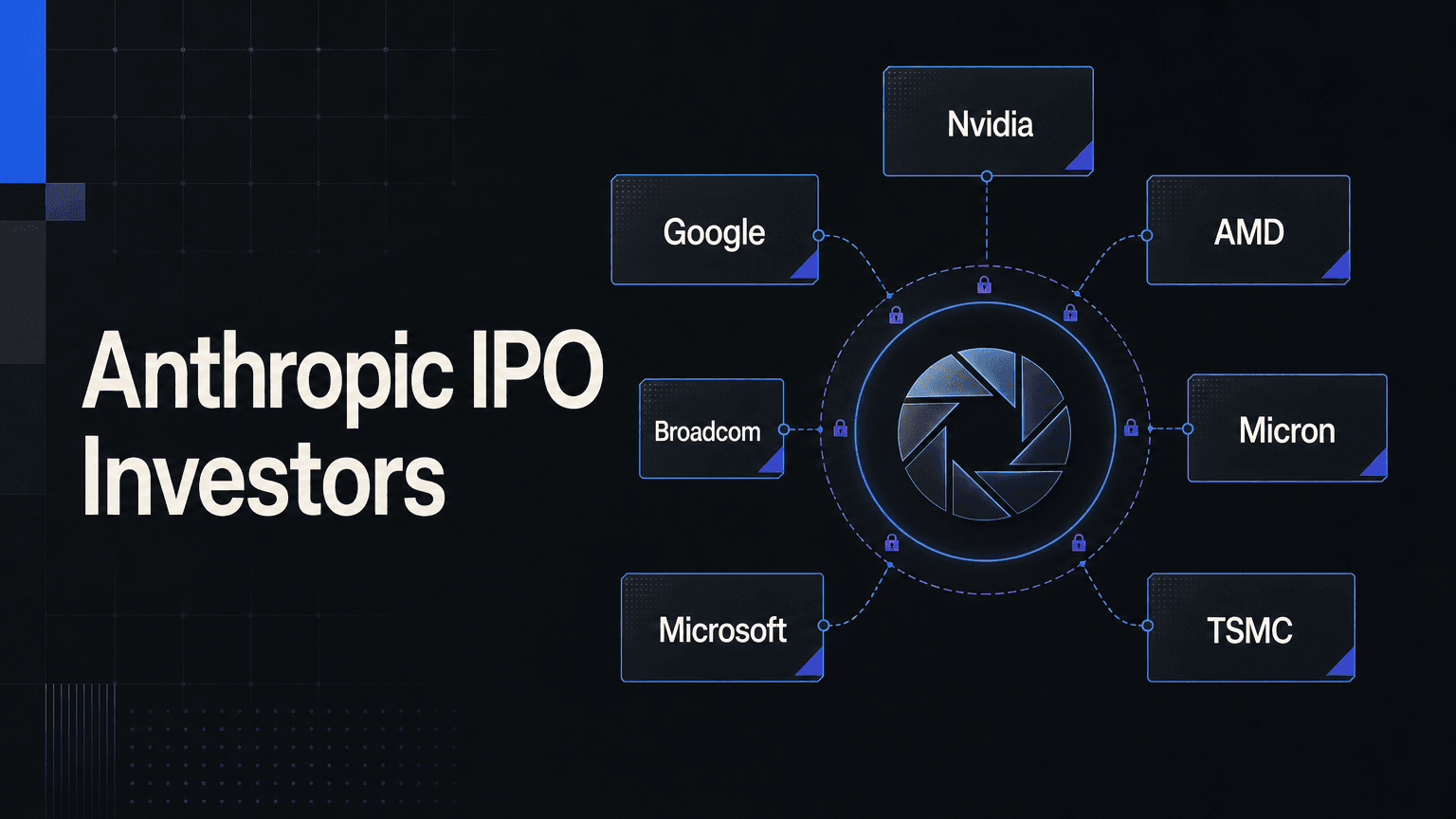
Fortune reported that seven strategic partners, including Google and Nvidia, agreed to buy $26 billion of non-voting stock at the IPO price, separate from the shares sold to the public. A strategic investor is a company that invests for business reasons, such as a supply or cloud relationship, in addition to financial return. The same $26 billion is described in Mitrade’s coverage as a private placement.
TradingKey listed the partners as Nvidia, Google, AMD, Broadcom, Micron, Microsoft and TSMC, and said the stock is issued as Class N shares. Fortune did not name all seven partners, so the full list comes from a single secondary source and should be verified in the prospectus. The non-voting nature of the stock means those investors would not gain voting control through the placement, which keeps governance decisions with other share classes.
Because these investors buy at the IPO price and in a private placement, their shares are not part of the 825 million shares offered to the public. This affects how the total capital raised is counted. TradingKey estimated net proceeds of about $84.6 billion at the $74 midpoint when the public offering and the private placement are combined, but that is the outlet’s own estimate. Lockup terms, which limit when insiders and early investors can sell, were not described in the sources reviewed, so this article makes no statement about them.
How Is the Market Backdrop Affecting the Anthropic IPO?
The range was set during a weak stretch for technology stocks. Fortune reported that the AI sector sold off after Democratic gains in the midterm elections, with investors worried about stricter regulation and closer scrutiny of data center buildouts. It reported that the Nasdaq fell 5.5% in the week before, losing nearly $2.5 trillion in market value in a single session at one point. Nvidia, a key Anthropic partner and strategic investor, was also under pressure after the departure of its CEO, Jensen Huang, on November 12.
Demand for the Anthropic IPO has been reported as strong despite that backdrop. TradingKey cited Bloomberg for orders of about six times the shares available as of November 12, and Mitrade repeated the roughly six-times figure without naming a source. TradingKey also reported that the order book was about two times covered on the first day of the roadshow, but that figure was unattributed. Order books are not binding, and demand at the time of pricing can differ from demand reported days earlier.
Crypto markets have been weak at the same time. KuCoin’s November 16 market report said Bitcoin was about $65,360 after briefly falling to around $62,000 over the weekend, its lowest since July, and that the Fear & Greed Index had dropped to 10. crypto.news quoted Xapo Bank CEO Seamus Rocca as saying the latest dip could be attributed to the opening of Anthropic’s subscription books, but the article presents this as one executive’s view and not an established cause. The sources reviewed do not show that IPO demand moved crypto prices.
What Risks Does the Anthropic IPO Prospectus Flag?
The most concrete risk is the size of Anthropic’s spending commitments. According to TradingKey’s summary of the prospectus, compute commitments total about $900.9 billion, including about $451.6 billion due before the end of 2030 and about $70.7 billion over the next 12 months. The article noted that some of these costs are payable regardless of utilization, which means they do not shrink if demand falls. A company with large fixed costs is more sensitive to changes in pricing and usage than one with costs that move with sales.
Competition and pricing are the second theme. TradingKey listed pricing pressure from OpenAI, Google, Meta and lower-cost or open-source models as watchpoints, along with investor focus on AI spending and debt. Its summary of the filing also noted that the adjusted operating margin fell from 19% in the second quarter to 15% in the third quarter, based on adjusted figures that should be checked against the filing before they are quoted.
The prospectus also includes safety language that is unusual for a listing. Fortune reported that it warns using AI to build more capable AI “could also pose a considerable safety risk, particularly if it sharply accelerates the pace of progress.” It also said Anthropic’s internal estimates suggest the company “may imminently meet” the threshold in its Responsible Scaling Policy for dramatically accelerated AI progress, while no current model has crossed it. These are the company’s own risk disclosures, and they are not predictions about the share price.
Conclusion
The Anthropic IPO is expected to price on November 18, 2026, and begin trading on Nasdaq under the ticker ANT on November 19, with a marketed range of $70 to $78 per share, 825 million shares and a valuation of up to about $1.4 trillion on a fully diluted basis. The prospectus shows very rapid revenue growth, a GAAP operating loss and large compute commitments, and the company’s own risk language is unusually specific about AI safety.
FAQ
1. When does the Anthropic IPO start trading?
Anthropic is expected to price on Wednesday, November 18, 2026, and begin trading on Nasdaq under the ticker ANT on Thursday, November 19, according to CNBC and crypto.news.
2. What is the ANT IPO price range?
The marketed range is $70 to $78 per share for 825 million Class A shares. At the top of the range the offering could raise up to about $64.4 billion, according to Fortune.
3. What valuation does the Anthropic IPO imply?
Fortune reported a valuation of up to about $1.4 trillion on a fully diluted basis. TradingKey estimated an implied market capitalization of about $917 billion to $1.02 trillion at the range, based on its own share count.
4. Who is buying $26 billion of Anthropic stock in the private placement?
Fortune reported that seven strategic partners, including Google and Nvidia, agreed to buy $26 billion of non-voting stock at the IPO price. TradingKey listed Nvidia, Google, AMD, Broadcom, Micron, Microsoft and TSMC, which should be confirmed in the prospectus.
5. Is the Anthropic IPO oversubscribed?
TradingKey, citing Bloomberg, reported orders of about six times the shares available as of November 12. Order books are not binding and can change before pricing.
This content is provided for general informational purposes only and doesn't constitute financial, investment, legal, or tax advice. Any events, rewards, online promotions, or related information mentioned herein should not be considered a recommendation, solicitation, or invitation to purchase, sell, trade, or otherwise deal in any crypto assets. Crypto assets are highly volatile and may result in loss. The availability of WEEX services, products, and related events may vary by region. You are responsible for ensuring that your participation is in accordance with applicable local laws and regulations.
You may also like
Why Is My WEEX Deposit Confirmed but Not Credited?
What Does the Kalshi–S&P Dow Jones Deal Mean? Event Contracts vs. Index Investing
What Is Crypto Margin Trading? How It Works, How It Differs From Futures and What Can Go Wrong
Flying Tesla Roadster (FTR) Coin: What Is It and What to Check Before Trading a Roadster Memecoin
WEEX 2026 New User Guide: Register, Complete KYC, and Claim the Welcome Bonus (Step-by-Step)

How to Buy Crypto Anonymously: 5 Methods, Real Costs and Limits
ENA Token Price Drops After October 5 Unlock: What Happened to Ethena?
How to Day Trade Crypto for Beginners: Fees, Hours, Risk Math
Stock Market Crash Risk in 2026: The Warning Signs Worth Watching
ENA Token Price Up 76% in a Month: The October 5 Unlock Test

How to manage Idle USDT? Top 5 Platforms to Earn Passive Income in 2026 OCT

Taiwan's Travel Rule Amendment Published: What Domestic Crypto Transfers Will Require

Germany's Crypto Tax Draft 2027: What the 50 Percent Substitute Assessment Means
Self-Custody Wallets: When a Crypto Transfer Must Be Reported to Brazil's Coaf
Italian Crypto Tax Return 2026: Filing Deadline, Forms and Gains Rate
What Is Blockchain Technology? Follow One Transaction to See
What Is Pi Network? A Complete Beginner's Guide
NEAR Price Jumps 80% in a Week: What Confidential Intents Changed
PENGU Airdrop on WEEX: Get 10 USDT in PENGU Before October 6

Why Did the CLARITY Act Fail in the Senate, and What Happens Next for Crypto Regulation?
What Is the Digital Asset Tax Certainty Act? All You Have to Know About The The New U.S. Crypto Tax Bill
Airdrops This Week (September 17-23, 2026): Official Conditions and Safety Checks
Senate CLARITY Act Cloture Vote Today: Can Trump's Ethics Compromise Get 60 Votes?
USDC on Arc: What Circle's Mainnet Launch Changes for Holders
Oracle Stock Futures After Earnings: How Leverage Got Liquidated

MU Stock Reclaims $1,000 Again: What's Actually Different This Time
XST Coin Price Fell Over 40% for Two Straight Days: What That Pattern Actually Means
Is The US Becoming The Crypto Capital? Brad Garlinghouse's Bold Predictions Explained
GPT-6 Astra and Crypto: The AI Token Bid and the Cyber Risk
Nike Is Being Removed From the S&P 100: What a 12 Year Low Actually Means for the Stock
Why Is My WEEX Deposit Confirmed but Not Credited?
What Does the Kalshi–S&P Dow Jones Deal Mean? Event Contracts vs. Index Investing
What Is Crypto Margin Trading? How It Works, How It Differs From Futures and What Can Go Wrong
Flying Tesla Roadster (FTR) Coin: What Is It and What to Check Before Trading a Roadster Memecoin
WEEX 2026 New User Guide: Register, Complete KYC, and Claim the Welcome Bonus (Step-by-Step)
How to Buy Crypto Anonymously: 5 Methods, Real Costs and Limits
Contents
Popular coins
Latest articles


