
How to Buy Crypto with PayPal: The Custody Catch Most Beginners Miss

 Prefer us on Google


Learning how to buy crypto with PayPal usually starts and ends with a simple question: tap the crypto icon, choose a coin, confirm. What most beginners miss is what actually happens behind that confirm button. When you buy crypto with PayPal, you're not receiving coins into a wallet you control. You're receiving a balance on a platform that holds the real coins on your behalf, and that distinction matters far more than the convenience of the app you already have installed.
What Actually Happens When You Buy Crypto with PayPal
PayPal doesn't run its own crypto exchange or custody infrastructure. Since launch, the actual trading, custody, and reserve management have been handled by Paxos Trust Company, with PayPal functioning as the consumer-facing wallet and broker layer on top. When you buy crypto with PayPal, your payment goes to PayPal, and Paxos executes the real purchase and holds the underlying coins.
What shows up in your PayPal account is a number, a balance that represents your claim on those coins, similar to how your bank account shows a dollar figure rather than physical cash sitting in a vault with your name on it. That's not a flaw specific to PayPal. It's how every custodial crypto product works. The detail worth understanding is what that structure means for you specifically, not just how it's described in PayPal's own marketing.
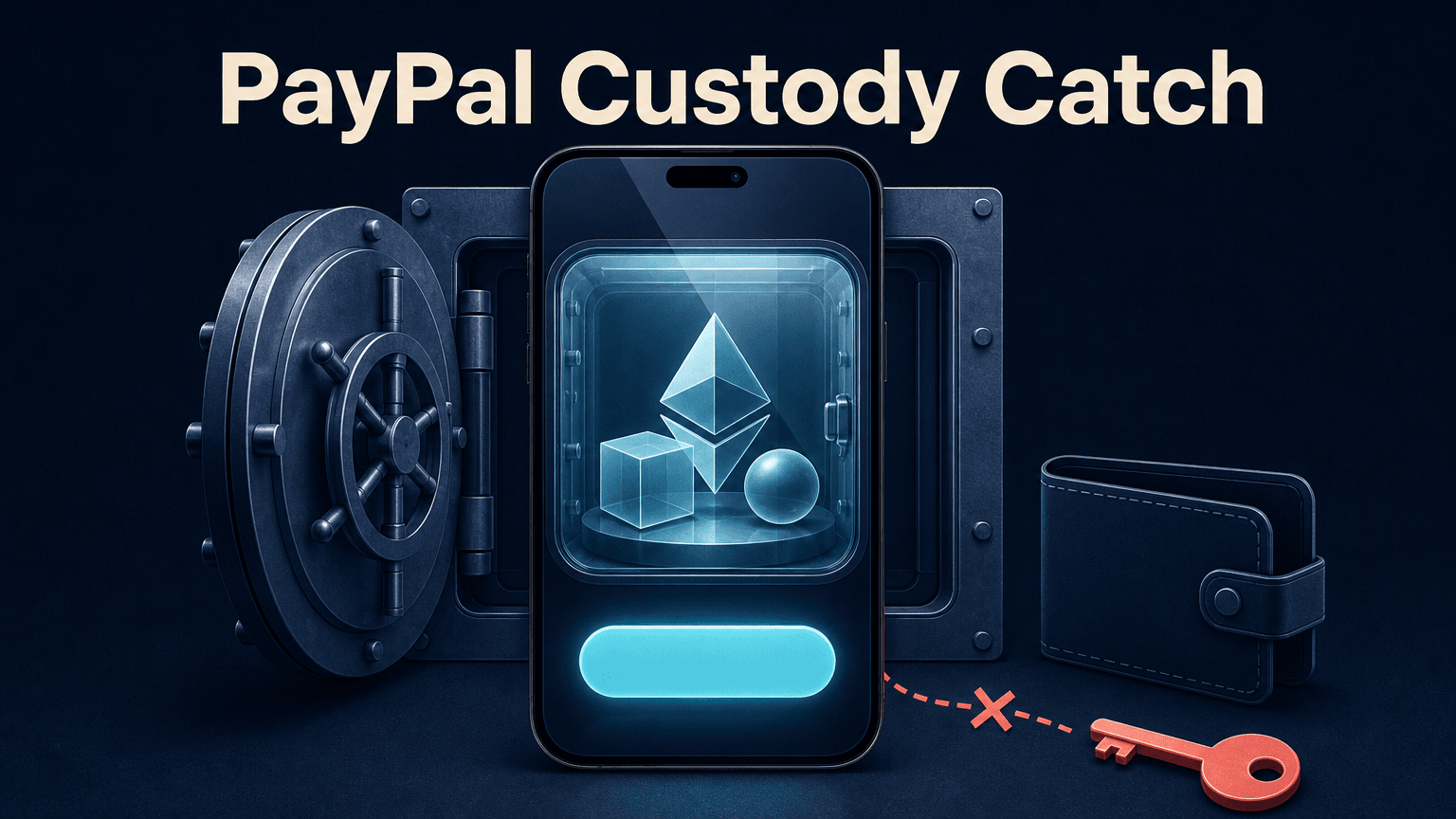
Why "Custodial" Is the Word That Actually Matters
Ownership of cryptocurrency isn't defined by what a balance shows on a screen. It's defined by who controls the private key, the cryptographic credential that can actually sign a transaction and move that cryptocurrency on its underlying blockchain. Whoever holds that key holds the coins, regardless of whose name is on the account showing the balance.
When you buy crypto with PayPal, Paxos holds the private keys, not you. Your PayPal balance is a liability PayPal and Paxos owe you, similar in structure to how a bank owes you the dollars shown in your checking account. That's a perfectly normal arrangement for a payments company, but it's a different thing entirely from holding crypto yourself, and the gap between the two only becomes visible when something goes wrong with the custodian rather than with the asset itself.
What You Can and Can't Actually Do With It
This custody structure isn't abstract. It shows up directly in what you're allowed to do with the crypto you bought. You can't sign your own transactions, choose your own fee, or send to any address you want the way you could from a self-custody wallet. You're limited to whatever functions PayPal's interface exposes: buying, selling, holding, and a restricted form of transferring.
Even that transfer option is narrower than it sounds. According to crypto-focused reviews of PayPal's offering, only four coins, Bitcoin, Ethereum, Litecoin, and Bitcoin Cash, plus PayPal's own stablecoin PYUSD, have full self-custody parity, meaning you can actually withdraw them to an external wallet you control. Anything outside that list may not offer a path out of PayPal's custody at all, which means for some assets, the balance you see is the only form that coin will ever take for you.
-- Price
The Lesson the Industry Already Learned the Hard Way
This isn't a hypothetical risk invented to sell wallets. It's the exact structural gap that turned into real losses when FTX collapsed in 2022: customers saw balances in their accounts right up until the moment those balances became unsecured claims against a bankrupt company rather than coins they could withdraw. PayPal and Paxos are a different kind of institution than FTX was, regulated differently and with a different risk profile, but the underlying mechanism, your crypto balance being a claim on a custodian rather than something you directly control, is structurally the same.
That's the real content behind the phrase "not your keys, not your coins," a piece of crypto native advice that sounds like a slogan until you actually trace through what happens if a custodian freezes withdrawals, faces a regulatory order, or runs into financial trouble. None of those scenarios require fraud or bad faith. Ordinary operational or regulatory friction is enough to turn a balance you thought you owned into something you're waiting on someone else to release.
When Buying Crypto with PayPal Still Makes Sense
None of this means buying crypto with PayPal is a mistake. For a small first purchase, for testing whether you actually want to hold crypto before committing meaningfully, or for the convenience of an app and login you already trust, it's a reasonable on-ramp. The familiarity and speed are real advantages, and most people's first exposure to owning any crypto at all starts exactly this way.
The mistake isn't buying crypto with PayPal. It's treating a PayPal balance as equivalent to crypto you actually control once the amount involved stops being trivial. A small test purchase sitting in PayPal while you learn the basics carries limited risk. A meaningful holding sitting there indefinitely, for an asset specifically bought with the intention of holding it long-term, is a different decision, and it's worth making deliberately rather than by default.
Closing the Gap: Moving From a Balance to Actual Ownership
The practical fix is straightforward once you understand the problem: withdraw to a wallet where you hold the private key yourself. For the coins that support it, that means moving your PayPal balance to a self-custody wallet, hardware or software, where you generate and control the keys rather than relying on Paxos to hold them for you.
That step isn't free, and it isn't instant. Moving crypto out of PayPal adds a transfer fee on top of whatever spread you already paid to buy it, plus the underlying network fee for the blockchain itself. For a small test amount, paying that fee to establish genuine self custody may not be worth it yet. For anything you're planning to hold for a meaningful period, it usually is, because it converts a claim on a company into something only you can move.
Where WEEX Fits Once You're Ready to Trade, Not Just Hold
PayPal's narrow coin list and custodial structure are built for occasional small purchases, not for someone who wants to actually trade or hold a broader range of assets. Once you've bought crypto with PayPal and want to do more than sit on that initial balance, WEEX Spot lets you fund an account with USDT and access a much wider range of assets than PayPal's four coins, in a structure where you control withdrawals to your own external wallet when you choose to.
That matters specifically because of the custody gap this article describes. Moving funds from a PayPal balance into USDT on an exchange like WEEX, and from there into a self-custody wallet when you're ready, is how you actually close the distance between "I bought crypto" and "I own crypto." Trading on WEEX is backed by a publicly disclosed 1,000 BTC protection fund, which you can check yourself at weex.com/protectfund, the same kind of independent verification this article has been arguing you should look for before trusting any platform with a meaningful balance.
Conclusion
Buying crypto with PayPal gets you exposure to crypto prices through a familiar, custodial interface, but it doesn't put coins in a wallet you control. Paxos holds the actual keys, your PayPal balance is a claim on that custody arrangement, and only a handful of coins even offer a path to real self-custody. That's a reasonable starting point for a small first purchase, but anyone holding a meaningful amount should understand the gap between a balance and genuine ownership, and know that closing it is a deliberate choice, not something that happens automatically.
FAQ
1. Do I actually own the crypto I buy with PayPal?
Not in the way you'd own crypto in a self-custody wallet. PayPal's crypto is custodial, meaning Paxos Trust Company holds the actual coins and private keys, while your PayPal balance represents a claim on that holding rather than direct control.
2. Can I withdraw crypto I bought on PayPal to my own wallet?
For some coins, yes. Bitcoin, Ethereum, Litecoin, Bitcoin Cash, and PYUSD have self-custody withdrawal support, but other assets may not offer a path to an external wallet at all.
3. Is buying crypto with PayPal safe?
It carries the same general risk profile as holding a balance with any custodian: reasonably safe for everyday operations, but subject to the custodian's own financial health, regulatory status, and operational decisions, which is different from holding crypto yourself.
4. What does "not your keys, not your coins" actually mean?
It means that whoever holds the private key to a crypto address controls those coins. If a custodian like Paxos holds the keys on your behalf, your crypto balance is a claim on that custodian, not coins under your direct, independent control.
5. Should I move my PayPal crypto to a different platform?
For small test amounts, it may not be worth the transfer fees yet. For anything you plan to hold meaningfully, moving to a platform with a broader asset range and eventually to self-custody is generally the more deliberate choice.
This content is provided for general informational purposes only and doesn't constitute financial, investment, legal, or tax advice. Any events, rewards, online promotions, or related information mentioned herein should not be considered a recommendation, solicitation, or invitation to purchase, sell, trade, or otherwise deal in any crypto assets. Crypto assets are highly volatile and may result in loss. The availability of WEEX services, products, and related events may vary by region. You are responsible for ensuring that your participation is in accordance with applicable local laws and regulations.
You may also like
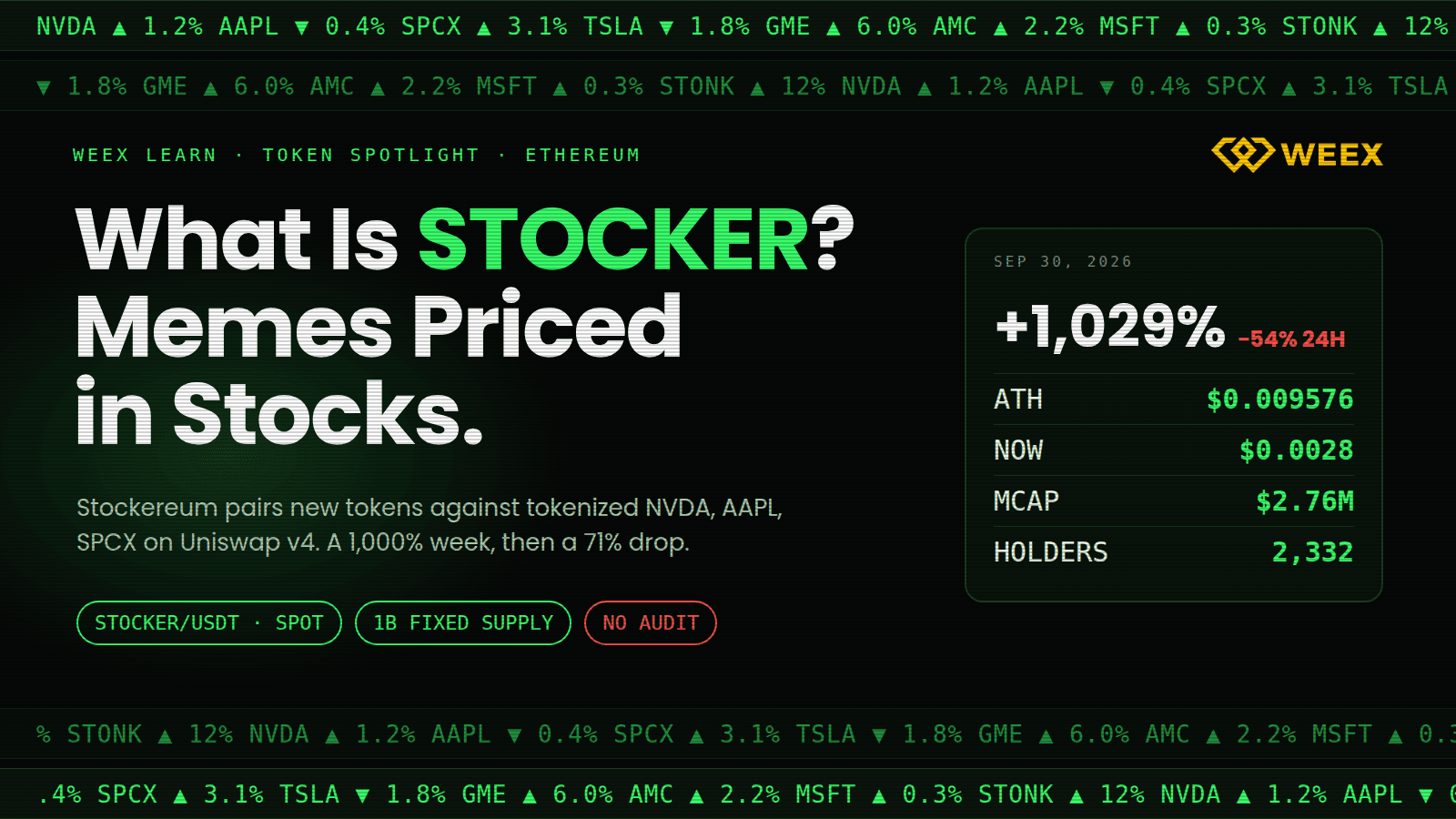
What Is STOCKER? Stockereum, Stock-Paired Meme Tokens, and Risks
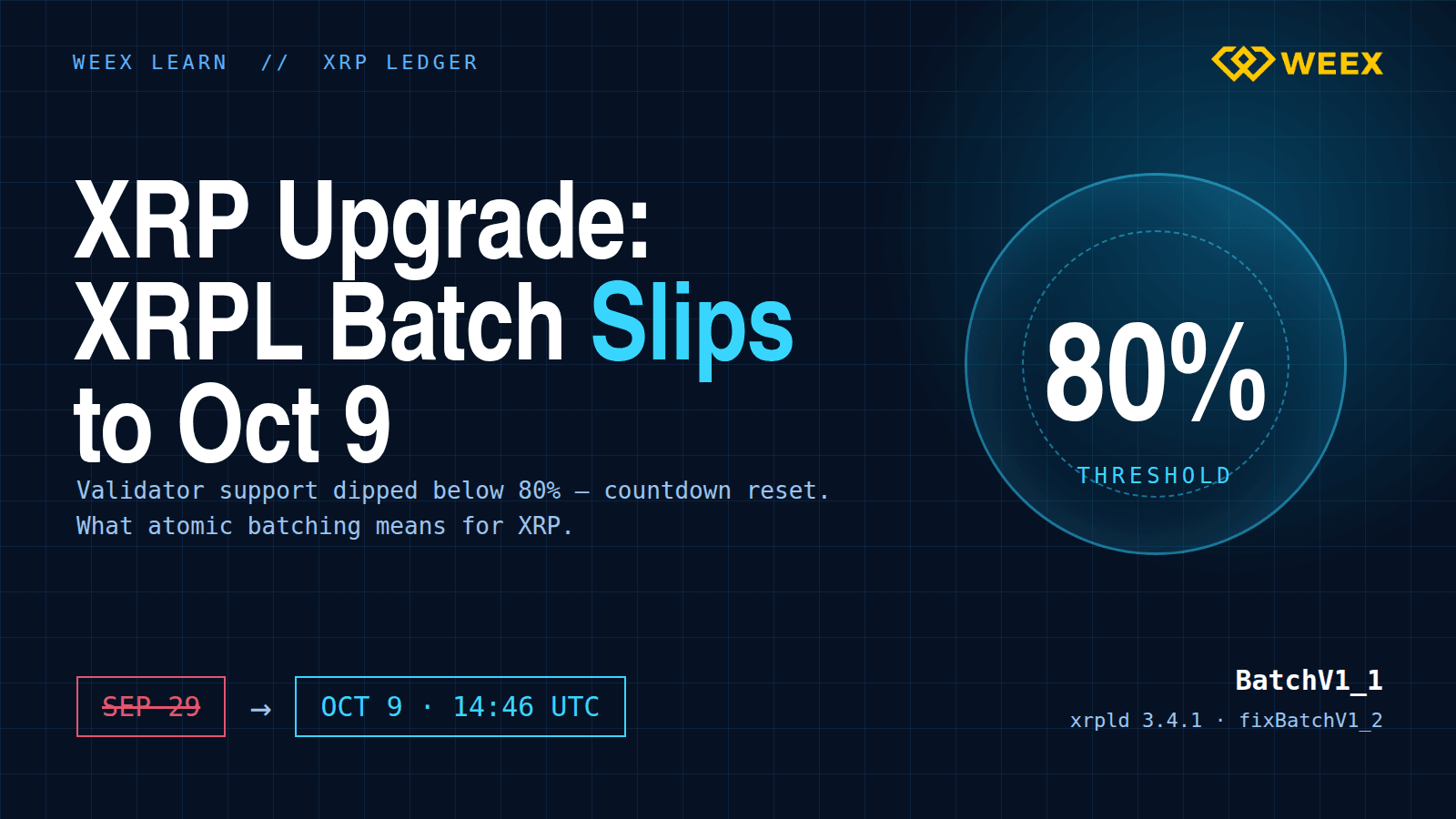
XRP Upgrade Update: XRPL Batch Slips to Oct 9 and What Changes

What Is Coinbase Wrapped HYPE (cbHYPE)? How It Works on Base, 1:1 Backing, Risks, and HYPE Conversion
Is QNT a Stock or Crypto? Quant (QNT) and Quantinuum Stock Are Not the Same Asset
No KYC Crypto Wallet: 6 Picks and 5 Places Your ID Still Leaks
What Is Quant (QNT) Crypto? How Overledger Works, QNT Utility, and Token Supply Explained
Best Decentralized Crypto Wallet for Beginners: What Self-Custody Really Asks of You
Does a Negative Funding Rate Mean a Short Squeeze Is Coming?

Best Crypto Exchange for Beginners 2026: What Actually Matters When Choosing One
Best Crypto Cold Wallet 2026: Top Picks Matched to How You Hold
How to Connect Phantom Wallet to a Solana DApp
How to Install and Set Up Phantom Wallet
Funding Rate Crypto: What BTC and ETH Are Paying Right Now

INTC Stock Surged 14%: Intel Only Has Enough Chips for Half Its Clients
XPL Unlock on Sept 25: How to Long or Short Plasma Futures Safely
Bitcoin Funding Rate After a $648M Short Squeeze: What Longs Pay
What Is Blockchain Technology? Follow One Transaction to See
How Does Mining Actually Work on Pi Network?
What Is Pi Network? A Complete Beginner's Guide
How to Look Up a Wallet Address and Transaction History
Funding Rate Explained: How Perpetual Futures Fees Hit Your PnL
PENGU Airdrop on WEEX: Get 10 USDT in PENGU Before October 6
BTC Futures Trading on WEEX: Claim BTC Rewards Before Sep 25
What Is a Funding Rate? How Perpetual Futures Charge Longs and Shorts
How Does WEEX KYC Verification Work? A Taiwan User Guide
Macro Protocol (MTP): Listing Status and a Safe Verification Guide
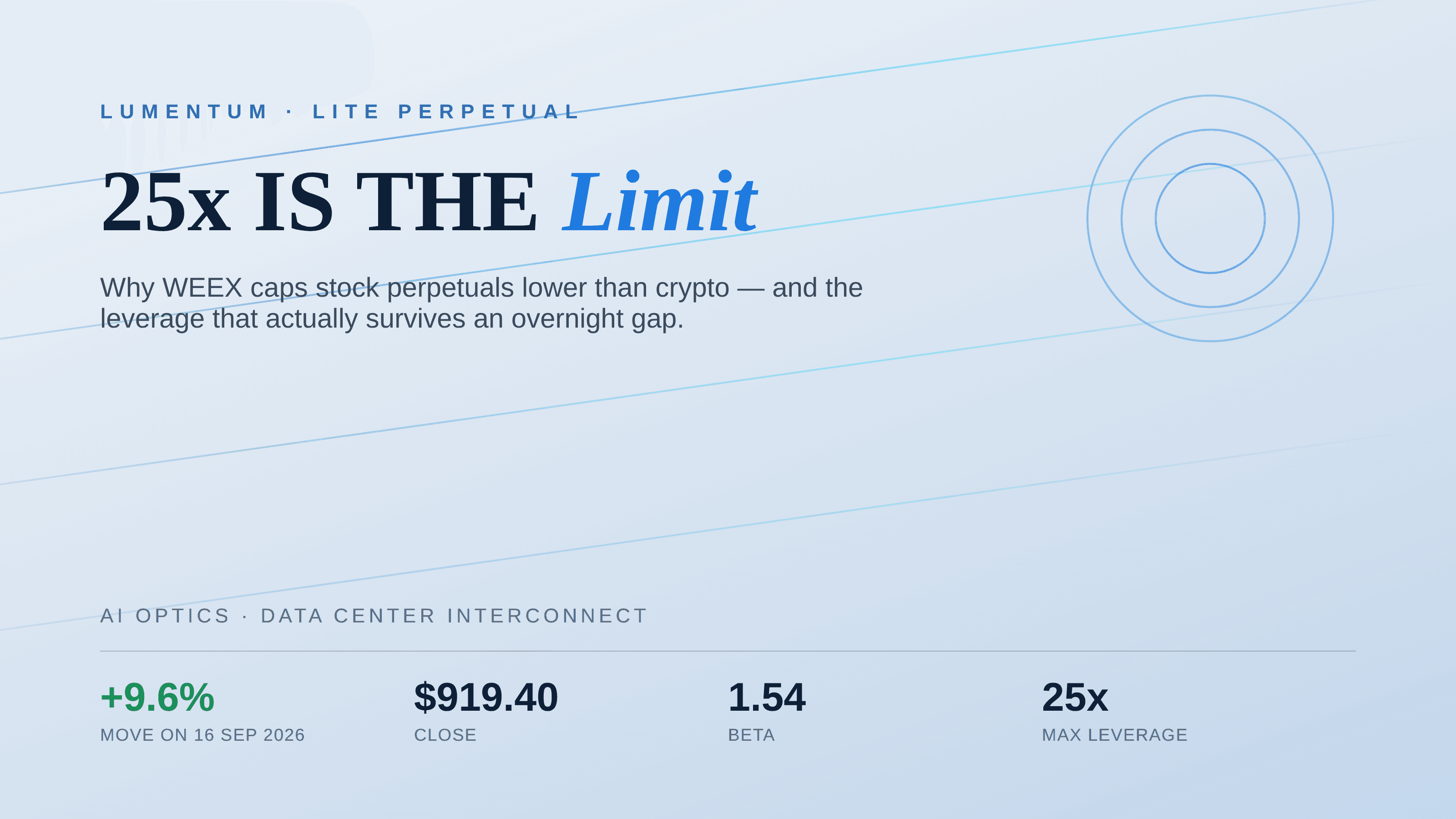
Lumentum (LITE) Perpetual Futures: Why 25x Leverage Is the Limit
Lisk Chain Shutdown October 31: How to Move LSK Safely
What Is BONK? WEEX Spot and 1000BONK Futures Status and Risk Checks
What Is BRETT? WEEX Spot and Futures Status and Risk Checks
What Is STOCKER? Stockereum, Stock-Paired Meme Tokens, and Risks
XRP Upgrade Update: XRPL Batch Slips to Oct 9 and What Changes
What Is Coinbase Wrapped HYPE (cbHYPE)? How It Works on Base, 1:1 Backing, Risks, and HYPE Conversion
Is QNT a Stock or Crypto? Quant (QNT) and Quantinuum Stock Are Not the Same Asset
No KYC Crypto Wallet: 6 Picks and 5 Places Your ID Still Leaks
What Is Quant (QNT) Crypto? How Overledger Works, QNT Utility, and Token Supply Explained




