
- Buy Crypto
- Markets
 Futures
- Spot
- Copy Trade
- Earn
- More
Where Does Institutional Money Flow During Each Geopolitical Conflict?

Original Title: How The US Iran Conflict Will Make Experienced Investors Rich
Original Author: Felix Prehn, Macro Analyst
Translation: DeepTech TechFlow
News about the US and Iran is everywhere right now.
If you're wondering if you can make money from this conflict—the answer is yes. I'm here to tell you exactly how to do it.
Having worked in investment banking for many years, I specialize in finding what Wall Street coolly refers to as "event-driven opportunities." That's their refined term for war. In every major conflict—the Gulf War, Iraq War, Russia-Ukraine War—the same three-stage market pattern has emerged, determining where institutional funds will flow next.
Stage One: Shock—retail panic selling.
Stage Two: Repricing—market settles down for reassessment.
Stage Three: Rotation—institutional funds flow into new sectors.
The US-Iran conflict is now following the same playbook. The shock phase has already begun. What happens next, where the real money flows—can actually be anticipated if you know what to look for.
And that's what I'm here to give you.
Retail vs Institutional Playbook
As conflict looms, retail investors typically do one of three things.
They liquidate everything to cash—thinking they are preserving security when, in reality, they are ensuring erosion by inflation.
They freeze—staring at a sea of red, unable to move, doing nothing.
Or they chase what has just spiked—oil, defense stocks, gold—buying at the entirely wrong time because fear drives their actions, and they have no plan.
Meanwhile, institutions managing billions are doing none of these. They are repositioning based on patterns studied over decades of conflicts. Not emotion, but patterns.
Let me teach you the same.
The Recurring Pattern
Following the outbreak of a geopolitical conflict, the S&P 500 drops 5% to 7% in the first 10 days. It regains this loss around 35 days later. After 12 months, it rises 8% to 10%—roughly the market's average performance in any given year.
Historical Examples:
During the Gulf War, the S&P had an annualized return of 11.7%. In the 12 months following the war's end, it rose by 18%.
During the 2003 Iraq War, the market surged by 13.6% in three months.
Amid the 2022 Russia-Ukraine conflict, the S&P initially fell by 7%, then rebounded above pre-invasion levels over the next few months.
Wars seldom destroy markets. They breed uncertainty, which leads to declines. Declines create opportunities.
Why Iran Is Especially Important
Iran produces 3.3 million barrels of oil per day.
Any escalation—even just perceived—adds supply risk, which affects everything.
The market won't wait for actual supply disruptions; it will price in the risk of disruptions ahead of time. Traders will assume some oil may go offline, meaning reduced supply with unchanged demand, leading to higher oil prices. And oil is an input to nearly everything—transportation, manufacturing, shipping, food production, fertilizers, heating, cooling.
Rising oil prices mean a comprehensive cost increase. Higher oil prices result in higher inflation. Higher inflation means the Fed may maintain high rates instead of cutting. Higher rates mean pricier mortgages, auto loans, and corporate debt. Costlier borrowing means lower corporate profits. Lower profits mean lower stock valuations.
The Three Phases of Every Conflict
Every geopolitical conflict propels money through three distinctly different phases. Understanding which phase you are in will completely change what you should do.
Phase One: Impact
This phase is fast, fierce, driven by emotion and algorithms. Oil spikes. The VIX—the market fear gauge—soars. Risk stocks plummet. Biotech, high-growth tech, speculative bets—all sold off as funds rush to safe havens. Gold rises. Financial media goes into 24-hour rolling coverage mode designed to keep you as scared as possible.
This stage lasts for several days, sometimes weeks. If you bought oil, gold, or defense stocks during this stage, you almost certainly bought the top. The emotional urge to act peaks during this stage, which is why action at this time is the most expensive mistake.
Stage Two: Repricing
Panic subsides. The market begins to think rather than feel.
The focus shifts from "what happened" to "what happens next." Is this temporary or structural? Will inflation remain high? What will the Fed do? Is the supply chain permanently disrupted or just temporarily stressed?
This is the stage where institutions begin to reallocate—not amid the initial days of chaos but in the subsequent clarity. This is where smart money makes money. In the calm after the storm, not during the storm.
Stage Three: Rotation
Money flows out of impacted sectors and into sectors poised to benefit in the new reality.
Where the Money Is Actually Going
First: Energy—but not in the way you'd think.
The obvious play is oil, indeed, oil has outperformed in the short term. Bank of America's study of 90 years of geopolitical shocks shows that oil has been the best-performing asset, averaging an 18% gain. What you want to hold are those companies benefiting from sustained high oil prices. Pipeline companies. Storage terminals. Energy infrastructure. Those companies that collect tolls on the oil flow regardless of where oil prices go.
Second: Defense—but look for the structural, not the headline.
Yes, defense stocks will spike immediately. Some individual stocks have risen over 30% since the escalation of tensions. But defense spending is not a quarterly event. Governments sign 10-year procurement contracts. Large contractors have backlogs in the hundreds of billions. Look for the companies that have positioned themselves for years-long spending cycles.
Third: Gold and Silver—for a longer-term play.
Gold surged in the first stage, but unlike oil, it tends to hold onto gains. Bank of America's data shows that six months after the shock, gold continues to outperform, on average, by 19%. The conditions driving gold higher—higher inflation, central bank money printing, institutional hedging—do not dissipate with calming headlines. If this conflict drags on, oil stays elevated, inflation sticks, and the Fed can't cut rates, that's precisely when gold is at its strongest.
Fourth: Company with Pricing Power.
This is the point that most people miss. If inflation stays high for a long time, what you want to hold are companies that can pass on higher costs to customers without losing them. Strong brand. High gross margin. Companies where customers don’t have cheaper alternatives.
Which sectors will be hurt: In such periods, utilities and real estate typically underperform. Prolonged high rates compress the valuation of these two sectors. If you are overweight in these two sectors, it is worth examining your position.
What You Should Actually Do
Don't panic sell. Decades of conflicting data are very clear — selling in the initial shock locks in losses and ensures you miss the rebound. Don't chase what has already surged. If it's already on financial media, you are late. Don't watch war coverage.
Keep your core portfolio unchanged — those high-quality companies with strong brands, high gross margins, and pricing power.
Then review your holdings, asking two questions: Where is the most vulnerable in this environment? Where is institutional money flowing in and I am not exposed yet?
What you are doing is tilting your portfolio — moderately realigning towards sectors where institutional money is already shifting, ahead of the headlines.
This is about your livelihood. Your retirement. Your family’s financial security.
Get risk management right, and you will make money. This is the least exciting thing I can say. But it's the truth.
You may also like

Join WEEX AI Wars II: How WEEX API, Trader Skills Empower AI Trading Innovations
Join WEEX AI Wars II and be part of a global AI trading revolution. Compete with top AI agents and bots, showcase your strategies, and leverage WEEX API and Trader Skill to innovate, automate, and gain exposure in the AI trading ecosystem. Onboard your AI agent to WEEX AI Wars II NOW.

What kind of scenario will Backpack's TGE today play out in the bear market opening?

Polymarket Ten Million Dollar Winner Retrospective: 40 Addresses, 100,000 Transactions, Only Three Ways to Make Money

The Most Brutal Single-Month Plunge in 43 Years, Gold's Every Top Looks Like This

Jiang Xueqin's Latest Interview Transcript: How to View the Current Global Changes
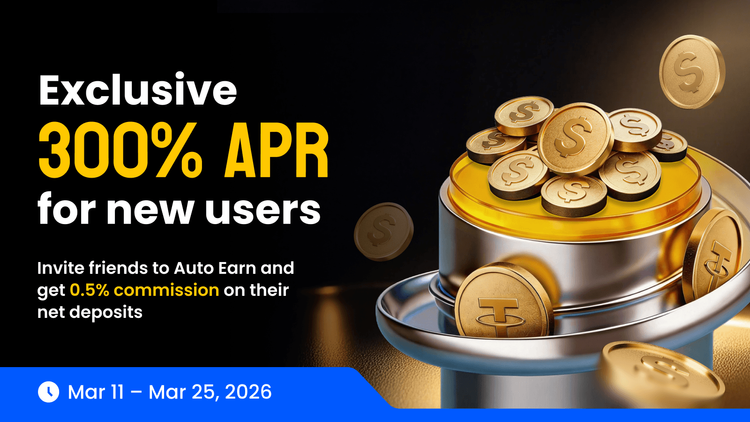
Maximize Your USDT Yield: The Weex Auto Earn Strategy for Passive Crypto Income
Learn how to earn interest on USDT with WEEX Auto Earn. Discover how stablecoins can generate passive income and why some platforms now offer up to 300% APR.

1 million investment yields over 1 billion return, Airwallex co-founder Liu Yueting reviews key life investments

Polymarket Millionaire Review: 40 addresses, 100,000 transactions, only three ways to make money

Four Key Truths and Cost Traps Behind Polymarket LP Market Making Incentives
San Francisco Stablecoin Weekly Insights: The XYZ Coordinate System of 2026
Asia's Next Great Dog Coin Debuts at the Weex AI Trading Hackathon
A BNB Chain meme token inspired by the Shih Tzu dog, blending community culture, creativity, and long‑term loyalty in Web3.
Fluxor: Connecting Global Builders With the WEEX AI Trading Hackathon
A hackathon platform connecting builders and creators to collaborative opportunities and innovation in Web3, enabling AI-oriented developers to experiment and create at scale.
The growth of AI-driven tools and community collaboration in Web3 has created new opportunities for developers worldwide. As a community partner and sponsor of the WEEX AI Trading Hackathon, Fluxor's mission to unify hackathon experiences and foster creative partnerships aligns with this spirit of collective innovation.

Houthi Deadline Countdown Begins | Rewire News Morning Brief

Middle East Conflict Escalation and Rate Hike Expectation Trigger Worst Gold Sell-Off in 43 Years

The Largest Oil Reserve Release in History: Why Is the Oil Price Still Above 100?

AI Agent Can't Kill SaaS

This viral Beijing high school teacher, Jiang Xueqin, predicted America's downfall in advance

Interview with Bill, Head of Bitget AI: In the AI Trading Era, How Far Are We from "Earning While Lying Down"?
Join WEEX AI Wars II: How WEEX API, Trader Skills Empower AI Trading Innovations
Join WEEX AI Wars II and be part of a global AI trading revolution. Compete with top AI agents and bots, showcase your strategies, and leverage WEEX API and Trader Skill to innovate, automate, and gain exposure in the AI trading ecosystem. Onboard your AI agent to WEEX AI Wars II NOW.
What kind of scenario will Backpack's TGE today play out in the bear market opening?
Polymarket Ten Million Dollar Winner Retrospective: 40 Addresses, 100,000 Transactions, Only Three Ways to Make Money
The Most Brutal Single-Month Plunge in 43 Years, Gold's Every Top Looks Like This
Jiang Xueqin's Latest Interview Transcript: How to View the Current Global Changes
Maximize Your USDT Yield: The Weex Auto Earn Strategy for Passive Crypto Income
Learn how to earn interest on USDT with WEEX Auto Earn. Discover how stablecoins can generate passive income and why some platforms now offer up to 300% APR.


 App
App