
What is PLASMA Coin? The Layer 1 for a New Financial System

 Prefer us on Google


As a crypto investor, I'm always searching for foundational projects that aim to solve real-world problems. Many Layer 1 blockchains compete on speed or scalability, but Plasma has captured my attention with its laser focus on a critical sector: stablecoin infrastructure. This project isn't just another blockchain; it's a dedicated platform designed to be the bedrock for a new global financial system powered by stable, digital currencies. For those looking to get involved, the exciting news is that the PLASMA coin has been listed on WEEX, with trading for the PLASMA/USDT pair having commenced on September 25, 2025.
An Introduction to the Plasma Blockchain
Plasma (PLASMA) is a Layer 1 blockchain specifically engineered to build and support the stablecoin infrastructure necessary for a decentralized global financial system. Unlike general-purpose blockchains that try to accommodate a wide range of applications, Plasma dedicates its architecture to providing a secure, scalable, and efficient environment for issuing and transacting with stablecoins. By concentrating on this niche, Plasma aims to address the unique challenges of price stability, cross-border payments, and financial inclusion that are paramount for the mass adoption of digital currencies. The project operates on the BSC (Binance Smart Chain) network, leveraging its established ecosystem while building out its own unique Layer 1 capabilities.
Who Is Behind the Creation of Plasma Crypto?
Investigating the team behind a project is a crucial part of my research process. The development of Plasma is led by the Plasma Foundation, a collective of developers, cryptographers, and financial experts who share a vision for a more accessible and stable digital economy. While specific high-profile names might not be at the forefront, the project's official communications and detailed documentation point to a team with deep expertise in blockchain architecture and financial technology. Their focus appears to be less on individual personalities and more on building robust, open-source technology. This commitment to the underlying infrastructure is often a hallmark of projects with long-term ambitions rather than short-term hype. The team's active development can be tracked through their official channels, such as the Plasma Foundation Twitter, where they post regular updates and engage with the community.
How Does the Plasma (PLASMA) Ecosystem Work?
To truly understand Plasma, we need to look under the hood at its technical design. As a Layer 1, Plasma is its own independent blockchain, not a solution built on top of another network like Ethereum. This sovereignty allows it to optimize every aspect of its protocol—from the consensus mechanism to the transaction processing—for the specific needs of stablecoins.
The core of its operation revolves around providing a framework for developers and institutions to launch their own fully-collateralized and algorithmically-backed stablecoins. The Plasma blockchain is designed to ensure high throughput and low transaction fees, which are essential for payments and remittances—key use cases for stablecoins. It aims to create an interoperable ecosystem where different stablecoins can be exchanged seamlessly, removing the friction that currently exists in both traditional finance and the fragmented crypto market. The native token, PLASMA, is integral to this ecosystem, serving critical functions to maintain network security and facilitate operations.
-- Price
What Are the Main Uses for the PLASMA Token?
The PLASMA token is the lifeblood of the Plasma ecosystem and is not just a speculative asset. Its utility is deeply integrated into the network's functionality. My analysis of their whitepaper and project documents reveals several primary use cases:
- Transaction Fees (Gas): Like Ether on Ethereum, the PLASMA token is used to pay for transaction fees on the network. Every transfer, smart contract interaction, or stablecoin issuance requires a small amount of PLASMA.
- Staking and Network Security: To ensure the integrity and security of the blockchain, Plasma will likely employ a Proof-of-Stake (PoS) consensus mechanism or a variant. Token holders can stake their PLASMA to participate in the validation of transactions and earn staking rewards in return. This not only secures the network but also provides a way for long-term supporters to earn a yield.
- Governance: Decentralization is key in Web3. PLASMA token holders are expected to have a say in the future development of the protocol. Through a governance model, they can vote on proposals for network upgrades, fee adjustments, and other important parameters, giving the community control over the platform's evolution.
A Comprehensive Guide on How to Buy Plasma (PLASMA) Coin
With its recent debut on centralized exchanges, acquiring PLASMA has become straightforward. The token is now actively trading on WEEX, a platform known for listing promising new assets. If you've decided that Plasma aligns with your investment strategy, here’s how you can purchase it.
First, you'll need an account. If you're new to the platform, you can register for a WEEX account here. The process is quick and requires basic information and security setup.
Once your account is set up and funded (you can deposit crypto like USDT), you are ready to trade. Navigate to the spot trading section of the exchange. You can directly access the trading pair via this PLASMA/USDT trade link on WEEX. Here, you can place a market order to buy at the current price or a limit order to specify the price at which you wish to purchase PLASMA.
Is Plasma Coin a Good Investment for Your Portfolio?
Evaluating any crypto asset as a potential investment requires a careful look at its fundamentals, market potential, and associated risks. Plasma's focus on stablecoin infrastructure places it in a rapidly growing and critically important sector of the digital economy. The demand for reliable stablecoins is projected to surge as more industries embrace blockchain technology for payments and DeFi.
Potential and Prospects: The project's success hinges on its ability to attract developers and institutions to build on its platform. If Plasma can become the go-to Layer 1 for stablecoin issuance, the demand for its native PLASMA token for fees, staking, and governance could grow substantially. Its clear vision and specialized approach are significant advantages that differentiate it from more generalized competitors.
Risk Assessment: However, the path is not without challenges. The Layer 1 space is intensely competitive, with established giants like Ethereum and fast-growing alternatives like Solana and Avalanche. Furthermore, the regulatory landscape for stablecoins is still evolving globally, and any adverse regulations could impact the entire sector. As an investor, it's crucial to weigh this immense potential against the inherent risks of a new and ambitious project. My approach is to see it as a high-risk, high-reward opportunity that warrants further due diligence and is best suited for a small, speculative portion of a diversified crypto portfolio.
DISCLAIMER: WEEX and affiliates provide digital asset exchange services, including derivatives and margin trading, only where legal and for eligible users. All content is general information, not financial advice-seek independent advice before trading. Cryptocurrency trading is high-risk and may result in total loss. By using WEEX services you accept all related risks and terms. Never invest more than you can afford to lose. See our Terms of Use and Risk Disclosure for details.
This content is provided for general informational purposes only and doesn't constitute financial, investment, legal, or tax advice. Any events, rewards, online promotions, or related information mentioned herein should not be considered a recommendation, solicitation, or invitation to purchase, sell, trade, or otherwise deal in any crypto assets. Crypto assets are highly volatile and may result in loss. The availability of WEEX services, products, and related events may vary by region. You are responsible for ensuring that your participation is in accordance with applicable local laws and regulations.
You may also like
AVAX Futures: Trading the Avalanche RWA Catalyst With Leverage
Pangolin (PNG) Price Prediction 2026–2030: Can Pangolin (PNG) Rise Again?

What Is Pangolin (PNG) Crypto and How to Buy It?
What is River Coin: A Comprehensive Guide to Chain-Abstraction

Best Crypto Cold Wallet 2026: Top Picks Matched to How You Hold
Phantom Wallet vs MetaMask: What's the Difference
How to Connect Phantom Wallet to a Solana DApp
How to Install and Set Up Phantom Wallet

What Is Phantom Wallet? A Complete Guide to the Solana Wallet

What Is a White Label Crypto Exchange? A Complete Beginner's Guide
What Is Pons Crypto (PONS), and How to Trade PONS on WEEX?
Crypto Futures Trading Explained: One Real Trade, Start to Exit
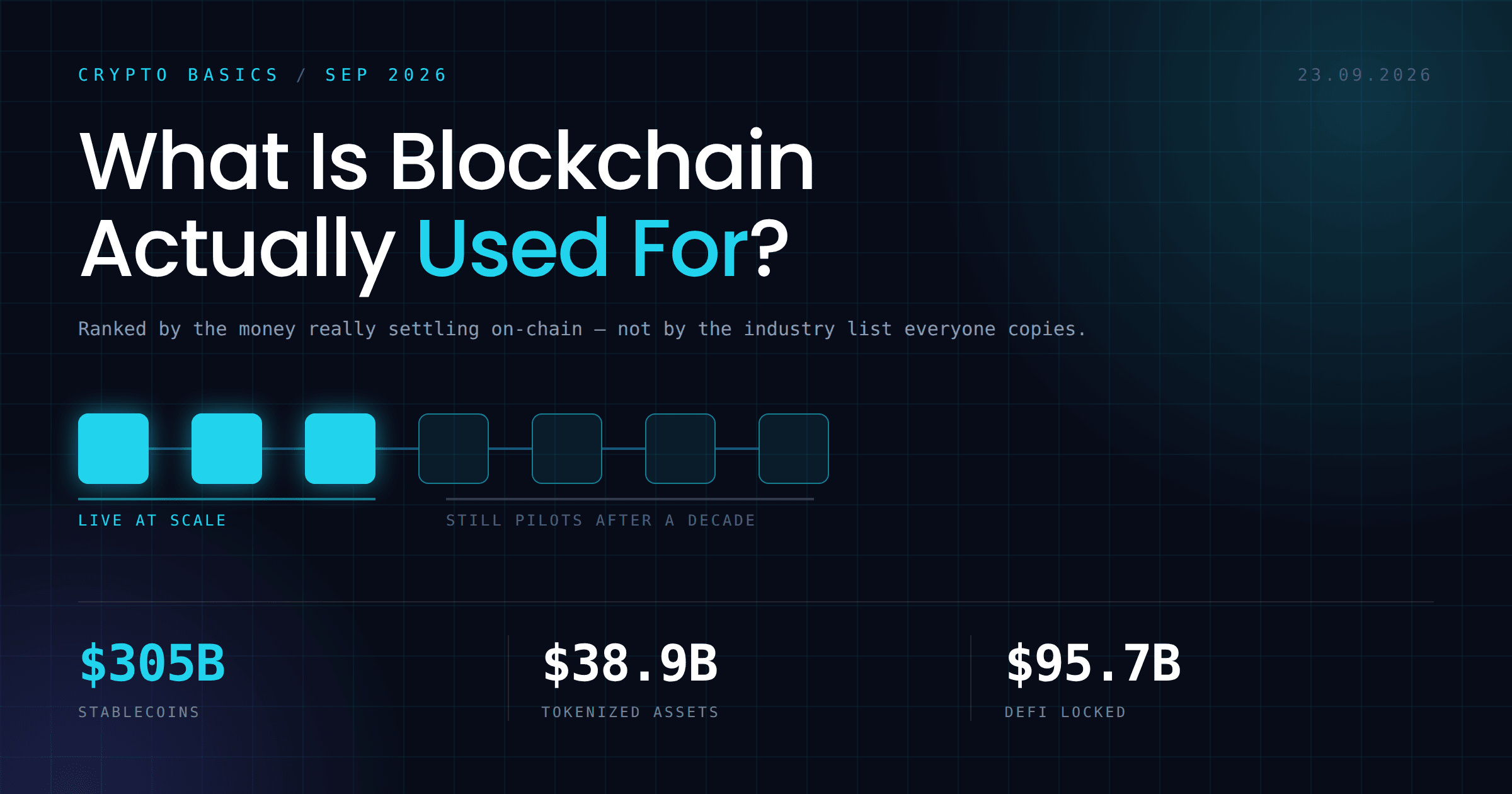
What Is Blockchain Used For? 2026 Uses, Ranked by Real Money

How to Buy USDT with EUR via SEPA Bank Transfer on WEEX
How to Buy Bitcoin with EUR in Europe on WEEX
How to Buy Crypto in Europe with EUR on WEEX OTC
How to Buy Crypto in Vietnam with VND on WEEX OTC
How to Buy USDT in Vietnam with VND via MoMo or Bank Account
INTC Stock Surged 14%: Intel Only Has Enough Chips for Half Its Clients
Is Hyperliquid Safe? Risks You Should Know Before You Trade
Hyperliquid vs Centralized Exchanges: What's the Difference?
SPCX Stock Has a September 22 Catalyst: Here's Why Today's Starship Launch Matters
AMD Stock Joins the $1 Trillion Club: What's Actually Driving the 5 Day Surge
How to Trade on Hyperliquid: A Step-by-Step Guide
What Is Hyperliquid? A Complete Guide to the Perpetuals Exchange
Meta Stock Price Target: Analysts Say Shares Can Reach $886
What Is Lighter Crypto(LIT Crypto), and Why Is the LIGHTER Token Rising in September 2026?
Meta Stock Price: What to Watch at This Week's Meta Connect Event
Meta Stock Surged 11%: Muse Just Hit No. 1 on the App Store, Beating ChatGPT
WEEX and MiCA: What the RDWW-1194 Entry in Poland's Register Says
AVAX Futures: Trading the Avalanche RWA Catalyst With Leverage
Pangolin (PNG) Price Prediction 2026–2030: Can Pangolin (PNG) Rise Again?
What Is Pangolin (PNG) Crypto and How to Buy It?
What is River Coin: A Comprehensive Guide to Chain-Abstraction
Best Crypto Cold Wallet 2026: Top Picks Matched to How You Hold
Phantom Wallet vs MetaMask: What's the Difference
Contents
Popular coins
Latest articles





