
Democrats may rewrite CLARITY Act and dare Trump to veto it, Giancarlo says

 Prefer us on Google


Former Commodity Futures Trading Commission Chairman Chris Giancarlo has suggested that Democrats could introduce their own version of the CLARITY Act and challenge President Donald Trump to sign it after taking control of Congress in January.
Summary
- Former CFTC Chairman Chris Giancarlo said Democrats could introduce their own version of the CLARITY Act and challenge President Trump to veto the legislation.
- Giancarlo said he had heard that Maxine Waters intends to retain roughly 80% of the existing CLARITY Act, with the remaining provisions reflecting Democratic priorities.
- The former regulator expects Democrats to focus their criticism on Trump's family cryptocurrency interests rather than pursue another extensive campaign against the industry.
- Giancarlo said the SEC and CFTC have already established a cooperative approach to crypto oversight, although Congress could reconsider how their responsibilities are divided.
In a November 11 interview with Bitcoin Magazine, Giancarlo said Democrats may find it politically useful to rewrite the crypto market structure legislation around their priorities and present it to the White House.
He suggested that such a move could allow Democrats to position themselves as supporters of crypto regulation while putting pressure on Trump to approve legislation drafted by the opposing party.
"We dare you to veto it," Giancarlo said, describing how Democrats could challenge the president after passing their version of the bill.
The former regulator acknowledged that the strategy would require support from prominent Democratic lawmakers, including Senators Elizabeth Warren and Sherrod Brown, whose positions on cryptocurrency regulation have frequently differed from those of Republicans.
Democrats could retain 80% of the CLARITY Act
Giancarlo said he had heard that Representative Maxine Waters intends to retain roughly 80% of the existing CLARITY Act in a new proposal, with the remaining 20% consisting of changes introduced by Democrats.
His comments follow discussions among House Democrats about legislation that would give the Securities and Exchange Commission more authority over cryptocurrencies while limiting the Commodity Futures Trading Commission's responsibilities.
The proposal reportedly draws on Waters' earlier Crypto Investor and Consumer Bill of Rights amendment, which included custody protections, withdrawal safeguards, and reserve reporting requirements.
Democrats have discussed provisions addressing the cryptocurrency interests of elected officials, including Trump and members of his administration.
Giancarlo said he expects Democratic opposition to focus more heavily on the president and his family's involvement in cryptocurrencies than on trying to stop the industry's development.
He argued that a renewed campaign against the industry would be politically difficult, particularly after cryptocurrency companies continued operating through the regulatory disputes of the Biden administration.
The CLARITY Act could face another political fight
The existing CLARITY Act stalled in September after the Senate failed to advance a procedural motion by a vote of 49 to 50. The measure needed 60 votes to move forward.
Seven Democratic senators subsequently expressed interest in continuing negotiations, although disagreements over ethics provisions and consumer protections remained unresolved.
Giancarlo warned that a Democratic proposal could become considerably different from the current legislation as lawmakers attach unrelated policy priorities during negotiations.
He raised the possibility of restrictions, prohibitions, and proposals concerning credit card fees becoming part of the legislative discussions, drawing a comparison with the negotiations surrounding the Dodd-Frank financial reform law.
In such circumstances, he said Trump could reject the legislation on the grounds that its provisions were no longer primarily concerned with cryptocurrencies.
The November midterm elections have given Democrats control of both congressional chambers beginning January 3, with Waters expected to lead the House Financial Services Committee and Warren potentially chairing Senate Banking.
SEC and CFTC responsibilities remain a central disagreement
Giancarlo said the SEC and CFTC have already developed a cooperative approach to digital asset oversight without waiting for Congress to settle their responsibilities through legislation.
He described the renewed debate over which regulator should supervise cryptocurrency markets as being "less about good regulation and more about turf," arguing that jurisdictional disputes are often influenced by political power and the industries overseen by congressional committees.
The former chairman explained that the SEC specializes in disclosure requirements intended to address information differences between companies and investors, while the CFTC focuses on market integrity, price formation, and preventing manipulation.
According to Giancarlo, Congress should consider those differences when deciding which agency is best suited to supervise particular cryptocurrency products. He said lawmakers should first ensure there is "no overlap" between regulators and that each agency has the necessary expertise.
He praised the cooperation between SEC Chairman Paul Atkins and CFTC Chairman Michael Selig, calling their coordination "quite a remarkable accomplishment," although he acknowledged that Congress could reconsider their responsibilities under new legislation.
Giancarlo separately criticized the failure to fill vacant commissioner positions at the agencies, arguing that bipartisan commissions produce better regulations because their members must work through disagreements.
"I'm a big believer in a full commission structure," he said, explaining that the rules he introduced during his tenure benefited from discussions with commissioners from both parties.
He said both the White House and Senate leadership share responsibility for the vacancies, although the agencies must continue their rulemaking duties regardless of how many commissioners are serving.
-- Price
This content is provided for general informational purposes only and doesn't constitute financial, investment, legal, or tax advice. Any events, rewards, online promotions, or related information mentioned herein should not be considered a recommendation, solicitation, or invitation to purchase, sell, trade, or otherwise deal in any crypto assets. Crypto assets are highly volatile and may result in loss. The availability of WEEX services, products, and related events may vary by region. You are responsible for ensuring that your participation is in accordance with applicable local laws and regulations.
You may also like

ASEAN to Establish Oil Product Sharing Reserve Mechanism with Japan's Support

Hedera Council adds Apex Group, servicer of $3.5T in assets
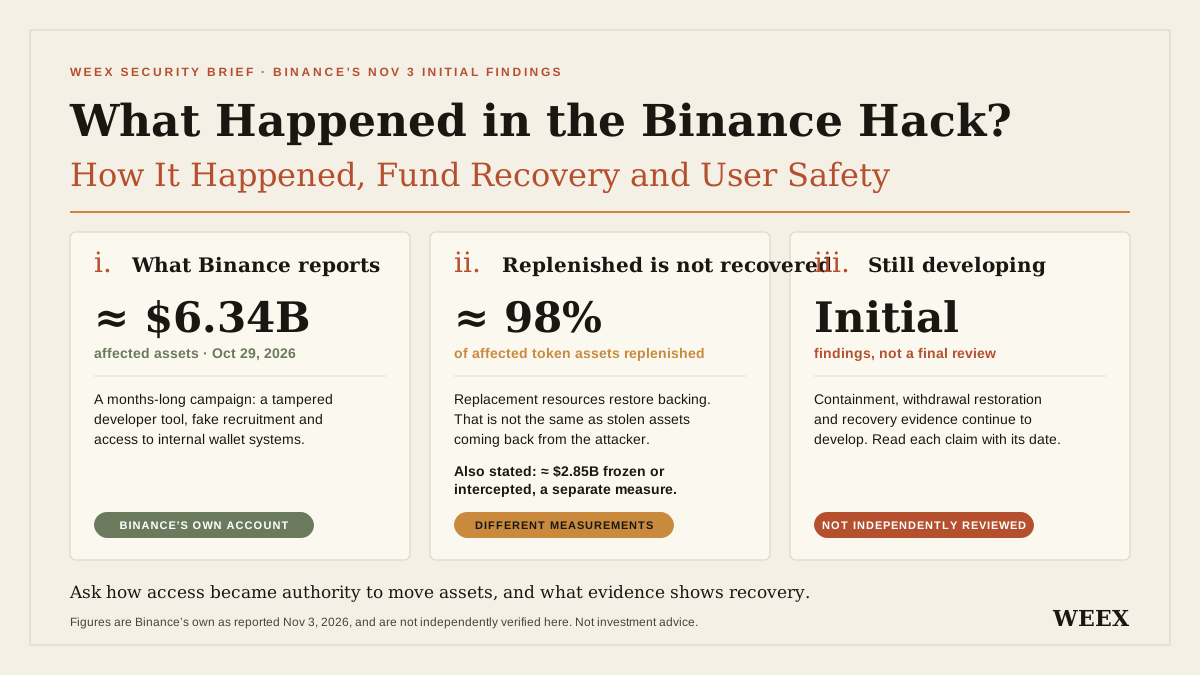
What Happened in the Binance Hack? How It Happened, Fund Recovery and User Safety
What happened in the Binance hack? Review the attack timeline, latest fund replenishment, recovery limits and practical steps to protect your account.

Tata Power Plans to Sign Agreement with Four States Allowing Power Prices to Be Linked to Coal Costs

AI Agents Do More Than Just Place Orders: The Next Entrepreneurial Opportunity Lies in Matching and Trust

NVIDIA Scandal Shakes the Internet! How Should Cryptocurrency Be Divided After a Divorce with a Tech Tycoon?

Bundesbank President Says Economic Recovery Faster Than Expected, Structural Reforms Needed

Immutable Chain's Transition to OP Stack: What Changes for Users
Ledger CEO faces backlash after saying everybody will be hacked at some point

WEEX 11.11 Shopping Fest: Buy BTC and Unlock Up to 888 USDT in Rewards
NEAR AI Discloses SGLang Security Incident and Revokes Exposed API Keys

The Art of Trading: How They Profit from Arbitraging USDE Stocks

VARA Is Not a Panacea: Dubai's Crypto Payments Still Depend on the Central Bank

a16z Frontier Partner: Agents Should Rebuild Uber-like Transaction Networks

Poland's Parliament Votes 240-202 To Let Officials Freeze Crypto Before Court Review

WEEX P2P now supports ILS, BHD, OMR & QAR —Merchant Recruitment Now Open

Cryptocurrency Security Checklist: Four Lessons from Phemex Safety Hub Vol. 05–08
Ondo Claims $4B in Tokenized Assets as RWA Market Gains Institutional Depth

DTCC Launches Tokenization Service: What Can Investors Actually Do?

The catch in recovering a hacked crypto wallet: the thief may still have a key

Bitcoin Remains Strong: Why $76,000 is the Level That Matters Now
Peter Schiff Criticizes Strategy's Bitcoin Purchases

iPhone Attack Kit 'DarkSword' Suspected of Being Misused for Cryptocurrency Theft, Bitquery Identifies Approximately $4.06 Million in Stolen Funds

Financial and Political Crisis in Paraguay: How the Ueno Bank Explosion Triggered the President's Resignation

OpenAI Releases National Community Covenant and Computing Park Policy Blueprint

GitBook Security Incident Review, Attack Targeting Trade.xyz

Post-Quantum Era Consensus Layer Divergence: Ethereum Maintains Decentralization, Monad Prioritizes Speed

The Ghost Behind the Screen: Unveiling the Secret World of North Korean Hackers Lazarus

Bitcoin Miners Turn to AI: Escaping the Crypto Cycle, but Entering New Turbulence
Decoding Variational: How a No-Order-Book Exchange Became the Dragon Behind Hyperliquid?
ASEAN to Establish Oil Product Sharing Reserve Mechanism with Japan's Support
Hedera Council adds Apex Group, servicer of $3.5T in assets
What Happened in the Binance Hack? How It Happened, Fund Recovery and User Safety
What happened in the Binance hack? Review the attack timeline, latest fund replenishment, recovery limits and practical steps to protect your account.
Tata Power Plans to Sign Agreement with Four States Allowing Power Prices to Be Linked to Coal Costs
AI Agents Do More Than Just Place Orders: The Next Entrepreneurial Opportunity Lies in Matching and Trust
NVIDIA Scandal Shakes the Internet! How Should Cryptocurrency Be Divided After a Divorce with a Tech Tycoon?
Latest articles





Latest coin listings on WEEX


