
Are Bitcoin Lightning Wallets Safe? 5 Security Warnings Since August

 Prefer us on Google


Bitcoin Lightning wallets are not shown to be broken by the five security warnings issued since August 2026, but the warnings do show that self-hosted Lightning software has been attacked repeatedly: BTCPay Server (August 7 and September 8), Core Lightning (August 28), Alby Hub (September 9) and LNbits (November 8 to 10).
In two of the cases, BTCPay Server in August and LNbits in November, funds were reported stolen, and in a third, Alby Hub, one user was affected with no loss amount given. This article explains what each warning said, what users of Lightning wallets and node software were told to do, and what remains unknown, because Lightning wallets differ in who controls the keys and who is responsible for updates.
Are Bitcoin Lightning Wallets Safe? What the Five Warnings Show
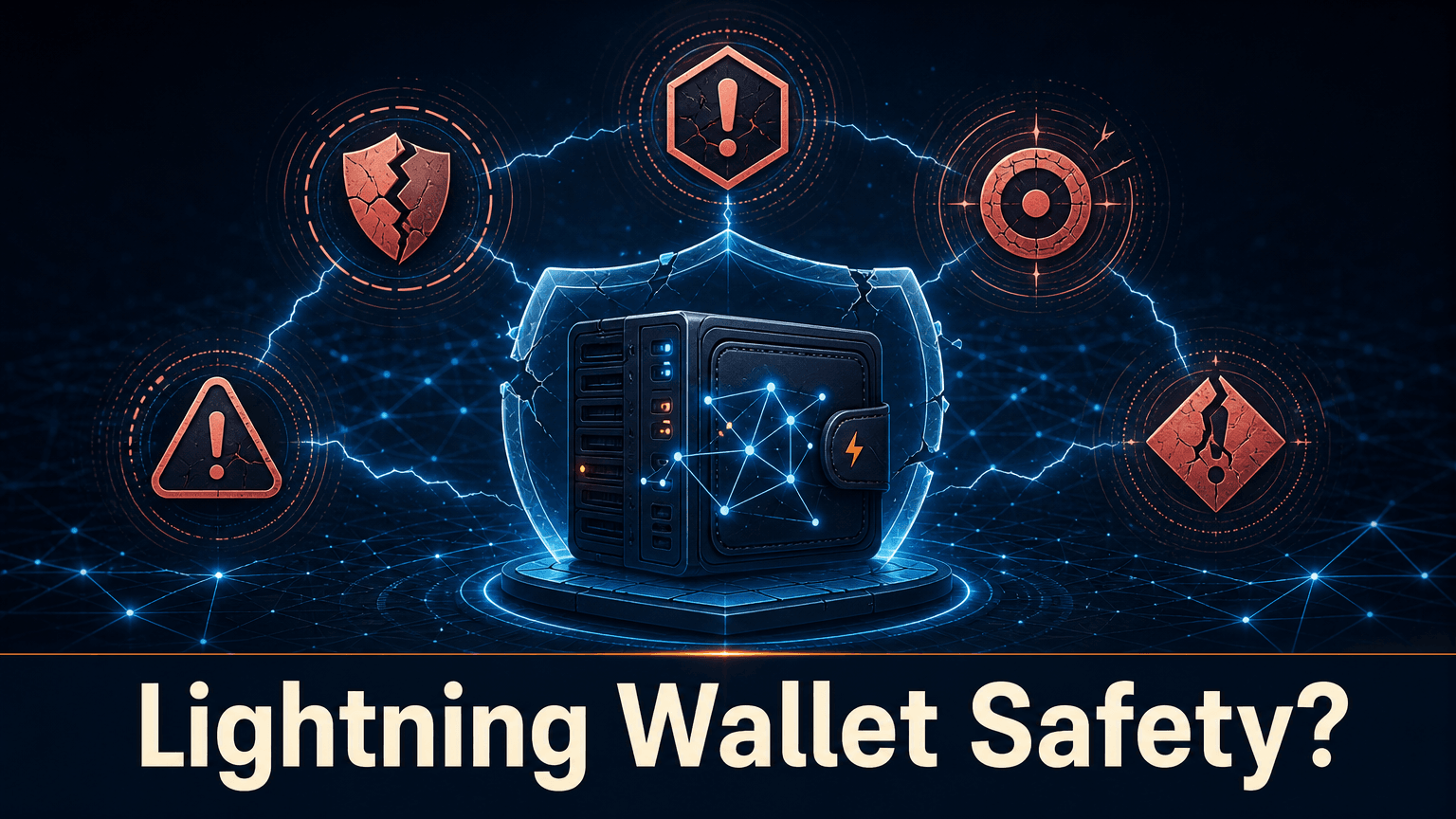
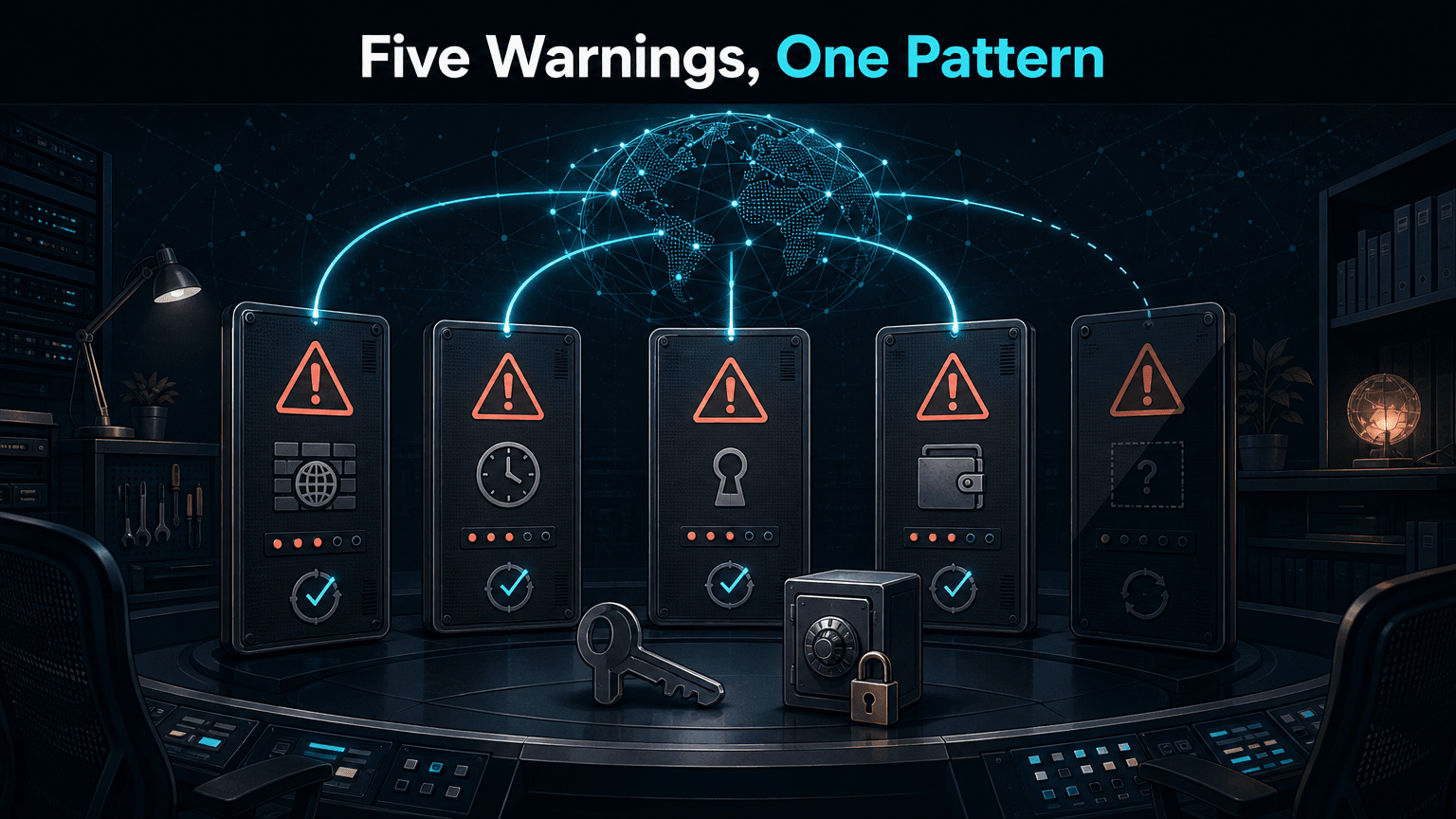
The five warnings come from CryptoTicker’s November 12 summary of Lightning software incidents since August, and each is confirmed by the project’s own announcement or by reporting on it. They are: BTCPay Server 2.4.2 (August 7), Core Lightning 26.06.7 (August 28), a BTCPay Server follow-up (September 8), Alby Hub (September 9) and LNbits 1.7.0 (November 8 to 10). They affect different products, and not every Lightning wallet is covered. The Lightning Network is a payment layer on top of Bitcoin, and the warnings concern software that runs Lightning nodes and wallets, not the Bitcoin blockchain itself.
The losses reported are limited and uneven. BTCPay Server confirmed that attackers exploited its flaw and stole funds, but gave no amounts. LNbits users reported about 2.3 million satoshis (roughly 0.023 BTC) stolen from one operator, and LNbits has not published a total. Core Lightning reported no losses, and the September BTCPay follow-up reported no successful takeover. For Alby Hub, the company said one user had been affected and did not say whether that user lost money.
Whether a Lightning wallet is safe therefore depends on which software it uses, how it is run and how quickly it is updated. The sources reviewed do not describe a flaw in the Lightning protocol specification itself, although Core Lightning’s release post withheld technical details of its vulnerabilities for two weeks. A user of a hosted wallet depends on the provider’s security, while a user of self-hosted software carries the work of updating and protecting credentials personally. Nothing here is a security audit, and no wallet can be called safe or unsafe on this evidence alone.
Warning 1: BTCPay Server 2.4.2 (August 7)
On August 7, 2026, BTCPay Server published a security advisory telling users to update to version 2.4.2 immediately. The advisory said that all versions before 2.4.2, including release candidates, were affected, and that an unauthenticated remote attacker could obtain the .macaroon credential files for LND, a Lightning node implementation. A macaroon is a credential that grants control over a node, so with those files an attacker could take control of an LND node and move its funds. The advisory stated: “We have confirmed that attackers exploited this vulnerability,” and that users were affected and funds were stolen, without giving amounts.
Cointelegraph reported on August 9 that BTCPay temporarily restricted public remote connections to LND nodes. On Docker deployments, this meant external wallets such as Zeus could no longer connect through a BTCPay domain or Tor address, while Lightning payments continued. Two operators reported drained nodes: Foundation, the Coldcard maker, whose channels were closed and funds swept, with its hot wallet unaffected, and Citadel21. Neither disclosed the amount lost, and the total number of affected operators is unknown.
The fix was BTCPay Server 2.4.2, which upgrades LND to 0.21.1 and regenerates the macaroons on standard installations. The advisory said that BTCPay’s on-chain wallets, including hot wallets, are not affected, though funds in LND’s own on-chain wallet may still be at risk. It told users who could not update at once to take the server offline, and to check the LND node for unfamiliar payments, unexpected channel closures, unknown peers and balance discrepancies. Users who exposed LND through their own reverse proxy, Tor service or forwarded port needed to rotate those credentials separately, since the update does not close those routes.
Warning 2: Core Lightning 26.06.7 (August 28)
On August 28, 2026, Blockstream published Core Lightning 26.06.7, a point release that, in its words, “fixes confirmed vulnerabilities reported to us over the past three weeks.” The post gave no technical details and said the source code would be published 14 days after release, on September 11. It did not state the severity of the vulnerabilities and did not say whether any had been exploited. It noted that the reports arrived during a surge of AI-generated security reports across open-source Bitcoin projects, but it did not say any were used in attacks.
The post told node operators to upgrade to 26.06.7, verify the binary signatures and restart. For operators who could not upgrade right away, it advised restarting with the --offline flag, which blocks outside peers from messaging the node while the daemon keeps running, and removing the flag after upgrading. It also stated that releases before 26.06.7 are unsupported and that the next release, 26.09, was scheduled for late September.
CryptoTicker’s summary added a packaging problem: until September 1, four Docker images labeled 26.06.7 lacked the fixes, so some users who updated may not have received the patch. This detail comes from that summary, and the Blockstream post reviewed did not mention Docker. No losses were reported at the time. The case shows that an update can fail to deliver the fix, so users should check the version and the image details they actually run.
-- Price
Warning 3: BTCPay Server Follow-Up (September 8)
On September 8, 2026, BTCPay Server issued a second warning, with version 2.4.4, according to CryptoTicker’s summary. The warning said bots were probing servers where operators had manually reopened LND access that BTCPay had closed in August. No successful takeover was reported. The cause was configuration, not a new flaw in the software: operators who restored remote access with their own rules, such as a self-built reverse proxy, put their nodes back on the internet.
The background is the August restriction. BTCPay temporarily blocked public remote LND connections after the first exploit, which cut off external wallets such as Zeus on Docker deployments. Operators who wanted that access back sometimes recreated it themselves. The August advisory had already warned that the update does not close routes an operator builds personally, and that such credentials must be rotated separately. The September warning shows why that matters.
The advice was to update to 2.4.4 and to remove any manual exposure, such as reverse proxy rules. Because the account of this warning rests on one secondary source, readers who run BTCPay Server should check the project’s own release notes for 2.4.4. The practical lesson from the sources is that a security fix can be undone by the way a server is configured.
Warning 4: Alby Hub (September 9)
On September 9, 2026, Alby warned that a critical flaw in older versions of Alby Hub could let an attacker take over a wallet and send its funds, according to The Hacker News. The affected versions run from 1.7.0 through 1.18.5, all released before August 2025. Exploitation applies only where the owner made the Hub’s management interface reachable from the internet. Alby has not disclosed the technical nature of the flaw and said full details would follow under responsible disclosure.
Alby said one user had been affected so far, but it did not say whether that user lost money or how much. The Hacker News said the affected user reported the details to Alby. Versions 1.19.0 and later are not affected, and the first fixed release was published on August 29, 2025, so the warning concerned people still running software more than a year old. Alby recommended version 1.24.0, the current release at the time.
Alby told users to check their installed version and, if they run 1.18.5 or older, to block outside access to the Hub first, for example by binding the port to 127.0.0.1 in Docker or limiting the firewall rule to their own IP on a cloud server. They should then update to 1.24.0, change the unlock password if an affected version was internet-reachable, and contact Alby’s security address. The Hacker News said it had asked Alby whether updating ends any access an attacker already gained, so that question was open when it published.
Warning 5: LNbits 1.7.0 (November 8 to 10)
On Sunday, November 8, 2026, LNbits told users to stop their servers after reporting active attacks, saying it was “better to err on the side of caution,” and it disabled instances on its own hosted service, according to Bitcoin Magazine. On November 10, it released version 1.7.0 as an urgent security update. The project warned that funds on earlier versions “are at risk of being stolen.” Reports describe unauthorized account creation and fund withdrawals, and the attack route has not been disclosed.
The reported losses are small and partial. BitTipBot operator Kevin Ravensberg said attackers created accounts and withdrew 2,285,545 satoshis, about 0.0229 BTC, between roughly 09:22 and 14:00 UTC on November 8, according to Bitcoin Magazine. LNbits has not published an aggregate total across affected instances. Gokhshtein reported that LNbits’s creator estimated in May that about 200,000 operators run the software independently, but it is not known how many were affected.
Version 1.7.0 includes hardening across authentication, extension management and payment handling, and LNbits promised a full technical report. The project told operators to upgrade before restarting. If compromise is suspected, it advised building a fresh server, because updating cannot remove access an attacker already has. It also told Super Admins to rotate all user wallet keys, replace funding-source credentials such as API keys or macaroons, rotate other secrets stored in settings, and review connections for NWC Provider, LNDHub, Bolt Cards, TPOS, Bleskomat and FOSSA. It recommended keeping only operational balances online and moving excess funds to offline keys.
What About the Electrum 4.8.4 Update?
Electrum 4.8.4 is not one of the five warnings, but it appeared in the same week and is often mentioned alongside them. Phemex News, citing PANews, reported that the release came out on November 6 and fixes a flaw in Lightning onion message handling: malformed onion messages from arbitrary sources could previously cause Electrum to disconnect from its channel peers. The fix discards all incoming onion messages until a practical use case is implemented. A CryptoTimes headline dated November 9 also described it as a Lightning security update.
The reported impact is a disconnection from channel peers, not a theft of funds, and none of the sources reviewed reports losses. The sources do not specify which earlier versions were affected. That makes it a lower-severity case than the BTCPay Server and LNbits incidents, where attackers moved funds. It is still a reason to keep the wallet current, since a client that is cut off from its peers may not be able to use its channels as expected.
I could not open the Electrum release notes or an advisory for 4.8.4, so these details come from a secondary report and should be checked against Electrum’s own release notes before they are relied on. The case is useful as a contrast: not every Lightning security fix involves stolen funds, and the severity of a warning should be read from the project’s own description of impact.
What Do the Five Warnings Have in Common?
Three of the five cases involve a part of the software that was reachable from the internet. BTCPay’s flaw let an unauthenticated remote attacker obtain LND credential files, the September BTCPay case involved operators who reopened LND access themselves, and Alby’s flaw applied only where the management interface was reachable from the internet. In each case, exposure turned a software problem into a way to take funds, and closing exposure was part of the fix. LNbits’s attack route has not been disclosed, so the same cannot be said of it.
Four of the five involve self-hosted or user-operated software, where the user decides when to update. Core Lightning and Alby both warned about versions that were old or unpatched, with Alby’s affected releases more than a year old. The sources do not show that every operator saw the warnings in time. They also show that fixes can be incomplete in practice, as with the Docker images that lacked the Core Lightning patch and the credentials that LNbits said must be replaced after updating.
Core Lightning’s post noted that its reports arrived during a surge of AI-generated security reports across open-source Bitcoin projects. The sources do not say whether that surge explains the pace of warnings since August, and this article draws no conclusion from it. What the cases do share is a pattern in the guidance: update promptly, avoid exposing admin interfaces and APIs, rotate credentials after an incident, and keep only operating balances where software could be attacked.
How Can Lightning Wallet Users Reduce Risk?
The advisories give consistent practical steps. Users should check which software and version they run and update when a security release is announced, verifying that the update actually installed the fix, as the Core Lightning Docker case shows. Management interfaces and node APIs should not be reachable from the open internet, and any access a user built personally, such as a reverse proxy, Tor service or forwarded port, needs to be secured and rotated separately because an update does not close it.
After an incident, credentials should be replaced, not just the software. LNbits told operators to rotate wallet keys and funding-source credentials and to consider a fresh server if compromise is suspected, and BTCPay told users to review nodes for unfamiliar payments, unexpected channel closures, unknown peers and balance discrepancies. LNbits also advised keeping only operational balances online and moving excess funds to offline keys, which limits what an attacker can take.
Users who do not run their own software depend on their provider’s security instead, and the sources reviewed do not rate any provider. LNbits disabled its hosted instances during its incident, which shows that a provider can act quickly, but it also shows that users of hosted instances had no control over the shutdown. Any user should keep amounts in a Lightning wallet small enough that a loss would not matter, and should check the project’s own announcements for security notices. Nothing in this article is investment or security advice.
Conclusion
Five security warnings since August 2026 affected BTCPay Server, Core Lightning, Alby Hub and LNbits, with funds reported stolen in the BTCPay Server and LNbits cases, one Alby Hub user affected with no loss stated and no losses reported for Core Lightning or the BTCPay follow-up. The losses disclosed so far are small, and the totals are unknown. The sources reviewed do not describe a flaw in the Lightning protocol itself, but they do show that self-hosted software exposed to the internet and left unpatched has been a repeated weak point.
FAQ
1. Are Bitcoin Lightning wallets safe?
It depends on the software and how it is run. Five security warnings since August 2026 affected BTCPay Server, Core Lightning, Alby Hub and LNbits, but the sources reviewed do not describe a flaw in the Lightning protocol itself.
2. Were funds stolen in these incidents?
Yes, in some. BTCPay Server confirmed attackers stole funds in August without giving amounts, and LNbits users reported about 2.3 million satoshis stolen from one operator in November. Alby Hub said one user was affected without stating a loss.
3. Which software was affected?
BTCPay Server (LND credential exposure, August 7, with a follow-up on September 8), Core Lightning (26.06.7, August 28), Alby Hub (versions 1.7.0 to 1.18.5, September 9) and LNbits (versions before 1.7.0, November 8 to 10).
4. What should LNbits users do?
Upgrade to 1.7.0 before restarting, rotate wallet keys and funding-source credentials, and build a fresh server if compromise is suspected. LNbits also advises keeping only operational balances online.
5. Is Electrum affected?
Electrum 4.8.4, released around November 6, fixes a Lightning onion message flaw that could disconnect a wallet from its channel peers, according to Phemex News. No loss of funds was reported.
This content is provided for general informational purposes only and doesn't constitute financial, investment, legal, or tax advice. Any events, rewards, online promotions, or related information mentioned herein should not be considered a recommendation, solicitation, or invitation to purchase, sell, trade, or otherwise deal in any crypto assets. Crypto assets are highly volatile and may result in loss. The availability of WEEX services, products, and related events may vary by region. You are responsible for ensuring that your participation is in accordance with applicable local laws and regulations.
You may also like

Anthropic IPO: ANT Date, Price Range and Valuation

ACKET Token Surges 1,000% After Jensen Huang Resigns: What Is Confirmed

What Is Project Faro? The $270M Bank Stablecoin Plan Explained
Stablecoin Supply Falls $14.2B in 30 Days: What It Means for Bitcoin
Binance Hack: $6.3B Laundering Trail and Recovery Progress

What Is GRAM? Price Rebounds After Falling Below $1, Telegram Wallet Data and What Is Confirmed
WEEX Review: The Latest Fees, Features, Security and Trading Experience
Binance Incident Report: How the Attack Chain Worked and What to Check
WEEX Shopping Fest 2026: Daily Egg Rewards, Trading Tasks and Event Guide

HYPE Price Jumps After ICE Backs trade[XYZ] on Hyperliquid: What Is Confirmed and What Is Not

Is USDT Staking Safe? 5 Risks to Check Before You Earn Interest

HOOD Q3 Earnings: Record $1.42B Revenue, So Why Did Crypto Revenue Fall 55%?

Taiwan Crypto Regulations 2027: What Investors Need to Know
CLS Stock After Q3 Earnings: Revenue Up 83%, 2027 Outlook and What Investors Should Check
Exchange Convert vs DEX Swap: What’s the Difference? Try Convert Crypto On WEEX!
Is XTruth Oil (XTO) a Stock or Crypto? How Its Oil Rewards Actually Work

Stake ETH or Hold USDT on WEEX? The Price Move That Decides It
How Transparent Is a Crypto Exchange? Checking Proof of Reserves and Protection Funds
What Is Leverage Trading in Crypto? A Beginner’s Guide With Simple Examples
Is RSI a Good Indicator? How the Relative Strength Index Works, Its Limits and How Traders Use It
CRWV Stock Swings From -9.5% to +5.9%: Why CoreWeave Reversed
Walrus (WAL) Jumps 30%: Sui Storage Token Rallies on AI Data
CoreWeave Stock Plunges 15%: Why a Bond Yield Spooked CRWV

Best Crypto Miner for Beginners: What to Check on Cost, Power, Hashprice and Profit Before You Buy
MU Stock Falls Below $1,000: Is the CXMT Threat Real or Just an Excuse to Take Profits?
Stop Limit Order: How It Works and Why It Can Fail to Fill

Best Crypto Podcasts for Beginners: A 4-Week Listening Plan
Conflux (CFX) Price Jumps on China's National Blockchain Network Plan: Does the Policy Actually Name CFX?
What Is Plume (PLUME)? Why the RWA Token Stays 93% Below Its High Even After the Layer 2 Rally

Who Is David Ellison? Skydance’s Strategy, Media Consolidation, and the Investment Case
Anthropic IPO: ANT Date, Price Range and Valuation
ACKET Token Surges 1,000% After Jensen Huang Resigns: What Is Confirmed
What Is Project Faro? The $270M Bank Stablecoin Plan Explained
Stablecoin Supply Falls $14.2B in 30 Days: What It Means for Bitcoin
Binance Hack: $6.3B Laundering Trail and Recovery Progress
What Is GRAM? Price Rebounds After Falling Below $1, Telegram Wallet Data and What Is Confirmed





