
Bitcoin After Hot CPI: Why December Rate Hike Odds Hit 85%

 Prefer us on Google

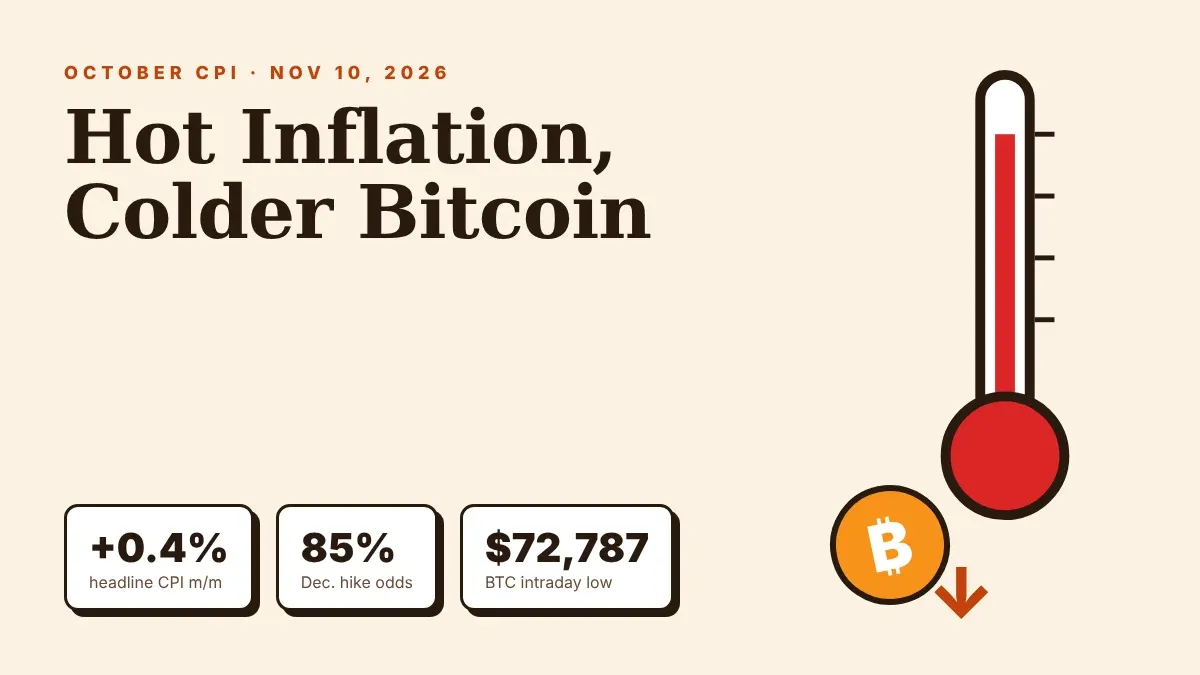
Bitcoin fell to an intraday low of $72,787 on November 10, 2026, after October's consumer price index came in hotter than expected, and traders sharply raised the odds of a Federal Reserve rate hike in December. Headline CPI rose 0.4% for the month against a 0.3% forecast, and core CPI rose 0.3% against 0.2%. Prediction-market odds of a 25-basis-point December hike climbed to about 85% from 77% before the release. As of 07:20 UTC on November 11, bitcoin was trading near $73,631 on WEEX. This article explains why one inflation print moved bitcoin this much, what the Fed is now signaling, which price levels traders are watching, and what could change the picture before the December meeting.
What the October CPI Report Showed
The October report, released on November 10, beat forecasts on both the headline and core measures:
- Headline CPI: up 0.4% month over month, versus 0.3% expected. That was down from September's 0.6%.
- Core CPI (excluding food and energy): up 0.3%, versus 0.2% expected.
- Energy: the energy index rose 0.7% in October, after a 5.2% jump in September.
The detail that matters most is core. Energy cooled sharply from September, which brought the headline number down, but core inflation did not slow. That is the measure the Fed watches for persistent price pressure, and it is the measure Fed officials had named as their trigger.
Bond markets moved first. The two-year Treasury yield rose to about 4.73%, and the 10-year approached 5%, per KuCoin's November 11 market report. Higher yields make holding non-yielding assets such as bitcoin more expensive, which is why crypto reacted within minutes.
Why a December Fed Rate Hike Now Looks Likely
The CPI print matters because Fed officials told markets in advance what they would do with it.
Fed Governor Christopher Waller said he would support a 25-basis-point hike in December and could back a 50-basis-point move if core CPI came in around 0.3% or higher. October's core print landed right on that 0.3% line. Dallas Fed President Lorie Logan reportedly sees at least two more quarter-point hikes ahead.
That is why the market repriced so quickly. Prediction-market odds of a 25-basis-point December hike jumped to about 85% after the release, from 77% before it, according to Bitcoin.com News, with CME FedWatch showing similar odds. A hike is now the base case, not the risk scenario. The open question is size: if markets start pricing a 50-basis-point move, that would be the more damaging surprise for crypto.
How Bitcoin and Crypto Reacted to the Hot CPI
The selling was fast and leveraged.
- Bitcoin: hit an intraday low of $72,787 on Bitstamp shortly after the release, and was near $73,800 at 00:00 UTC on November 11, down about 2% on the day.
- Ether: dropped about 3.8% to roughly $2,053.
- Liquidations: more than $632 million of crypto positions were liquidated over 24 hours, $511 million of them longs, per Coinglass data reported by Bitcoin.com News. Bitcoin accounted for more than $169 million and ether for just under $240 million.
- Sentiment: the Crypto Fear & Greed Index slipped to 29 from 32.
Fund flows were already weak before the print. U.S. spot bitcoin ETFs saw about $201 million of net outflows on November 9 and spot ether ETFs about $185 million, the third straight day of outflows for both. The inflation data hit a market that had little fresh buying to absorb it.
-- Price
Bitcoin Price Levels to Watch After CPI
Analysts have converged on a narrow band of levels. As of 07:20 UTC on November 11, bitcoin was near $73,631 on the WEEX Bitcoin price page, with a 24-hour high near $74,900.
Support
- About $73,200: the 200-day moving average, flagged by Bitget's Lewis Huang as the key level.
- $73,000: a zone that lines up with the 2024 pre-election high and April 2025 lows.
- $69,000 to $70,000: the next downside target if $73,000 breaks on a daily close, per 21Shares' Matt Mena, close to the 2021 cycle high.
Resistance
- $74,500 to $75,000: the zone bitcoin needs to reclaim for a sustained recovery.
- $78,000: the next retest level if the recovery holds.
The more important point is how bitcoin tests these levels. A slow drift toward $73,000 with falling open interest would mean leverage is being cleared out. Another fast wick lower with heavy long liquidations, like November 10, would suggest traders are still rebuilding leverage into a hawkish Fed. For context on the previous leg down, see our earlier breakdown of why bitcoin dropped to $76,000.
What Could Change the Outlook Before the December Fed Meeting
A hike is largely priced in. What moves bitcoin from here is new information that shifts the size or the path of rate increases. The calendar for the next few days:
- November 12: weekly jobless claims. A jump in claims would support the case against a 50-basis-point hike.
- November 13: October PPI. A hot producer-price print would reinforce the inflation story.
- November 14: remarks from Fed Vice Chair Philip Jefferson. Any pushback on a larger hike would matter.
- ETF flows: three days of outflows need to stop before a recovery can hold.
What traders usually miss is that macro-driven sell-offs do not need bad crypto news to continue. On the BTC/USDT perpetual futures market on WEEX, macro data releases are when funding flips and liquidations cluster. Sizing positions for a 3% to 5% swing on release days matters more than calling direction.
FAQ
1. Why did bitcoin fall after the CPI report?
October CPI rose 0.4% and core CPI 0.3%, both above forecasts. That raised the odds of a December Fed rate hike to about 85%, pushed Treasury yields higher, and triggered more than $632 million of crypto liquidations.
2. Will the Fed raise rates in December 2026?
Markets now treat a 25-basis-point hike as likely. Governor Waller said he would support one and could back 50 basis points if core CPI ran around 0.3%, which is where October landed. The decision is not final until the meeting.
3. What is the key support level for bitcoin now?
Analysts are watching about $73,200, the 200-day moving average, and $73,000. A daily close below $73,000 could open a move toward $69,000 to $70,000.
4. What data could move bitcoin next?
Jobless claims on November 12, October PPI on November 13, Fed Vice Chair Jefferson's remarks on November 14, and daily spot ETF flows.
This content is provided for general informational purposes only and doesn't constitute financial, investment, legal, or tax advice. Any events, rewards, online promotions, or related information mentioned herein should not be considered a recommendation, solicitation, or invitation to purchase, sell, trade, or otherwise deal in any crypto assets. Crypto assets are highly volatile and may result in loss. The availability of WEEX services, products, and related events may vary by region. You are responsible for ensuring that your participation is in accordance with applicable local laws and regulations.
You may also like

What Is GRAM? Price Rebounds After Falling Below $1, Telegram Wallet Data and What Is Confirmed
Why Is My WEEX Crypto Withdrawal Still Pending?
PROJECT CORTEX (XTX) Price: Why a 15.8M% Gain and a $6 Billion Market Cap Are Hard to Trust

Copy Trading Platforms With Verified Performance: Spot the Fakes
Top 10 Crypto Derivatives Exchanges Worldwide by Open Interest
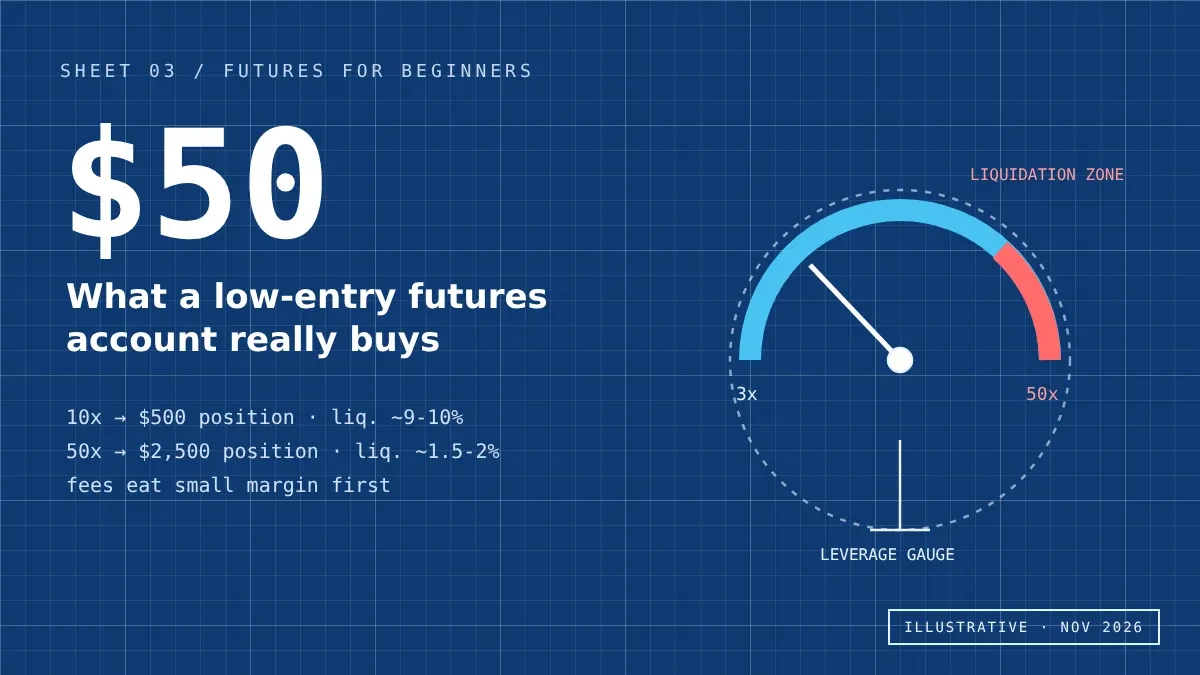
Beginner Futures Exchanges With Low Entry: What $50 Really Buys
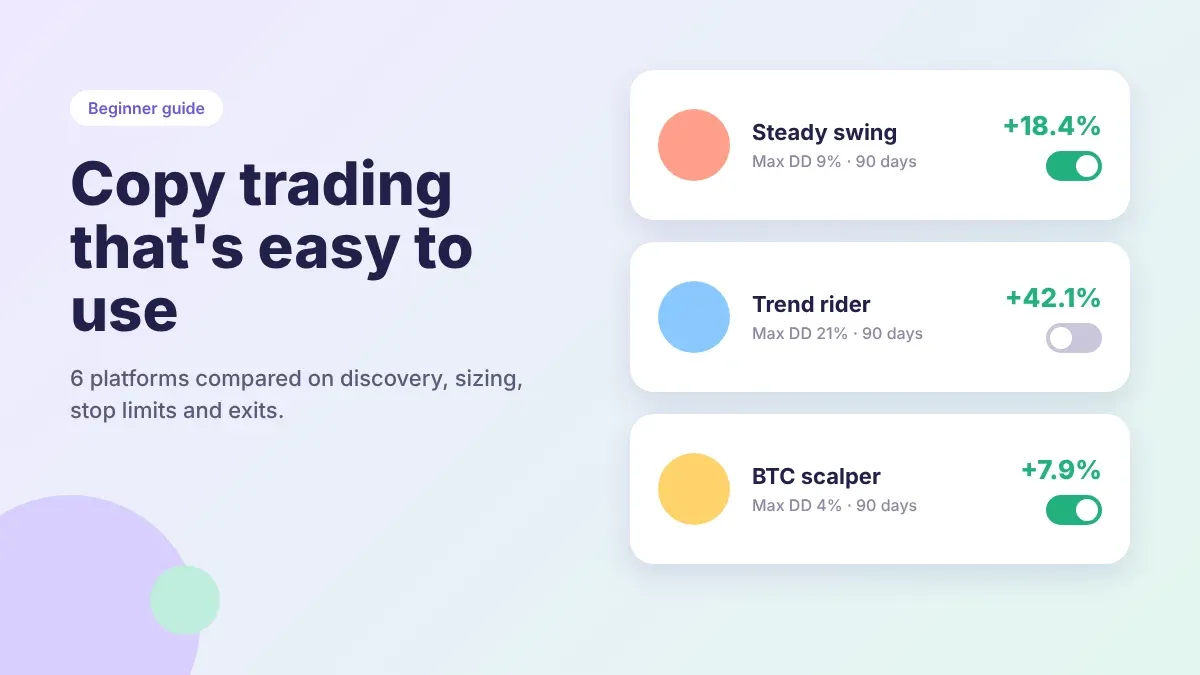
User-Friendly Crypto Copy Trading Platforms: 6 Picks Compared

WEEX Review: The Latest Fees, Features, Security and Trading Experience
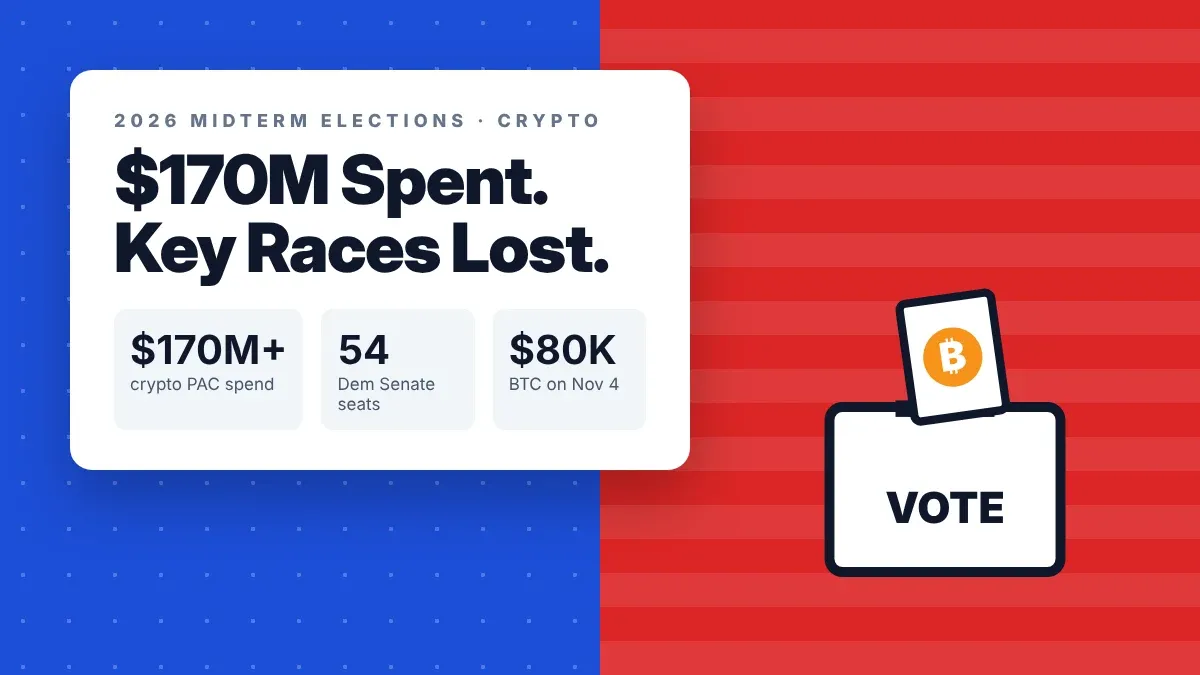
Midterm Elections Crypto Fallout: $170M Spent, Key Races Lost

FreeBitco.in Shutdown: Frozen Withdrawals and What Users Can Do
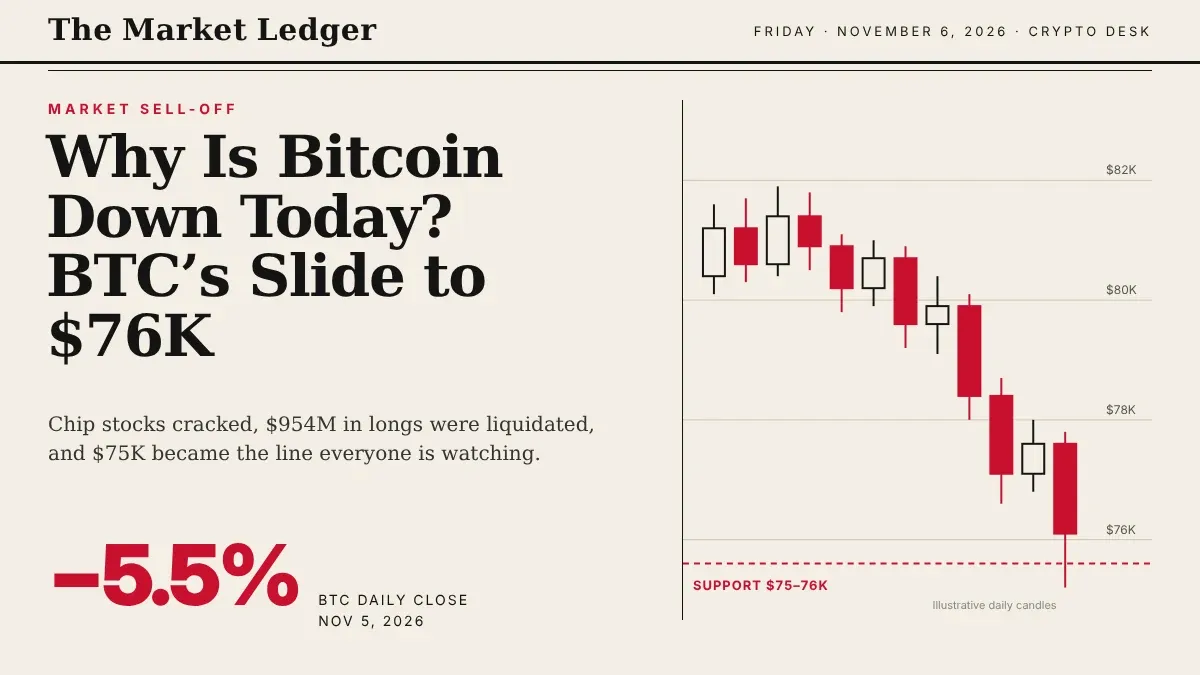
Why Is Bitcoin Down Today? BTC's Slide to $76K Explained
BTC Price Above $78,000 After the Midterms: What Is Confirmed, What Moved and What to Check Next
Crypto Trading Rewards: What Each Lucky Egg Really Costs in Fees

WEEX Rewards Guide: Lucky Eggs Tasks, Prizes and a 22-Day Plan

Binance Incident Report: How the Attack Chain Worked and What to Check
FOMC Meeting December 2026: Date, Schedule and What to Know Before the Rate Decision

Can You Stake Bitcoin? How BTC Staking Works and What It Pays
NEAR Protocol HSP-029 Vote: Can a 36% Issuance Cut Affect NEAR Price?
Bitcoin Futures ETF Explained: How It Works, How It Differs From a Spot Bitcoin ETF and Where the Risks Are
Bitcoin and the US Midterms: A Trader's Checklist for Nov. 3-11
Crypto Liquidation Cascade: What the $1.57B Oct. 30 Flush Taught
Dutch 36% Crypto Tax: Why Wallets Get Taxed Differently From ETFs
Binance Proof of Reserves: What the Nov. 3 ZK Report Can Prove
MSCI vs Strategy: What the Nov. 11 Index Decision Means for BTC

Binance Hack Explained: What Is Confirmed, What Is Disputed and What Users Should Do Now
Hot Wallet Security Explained: Lessons From the Binance Incident
How Do Stablecoin Issuers Make Money? The Business Behind a $1 Token
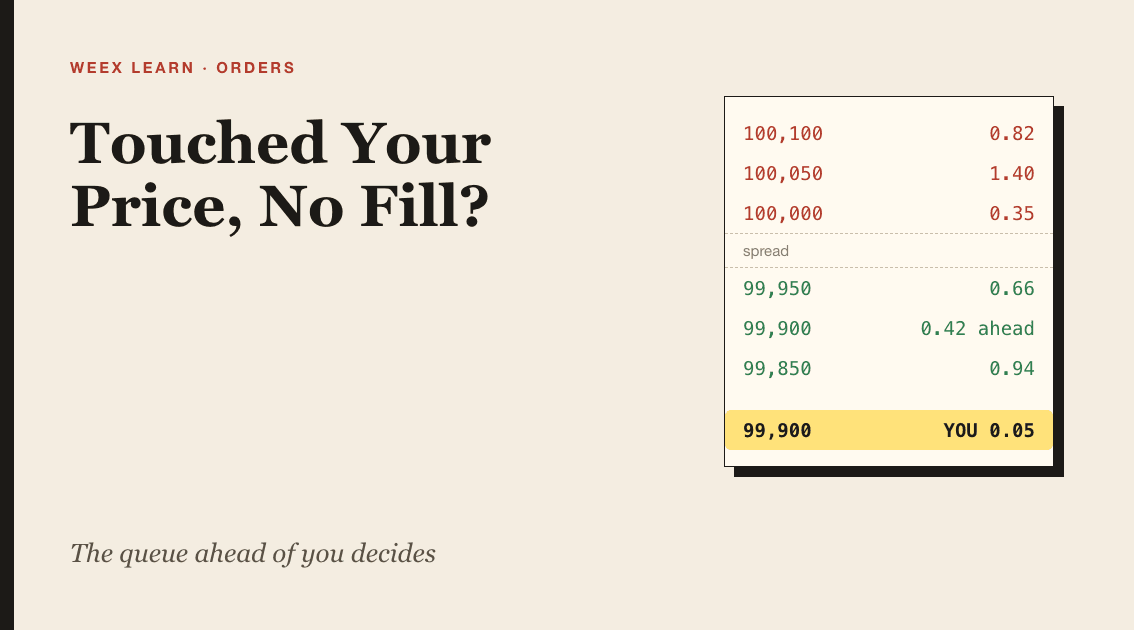
BTC Fights for $80K Before the Fed: Why Leverage Hasn't Flushed
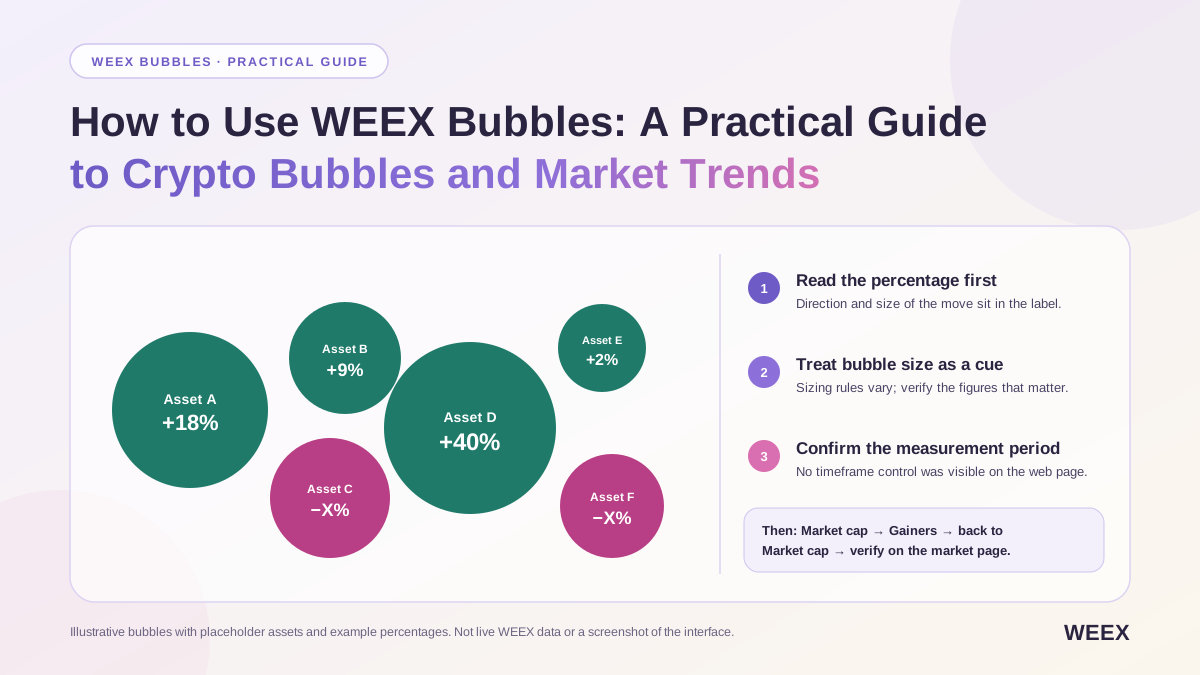
How to Use WEEX Bubbles: A Practical Guide to Crypto Bubbles and Market Trends
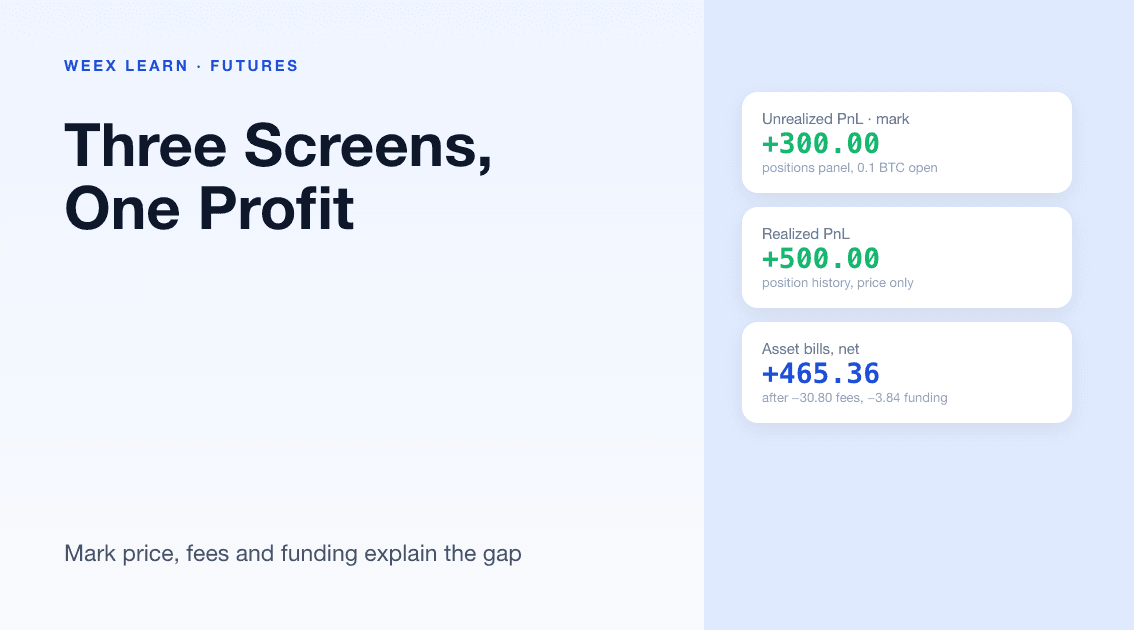
WEEX Futures PnL: Why Your Three PnL Numbers Rarely Match
What Is GRAM? Price Rebounds After Falling Below $1, Telegram Wallet Data and What Is Confirmed
Why Is My WEEX Crypto Withdrawal Still Pending?
PROJECT CORTEX (XTX) Price: Why a 15.8M% Gain and a $6 Billion Market Cap Are Hard to Trust
Copy Trading Platforms With Verified Performance: Spot the Fakes
Top 10 Crypto Derivatives Exchanges Worldwide by Open Interest
Beginner Futures Exchanges With Low Entry: What $50 Really Buys





