
SPY Stock in 2026: What the Rebound to Record Highs Is Hiding

 Prefer us on Google


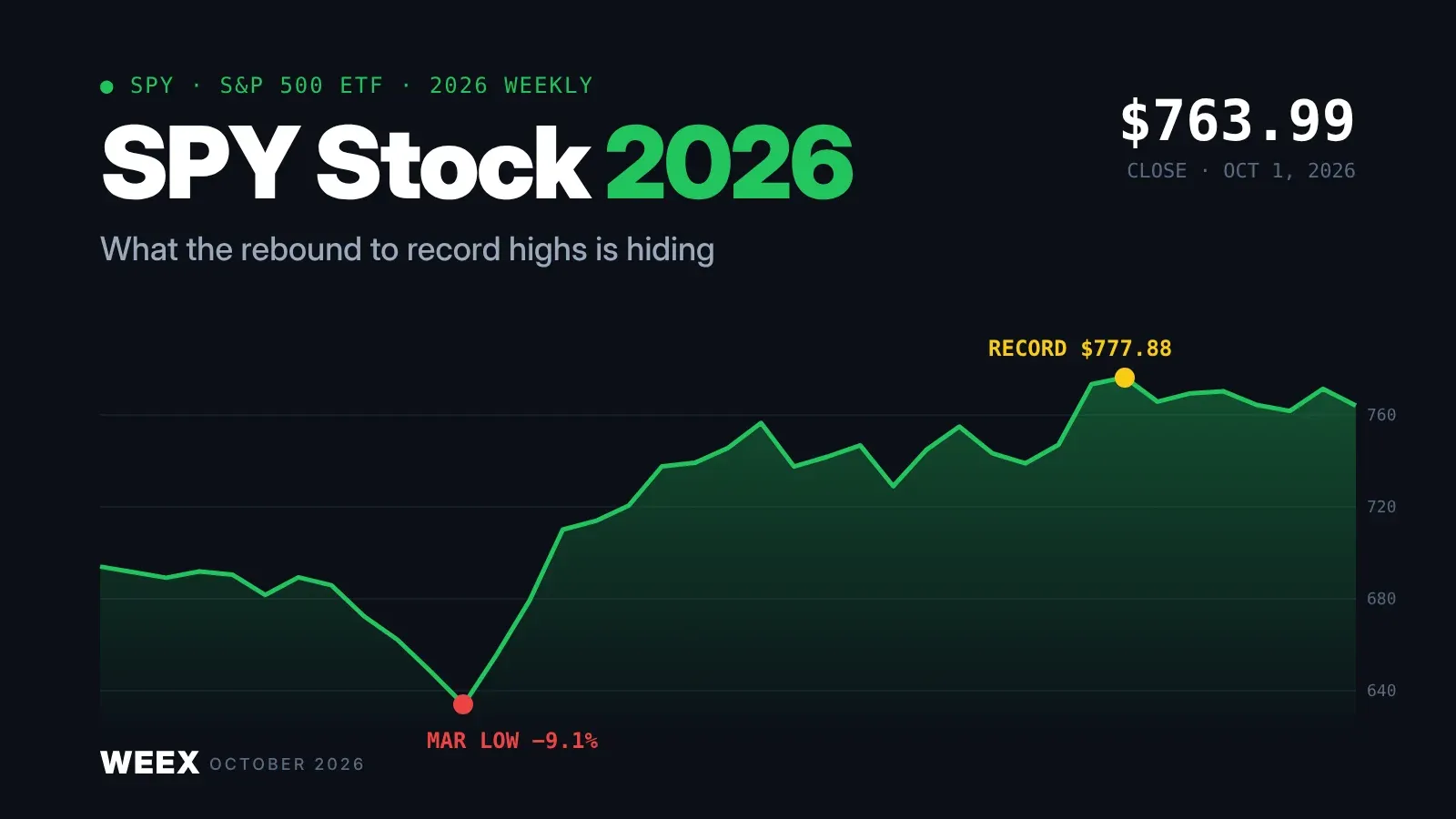
SPY is the ticker for the SPDR S&P 500 ETF Trust, the oldest and most heavily traded exchange-traded fund in the US, built to track the S&P 500 index. Buying one share of SPY stock gives you a slice of roughly 500 large US companies in a single trade. As of the October 1, 2026 close, SPY stood at $763.99 — about 1.8% below the record close of $777.88 set on August 13, and well above the $631.97 low it hit on March 30. This guide explains how SPY works, what its 2026 path actually shows, why the index looks healthier than the stocks inside it, and how SPY exposure can be traded around the clock on WEEX.
What SPY Stock Is and How It Works
SPY launched in January 1993 and still sets the pace for the ETF industry in trading volume and options activity. A few structural details matter more than most guides admit:
- It's a unit investment trust, not a typical ETF fund. SPY must hold the index stocks directly. It can't lend out shares for extra income the way many newer ETFs do, and it holds dividends as cash until it pays them out quarterly.
- Its fee is higher than its cheapest rivals. SPY charges a 0.0945% expense ratio. Vanguard's VOO and iShares' IVV track the same index for about 0.03%.
- Its edge is liquidity. SPY routinely trades tens of millions of shares a day, with some of the tightest bid-ask spreads in any market and the deepest options chain of any ETF. Traders pay the extra fee for that; long-term buy-and-hold investors often don't need to.
In practice, SPY suits active traders and options users. For a 30-year retirement holding, the fee gap with VOO or IVV adds up.
SPY's 2026 Price Path in Four Closes
The year so far has had a clean shape. Using daily closing prices from TradingView:
- January 27, 2026: $695.49. The early-year peak.
- March 30, 2026: $631.97. A 9.1% slide from that peak — just short of the 10% line that defines a correction.
- August 13, 2026: $777.88. A record close and a 23.1% rally from the March low in under five months.
- October 1, 2026: $763.99. A shallow 1.8% pullback from the record, with SPY spending most of September in a tight $754–$774 range.
The headline reading is bullish: a near-correction was bought quickly and new highs followed. The more useful reading comes from what happened inside the index.
Why SPY's Record Highs Look Narrower Than They Are
SPY is weighted by market value, so its biggest holdings move it most. That can hide weakness in the rest of the market — and it did in September.
- SPY gained 0.26% for the month, yet about 75% of S&P 500 stocks fell, according to a Yahoo Finance breadth analysis published in early October.
- Only 40.55% of S&P 500 members traded above their 200-day moving average at the end of September, down from roughly 73% in August.
- Gains concentrated in AI hardware names such as Micron, Apple, and Dell, while banks and large software stocks slipped.
The better reading: SPY near a record with fewer than half its stocks in long-term uptrends is a market leaning on a small group of leaders. That doesn't predict a drop on a schedule, but it does mean a stumble in a few megacaps would hit SPY harder than the average stock suggests. Traders watching SPY should track breadth, not just price.
-- Price
SPY Stock vs. a SPY Perpetual: What Changes
Crypto traders increasingly get SPY exposure through perpetual futures rather than shares. WEEX lists a SPY-USDT perpetual that tracks SPY's price and settles in USDT. The two instruments behave differently in ways that matter:
- Trading hours. SPY shares trade during US market sessions plus limited pre- and post-market. A perpetual trades 24/7, so you can react to weekend news — but the price can gap when the US cash market reopens.
- Dividends. SPY shareholders collect quarterly dividends. A perpetual holder doesn't; the contract tracks price only.
- Leverage. SPY shares are unleveraged unless you borrow on margin. A perpetual lets you size up or go short, which magnifies both gains and losses, and a 9% move like the January–March slide can liquidate a highly leveraged position.
- Funding. Perpetuals charge or pay a periodic funding rate between longs and shorts. When most traders are long, holding a long can cost money every funding interval.
- Account. Shares need a brokerage account that handles US equities. The perpetual runs from a crypto exchange account funded with USDT.
Where it fits: the perpetual is a trading tool for short-term views or hedges, not a replacement for owning SPY in a retirement account. If you trade tech exposure separately, WEEX also lists a QQQ-USDT perpetual, which tracks the Nasdaq-100 and leans even harder on the same megacaps driving SPY.
How to Read SPY From Here
Three signals carry more information than the daily price:
- Breadth. A recovery in the share of stocks above their 200-day average would confirm the August highs. Further slippage below 40% while SPY holds up would widen the gap.
- The March low. $631.97 is the reference point buyers defended. A return toward it would mean the year's gains have unwound.
- Megacap earnings. With leadership this concentrated, a few earnings reports carry outsized weight for the whole index.
SPY stock remains the simplest single trade for broad US market exposure, and in 2026 it has rewarded holders. The caution is that its strength rests on fewer shoulders than the price alone suggests. For round-the-clock exposure to that market, the SPY-USDT perpetual on WEEX is one way to act on a view without waiting for the opening bell.
FAQ
1. Is SPY a stock or an ETF?
SPY is an ETF that trades like a stock. It holds the roughly 500 companies in the S&P 500, so one share gives you diversified exposure in a single trade.
2. What is the difference between SPY and VOO?
Both track the S&P 500. VOO charges about 0.03% a year versus SPY's 0.0945%. SPY trades far more volume and has a deeper options market, which is why active traders prefer it.
3. Does SPY pay dividends?
Yes. SPY pays dividends quarterly from the cash dividends of the companies it holds. Holders of a SPY perpetual contract don't receive them.
4. Can I trade SPY on weekends?
Not as shares — US exchanges are closed. A SPY-USDT perpetual on a crypto exchange such as WEEX trades 24/7, though its price can gap when the US market reopens on Monday.
This content is provided for general informational purposes only and doesn't constitute financial, investment, legal, or tax advice. Any events, rewards, online promotions, or related information mentioned herein should not be considered a recommendation, solicitation, or invitation to purchase, sell, trade, or otherwise deal in any crypto assets. Crypto assets are highly volatile and may result in loss. The availability of WEEX services, products, and related events may vary by region. You are responsible for ensuring that your participation is in accordance with applicable local laws and regulations.
You may also like
Stock Market Crash Risk in 2026: The Warning Signs Worth Watching
XST Coin Explained: Two Tokens Share One Ticker, Check Which One
What Is Blockchain and How Does It Work? A Transaction Traced
How to Buy Crypto with PayPal: The Custody Catch Most Beginners Miss
ENA Token Price Up 76% in a Month: The October 5 Unlock Test
MU Stock After a Record Q4: Why Micron Slipped on a Huge Beat

QNT Price Near $295: Does the Bank Deal Justify a 4x Rally?
HBAR Price Spike and Reversal: Long, Short, and Stop-Loss Orders
QNT Futures After a 280% Rally: Leverage and Liquidation Math
XRP Upgrade Update: XRPL Batch Slips to Oct 9 and What Changes

Safest Crypto Wallet in 2026: Matching Wallet Type to the Threat You're Actually Worried About
No KYC Crypto Wallet: 6 Picks and 5 Places Your ID Still Leaks
2Z Token Unlock on October 2: What 1.66B DoubleZero Tokens Mean

Best Decentralized Crypto Wallet for Beginners: What Self-Custody Really Asks of You
UNI Futures: How to Set Take-Profit and Stop-Loss After a 2x Run
QNT Futures: Funding Rate and Long vs Short After a 4x Rally
Which Crypto to Buy for Beginners: A Simple 3-Tier Starter Plan

How to Get a Crypto Wallet: Pick, Set Up, and Fund It Safely
WEEX Quantitative Trading: How API Strategies Run in Practice
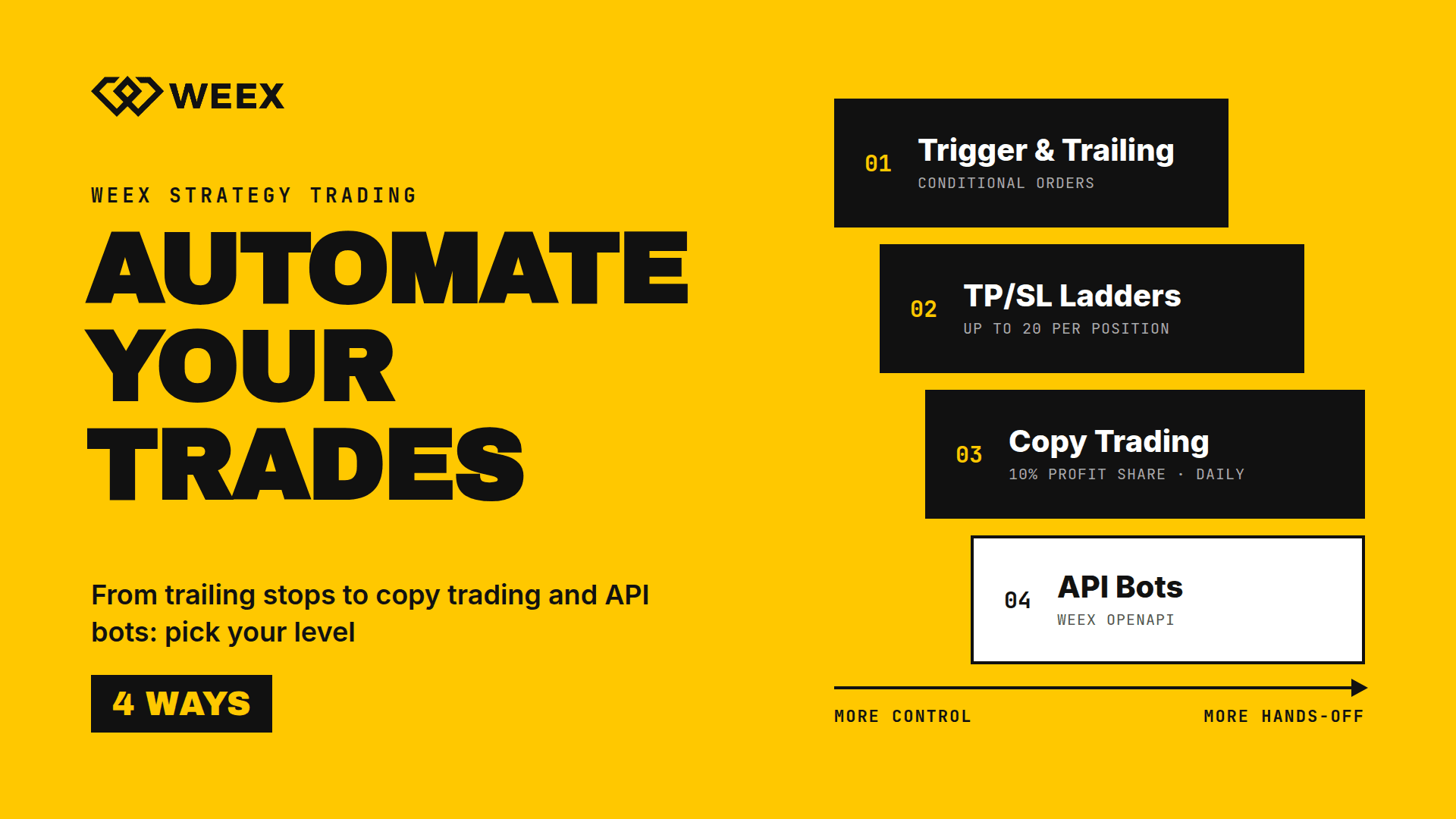
WEEX Strategy Trading: 4 Ways to Automate Your Crypto Trades
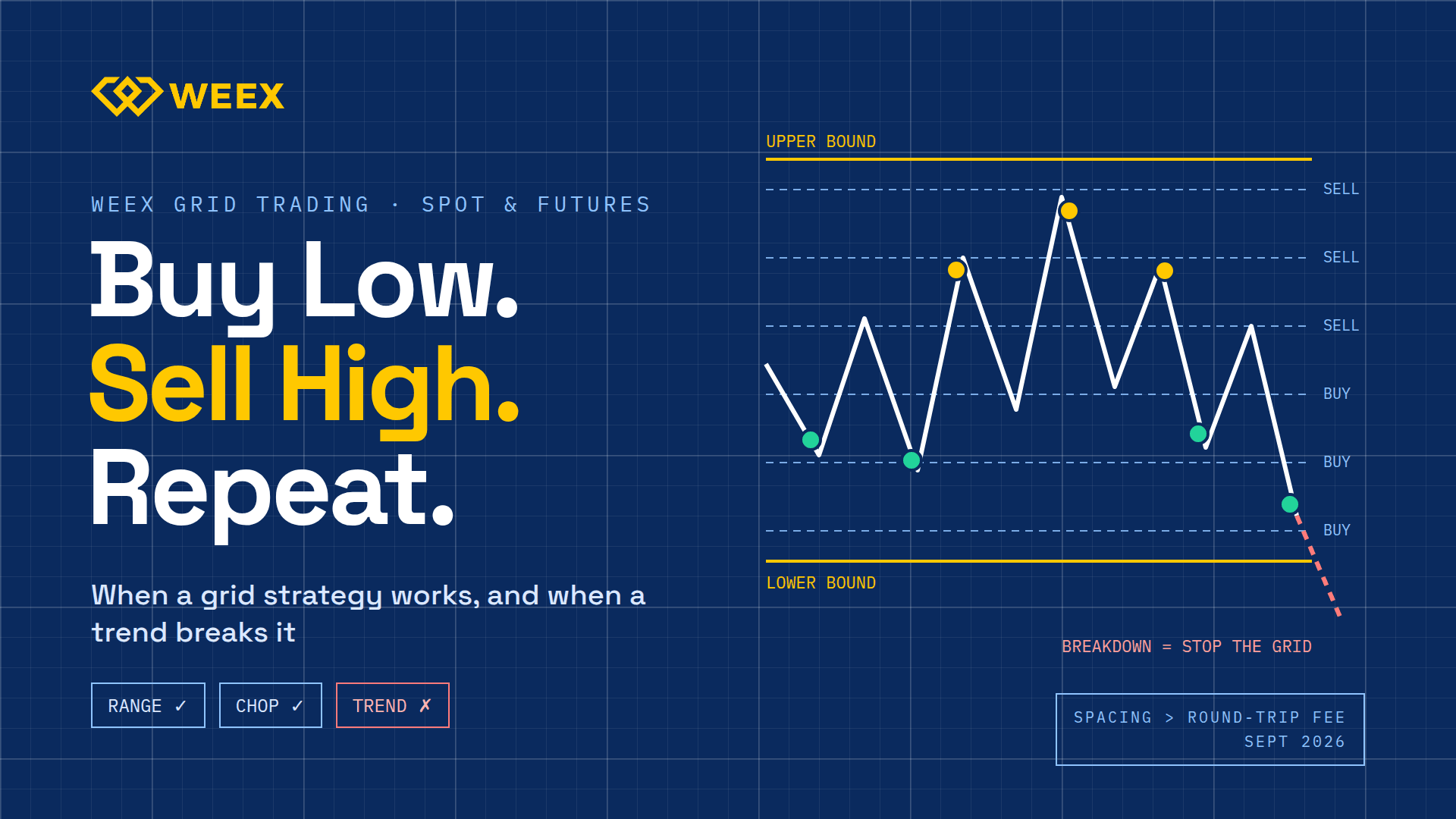
WEEX Grid Trading: When a Grid Strategy Works and When It Fails
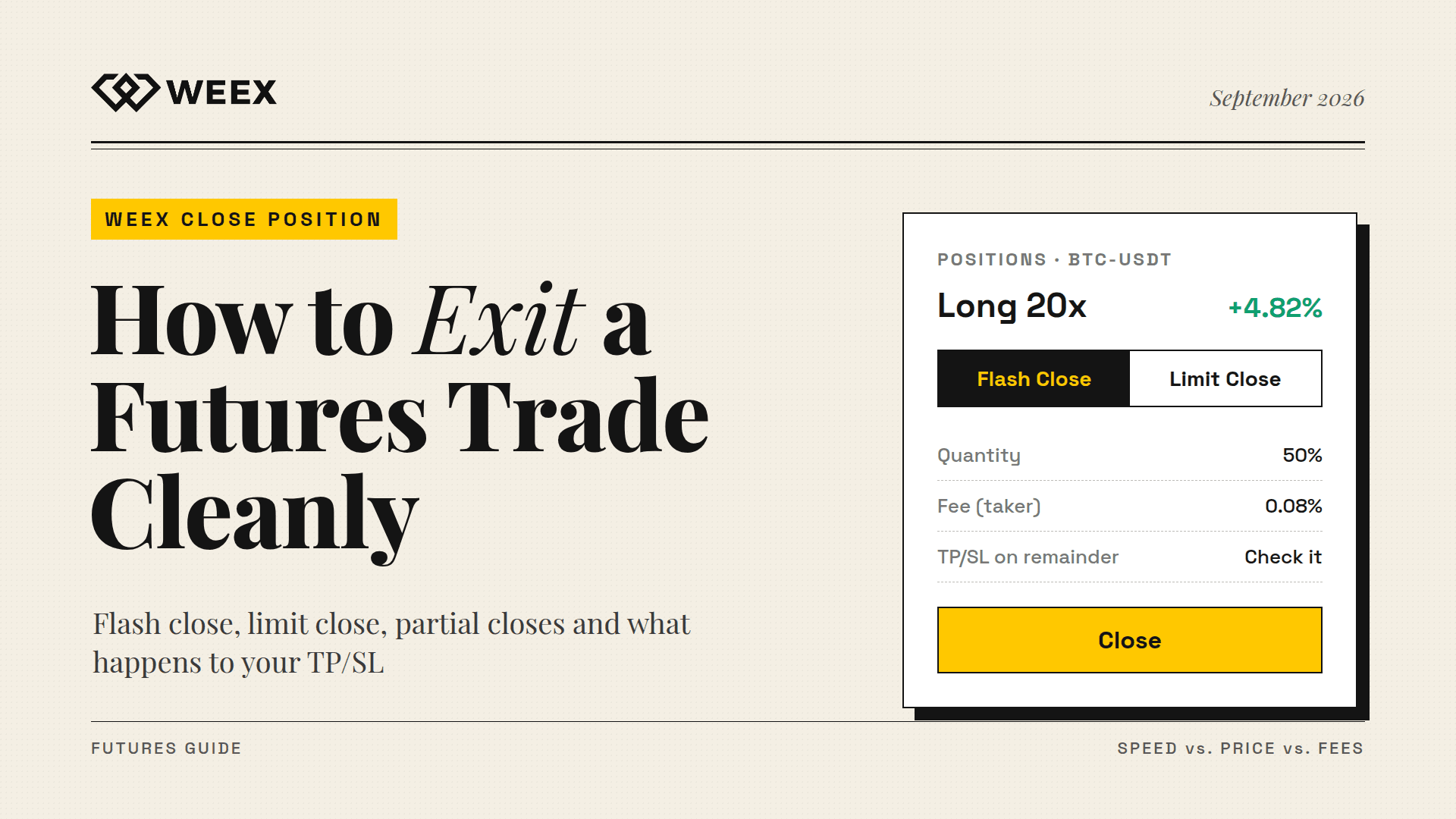
WEEX Close Position Guide: Flash Close, Limit Close and TP/SL
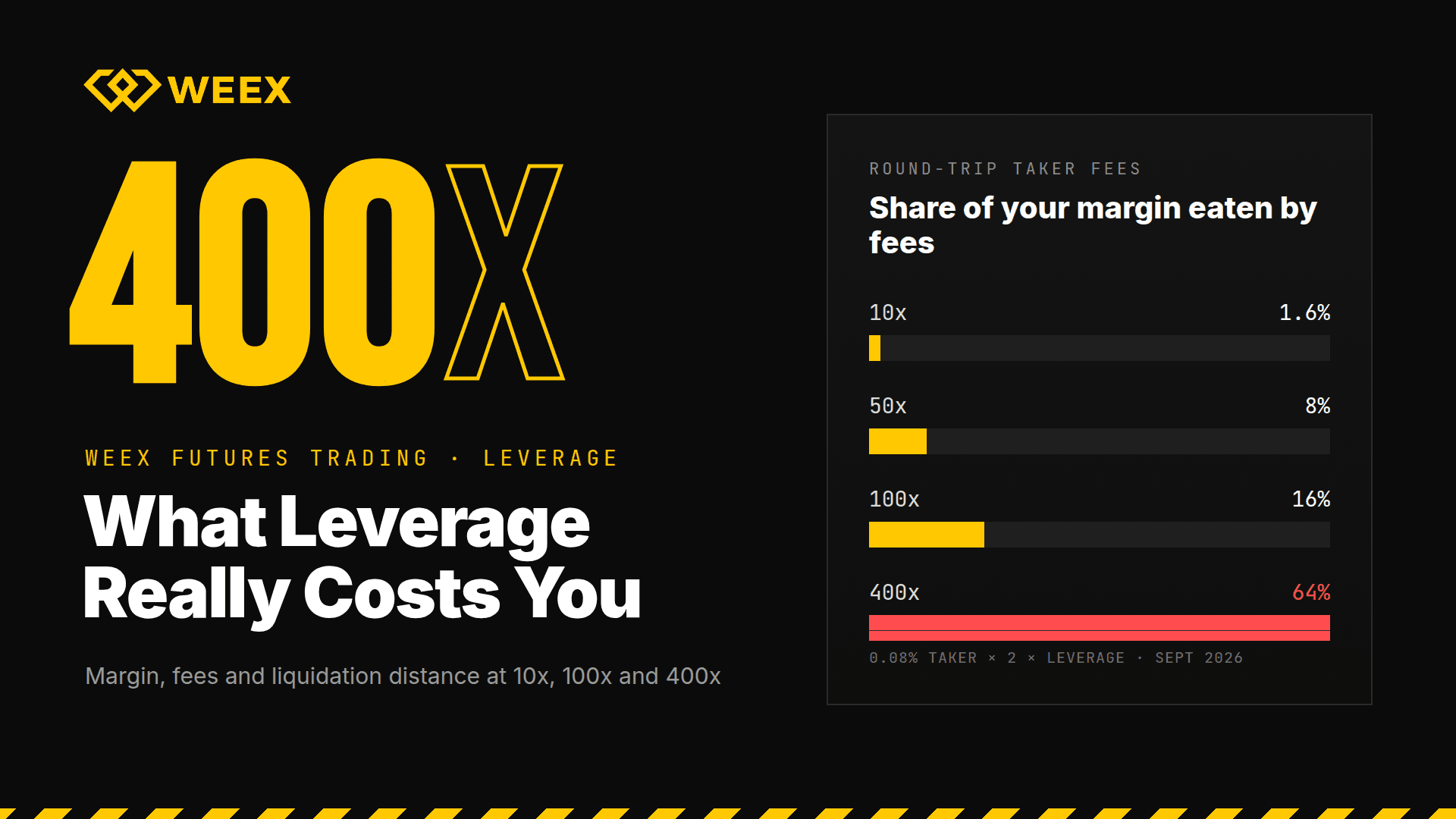
WEEX Futures Trading: What 400x Leverage Really Costs You

Best Crypto Exchange for Beginners 2026: What Actually Matters When Choosing One
Bitcoin Short Squeeze Explained: Inside the $648M Sept 21 Wipeout

Best Crypto Cold Wallet 2026: Top Picks Matched to How You Hold
INJ Meridian Upgrade: What Activates Sept 24 and What to Watch
Phantom Wallet vs MetaMask: What's the Difference
How to Connect Phantom Wallet to a Solana DApp
How to Install and Set Up Phantom Wallet
Stock Market Crash Risk in 2026: The Warning Signs Worth Watching
XST Coin Explained: Two Tokens Share One Ticker, Check Which One
What Is Blockchain and How Does It Work? A Transaction Traced
How to Buy Crypto with PayPal: The Custody Catch Most Beginners Miss
ENA Token Price Up 76% in a Month: The October 5 Unlock Test
MU Stock After a Record Q4: Why Micron Slipped on a Huge Beat





