
Merck Stock Overvalued After Cancer Vaccine Breakthrough? MRK Outlook 2026

 Prefer us on Google


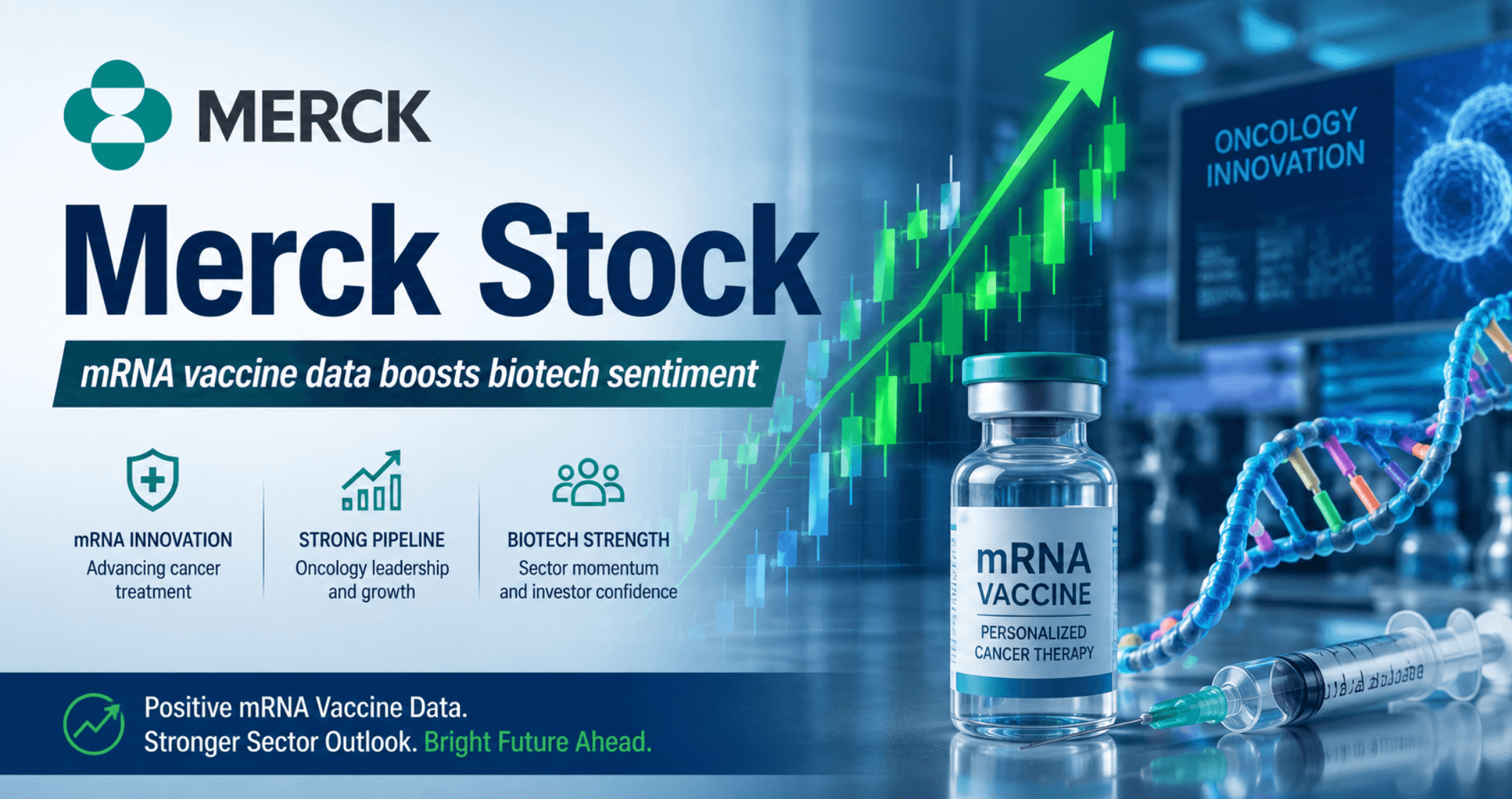
Merck & Co. (NYSE: MRK) jumped more than 12% after announcing positive Phase 3 results for its personalized mRNA cancer vaccine collaboration with Moderna, pushing the stock near record highs around $152 per share.
The market reaction reflects more than a successful clinical trial. Investors are reassessing whether the combination of Moderna’s mRNA technology and Merck’s Keytruda franchise could create a new long-term growth engine and reduce concerns surrounding Keytruda’s future patent expiration.
However, after the sharp rally, a key question has emerged: Is Merck stock still undervalued based on future growth potential, or has the market already priced in too much optimism?
Why Did Merck Stock Rally After the Cancer Vaccine Breakthrough?
The main catalyst behind MRK’s recent move was the success of the INTerpath-001 Phase 3 clinical trial conducted by Merck and Moderna.
The trial evaluated: mRNA-4157 (V940) personalized cancer vaccine + Keytruda
for high-risk melanoma patients after surgical removal.
According to Merck’s official announcement, the combination therapy achieved statistically significant improvements in:
| Trial Endpoint | Result |
|---|---|
| Recurrence-free survival (RFS) | Successfully improved compared with Keytruda alone |
| Distant metastasis-free survival (DMFS) | Successfully improved compared with Keytruda alone |
Longer-term follow-up data showed:
- 49% reduction in risk of recurrence or death
- 59% reduction in risk of distant metastasis or death
The results strengthened the market view that personalized cancer vaccines could become an important next-generation cancer treatment platform.
Can Cancer Vaccine Growth Extend Merck’s Keytruda Franchise?
The biggest investment debate around Merck is not only about the vaccine itself, but whether it can extend the commercial life of Keytruda.
Keytruda remains Merck’s largest revenue driver. According to Merck’s financial reports:
- Keytruda generated approximately $8.37 billion in quarterly revenue;
- It represents a significant portion of Merck’s pharmaceutical sales.
However, investors have been concerned about the long-term impact of Keytruda’s patent expiration timeline.
The cancer vaccine breakthrough changes this discussion.
Instead of replacing Keytruda, the combination therapy could potentially strengthen its position by creating a new treatment approach where patients receive both immunotherapy and personalized vaccination.
This could help Merck expand into additional cancer indications, including:
- melanoma;
- lung cancer;
- kidney cancer;
- pancreatic cancer.
The market is therefore pricing in the possibility that Keytruda’s revenue cycle could be extended beyond current expectations.
Is Merck Stock Overvalued After the Rally?
After the recent move, valuation has become the main discussion among investors.
As of August 2026:
| Metric | Data |
|---|---|
| Stock Price | Around $152 |
| Market Capitalization | Approximately $380 billion |
| Main Growth Driver | Keytruda oncology franchise |
| Recent Catalyst | Phase 3 cancer vaccine success |
| Industry | Pharmaceutical / Oncology |
Merck’s valuation depends heavily on whether future pipeline growth can offset potential pressure from Keytruda’s patent cycle.
Bullish valuation argument
Supporters believe the market is still underestimating:
- personalized cancer vaccine potential;
- expansion into additional cancer types;
- Merck’s global oncology sales network.
If the therapy receives regulatory approval and achieves strong commercial adoption, analysts may increase long-term earnings expectations.
Bearish valuation argument
More cautious investors argue that:
- the stock already reflects significant future success;
- regulatory approval is not guaranteed;
- manufacturing personalized mRNA vaccines at scale remains challenging.
Therefore, the current valuation debate is less about the clinical result itself and more about whether future earnings growth can justify the higher market expectations.
-- Price
Merck Stock Price Outlook 2026: Possible Scenarios
Future MRK performance will likely depend on regulatory progress, commercial adoption, and broader pharmaceutical market conditions.
| Scenario | Key Drivers | Potential Price Range |
|---|---|---|
| Bull Case | FDA approval progress, strong Keytruda combination adoption, higher earnings expectations | $170-$185 |
| Base Case | Positive pipeline development but gradual commercialization | $145-$165 |
| Bear Case | Delayed approval, slower adoption, renewed patent concerns | $125-$140 |
These scenarios are market-based estimates for evaluating possible outcomes and do not represent guaranteed future prices.
Merck vs Moderna: Who Benefits More From the Cancer Vaccine Opportunity?
The breakthrough also changed expectations for Moderna.
For Moderna, the data provided important validation that mRNA technology can expand beyond COVID-19 vaccines into oncology.
For Merck, the advantage comes from its existing commercial infrastructure.
| Company | Potential Advantage |
|---|---|
| Merck | Strong oncology portfolio, Keytruda ecosystem, global distribution |
| Moderna | mRNA platform technology and personalized vaccine expertise |
From a business perspective, Merck may have a clearer path to monetizing the technology because it already has a large oncology customer base.
Risks That Could Challenge Merck’s Growth Story
Despite the positive clinical results, several risks remain.
First, successful Phase 3 data does not immediately translate into revenue. Regulatory approval, pricing negotiations, and manufacturing capacity will determine the commercial outcome.
Second, personalized cancer vaccines require patient-specific sequencing and production processes. Scaling this model across millions of patients could present operational challenges.
Finally, valuation risk remains important. If future revenue growth does not match current market expectations, the stock could face a valuation adjustment even with strong scientific progress.
How WEEX Provides Access to Global Stock Token Opportunities
For investors following global healthcare and technology trends, tokenized stocks provide another way to track traditional market assets through Web3 platforms.
WEEX currently supports hundreds of stock-related token assets across sectors, including healthcare and technology markets. Users can explore available assets through WEEX Stock Token Market and WEEX TradFi Market.
WEEX also provides a Proof of Reserves mechanism based on a 1:1 reserve structure to enhance transparency and asset security. More details are available through WEEX Proof of Reserves.
Conclusion: Is Merck Stock Overvalued or Entering a New Growth Cycle?
Merck’s cancer vaccine breakthrough has shifted the market conversation from short-term earnings toward long-term oncology growth potential.
The key question for investors is no longer whether the technology is promising, but whether Merck can successfully convert this scientific breakthrough into sustainable revenue growth.
The company’s future valuation will likely depend on three factors:
- regulatory approval progress;
- Keytruda franchise expansion;
- commercial success of personalized cancer vaccines.
For now, Merck represents a classic market debate between a premium valuation supported by innovation and the risk of expectations becoming too optimistic too quickly.
This content is provided for general informational purposes only and doesn't constitute financial, investment, legal, or tax advice. Any events, rewards, online promotions, or related information mentioned herein should not be considered a recommendation, solicitation, or invitation to purchase, sell, trade, or otherwise deal in any crypto assets. Crypto assets are highly volatile and may result in loss. The availability of WEEX services, products, and related events may vary by region. You are responsible for ensuring that your participation is in accordance with applicable local laws and regulations.
You may also like
How to Buy Crypto with PayPal: The Custody Catch Most Beginners Miss
ENA Token Price Up 76% in a Month: The October 5 Unlock Test
HPE Stock Hits a Record on $1.2B AI Order: Is It Still Cheap?
MU Stock After a Record Q4: Why Micron Slipped on a Huge Beat
Senate Democrats Block Stock Bill: What Failed and What Is Next
QNT Price Near $295: Does the Bank Deal Justify a 4x Rally?

FICO vs VantageScore: What the New Fannie Mae and Freddie Mac Rule Actually Means for Your Mortgage
How Tether Freezes USDT: Address Blacklists and Holder Checks

Best Crypto Exchange for Beginners 2026: What Your First $100 Actually Goes Through
Bitcoin Futures at $83K: PnL and Position Sizing Into Jobs Week
What Is STOCKER? Stockereum, Stock-Paired Meme Tokens, and Risks
HBAR Price Spike and Reversal: Long, Short, and Stop-Loss Orders
QNT Futures After a 280% Rally: Leverage and Liquidation Math
XRP Upgrade Update: XRPL Batch Slips to Oct 9 and What Changes
WIF and POPCAT Price Rally: Can the Solana Meme Rotation Hold?

How to manage Idle USDT? Top 5 Platforms to Earn Passive Income in 2026 OCT
What Is XDP? Can Doppler Finance Break $0.03 in October 2026?

What Is Coinbase Wrapped Zcash (cbZEC)? How It Brings Zcash to Base Without Native ZEC Privacy
Safest Crypto Wallet in 2026: Matching Wallet Type to the Threat You're Actually Worried About

What Is Coinbase Wrapped HYPE (cbHYPE)? How It Works on Base, 1:1 Backing, Risks, and HYPE Conversion
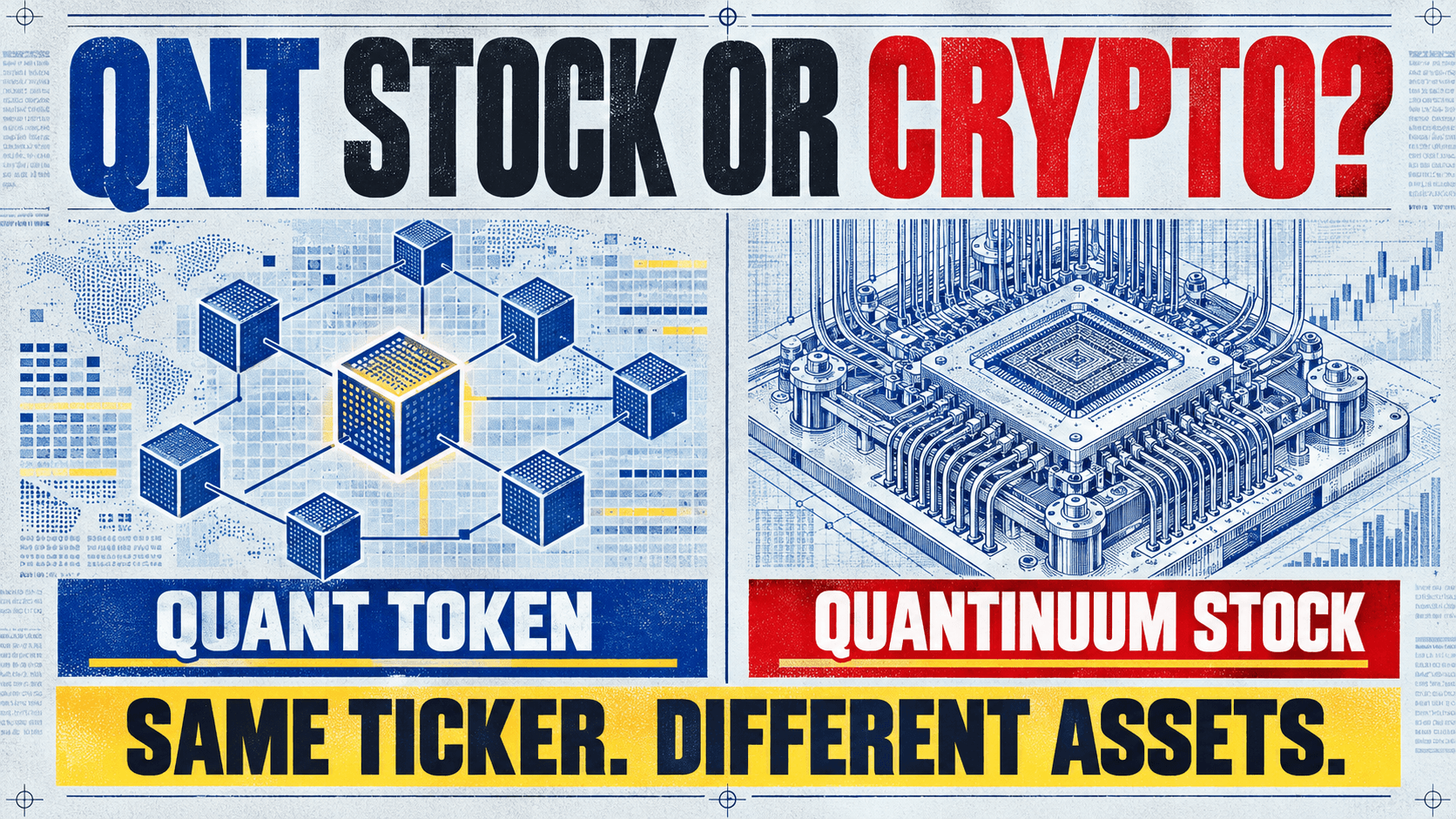
Is QNT a Stock or Crypto? Quant (QNT) and Quantinuum Stock Are Not the Same Asset
No KYC Crypto Wallet: 6 Picks and 5 Places Your ID Still Leaks
THORChain Bitget Dispute: Who Can Actually Freeze Stolen Crypto?
What Is Quant (QNT) Crypto? How Overledger Works, QNT Utility, and Token Supply Explained

Best Decentralized Crypto Wallet for Beginners: What Self-Custody Really Asks of You

Best Crypto App for Beginners: Exchange App, Wallet App, or Both?
What Is Gno.land (GNOT)? How GnoVM, Storage Deposits, Tokenomics, and GovDAO Work
Which Stocks Are Undervalued Right Now? What the Major Screens Say in September 2026
Coincheck FLR DAI Delisting Dates and Holder Checklist

What an Iranian Parliament Report Says About Crypto Mining and Power Shortages
How to Buy Crypto with PayPal: The Custody Catch Most Beginners Miss
ENA Token Price Up 76% in a Month: The October 5 Unlock Test
HPE Stock Hits a Record on $1.2B AI Order: Is It Still Cheap?
MU Stock After a Record Q4: Why Micron Slipped on a Huge Beat
Senate Democrats Block Stock Bill: What Failed and What Is Next
QNT Price Near $295: Does the Bank Deal Justify a 4x Rally?





