
Low-Fee Futures Exchanges That Are Easy to Use: 2026 Cost Test

 Prefer us on Google

The low-fee futures exchanges that are also easy to use in November 2026 are Binance, OKX, Bybit, Bitget and WEEX, and on regular-tier pricing their maker fees are identical at 0.02%. The real difference is the taker fee, which ranges from 0.05% to 0.08%, and how easily each app lets a newer trader place limit orders instead of market orders. This guide prices a typical leveraged round trip on each venue, explains why ease of use changes what you actually pay, and shows where funding and slippage quietly outweigh the fee table.
Futures Fees Compared: What Each Exchange Charges
Regular-tier USDT-margined perpetual fees, as published by each exchange in November 2026, before any token-holding or referral discounts:
- Binance: 0.02% maker, 0.05% taker.
- OKX: 0.02% maker, 0.05% taker.
- Bybit: 0.02% maker, 0.055% taker.
- Bitget: 0.02% maker, 0.06% taker.
- WEEX: 0.02% maker, 0.08% taker, per the WEEX fee schedule checked on November 12, 2026.
On paper, WEEX has the highest taker rate in the group and every venue ties on maker. That is the honest starting point. But fee tables are written per order, and traders pay per position, usually with leverage. That changes the comparison.
WEEX also discounts quickly as volume or WXT holdings grow. Its VIP 1 tier, reached with 1 million USDT in 30-day futures volume, 5,000 WXT or 10,000 USDT in assets, keeps maker at 0.02% and cuts taker to 0.075%. VIP 2 drops to 0.018% maker and 0.06% taker.
What a $1,000, 10x Round Trip Actually Costs
Fees apply to the notional value of a position, not the margin. A trader who posts $1,000 at 10x controls a $10,000 position, and pays fees twice: once to open and once to close.
Here is the regular-tier cost of that round trip, depending on order type:
- Both legs as maker (limit orders): $4.00 on every exchange listed.
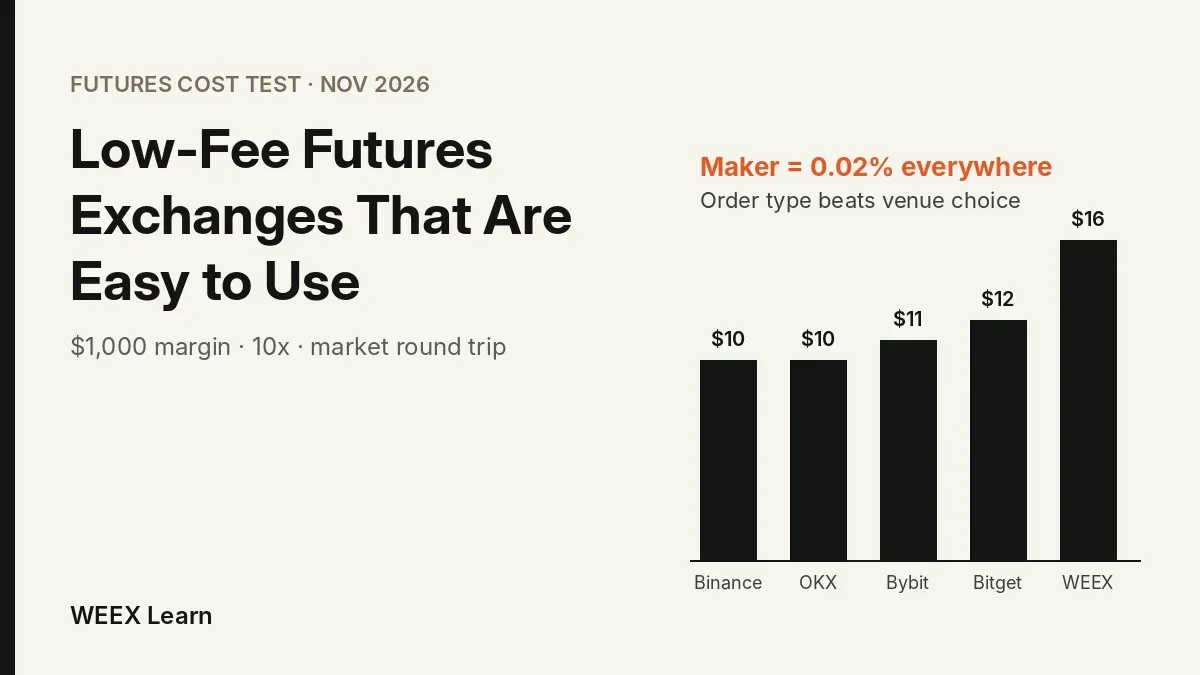
- Both legs as taker (market orders): $10.00 on Binance and OKX, $11.00 on Bybit, $12.00 on Bitget and $16.00 on WEEX.
- Limit entry, market exit (the most common pattern): $7.00 on Binance and OKX, $7.50 on Bybit, $8.00 on Bitget and $10.00 on WEEX.
The gap between the cheapest and most expensive venue on a mixed round trip is $3, or 0.3% of the margin posted. The gap between trading as a maker and trading as a taker on the same venue is $6 to $12. In practice, order type matters two to four times more than venue choice.
That is why ease of use belongs in a fee comparison. An interface that makes limit orders, post-only orders and preset take-profit and stop-loss levels easy to reach will save a newer trader more than shopping for the lowest taker rate.
How Ease of Use Lowers Your Real Trading Cost
Usability affects cost through a few specific screens, not a general feeling of polish:
- Default order type. Some apps open the order panel on market by default. Switching to limit every time is an easy step to forget under pressure.
- Post-only toggle. A post-only limit order is rejected rather than filled as a taker, which guarantees maker pricing. It should be one tap away.
- TP/SL at entry. Setting take-profit and stop-loss when opening a trade means exits can rest as orders instead of being panic-closed at market.
- Fee preview. Showing estimated fees before submission keeps the cost visible.
- Margin mode clarity. Isolated versus cross margin, shown plainly, prevents a single trade from drawing on the whole account.
All five exchanges offer limit orders and TP/SL on perpetuals. The difference is how many steps it takes. WEEX's futures panel, for example, puts Limit, Market and Trigger tabs side by side and shows long and short TP/SL fields directly on the order form, with leverage and margin mode set at the top of the panel.
-- Price
When Fees Matter Less Than Funding and Slippage
For anyone holding a position for more than a few hours, the fee table stops being the main cost.
Funding rates are exchanged between longs and shorts, usually every eight hours. At a typical 0.01% per interval, a $10,000 position pays or receives about $1 per funding period, or $3 a day. Hold for a week and funding can exceed the round-trip trading fee. Funding is set by each market's positioning, not by the exchange's fee schedule, so it varies by pair and by day.
Slippage is the other hidden cost. A market order on a thin altcoin pair can fill several ticks away from the quoted price, which costs more than the taker fee itself. Deep order books on major pairs keep slippage low on every venue in this list. On smaller pairs, check the order book before sending a large market order.
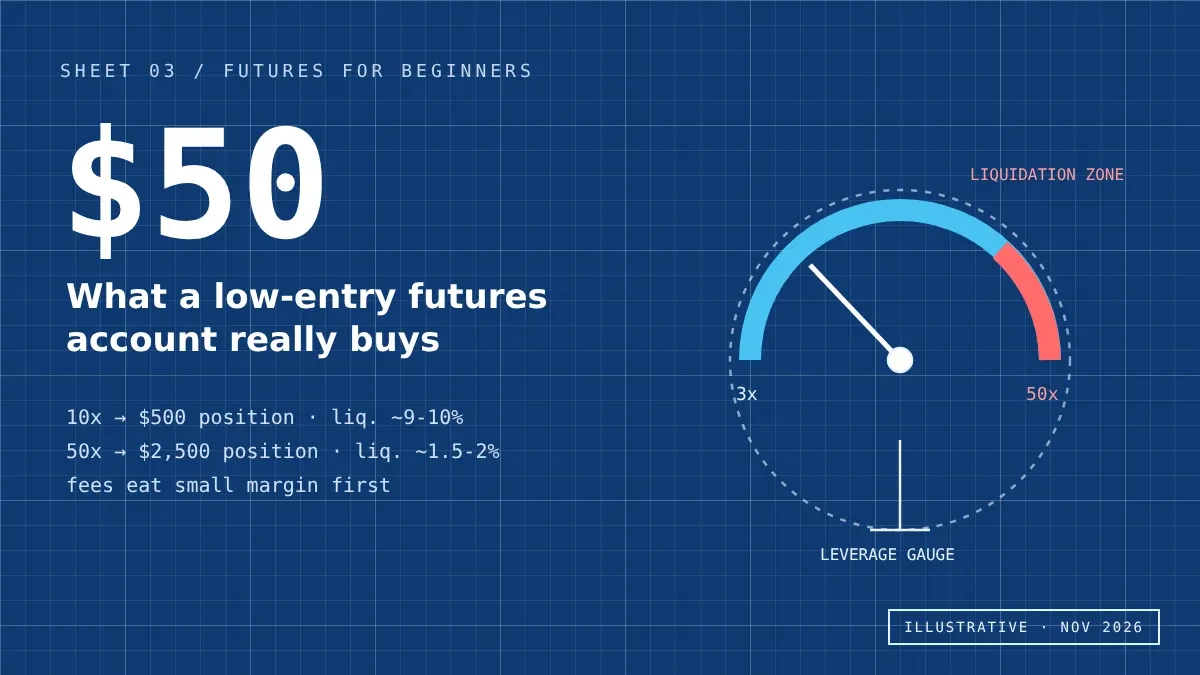
What traders usually miss: leverage multiplies fees as a share of margin. At 10x, a 0.08% taker fee on both legs equals 1.6% of the margin posted. At 50x, the same round trip consumes 8% of margin before price moves at all.
Choosing a Low-Fee Futures Exchange You Will Actually Use
The cheapest exchange on paper is not automatically the cheapest for you. A practical order of priorities:
- Use limit and post-only orders by default. This alone brings every venue in this list to the same 0.02% maker rate.
- Pick the interface you will use correctly. A clear order panel with TP/SL at entry reduces costly market exits.
- Check discount paths. Token holdings and volume tiers lower rates on all five exchanges; WEEX's first two tiers cut taker from 0.08% to 0.06%.
- Watch funding on positions held overnight. It can outweigh trading fees within days.
- Confirm reserves and safeguards. Fees are irrelevant if the venue cannot return your margin. WEEX publishes proof of reserves data for users to check.
For a related look at entry costs, see what $50 really buys on beginner futures exchanges. The takeaway on low-fee futures exchanges: maker pricing is the same everywhere, so the platform that makes limit orders and risk controls easiest is usually the one that costs you least.
FAQ
1. Which futures exchange has the lowest fees in 2026?
On regular-tier pricing, Binance and OKX have the lowest taker fees at 0.05%. All five major venues compared here charge the same 0.02% maker fee, so limit-order traders pay the same base rate everywhere.
2. Are futures fees charged on margin or on position size?
On position size. A $1,000 margin position at 10x leverage is a $10,000 position, and the fee percentage applies to the $10,000.
3. How can beginners reduce futures trading fees?
Use limit or post-only orders to pay maker rather than taker fees, set take-profit and stop-loss at entry, avoid very high leverage, and use volume or token-holding discount tiers when you qualify.
4. Do funding rates count as trading fees?
No. Funding is paid between traders, not to the exchange, but it is a real cost for positions held across funding intervals and can exceed trading fees on multi-day holds.
This content is provided for general informational purposes only and doesn't constitute financial, investment, legal, or tax advice. Any events, rewards, online promotions, or related information mentioned herein should not be considered a recommendation, solicitation, or invitation to purchase, sell, trade, or otherwise deal in any crypto assets. Crypto assets are highly volatile and may result in loss. The availability of WEEX services, products, and related events may vary by region. You are responsible for ensuring that your participation is in accordance with applicable local laws and regulations.
You may also like

Are Bitcoin Lightning Wallets Safe? 5 Security Warnings Since August

Anthropic IPO: ANT Date, Price Range and Valuation
Powell Speech Bitcoin: Why Warsh, Not Powell, Moves BTC in 2026
Fed Rate Cut December 2026? Why Markets Now Price a Hike Instead
Fed Rate Decision Bitcoin: How BTC Reacted to Every 2026 Call

BTC Staking in a Crash: What It Protects and What It Does Not
Bitcoin Falls Toward $70K: ETF Outflows, Liquidations and What Happens Next
December FOMC Meeting 2026: Dec. 8-9 Rate Hike, 25 or 50 Bps?
CPI Release Date: Next Report Dec. 10, 2026 at 8:30 a.m. ET
November CPI Report: Dec. 10 Release Lands After the Fed Decides
Midterm Election Results Crypto: Who Now Controls Crypto Policy
Midterm Elections Bitcoin Price: What 2014, 2018 and 2022 Show
What Is Project Faro? The $270M Bank Stablecoin Plan Explained

Stablecoin Supply Falls $14.2B in 30 Days: What It Means for Bitcoin
Emerging Copy Trading Exchanges for Futures: 5 Retail Favorites
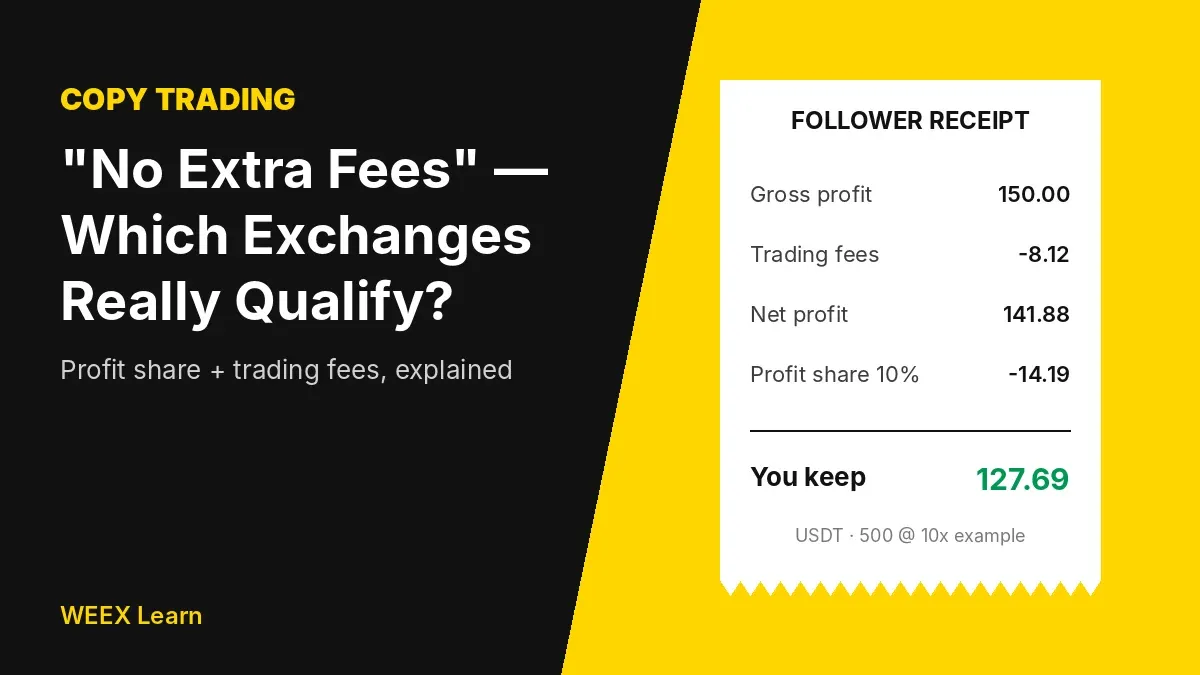
Copy Trading With No Extra Fees: Which Exchanges Really Qualify?
Beginner-Friendly Crypto Exchanges With Simple Interfaces Ranked

Is WEEX Safe? Proof of Reserves, 1,000 BTC Fund and Licences Checked (2026)
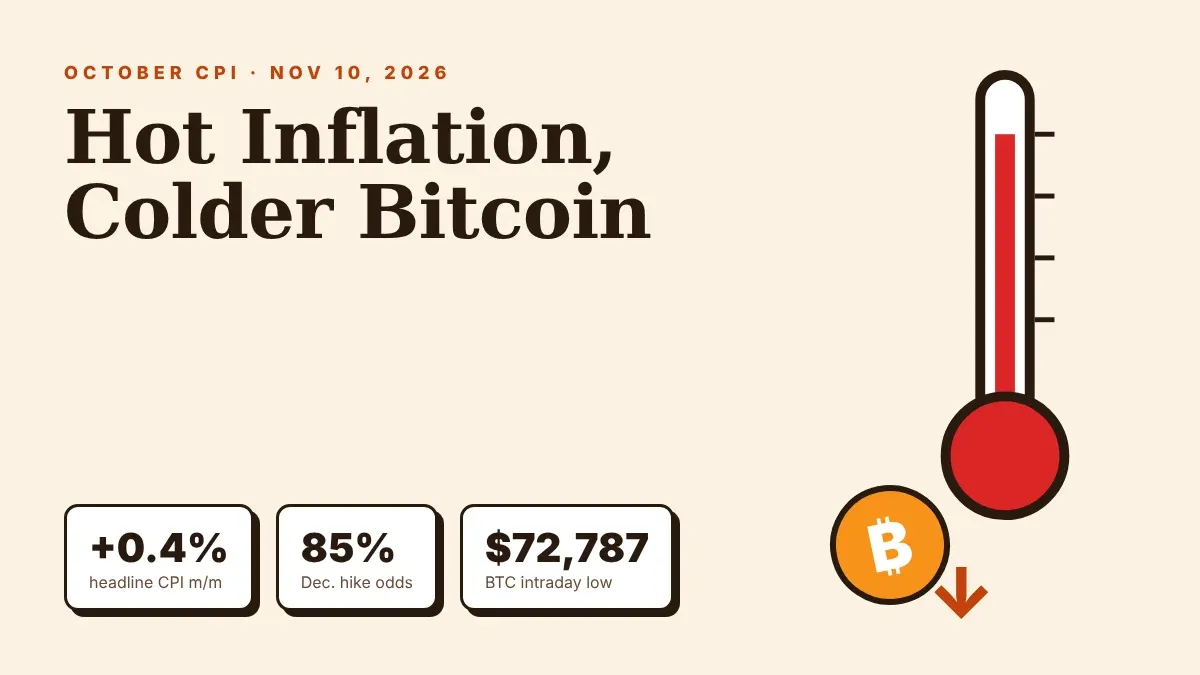
Bitcoin After Hot CPI: Why December Rate Hike Odds Hit 85%
What Is GRAM? Price Rebounds After Falling Below $1, Telegram Wallet Data and What Is Confirmed
Why Is My WEEX Crypto Withdrawal Still Pending?
PROJECT CORTEX (XTX) Price: Why a 15.8M% Gain and a $6 Billion Market Cap Are Hard to Trust
Copy Trading Platforms With Verified Performance: Spot the Fakes
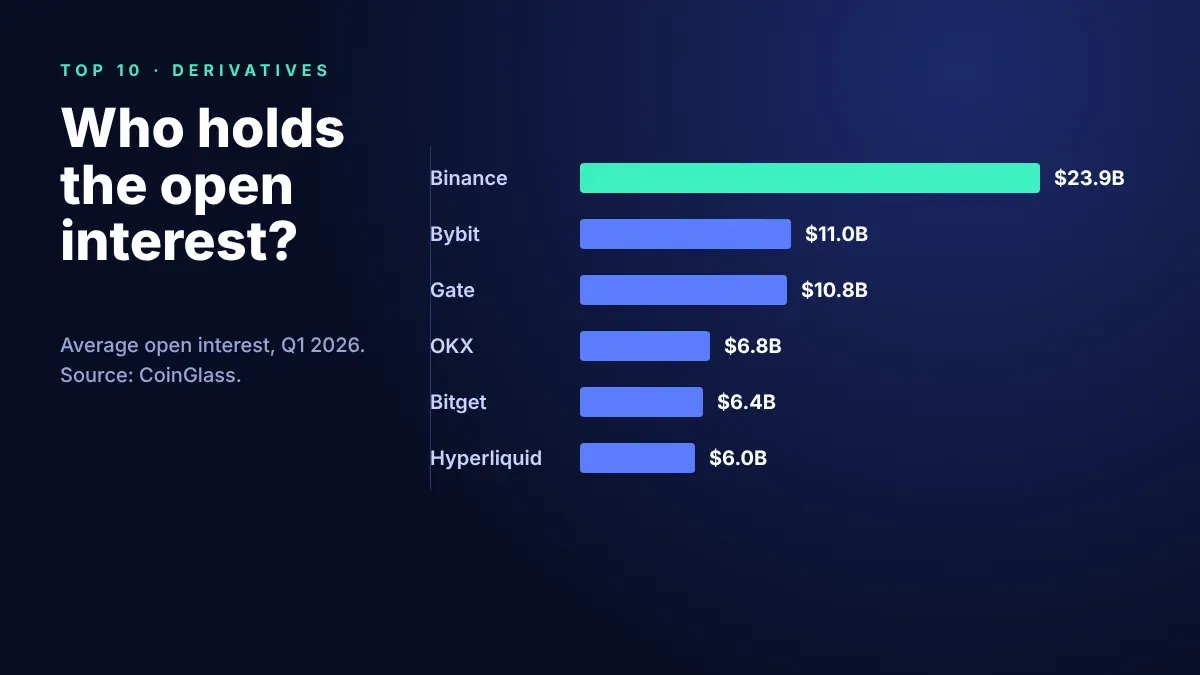
Top 10 Crypto Derivatives Exchanges Worldwide by Open Interest
Beginner Futures Exchanges With Low Entry: What $50 Really Buys
User-Friendly Crypto Copy Trading Platforms: 6 Picks Compared
WEEX Review: The Latest Fees, Features, Security and Trading Experience
Midterm Elections Crypto Fallout: $170M Spent, Key Races Lost
FreeBitco.in Shutdown: Frozen Withdrawals and What Users Can Do
Why Is Bitcoin Down Today? BTC's Slide to $76K Explained
Are Bitcoin Lightning Wallets Safe? 5 Security Warnings Since August
Anthropic IPO: ANT Date, Price Range and Valuation
Powell Speech Bitcoin: Why Warsh, Not Powell, Moves BTC in 2026
Fed Rate Cut December 2026? Why Markets Now Price a Hike Instead
Fed Rate Decision Bitcoin: How BTC Reacted to Every 2026 Call
BTC Staking in a Crash: What It Protects and What It Does Not





