
Jensen Huang Resigns as NVIDIA CEO: What Happens to NVDA Stock Next?

 Prefer us on Google

Introduction
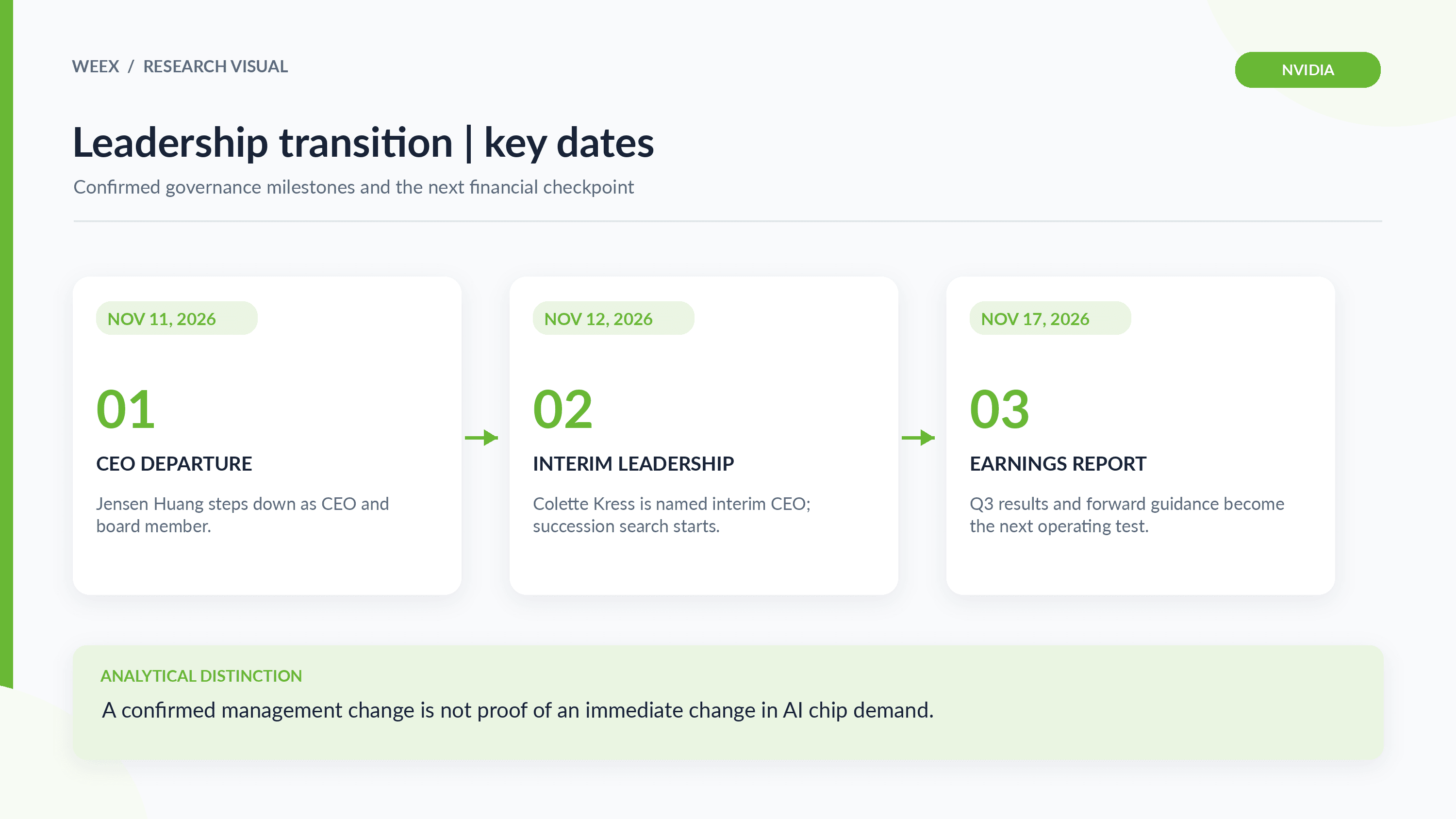
Jensen Huang resigns NVIDIA CEO has become one of the most consequential technology-market headlines of November 2026. NVIDIA confirmed on November 12 that co-founder Jensen Huang had stepped down as President, Chief Executive Officer, and a member of its board, effective November 11. The company appointed longtime Chief Financial Officer Colette Kress as interim CEO while beginning a search for a permanent successor. Harvey Jones was separately appointed Chairman of the Board.
The announcement behind the Jensen Huang resigns NVIDIA CEO headline comes at a sensitive moment for the AI chipmaker. NVIDIA reported $96.2 billion in revenue during its second quarter of fiscal 2027, more than double the amount recorded a year earlier, and is scheduled to report third-quarter results on November 17. The sudden leadership transition introduces questions about management continuity, investor confidence, and the company's ability to maintain its technology roadmap.
For investors searching Jensen Huang resigns NVIDIA CEO, the immediate concern is whether this leadership change alters NVIDIA's financial outlook or primarily affects the valuation investors are willing to assign to the business. The answer requires distinguishing confirmed management changes from speculation about their causes, and separating short-term market reactions from measurable changes in NVIDIA's underlying operations.
Why Did Jensen Huang Resign as NVIDIA CEO?
NVIDIA's November 12 announcement confirmed the resignation and the board's leadership appointments. The company's formal disclosure establishes the timing and personnel changes, but the publicly confirmed facts should not be stretched into conclusions about undisclosed motives or wrongdoing.
On November 8, NVIDIA's board had announced an independent investigation following reports concerning a potential foreign intelligence effort targeting Huang. The company stated that it had no reason at that time to believe its secrets or national security had been compromised. Allegations surrounding that investigation remain separate from findings of fact.
The announcement of Huang's resignation does not itself establish the outcome of the investigation. Investors should therefore distinguish the confirmed CEO transition from allegations, unverified personal claims, and questions that remain under review.
NVIDIA Leadership Transition: Confirmed Facts
| Item | Confirmed Information | Source |
|---|---|---|
| Resignation accepted | November 11, 2026 | NVIDIA Form 8-K |
| Public announcement | November 12, 2026 | NVIDIA announcement |
| Departing executive | Jensen Huang | NVIDIA |
| Roles relinquished | President, CEO and board member | NVIDIA Form 8-K |
| Interim CEO | Colette M. Kress | NVIDIA |
| Kress's previous role | CFO since 2013 | NVIDIA |
| New board chair | Harvey C. Jones | NVIDIA |
| Permanent CEO | Search underway; not yet announced | NVIDIA |
| Next earnings release | November 17, 2026 | NVIDIA |
Sources: NVIDIA CEO Transition — Form 8-K and accompanying press release and NVIDIA Board Statement, November 8.
The immediate governance issue is not whether NVIDIA has stopped operating. It has appointed an interim chief executive and retains its broader management organization. The uncertainty concerns how the company will manage a transition away from a founder who has been closely associated with its strategic direction since 1993.
Who Is Colette Kress, NVIDIA's Interim CEO?
Colette Kress joined NVIDIA in 2013 and has served as its Chief Financial Officer throughout a period of substantial growth in accelerated computing and AI infrastructure.
Her responsibilities have included the company's financial management and interactions with investors, giving her familiarity with NVIDIA's business performance, capital allocation, and reporting processes.
As interim CEO, Kress will continue to serve as CFO while NVIDIA searches for a permanent chief executive.
That arrangement provides leadership continuity, but the interim appointment should not be interpreted as confirmation that Kress will become the permanent successor.
Can NVIDIA Continue Its AI Strategy Without Jensen Huang?
NVIDIA's strategy is supported by engineering teams, product organizations, software platforms, manufacturing relationships, and customer partnerships that extend beyond any single executive.
Its CUDA ecosystem, GPU architecture development, data-center networking, and AI computing platforms have been developed across multiple business functions.
However, a founder-led company's valuation can also reflect investor confidence in the founder's judgment and ability to coordinate long-term strategy.
The relevant question is therefore not whether NVIDIA immediately loses its technology capabilities. It is whether the new leadership structure can maintain the company's existing execution standards while preserving relationships with customers, developers, manufacturers, and regulators.
A useful way to evaluate the transition is to track product delivery, customer commitments, gross margins, capital allocation, and management's financial guidance over subsequent quarters.
-- Price
What Do NVIDIA's Latest Financial Results Reveal?
NVIDIA entered the transition with substantial reported revenue growth.
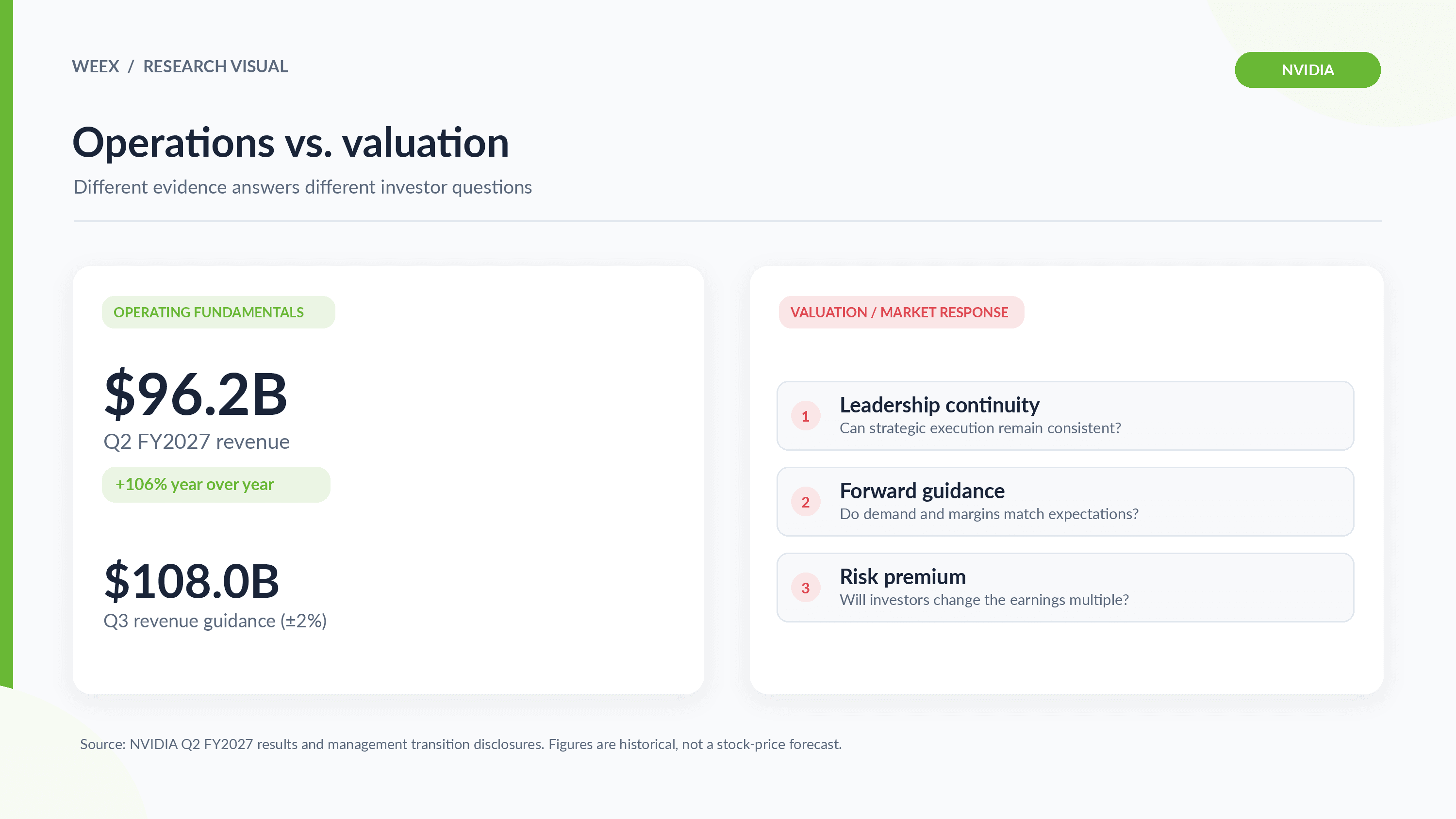
According to its August 26 fiscal second-quarter results, revenue reached $96.2 billion, up 106% year over year, while Data Center revenue reached $89.0 billion, up 117%.
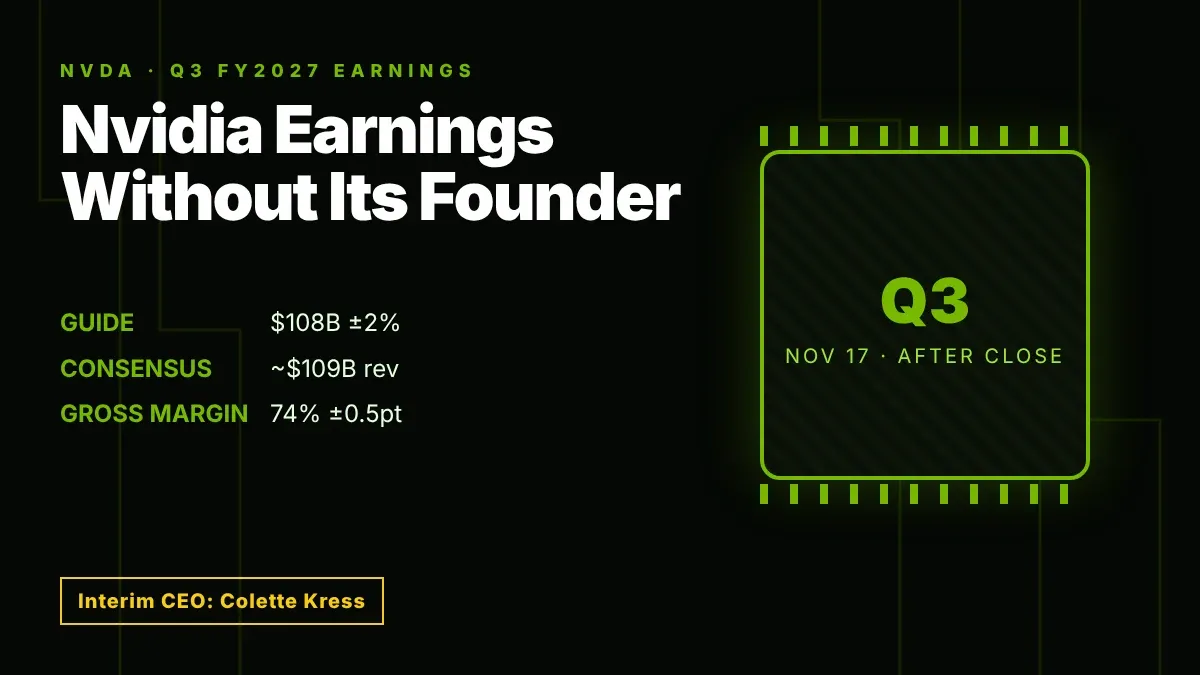
The company also provided third-quarter revenue guidance of approximately $108.0 billion, plus or minus 2%.
NVIDIA Fiscal Q2 2027 Financial Snapshot
| Metric | Reported Value | Comparison |
|---|---|---|
| Total Revenue | $96.2 billion | +106% YoY |
| Data Center Revenue | $89.0 billion | +117% YoY |
| GAAP Gross Margin | 75.0% | 72.4% a year earlier |
| GAAP Operating Income | $63.7 billion | +124% YoY |
| GAAP Diluted EPS | $2.46 | +128% YoY |
| Q3 Revenue Guidance | $108.0 billion ±2% | Company outlook |
| Next Earnings Report | November 17, 2026 | Scheduled |
Source: NVIDIA Fiscal Q2 2027 Financial Results, August 26, 2026.
These figures provide important context for the CEO transition. NVIDIA's existing business was growing rapidly before the resignation, and the announcement alone does not demonstrate that customer demand, product shipments, or reported revenue have changed.
Yet strong historical results do not remove transition risk. Investors must evaluate whether financial expectations are still achievable under the new leadership structure.
A change in executive leadership can affect a company's valuation even before its financial statements change, particularly when expectations already assume sustained growth.
Why Could Jensen Huang's Resignation Pressure NVDA Stock?
NVIDIA's share price reflects expectations of future earnings and cash flows, not simply the revenue it has already reported.
When a major leadership change occurs unexpectedly, investors may demand a greater margin of safety until they have more information about the company's strategy and management stability.
That process can lower the valuation multiple assigned to future earnings, even without an immediate revision to revenue forecasts.
Leadership Risk vs. Fundamental Business Risk
| Market Concern | What It Means | Evidence to Watch |
|---|---|---|
| Succession uncertainty | Permanent leadership remains unresolved | CEO search announcements |
| Strategy continuity | Potential changes to priorities | Product roadmap updates |
| Financial execution | Risk to expected revenue and profitability | November 17 earnings |
| Regulatory exposure | Possible legal or compliance implications | Verified official disclosures |
| Valuation uncertainty | Investors reassess future earnings risk | Earnings estimates and valuation multiples |
A hypothetical example illustrates the difference between earnings and valuation effects.
Suppose investors value a company at 30 times expected earnings. If its earnings forecast remains unchanged but the valuation multiple falls to 27 times, the implied valuation would decline 10%, before considering any other changes.
This is a mathematical illustration, not a prediction of NVIDIA's share price.
It demonstrates why a company can report strong financial results while its stock comes under pressure following an unexpected governance event.
Does NVIDIA's CEO Resignation Change Its AI Chip Demand?
Not automatically.
Demand for NVIDIA's AI infrastructure depends on spending by cloud providers, enterprises, AI developers, and other customers. Those economic drivers do not necessarily disappear when an executive resigns.
However, leadership decisions can influence how a company responds to supply constraints, international regulations, product competition, and manufacturing partnerships.
A more reliable assessment will come from updated customer demand indicators, revenue guidance, product delivery schedules, and management commentary.
The resignation is therefore a significant governance event, but it is not direct evidence that AI computing demand has collapsed.
Why Is NVIDIA's November 17 Earnings Report Especially Important?
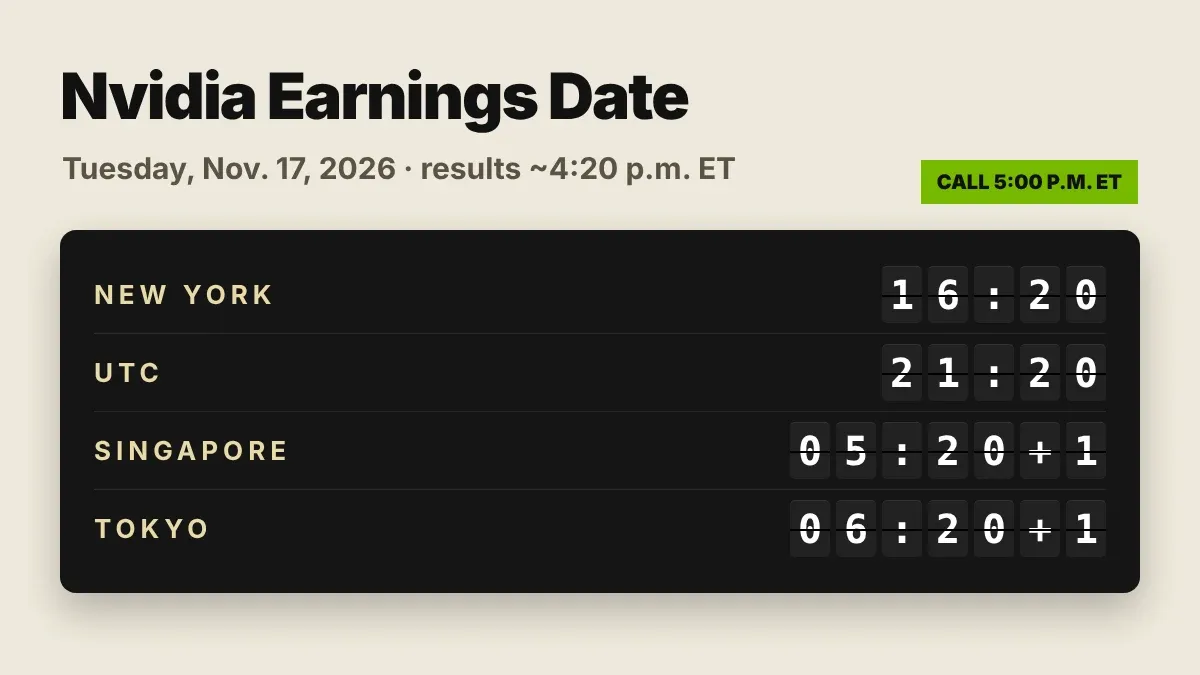
NVIDIA is scheduled to publish fiscal third-quarter 2027 results on November 17, creating a near-term opportunity for investors to compare operational performance with the disruption surrounding the leadership transition.
The report will be important for several reasons.
First, revenue and gross margin results will show how the business performed during the reporting period. Second, forward guidance may reveal whether management sees changes in customer demand, supply capacity, or profitability. Third, the earnings discussion may provide additional information about leadership responsibilities and strategic continuity.
Investors should avoid assuming that results reported on November 17 were caused by a resignation announced only days earlier. Most of the quarter's business activity occurred before the transition.
Instead, the most useful distinction will be between historical operating results and new forward-looking information.
A strong earnings report could provide evidence of operational resilience, but it would not automatically resolve governance uncertainty. Conversely, disappointing financial results would require separate analysis rather than being attributed entirely to the CEO change.
NVIDIA Stock vs. NVDA Stock Tokens and Perpetual Futures
Investors following NVIDIA through traditional equity markets and cryptocurrency exchanges may see different quotations for products referencing NVDA.
Nasdaq-listed NVIDIA common shares represent direct corporate ownership. WEEX NVDA stock-related tokens are synthetic price-tracking products, while NVDA perpetual futures provide derivatives exposure.
These products do not confer identical rights or follow identical trading mechanics.
| Feature | Nasdaq NVDA Shares | WEEX NVDA Stock Token | WEEX NVDA Perpetual |
|---|---|---|---|
| Product Type | Corporate equity | Synthetic stock-linked token | Derivatives contract |
| Owns NVIDIA Shares | Yes | No | No |
| Shareholder Voting Rights | Generally yes | No | No |
| Leverage | Brokerage-dependent | Product-dependent | May be available |
| Market Hours | U.S. equity-market schedule | WEEX stock-token schedule | WEEX contract schedule |
| Main Risks | Equity price volatility | Price tracking, spreads, liquidity | Funding, leverage, liquidation |
Source: WEEX Guide to Trading NVIDIA Stock Tokens.
A sudden leadership headline can affect prices across these markets, but the magnitude and timing of movements may differ.
WEEX perpetual futures can remain active outside ordinary U.S. stock-market hours, while a stock-related reference quotation may be unchanged because the underlying market is closed.
Therefore, a futures price movement cannot automatically be reported as an identical Nasdaq share-price movement.
How to View and Trade NVIDIA (NVDA) on WEEX
Users interested in monitoring NVIDIA-related price movements can access stock-linked products and perpetual futures on WEEX, subject to account eligibility and current product availability.
How to Access NVDA Stock-Related Trading
Open the WEEX NVDA/USDT Stock Trading page.
The market allows eligible users to review NVIDIA-linked token information and available trading conditions. Before submitting an order, check the product's current market status, order-book liquidity, spread, and transaction fees.
WEEX stock tokens track a referenced equity's price performance but do not grant ownership of the underlying shares, voting rights, or shareholder dividends.
How to Access NVDA Perpetual Futures
Experienced derivatives traders can review the WEEX NVDA/USDT Perpetual Futures page.
Perpetual futures involve margin, funding payments, possible leverage, and liquidation risk. Those features make them fundamentally different from buying ordinary NVIDIA stock.
Before placing an order, users should verify current trading availability, leverage, margin requirements, and contract specifications. Special market conditions may also lead to trading restrictions or circuit-breaker measures.
For broader information, see How to Trade U.S. Stocks with USDT on WEEX.
Conclusion
Jensen Huang's resignation marks a significant leadership transition for NVIDIA, a company closely associated with its founder for more than three decades. The appointment of Colette Kress as interim CEO establishes an immediate management structure, but the identity of NVIDIA's permanent successor remains unresolved.
The latest reported financial data show a large and rapidly growing AI infrastructure business. Those fundamentals provide context for the transition without eliminating the possibility of valuation pressure or strategic uncertainty.
For NVDA investors, the most informative next developments will be NVIDIA's November 17 earnings report, any changes to financial guidance, the permanent CEO search, and verified updates concerning the company's governance.
The leadership change is confirmed. Its long-term financial consequences are not yet measurable.
FAQ
1. Did Jensen Huang resign as NVIDIA CEO in November 2026?
Yes. NVIDIA confirmed on November 12, 2026, that Jensen Huang had resigned as President, CEO, and a member of its board, effective November 11. The resignation was disclosed in the company's regulatory filing and accompanying announcement.
2. Who replaced Jensen Huang as NVIDIA CEO?
NVIDIA appointed Colette Kress, its longtime Chief Financial Officer, as interim CEO. She will continue serving as CFO while the board searches for a permanent chief executive. Harvey Jones was appointed Chairman of the Board.
3. Why is NVDA stock affected by Jensen Huang's resignation?
Unexpected leadership changes can influence investor confidence, earnings expectations, and valuation multiples. However, stock-price movements may also reflect broader market conditions and other company-specific news. The resignation itself does not establish that NVIDIA's underlying AI chip demand has declined.
4. When is NVIDIA's next earnings announcement?
NVIDIA is scheduled to report its third-quarter fiscal 2027 results on November 17, 2026. Investors will be watching revenue, profitability, financial guidance, and management commentary for information about operating performance and strategic continuity.
5. Can users trade NVDA-related products on WEEX?
WEEX provides NVDA stock-linked token and perpetual futures trading interfaces for eligible users. The stock token is a synthetic price-tracking product rather than an ordinary NVIDIA share, while perpetual futures involve additional leverage, funding, and liquidation risks. Availability depends on current platform rules.
This content is provided for general informational purposes only and doesn't constitute financial, investment, legal, or tax advice. Any events, rewards, online promotions, or related information mentioned herein should not be considered a recommendation, solicitation, or invitation to purchase, sell, trade, or otherwise deal in any crypto assets. Crypto assets are highly volatile and may result in loss. The availability of WEEX services, products, and related events may vary by region. You are responsible for ensuring that your participation is in accordance with applicable local laws and regulations.
You may also like
Nvidia Earnings Date: Nov. 17, 2026 After the Bell, in Every Zone
Nvidia Earnings Preview: Q3 Results Land Days After Huang's Exit
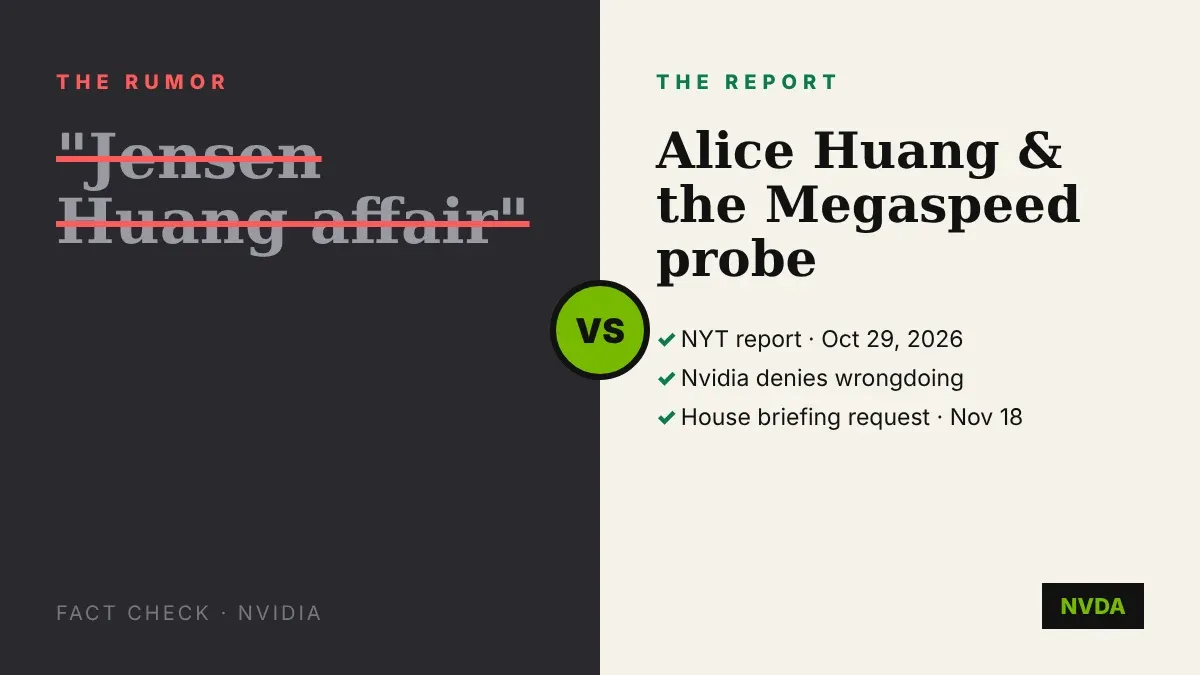
Jensen Huang Affair Rumors: What the Alice Huang Report Says
Nvidia Stock This Week: Why NVDA Fell Then Bounced and What AI Funding Worries Mean for Chip Stocks

Nvidia Stock Falls After Microsoft's Maia 300: Is Custom Silicon a Real Threat to NVDA?
NVDA Stock Sits Near Its High While Rivals Are Down 18-32%: What Explains the Gap

What Is WEEX Stock Spot Trading? A Beginner's Guide to US Stock Trading with USDT

AMD vs Nvidia After Q2 Earnings: Which Stock Is the Better Buy?

Are Bitcoin Lightning Wallets Safe? 5 Security Warnings Since August

How to Buy ANT Stock on Day One: What Is Confirmed

Anthropic IPO: ANT Date, Price Range and Valuation

Jensen Huang Comeback Reports: Petition, War Room and Nvidia’s Response

Powell Speech Bitcoin: Why Warsh, Not Powell, Moves BTC in 2026
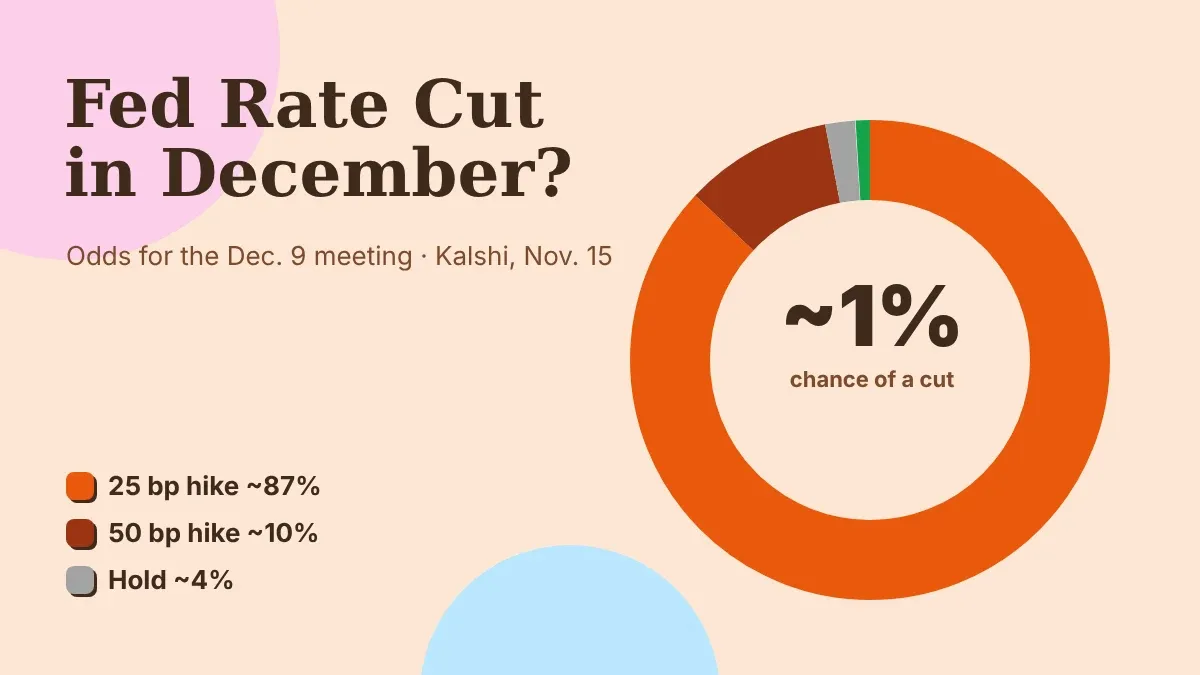
Fed Rate Cut December 2026? Why Markets Now Price a Hike Instead
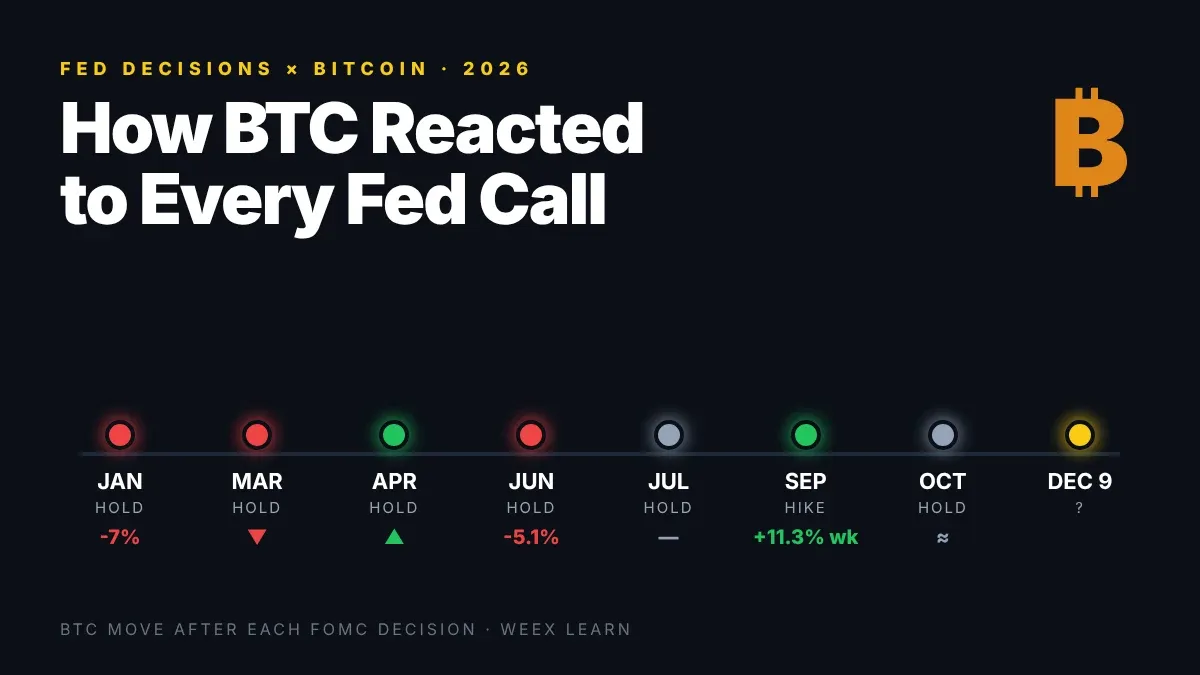
Fed Rate Decision Bitcoin: How BTC Reacted to Every 2026 Call
Nebius Cuts 2026 Revenue Outlook: Are Data Center Delays a Threat to NBIS?

BTC Staking in a Crash: What It Protects and What It Does Not

WXT Burn Q3 2026: WEEX to Burn 65,228,631 WXT on November 16

ACKET Token Surges 1,000% After Jensen Huang Resigns: What Is Confirmed

Why Did Nebius Stock Crash Despite 571% Revenue Growth? NBIS Q3 Earnings Explained

Bitcoin Falls Toward $70K: ETF Outflows, Liquidations and What Happens Next
Cisco Q1 FY2027 Earnings: $18.5B Revenue, $9B AI Outlook and CSCO Stock Reaction
December FOMC Meeting 2026: Dec. 8-9 Rate Hike, 25 or 50 Bps?
CPI Release Date: Next Report Dec. 10, 2026 at 8:30 a.m. ET
November CPI Report: Dec. 10 Release Lands After the Fed Decides
Midterm Election Results Crypto: Who Now Controls Crypto Policy

Midterm Elections Bitcoin Price: What 2014, 2018 and 2022 Show

Is Staking Crypto Worth It? What You Earn on WEEX Staking

MSCI Removes Strategy (MSTR): Will Index Selling Pressure Bitcoin?
DTCC Brings Tokenized Securities to Solana: Will SOL Demand Rise in 2027?
Nvidia Earnings Date: Nov. 17, 2026 After the Bell, in Every Zone
Nvidia Earnings Preview: Q3 Results Land Days After Huang's Exit
Jensen Huang Affair Rumors: What the Alice Huang Report Says
Nvidia Stock This Week: Why NVDA Fell Then Bounced and What AI Funding Worries Mean for Chip Stocks
Nvidia Stock Falls After Microsoft's Maia 300: Is Custom Silicon a Real Threat to NVDA?
NVDA Stock Sits Near Its High While Rivals Are Down 18-32%: What Explains the Gap
Contents
Popular coins
Latest articles


