
Nebius Cuts 2026 Revenue Outlook: Are Data Center Delays a Threat to NBIS?

 Prefer us on Google

Nebius Group (NASDAQ: NBIS) reported third-quarter 2026 revenue of $980.8 million, up 571% year over year, but expects full-year revenue near the lower end of its previous $3.0 billion–$3.4 billion forecast range after delays in deploying AI data-center capacity. The revision to Nebius 2026 revenue guidance has raised concerns about NBIS stock despite strong customer demand, as the company also increased its capital expenditure outlook to approximately $27 billion for 2026 and $40 billion–$45 billion for 2027. The central question is whether these delays represent a temporary revenue-recognition issue or a deeper infrastructure execution risk. This article examines the revised guidance, data-center deployment challenges, Q3 financial results, financing pressures, and the implications for NBIS investors.
The change in Nebius 2026 revenue guidance primarily reflects the postponement of certain third-party computing deployments into the first half of 2027. Nebius stated that the affected customer contracts remain intact, suggesting that the immediate problem concerns when computing services can be delivered rather than confirmed cancellations or a broad decline in AI demand. However, the delayed revenue timetable has become more significant as the company commits substantial additional capital to its expansion.
For investors assessing Nebius 2026 revenue guidance, the distinction between contracted demand and operational capacity is critical. Nebius reported more than $12 billion in new customer contract value signed since the beginning of the third quarter and projects $12 billion–$13 billion in revenue for 2027. Whether the company can meet these expectations will depend on completing data-center projects, securing financing, recognizing contracted revenue, and progressing toward its profitability targets.
Key Takeaways
- Revenue growth vs. weaker guidance: Q3 revenue increased 571% to $980.8 million, but Nebius now expects 2026 revenue near the lower end of its previous $3.0 billion–$3.4 billion forecast.
- Data-center delays: Some computing capacity will become operational in 2027 rather than 2026, although Nebius says the associated customer contracts remain in place.
- Higher capital requirements: Planned spending has increased to approximately $27 billion in 2026 and $40 billion–$45 billion in 2027, making infrastructure execution and financing central to the NBIS outlook.
Why Did Nebius Lower Its 2026 Revenue Guidance?
The guidance revision primarily reflects delays in bringing additional computing capacity online. In its November 12 shareholder letter, Nebius explained that certain third-party facilities originally scheduled to contribute revenue during 2026 would instead become operational during the first half of 2027.
For an AI infrastructure provider, signing a customer contract and delivering the contracted computing services are separate milestones. Revenue is recognized according to the relevant performance obligations, meaning that hardware, electricity, cooling, networking, and other infrastructure must be ready before the company can fully deliver many of its services.
Nebius also postponed its annualized revenue run-rate milestone from December 2026 to February 2027. Although management continues to report substantial customer demand, the revised timetable means that some anticipated revenue will arrive later than investors previously expected.
Nebius 2026 Guidance: What Changed?
| Indicator | Previous Outlook | November 12 Update |
|---|---|---|
| Full-Year Revenue | $3.0B–$3.4B | Expected near the low end |
| Adjusted EBITDA Margin | Approximately 40% | Unchanged |
| Capital Expenditures | $20B–$25B | Approximately $27B |
| Annualized Revenue Run Rate | $7B–$9B by December | More than $7B expected in February 2027 |
| Third-Party Capacity | Selected deployments expected in 2026 | Some moved to H1 2027 |
| Year-End Contracted Power | 5 GW | Target unchanged |
Source: Nebius Q3 2026 Shareholder Letter, November 12, 2026
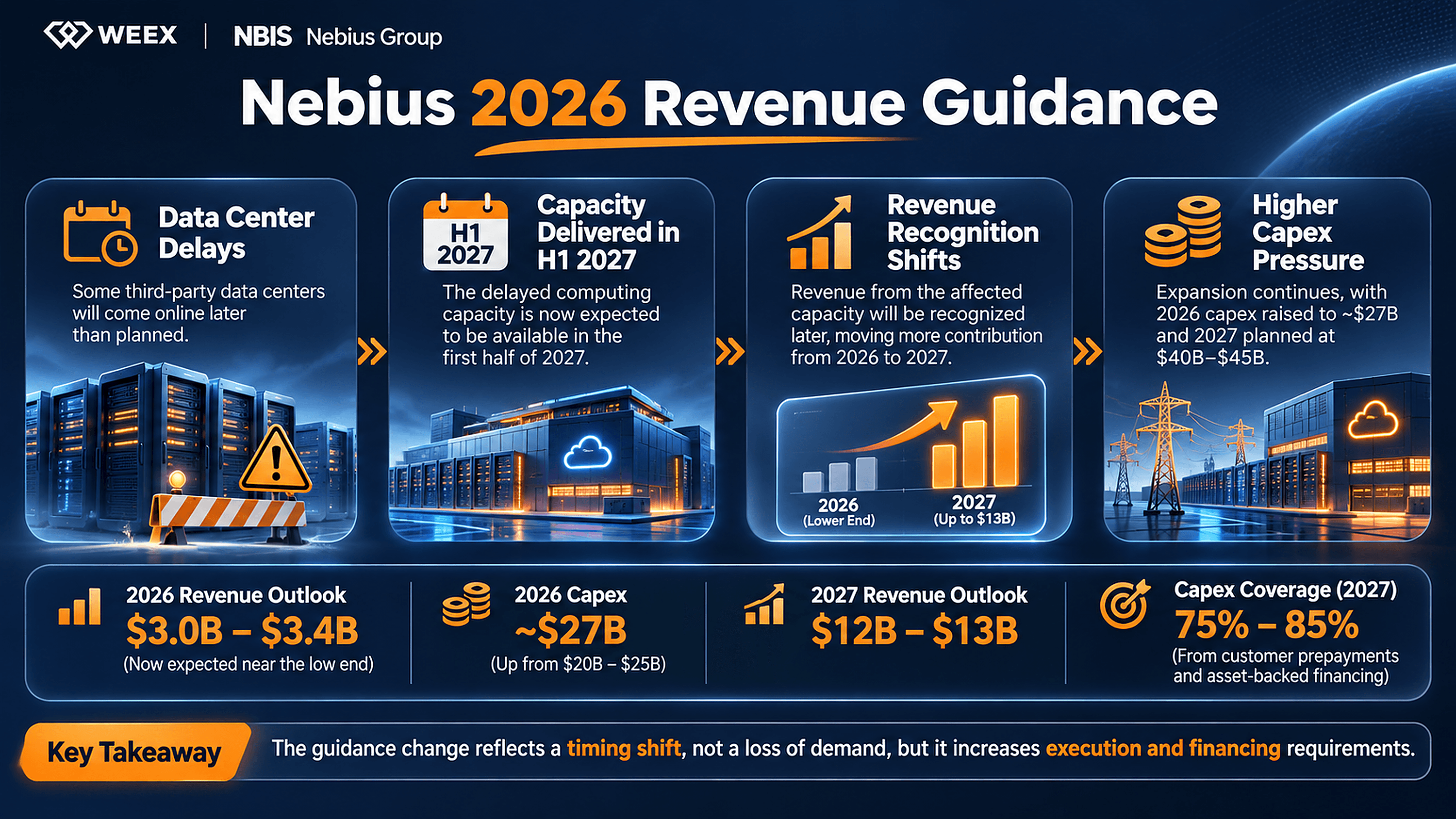
The table highlights two simultaneous developments: some revenue-generating capacity is arriving later, while the investment required to expand Nebius's infrastructure is increasing. These changes do not establish a decline in demand, but they make execution timing and financing conditions more important to the company's financial outlook.
What Caused the Delay at Nebius's New Jersey Data Center?
Nebius's New Jersey project illustrates the operational challenges involved in rapidly expanding AI cloud infrastructure. The facility includes computing capacity associated with a Microsoft agreement, but its deployment timetable has been affected by a transition from temporary power generation to permanent infrastructure using Bloom Energy fuel cells.
According to the company, DataOne began retiring some temporary generation equipment during the third quarter as part of that transition. Nebius now expects to deliver more than half of its Microsoft-contracted capacity by the end of 2026, with the remaining portions scheduled for the second quarter of 2027.
The distinction between installed hardware and operational computing capacity matters because high-performance AI systems require substantial electricity and cooling. A data center cannot generate its full intended service revenue simply because GPUs have been ordered or customers have signed contracts. The physical infrastructure must be capable of reliably supporting the computing workloads.
Nebius has indicated that Microsoft remains involved in the deployment planning process and that the relevant contractual commitments have not been canceled. Nevertheless, shifting part of the deployment into 2027 affects the expected timing of recognized revenue and increases the importance of meeting the revised schedule.
Does the Guidance Cut Mean AI Cloud Demand Is Slowing?
The current evidence does not establish that demand for Nebius's AI cloud services has collapsed. Management reported more than $12 billion in new customer contract value signed since the beginning of the third quarter, suggesting continuing commercial interest in its computing infrastructure.
However, new contract value is not equivalent to revenue already earned. Large AI infrastructure agreements may cover multiple years, while associated revenue depends on when capacity becomes operational and when services are delivered under the contract.
AI Infrastructure Demand vs. Revenue Recognition
| Indicator | What It Measures | What It Does Not Confirm |
|---|---|---|
| Customer Contract Value | Future commercial commitments | Immediate recognized revenue |
| GPU Orders | Planned computing investment | Operational capacity |
| Contracted Power | Planned or secured power arrangements | Completed facilities |
| Active Computing Capacity | Resources available to serve customers | Full utilization |
| Recognized Revenue | Services delivered under accounting rules | Positive free cash flow |
| Customer Prepayments | Cash received ahead of some obligations | Completed service delivery |
This distinction explains how Nebius can simultaneously report rapid growth, major new customer agreements, and a weaker near-term revenue timetable. Investors therefore need to monitor both demand indicators and actual infrastructure delivery.
The broader question is whether Nebius can consistently convert contractual commitments into functioning capacity, recognized revenue, and ultimately sustainable cash generation.
-- Price
What Did Nebius Report in Q3 2026?
Nebius generated $980.8 million in revenue during the third quarter, compared with $146.1 million in the same period of 2025. The increase reflects rapid growth in the company's AI infrastructure operations and the expansion of its commercial activities.
Adjusted EBITDA reached $465.8 million, compared with a $5.2 million loss a year earlier. Meanwhile, its net loss from continuing operations narrowed to $37.5 million from $119.6 million. These results show improving operating performance, although the company continued to invest substantial amounts in new computing capacity.
Nebius Q3 2026 Financial Snapshot
| Financial Metric | Q3 2025 | Q3 2026 | Change |
|---|---|---|---|
| Revenue | $146.1M | $980.8M | +571% |
| Adjusted EBITDA | -$5.2M | $465.8M | Turned positive |
| Net Loss from Continuing Operations | -$119.6M | -$37.5M | Loss narrowed approximately 69% |
| Adjusted Net Income | -$100.4M | $90.9M | Turned positive |
| Cash Used in Operating Activities | $80.6M | $273.0M | Cash outflow increased |
| Purchases of Property, Equipment and Intangible Assets | $955.5M | $7.30B | Substantial increase |
Source: Nebius Q3 2026 Financial Results. Adjusted EBITDA and adjusted net income are non-GAAP measures.
Although adjusted EBITDA improved considerably, it should not be confused with free cash flow. Nebius must finance equipment purchases, data-center construction, and other infrastructure requirements that are not reflected in adjusted EBITDA in the same way as operating expenses.
How Much of Nebius's Q3 Revenue Was Non-Recurring?
Approximately $325 million of Nebius's third-quarter revenue came from non-recurring activity related to its asset-light partnership model. Under this arrangement, partners finance selected computing capacity while Nebius supplies infrastructure architecture, AI cloud software, and related services.
The identified $325 million accounted for approximately 33.1% of reported quarterly revenue. Subtracting it leaves around $655.8 million from other reported activities, although that figure is an analytical illustration rather than an officially disclosed recurring-revenue metric.
This distinction matters because the headline growth rate includes both ongoing services and the identified non-recurring contribution. Future quarterly results will depend on the expansion of core cloud operations and the timing of new partnership revenue.
For a broader discussion of the financial results, see Why Did Nebius Stock Crash Despite 571% Revenue Growth?.
Why Is Nebius Increasing Capital Expenditures?
Nebius raised its expected 2026 capital expenditures to approximately $27 billion and introduced a 2027 spending outlook of $40 billion–$45 billion. The investment will support additional GPUs, data-center facilities, power infrastructure, and related computing equipment.
Management has also expressed a preference for owning more of its data-center infrastructure. Greater control over construction and operations could improve the company's ability to coordinate deployments, although developing owned facilities requires significant upfront capital and introduces additional project-execution risks.
Nebius 2027 Growth and Spending Outlook
| Metric | Management Outlook |
|---|---|
| Annual Revenue | $12B–$13B |
| Capital Expenditures | $40B–$45B |
| Additional Computing Capacity | More than 1 GW annually targeted |
| Pre-Tax Profitability | Breakeven targeted in Q4 2027 |
| Expected Capex Coverage | 75%–85% from customer prepayments and asset-backed financing |
Source: Nebius Q3 2026 shareholder letter.
At the midpoint of these ranges, Nebius would invest approximately $42.5 billion while generating $12.5 billion in annual revenue. This is a comparison of investment spending and projected sales, not a forecast of an accounting loss.
The economic value of this spending depends on the capacity becoming operational, customers utilizing the infrastructure, and the resulting revenue covering operating costs, depreciation, financing, and other obligations over time.
Can Customer Prepayments Reduce Nebius's Financing Risk?
Nebius expects customer prepayments and asset-backed financing secured against contracts with investment-grade customers to cover approximately 75%–85% of its planned 2027 capital expenditures. Management also reported that prepayments associated with deals signed during the third quarter covered more than 100% of their related capital expenditures.
This approach may reduce reliance on conventional borrowing or equity issuance. However, advance payments do not eliminate the obligation to deliver contracted services, and secured financing can introduce interest costs and collateral requirements.
Using the midpoint of Nebius's 2027 spending outlook illustrates the scale involved:
| Illustrative Scenario | 75% Coverage | 85% Coverage |
|---|---|---|
| Assumed Capital Expenditures | $42.5B | $42.5B |
| Prepayments and Asset-Backed Financing | $31.88B | $36.13B |
| Remaining Funding Requirement | $10.63B | $6.38B |
Source: Calculations based on published Nebius guidance. The remaining amount is illustrative and is not a company-reported financing deficit.
Nebius reported approximately $7.4 billion in cash and cash equivalents at the end of Q3. Investors should evaluate available cash together with contractual obligations, financing arrangements, future capital requirements, and the timing of customer payments.
The company may ultimately benefit from significant contracted demand, but its financing strategy depends partly on completing infrastructure projects and delivering the services associated with those contracts.
For more context, see Nebius Stock After a 34% Pop: What the Capex Math Says.
Why Did NBIS Stock Fall After the Earnings Report?
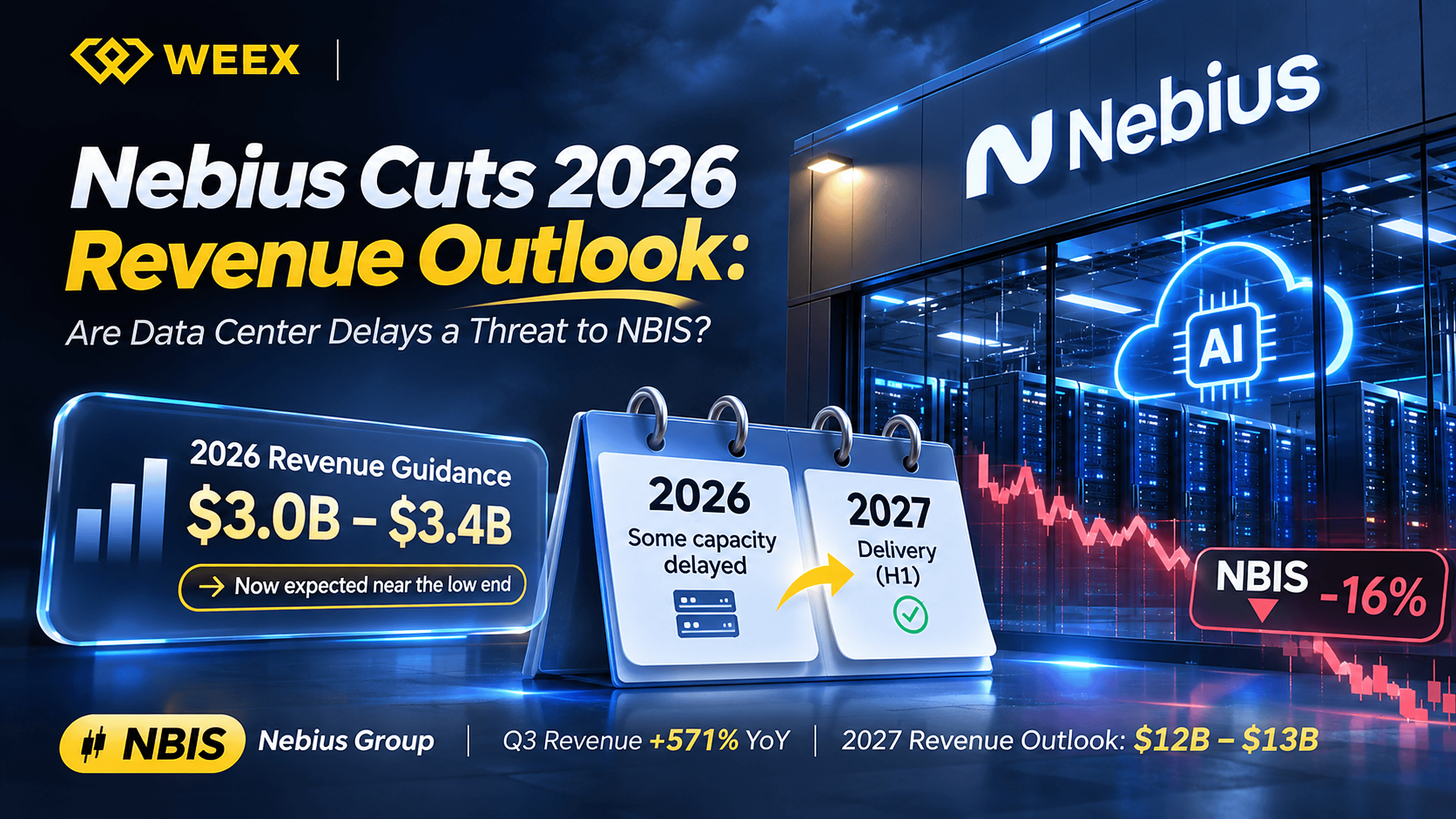
NBIS shares declined sharply following the November 12 earnings announcement, with market reporting describing a fall of approximately 16% during the U.S. session. Investors appeared to focus on the later revenue timetable, increased capital spending, and the financing demands of Nebius's expansion rather than the quarterly revenue beat alone.
Equity valuations reflect expectations about future financial results, not just the most recent quarter. When infrastructure deployment is delayed, investors may adjust the timing of expected earnings and cash flows, even if the underlying customer contracts remain intact.
NBIS Market Snapshot: November 13
| Observation | Recorded Value | Context |
|---|---|---|
| NBIS Stock-Related Reference | 130.15 USDT | Closed-market reference |
| Perpetual Futures Quote A | Approximately 126.61 USDT | Historical order-book observation |
| Perpetual Futures Quote B | Approximately 126.44 USDT | Historical order-book observation |
| Observation Time | November 13, 15:17 Beijing Time | Internal WEEX market snapshot |
Source: WEEX promotional market snapshot dated November 13, 2026. Historical figures are not live quotations.
The price difference between stock-linked products and perpetual futures should not be interpreted as an exact measurement of the underlying Nasdaq stock's decline. These instruments may have different trading hours, liquidity, pricing mechanisms, and market restrictions.
Readers can review When Can You Trade U.S. Stock Tokens? Trading Hours Explained for additional background.
What Should Investors Watch Next?
The clearest near-term indicator will be whether Nebius delivers its delayed computing capacity during the first half of 2027, especially the remaining New Jersey facilities associated with Microsoft. Meeting the revised schedule would help demonstrate that the company's guidance change primarily reflects a timing issue. Further delays could lead investors to reassess its ability to execute an increasingly complex expansion.
The second area is revenue quality. Future earnings should help establish how much growth comes from recurring AI cloud services and how much depends on non-recurring partnership arrangements. Investors should examine revenue recognition, utilization, operating profitability, and cash generation together.
Finally, Nebius's financing terms and progress toward its Q4 2027 pre-tax breakeven target will remain important. Strong contracted demand supports the potential for growth, but sustained financial performance depends on converting that demand into operational infrastructure and profitable services.
How to View and Trade Nebius (NBIS) on WEEX
WEEX provides NBIS-related stock-linked products and perpetual futures for eligible users. These instruments differ from directly holding Nasdaq-listed Nebius common shares, and users should understand the relevant product structure before trading.
Step 1: Register on WEEX and Prepare USDT
Visit the WEEX official website and create an account or log in. Complete any required identity verification and prepare a USDT balance using a supported deposit method. Confirm that the relevant stock-related trading products are available to your account and region.
Step 2: Open the NBIS Trading Page
Navigate to the NBIS/USDT Stock Trading page and review the current product status, displayed quotation, liquidity, supported order types, and fees. Stock-linked products provide economic exposure according to their own terms and do not necessarily convey the rights associated with ordinary Nasdaq shares.
Step 3: Place an Order and Monitor Your Position
If trading is available, select a supported order type, enter your desired amount, and review the price and transaction costs before confirming. After execution, monitor your position through your WEEX account.
Experienced derivatives users may also review NBIS/USDT Perpetual Futures, subject to current availability. Perpetual futures involve margin requirements, funding payments, leverage, liquidation risks, and possible temporary trading restrictions.
Conclusion
Nebius's revised 2026 revenue guidance demonstrates the challenges of turning rapid AI infrastructure demand into delivered computing services. Although third-quarter revenue rose 571%, some capacity is now expected to come online in 2027, delaying the associated revenue contribution.
The company continues to report substantial customer commitments, but higher capital expenditures increase the importance of financing, deployment schedules, and operating economics. For investors following NBIS, the most useful future evidence will come from completed facilities, recognized revenue, cash generation, and progress toward management's 2027 financial targets.
FAQ
1. Why did Nebius lower its 2026 revenue guidance?
Some third-party data-center capacity initially expected to become operational in 2026 has been delayed until the first half of 2027. Nebius said the associated customer contracts remain in place, but the revised deployment schedule shifts the timing of expected revenue.
2. Does the revised guidance mean AI demand is slowing?
Not necessarily. Nebius reported more than $12 billion in new contract value signed since the beginning of Q3. The guidance change concerns infrastructure delivery timing, although future results will depend on converting those contracts into operational capacity and recognized revenue.
3. What were Nebius's Q3 2026 financial results?
Nebius reported revenue of $980.8 million, up 571% year over year, and adjusted EBITDA of $465.8 million. Its net loss from continuing operations narrowed to $37.5 million. Approximately $325 million of quarterly revenue came from identified non-recurring asset-light partnership activity.
4. What is Nebius's 2027 revenue outlook?
Management expects $12 billion–$13 billion in 2027 revenue and plans $40 billion–$45 billion in capital expenditures. It also targets pre-tax breakeven in the fourth quarter, subject to delivery schedules and financing conditions.
5. Can I trade NBIS-related products on WEEX?
WEEX provides NBIS-related stock-linked and perpetual futures interfaces, subject to eligibility and trading availability. Users should understand that these products do not necessarily represent ownership of ordinary Nebius shares, while futures introduce additional leverage and liquidation risks.Nebius Cuts 2026 Revenue Outlook: Are Data Center Delays a Threat to NBIS?
Nebius Group (NASDAQ: NBIS) reported third-quarter 2026 revenue of $980.8 million, up 571% year over year, but expects full-year revenue near the lower end of its previous $3.0 billion–$3.4 billion forecast range after delays in deploying AI data-center capacity. The revision to Nebius 2026 revenue guidance has raised concerns about NBIS stock despite strong customer demand, as the company also increased its capital expenditure outlook to approximately $27 billion for 2026 and $40 billion–$45 billion for 2027. The central question is whether these delays represent a temporary revenue-recognition issue or a deeper infrastructure execution risk. This article examines the revised guidance, data-center deployment challenges, Q3 financial results, financing pressures, and the implications for NBIS investors.
The change in Nebius 2026 revenue guidance primarily reflects the postponement of certain third-party computing deployments into the first half of 2027. Nebius stated that the affected customer contracts remain intact, suggesting that the immediate problem concerns when computing services can be delivered rather than confirmed cancellations or a broad decline in AI demand. However, the delayed revenue timetable has become more significant as the company commits substantial additional capital to its expansion.
For investors assessing Nebius 2026 revenue guidance, the distinction between contracted demand and operational capacity is critical. Nebius reported more than $12 billion in new customer contract value signed since the beginning of the third quarter and projects $12 billion–$13 billion in revenue for 2027. Whether the company can meet these expectations will depend on completing data-center projects, securing financing, recognizing contracted revenue, and progressing toward its profitability targets.
Key Takeaways
- Revenue growth vs. weaker guidance: Q3 revenue increased 571% to $980.8 million, but Nebius now expects 2026 revenue near the lower end of its previous $3.0 billion–$3.4 billion forecast.
- Data-center delays: Some computing capacity will become operational in 2027 rather than 2026, although Nebius says the associated customer contracts remain in place.
- Higher capital requirements: Planned spending has increased to approximately $27 billion in 2026 and $40 billion–$45 billion in 2027, making infrastructure execution and financing central to the NBIS outlook.
Why Did Nebius Lower Its 2026 Revenue Guidance?
The guidance revision primarily reflects delays in bringing additional computing capacity online. In its November 12 shareholder letter, Nebius explained that certain third-party facilities originally scheduled to contribute revenue during 2026 would instead become operational during the first half of 2027.
For an AI infrastructure provider, signing a customer contract and delivering the contracted computing services are separate milestones. Revenue is recognized according to the relevant performance obligations, meaning that hardware, electricity, cooling, networking, and other infrastructure must be ready before the company can fully deliver many of its services.
Nebius also postponed its annualized revenue run-rate milestone from December 2026 to February 2027. Although management continues to report substantial customer demand, the revised timetable means that some anticipated revenue will arrive later than investors previously expected.
Nebius 2026 Guidance: What Changed?
| Indicator | Previous Outlook | November 12 Update |
|---|---|---|
| Full-Year Revenue | $3.0B–$3.4B | Expected near the low end |
| Adjusted EBITDA Margin | Approximately 40% | Unchanged |
| Capital Expenditures | $20B–$25B | Approximately $27B |
| Annualized Revenue Run Rate | $7B–$9B by December | More than $7B expected in February 2027 |
| Third-Party Capacity | Selected deployments expected in 2026 | Some moved to H1 2027 |
| Year-End Contracted Power | 5 GW | Target unchanged |
Source: Nebius Q3 2026 Shareholder Letter, November 12, 2026.
The table highlights two simultaneous developments: some revenue-generating capacity is arriving later, while the investment required to expand Nebius's infrastructure is increasing. These changes do not establish a decline in demand, but they make execution timing and financing conditions more important to the company's financial outlook.
[Insert Image 1: Nebius 2026 revenue guidance, annualized revenue milestone and capital expenditure comparison]
What Caused the Delay at Nebius's New Jersey Data Center?
Nebius's New Jersey project illustrates the operational challenges involved in rapidly expanding AI cloud infrastructure. The facility includes computing capacity associated with a Microsoft agreement, but its deployment timetable has been affected by a transition from temporary power generation to permanent infrastructure using Bloom Energy fuel cells.
According to the company, DataOne began retiring some temporary generation equipment during the third quarter as part of that transition. Nebius now expects to deliver more than half of its Microsoft-contracted capacity by the end of 2026, with the remaining portions scheduled for the second quarter of 2027.
The distinction between installed hardware and operational computing capacity matters because high-performance AI systems require substantial electricity and cooling. A data center cannot generate its full intended service revenue simply because GPUs have been ordered or customers have signed contracts. The physical infrastructure must be capable of reliably supporting the computing workloads.
Nebius has indicated that Microsoft remains involved in the deployment planning process and that the relevant contractual commitments have not been canceled. Nevertheless, shifting part of the deployment into 2027 affects the expected timing of recognized revenue and increases the importance of meeting the revised schedule.
Does the Guidance Cut Mean AI Cloud Demand Is Slowing?
The current evidence does not establish that demand for Nebius's AI cloud services has collapsed. Management reported more than $12 billion in new customer contract value signed since the beginning of the third quarter, suggesting continuing commercial interest in its computing infrastructure.
However, new contract value is not equivalent to revenue already earned. Large AI infrastructure agreements may cover multiple years, while associated revenue depends on when capacity becomes operational and when services are delivered under the contract.
AI Infrastructure Demand vs. Revenue Recognition
| Indicator | What It Measures | What It Does Not Confirm |
|---|---|---|
| Customer Contract Value | Future commercial commitments | Immediate recognized revenue |
| GPU Orders | Planned computing investment | Operational capacity |
| Contracted Power | Planned or secured power arrangements | Completed facilities |
| Active Computing Capacity | Resources available to serve customers | Full utilization |
| Recognized Revenue | Services delivered under accounting rules | Positive free cash flow |
| Customer Prepayments | Cash received ahead of some obligations | Completed service delivery |
This distinction explains how Nebius can simultaneously report rapid growth, major new customer agreements, and a weaker near-term revenue timetable. Investors therefore need to monitor both demand indicators and actual infrastructure delivery.
The broader question is whether Nebius can consistently convert contractual commitments into functioning capacity, recognized revenue, and ultimately sustainable cash generation.
What Did Nebius Report in Q3 2026?
Nebius generated $980.8 million in revenue during the third quarter, compared with $146.1 million in the same period of 2025. The increase reflects rapid growth in the company's AI infrastructure operations and the expansion of its commercial activities.
Adjusted EBITDA reached $465.8 million, compared with a $5.2 million loss a year earlier. Meanwhile, its net loss from continuing operations narrowed to $37.5 million from $119.6 million. These results show improving operating performance, although the company continued to invest substantial amounts in new computing capacity.
Nebius Q3 2026 Financial Snapshot
| Financial Metric | Q3 2025 | Q3 2026 | Change |
|---|---|---|---|
| Revenue | $146.1M | $980.8M | +571% |
| Adjusted EBITDA | -$5.2M | $465.8M | Turned positive |
| Net Loss from Continuing Operations | -$119.6M | -$37.5M | Loss narrowed approximately 69% |
| Adjusted Net Income | -$100.4M | $90.9M | Turned positive |
| Cash Used in Operating Activities | $80.6M | $273.0M | Cash outflow increased |
| Purchases of Property, Equipment and Intangible Assets | $955.5M | $7.30B | Substantial increase |
Source: Nebius Q3 2026 Financial Results. Adjusted EBITDA and adjusted net income are non-GAAP measures.
Although adjusted EBITDA improved considerably, it should not be confused with free cash flow. Nebius must finance equipment purchases, data-center construction, and other infrastructure requirements that are not reflected in adjusted EBITDA in the same way as operating expenses.
How Much of Nebius's Q3 Revenue Was Non-Recurring?
Approximately $325 million of Nebius's third-quarter revenue came from non-recurring activity related to its asset-light partnership model. Under this arrangement, partners finance selected computing capacity while Nebius supplies infrastructure architecture, AI cloud software, and related services.
The identified $325 million accounted for approximately 33.1% of reported quarterly revenue. Subtracting it leaves around $655.8 million from other reported activities, although that figure is an analytical illustration rather than an officially disclosed recurring-revenue metric.
This distinction matters because the headline growth rate includes both ongoing services and the identified non-recurring contribution. Future quarterly results will depend on the expansion of core cloud operations and the timing of new partnership revenue.
For a broader discussion of the financial results, see Why Did Nebius Stock Crash Despite 571% Revenue Growth?.
Why Is Nebius Increasing Capital Expenditures?
Nebius raised its expected 2026 capital expenditures to approximately $27 billion and introduced a 2027 spending outlook of $40 billion–$45 billion. The investment will support additional GPUs, data-center facilities, power infrastructure, and related computing equipment.
Management has also expressed a preference for owning more of its data-center infrastructure. Greater control over construction and operations could improve the company's ability to coordinate deployments, although developing owned facilities requires significant upfront capital and introduces additional project-execution risks.
Nebius 2027 Growth and Spending Outlook
| Metric | Management Outlook |
|---|---|
| Annual Revenue | $12B–$13B |
| Capital Expenditures | $40B–$45B |
| Additional Computing Capacity | More than 1 GW annually targeted |
| Pre-Tax Profitability | Breakeven targeted in Q4 2027 |
| Expected Capex Coverage | 75%–85% from customer prepayments and asset-backed financing |
Source: Nebius Q3 2026 shareholder letter.
At the midpoint of these ranges, Nebius would invest approximately $42.5 billion while generating $12.5 billion in annual revenue. This is a comparison of investment spending and projected sales, not a forecast of an accounting loss.
The economic value of this spending depends on the capacity becoming operational, customers utilizing the infrastructure, and the resulting revenue covering operating costs, depreciation, financing, and other obligations over time.
Can Customer Prepayments Reduce Nebius's Financing Risk?
Nebius expects customer prepayments and asset-backed financing secured against contracts with investment-grade customers to cover approximately 75%–85% of its planned 2027 capital expenditures. Management also reported that prepayments associated with deals signed during the third quarter covered more than 100% of their related capital expenditures.
This approach may reduce reliance on conventional borrowing or equity issuance. However, advance payments do not eliminate the obligation to deliver contracted services, and secured financing can introduce interest costs and collateral requirements.
Using the midpoint of Nebius's 2027 spending outlook illustrates the scale involved:
| Illustrative Scenario | 75% Coverage | 85% Coverage |
|---|---|---|
| Assumed Capital Expenditures | $42.5B | $42.5B |
| Prepayments and Asset-Backed Financing | $31.88B | $36.13B |
| Remaining Funding Requirement | $10.63B | $6.38B |
Source: Calculations based on published Nebius guidance. The remaining amount is illustrative and is not a company-reported financing deficit.
Nebius reported approximately $7.4 billion in cash and cash equivalents at the end of Q3. Investors should evaluate available cash together with contractual obligations, financing arrangements, future capital requirements, and the timing of customer payments.
The company may ultimately benefit from significant contracted demand, but its financing strategy depends partly on completing infrastructure projects and delivering the services associated with those contracts.
For more context, see Nebius Stock After a 34% Pop: What the Capex Math Says.
Why Did NBIS Stock Fall After the Earnings Report?
NBIS shares declined sharply following the November 12 earnings announcement, with market reporting describing a fall of approximately 16% during the U.S. session. Investors appeared to focus on the later revenue timetable, increased capital spending, and the financing demands of Nebius's expansion rather than the quarterly revenue beat alone.
Equity valuations reflect expectations about future financial results, not just the most recent quarter. When infrastructure deployment is delayed, investors may adjust the timing of expected earnings and cash flows, even if the underlying customer contracts remain intact.
NBIS Market Snapshot: November 13
| Observation | Recorded Value | Context |
|---|---|---|
| NBIS Stock-Related Reference | 130.15 USDT | Closed-market reference |
| Perpetual Futures Quote A | Approximately 126.61 USDT | Historical order-book observation |
| Perpetual Futures Quote B | Approximately 126.44 USDT | Historical order-book observation |
| Observation Time | November 13, 15:17 Beijing Time | Internal WEEX market snapshot |
Source: WEEX promotional market snapshot dated November 13, 2026. Historical figures are not live quotations.
The price difference between stock-linked products and perpetual futures should not be interpreted as an exact measurement of the underlying Nasdaq stock's decline. These instruments may have different trading hours, liquidity, pricing mechanisms, and market restrictions.
Readers can review When Can You Trade U.S. Stock Tokens? Trading Hours Explained for additional background.
[Insert Image 2: Nebius data-center delays, funding requirements, and their relationship to the NBIS market reaction]
What Should Investors Watch Next?
The clearest near-term indicator will be whether Nebius delivers its delayed computing capacity during the first half of 2027, especially the remaining New Jersey facilities associated with Microsoft. Meeting the revised schedule would help demonstrate that the company's guidance change primarily reflects a timing issue. Further delays could lead investors to reassess its ability to execute an increasingly complex expansion.
The second area is revenue quality. Future earnings should help establish how much growth comes from recurring AI cloud services and how much depends on non-recurring partnership arrangements. Investors should examine revenue recognition, utilization, operating profitability, and cash generation together.
Finally, Nebius's financing terms and progress toward its Q4 2027 pre-tax breakeven target will remain important. Strong contracted demand supports the potential for growth, but sustained financial performance depends on converting that demand into operational infrastructure and profitable services.
How to View and Trade Nebius (NBIS) on WEEX
WEEX provides NBIS-related stock-linked products and perpetual futures for eligible users. These instruments differ from directly holding Nasdaq-listed Nebius common shares, and users should understand the relevant product structure before trading.
Step 1: Register on WEEX and Prepare USDT
Visit the WEEX official website and create an account or log in. Complete any required identity verification and prepare a USDT balance using a supported deposit method. Confirm that the relevant stock-related trading products are available to your account and region.
Step 2: Open the NBIS Trading Page
Navigate to the NBIS/USDT Stock Trading page and review the current product status, displayed quotation, liquidity, supported order types, and fees. Stock-linked products provide economic exposure according to their own terms and do not necessarily convey the rights associated with ordinary Nasdaq shares.
Step 3: Place an Order and Monitor Your Position
If trading is available, select a supported order type, enter your desired amount, and review the price and transaction costs before confirming. After execution, monitor your position through your WEEX account.
Experienced derivatives users may also review NBIS/USDT Perpetual Futures, subject to current availability. Perpetual futures involve margin requirements, funding payments, leverage, liquidation risks, and possible temporary trading restrictions.
Conclusion
Nebius's revised 2026 revenue guidance demonstrates the challenges of turning rapid AI infrastructure demand into delivered computing services. Although third-quarter revenue rose 571%, some capacity is now expected to come online in 2027, delaying the associated revenue contribution.
The company continues to report substantial customer commitments, but higher capital expenditures increase the importance of financing, deployment schedules, and operating economics. For investors following NBIS, the most useful future evidence will come from completed facilities, recognized revenue, cash generation, and progress toward management's 2027 financial targets.
FAQ
1. Why did Nebius lower its 2026 revenue guidance?
Some third-party data-center capacity initially expected to become operational in 2026 has been delayed until the first half of 2027. Nebius said the associated customer contracts remain in place, but the revised deployment schedule shifts the timing of expected revenue.
2. Does the revised guidance mean AI demand is slowing?
Not necessarily. Nebius reported more than $12 billion in new contract value signed since the beginning of Q3. The guidance change concerns infrastructure delivery timing, although future results will depend on converting those contracts into operational capacity and recognized revenue.
3. What were Nebius's Q3 2026 financial results?
Nebius reported revenue of $980.8 million, up 571% year over year, and adjusted EBITDA of $465.8 million. Its net loss from continuing operations narrowed to $37.5 million. Approximately $325 million of quarterly revenue came from identified non-recurring asset-light partnership activity.
4. What is Nebius's 2027 revenue outlook?
Management expects $12 billion–$13 billion in 2027 revenue and plans $40 billion–$45 billion in capital expenditures. It also targets pre-tax breakeven in the fourth quarter, subject to delivery schedules and financing conditions.
5. Can I trade NBIS-related products on WEEX?
WEEX provides NBIS-related stock-linked and perpetual futures interfaces, subject to eligibility and trading availability. Users should understand that these products do not necessarily represent ownership of ordinary Nebius shares, while futures introduce additional leverage and liquidation risks.Nebius Cuts 2026 Revenue Outlook: Are Data Center Delays a Threat to NBIS?
Nebius Group (NASDAQ: NBIS) reported third-quarter 2026 revenue of $980.8 million, up 571% year over year, but expects full-year revenue near the lower end of its previous $3.0 billion–$3.4 billion forecast range after delays in deploying AI data-center capacity. The revision to Nebius 2026 revenue guidance has raised concerns about NBIS stock despite strong customer demand, as the company also increased its capital expenditure outlook to approximately $27 billion for 2026 and $40 billion–$45 billion for 2027. The central question is whether these delays represent a temporary revenue-recognition issue or a deeper infrastructure execution risk. This article examines the revised guidance, data-center deployment challenges, Q3 financial results, financing pressures, and the implications for NBIS investors.
The change in Nebius 2026 revenue guidance primarily reflects the postponement of certain third-party computing deployments into the first half of 2027. Nebius stated that the affected customer contracts remain intact, suggesting that the immediate problem concerns when computing services can be delivered rather than confirmed cancellations or a broad decline in AI demand. However, the delayed revenue timetable has become more significant as the company commits substantial additional capital to its expansion.
For investors assessing Nebius 2026 revenue guidance, the distinction between contracted demand and operational capacity is critical. Nebius reported more than $12 billion in new customer contract value signed since the beginning of the third quarter and projects $12 billion–$13 billion in revenue for 2027. Whether the company can meet these expectations will depend on completing data-center projects, securing financing, recognizing contracted revenue, and progressing toward its profitability targets.
Key Takeaways
- Revenue growth vs. weaker guidance: Q3 revenue increased 571% to $980.8 million, but Nebius now expects 2026 revenue near the lower end of its previous $3.0 billion–$3.4 billion forecast.
- Data-center delays: Some computing capacity will become operational in 2027 rather than 2026, although Nebius says the associated customer contracts remain in place.
- Higher capital requirements: Planned spending has increased to approximately $27 billion in 2026 and $40 billion–$45 billion in 2027, making infrastructure execution and financing central to the NBIS outlook.
Why Did Nebius Lower Its 2026 Revenue Guidance?
The guidance revision primarily reflects delays in bringing additional computing capacity online. In its November 12 shareholder letter, Nebius explained that certain third-party facilities originally scheduled to contribute revenue during 2026 would instead become operational during the first half of 2027.
For an AI infrastructure provider, signing a customer contract and delivering the contracted computing services are separate milestones. Revenue is recognized according to the relevant performance obligations, meaning that hardware, electricity, cooling, networking, and other infrastructure must be ready before the company can fully deliver many of its services.
Nebius also postponed its annualized revenue run-rate milestone from December 2026 to February 2027. Although management continues to report substantial customer demand, the revised timetable means that some anticipated revenue will arrive later than investors previously expected.
Nebius 2026 Guidance: What Changed?
| Indicator | Previous Outlook | November 12 Update |
|---|---|---|
| Full-Year Revenue | $3.0B–$3.4B | Expected near the low end |
| Adjusted EBITDA Margin | Approximately 40% | Unchanged |
| Capital Expenditures | $20B–$25B | Approximately $27B |
| Annualized Revenue Run Rate | $7B–$9B by December | More than $7B expected in February 2027 |
| Third-Party Capacity | Selected deployments expected in 2026 | Some moved to H1 2027 |
| Year-End Contracted Power | 5 GW | Target unchanged |
Source: Nebius Q3 2026 Shareholder Letter, November 12, 2026.
The table highlights two simultaneous developments: some revenue-generating capacity is arriving later, while the investment required to expand Nebius's infrastructure is increasing. These changes do not establish a decline in demand, but they make execution timing and financing conditions more important to the company's financial outlook.
[Insert Image 1: Nebius 2026 revenue guidance, annualized revenue milestone and capital expenditure comparison]
What Caused the Delay at Nebius's New Jersey Data Center?
Nebius's New Jersey project illustrates the operational challenges involved in rapidly expanding AI cloud infrastructure. The facility includes computing capacity associated with a Microsoft agreement, but its deployment timetable has been affected by a transition from temporary power generation to permanent infrastructure using Bloom Energy fuel cells.
According to the company, DataOne began retiring some temporary generation equipment during the third quarter as part of that transition. Nebius now expects to deliver more than half of its Microsoft-contracted capacity by the end of 2026, with the remaining portions scheduled for the second quarter of 2027.
The distinction between installed hardware and operational computing capacity matters because high-performance AI systems require substantial electricity and cooling. A data center cannot generate its full intended service revenue simply because GPUs have been ordered or customers have signed contracts. The physical infrastructure must be capable of reliably supporting the computing workloads.
Nebius has indicated that Microsoft remains involved in the deployment planning process and that the relevant contractual commitments have not been canceled. Nevertheless, shifting part of the deployment into 2027 affects the expected timing of recognized revenue and increases the importance of meeting the revised schedule.
Does the Guidance Cut Mean AI Cloud Demand Is Slowing?
The current evidence does not establish that demand for Nebius's AI cloud services has collapsed. Management reported more than $12 billion in new customer contract value signed since the beginning of the third quarter, suggesting continuing commercial interest in its computing infrastructure.
However, new contract value is not equivalent to revenue already earned. Large AI infrastructure agreements may cover multiple years, while associated revenue depends on when capacity becomes operational and when services are delivered under the contract.
AI Infrastructure Demand vs. Revenue Recognition
| Indicator | What It Measures | What It Does Not Confirm |
|---|---|---|
| Customer Contract Value | Future commercial commitments | Immediate recognized revenue |
| GPU Orders | Planned computing investment | Operational capacity |
| Contracted Power | Planned or secured power arrangements | Completed facilities |
| Active Computing Capacity | Resources available to serve customers | Full utilization |
| Recognized Revenue | Services delivered under accounting rules | Positive free cash flow |
| Customer Prepayments | Cash received ahead of some obligations | Completed service delivery |
This distinction explains how Nebius can simultaneously report rapid growth, major new customer agreements, and a weaker near-term revenue timetable. Investors therefore need to monitor both demand indicators and actual infrastructure delivery.
The broader question is whether Nebius can consistently convert contractual commitments into functioning capacity, recognized revenue, and ultimately sustainable cash generation.
What Did Nebius Report in Q3 2026?
Nebius generated $980.8 million in revenue during the third quarter, compared with $146.1 million in the same period of 2025. The increase reflects rapid growth in the company's AI infrastructure operations and the expansion of its commercial activities.
Adjusted EBITDA reached $465.8 million, compared with a $5.2 million loss a year earlier. Meanwhile, its net loss from continuing operations narrowed to $37.5 million from $119.6 million. These results show improving operating performance, although the company continued to invest substantial amounts in new computing capacity.
Nebius Q3 2026 Financial Snapshot
| Financial Metric | Q3 2025 | Q3 2026 | Change |
|---|---|---|---|
| Revenue | $146.1M | $980.8M | +571% |
| Adjusted EBITDA | -$5.2M | $465.8M | Turned positive |
| Net Loss from Continuing Operations | -$119.6M | -$37.5M | Loss narrowed approximately 69% |
| Adjusted Net Income | -$100.4M | $90.9M | Turned positive |
| Cash Used in Operating Activities | $80.6M | $273.0M | Cash outflow increased |
| Purchases of Property, Equipment and Intangible Assets | $955.5M | $7.30B | Substantial increase |
Source: Nebius Q3 2026 Financial Results. Adjusted EBITDA and adjusted net income are non-GAAP measures.
Although adjusted EBITDA improved considerably, it should not be confused with free cash flow. Nebius must finance equipment purchases, data-center construction, and other infrastructure requirements that are not reflected in adjusted EBITDA in the same way as operating expenses.
How Much of Nebius's Q3 Revenue Was Non-Recurring?
Approximately $325 million of Nebius's third-quarter revenue came from non-recurring activity related to its asset-light partnership model. Under this arrangement, partners finance selected computing capacity while Nebius supplies infrastructure architecture, AI cloud software, and related services.
The identified $325 million accounted for approximately 33.1% of reported quarterly revenue. Subtracting it leaves around $655.8 million from other reported activities, although that figure is an analytical illustration rather than an officially disclosed recurring-revenue metric.
This distinction matters because the headline growth rate includes both ongoing services and the identified non-recurring contribution. Future quarterly results will depend on the expansion of core cloud operations and the timing of new partnership revenue.
For a broader discussion of the financial results, see Why Did Nebius Stock Crash Despite 571% Revenue Growth?.
Why Is Nebius Increasing Capital Expenditures?
Nebius raised its expected 2026 capital expenditures to approximately $27 billion and introduced a 2027 spending outlook of $40 billion–$45 billion. The investment will support additional GPUs, data-center facilities, power infrastructure, and related computing equipment.
Management has also expressed a preference for owning more of its data-center infrastructure. Greater control over construction and operations could improve the company's ability to coordinate deployments, although developing owned facilities requires significant upfront capital and introduces additional project-execution risks.
Nebius 2027 Growth and Spending Outlook
| Metric | Management Outlook |
|---|---|
| Annual Revenue | $12B–$13B |
| Capital Expenditures | $40B–$45B |
| Additional Computing Capacity | More than 1 GW annually targeted |
| Pre-Tax Profitability | Breakeven targeted in Q4 2027 |
| Expected Capex Coverage | 75%–85% from customer prepayments and asset-backed financing |
Source: Nebius Q3 2026 shareholder letter.
At the midpoint of these ranges, Nebius would invest approximately $42.5 billion while generating $12.5 billion in annual revenue. This is a comparison of investment spending and projected sales, not a forecast of an accounting loss.
The economic value of this spending depends on the capacity becoming operational, customers utilizing the infrastructure, and the resulting revenue covering operating costs, depreciation, financing, and other obligations over time.
Can Customer Prepayments Reduce Nebius's Financing Risk?
Nebius expects customer prepayments and asset-backed financing secured against contracts with investment-grade customers to cover approximately 75%–85% of its planned 2027 capital expenditures. Management also reported that prepayments associated with deals signed during the third quarter covered more than 100% of their related capital expenditures.
This approach may reduce reliance on conventional borrowing or equity issuance. However, advance payments do not eliminate the obligation to deliver contracted services, and secured financing can introduce interest costs and collateral requirements.
Using the midpoint of Nebius's 2027 spending outlook illustrates the scale involved:
| Illustrative Scenario | 75% Coverage | 85% Coverage |
|---|---|---|
| Assumed Capital Expenditures | $42.5B | $42.5B |
| Prepayments and Asset-Backed Financing | $31.88B | $36.13B |
| Remaining Funding Requirement | $10.63B | $6.38B |
Source: Calculations based on published Nebius guidance. The remaining amount is illustrative and is not a company-reported financing deficit.
Nebius reported approximately $7.4 billion in cash and cash equivalents at the end of Q3. Investors should evaluate available cash together with contractual obligations, financing arrangements, future capital requirements, and the timing of customer payments.
The company may ultimately benefit from significant contracted demand, but its financing strategy depends partly on completing infrastructure projects and delivering the services associated with those contracts.
For more context, see Nebius Stock After a 34% Pop: What the Capex Math Says.
Why Did NBIS Stock Fall After the Earnings Report?
NBIS shares declined sharply following the November 12 earnings announcement, with market reporting describing a fall of approximately 16% during the U.S. session. Investors appeared to focus on the later revenue timetable, increased capital spending, and the financing demands of Nebius's expansion rather than the quarterly revenue beat alone.
Equity valuations reflect expectations about future financial results, not just the most recent quarter. When infrastructure deployment is delayed, investors may adjust the timing of expected earnings and cash flows, even if the underlying customer contracts remain intact.
NBIS Market Snapshot: November 13
| Observation | Recorded Value | Context |
|---|---|---|
| NBIS Stock-Related Reference | 130.15 USDT | Closed-market reference |
| Perpetual Futures Quote A | Approximately 126.61 USDT | Historical order-book observation |
| Perpetual Futures Quote B | Approximately 126.44 USDT | Historical order-book observation |
| Observation Time | November 13, 15:17 Beijing Time | Internal WEEX market snapshot |
Source: WEEX promotional market snapshot dated November 13, 2026. Historical figures are not live quotations.
The price difference between stock-linked products and perpetual futures should not be interpreted as an exact measurement of the underlying Nasdaq stock's decline. These instruments may have different trading hours, liquidity, pricing mechanisms, and market restrictions.
Readers can review When Can You Trade U.S. Stock Tokens? Trading Hours Explained for additional background.
[Insert Image 2: Nebius data-center delays, funding requirements, and their relationship to the NBIS market reaction]
What Should Investors Watch Next?
The clearest near-term indicator will be whether Nebius delivers its delayed computing capacity during the first half of 2027, especially the remaining New Jersey facilities associated with Microsoft. Meeting the revised schedule would help demonstrate that the company's guidance change primarily reflects a timing issue. Further delays could lead investors to reassess its ability to execute an increasingly complex expansion.
The second area is revenue quality. Future earnings should help establish how much growth comes from recurring AI cloud services and how much depends on non-recurring partnership arrangements. Investors should examine revenue recognition, utilization, operating profitability, and cash generation together.
Finally, Nebius's financing terms and progress toward its Q4 2027 pre-tax breakeven target will remain important. Strong contracted demand supports the potential for growth, but sustained financial performance depends on converting that demand into operational infrastructure and profitable services.
How to View and Trade Nebius (NBIS) on WEEX
WEEX provides NBIS-related stock-linked products and perpetual futures for eligible users. These instruments differ from directly holding Nasdaq-listed Nebius common shares, and users should understand the relevant product structure before trading.
Step 1: Register on WEEX and Prepare USDT
Visit the WEEX official website and create an account or log in. Complete any required identity verification and prepare a USDT balance using a supported deposit method. Confirm that the relevant stock-related trading products are available to your account and region.
Step 2: Open the NBIS Trading Page
Navigate to the NBIS/USDT Stock Trading page and review the current product status, displayed quotation, liquidity, supported order types, and fees. Stock-linked products provide economic exposure according to their own terms and do not necessarily convey the rights associated with ordinary Nasdaq shares.
Step 3: Place an Order and Monitor Your Position
If trading is available, select a supported order type, enter your desired amount, and review the price and transaction costs before confirming. After execution, monitor your position through your WEEX account.
Experienced derivatives users may also review NBIS/USDT Perpetual Futures, subject to current availability. Perpetual futures involve margin requirements, funding payments, leverage, liquidation risks, and possible temporary trading restrictions.
Conclusion
Nebius's revised 2026 revenue guidance demonstrates the challenges of turning rapid AI infrastructure demand into delivered computing services. Although third-quarter revenue rose 571%, some capacity is now expected to come online in 2027, delaying the associated revenue contribution.
The company continues to report substantial customer commitments, but higher capital expenditures increase the importance of financing, deployment schedules, and operating economics. For investors following NBIS, the most useful future evidence will come from completed facilities, recognized revenue, cash generation, and progress toward management's 2027 financial targets.
FAQ
1. Why did Nebius lower its 2026 revenue guidance?
Some third-party data-center capacity initially expected to become operational in 2026 has been delayed until the first half of 2027. Nebius said the associated customer contracts remain in place, but the revised deployment schedule shifts the timing of expected revenue.
2. Does the revised guidance mean AI demand is slowing?
Not necessarily. Nebius reported more than $12 billion in new contract value signed since the beginning of Q3. The guidance change concerns infrastructure delivery timing, although future results will depend on converting those contracts into operational capacity and recognized revenue.
3. What were Nebius's Q3 2026 financial results?
Nebius reported revenue of $980.8 million, up 571% year over year, and adjusted EBITDA of $465.8 million. Its net loss from continuing operations narrowed to $37.5 million. Approximately $325 million of quarterly revenue came from identified non-recurring asset-light partnership activity.
4. What is Nebius's 2027 revenue outlook?
Management expects $12 billion–$13 billion in 2027 revenue and plans $40 billion–$45 billion in capital expenditures. It also targets pre-tax breakeven in the fourth quarter, subject to delivery schedules and financing conditions.
5. Can I trade NBIS-related products on WEEX?
WEEX provides NBIS-related stock-linked and perpetual futures interfaces, subject to eligibility and trading availability. Users should understand that these products do not necessarily represent ownership of ordinary Nebius shares, while futures introduce additional leverage and liquidation risks.
This content is provided for general informational purposes only and doesn't constitute financial, investment, legal, or tax advice. Any events, rewards, online promotions, or related information mentioned herein should not be considered a recommendation, solicitation, or invitation to purchase, sell, trade, or otherwise deal in any crypto assets. Crypto assets are highly volatile and may result in loss. The availability of WEEX services, products, and related events may vary by region. You are responsible for ensuring that your participation is in accordance with applicable local laws and regulations.
You may also like

Are Bitcoin Lightning Wallets Safe? 5 Security Warnings Since August

How to Buy ANT Stock on Day One: What Is Confirmed

Anthropic IPO: ANT Date, Price Range and Valuation

Jensen Huang Comeback Reports: Petition, War Room and Nvidia’s Response
Nvidia Earnings Date: Nov. 17, 2026 After the Bell, in Every Zone
Nvidia Earnings Preview: Q3 Results Land Days After Huang's Exit

Powell Speech Bitcoin: Why Warsh, Not Powell, Moves BTC in 2026
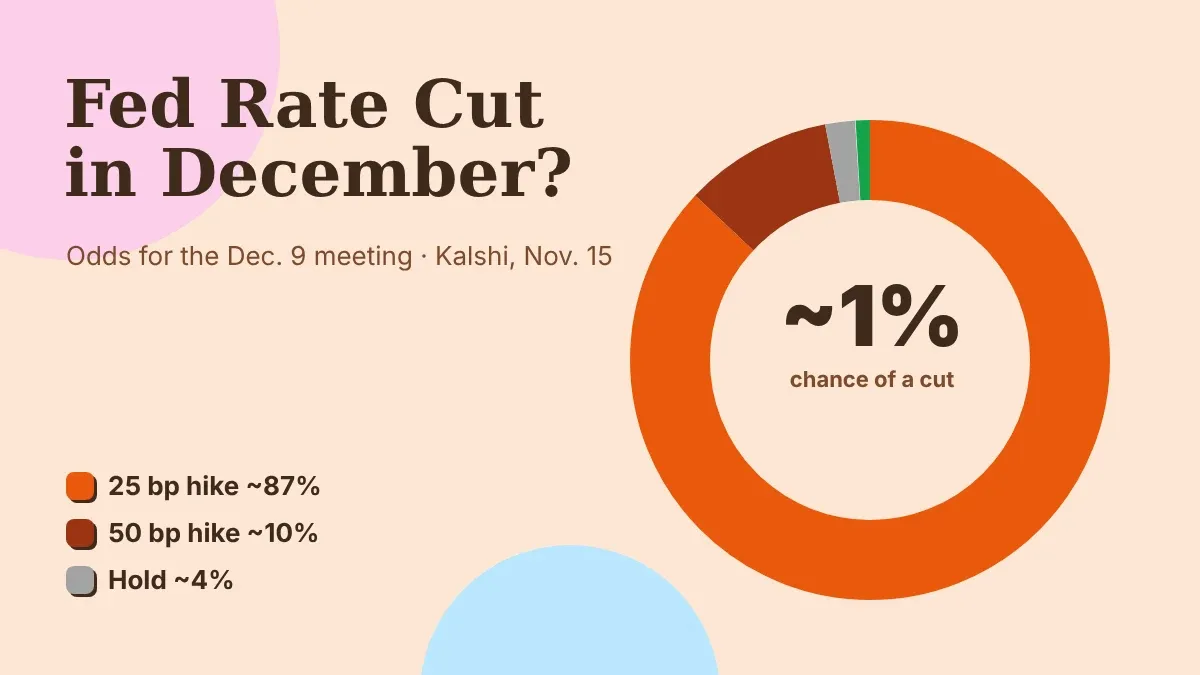
Fed Rate Cut December 2026? Why Markets Now Price a Hike Instead
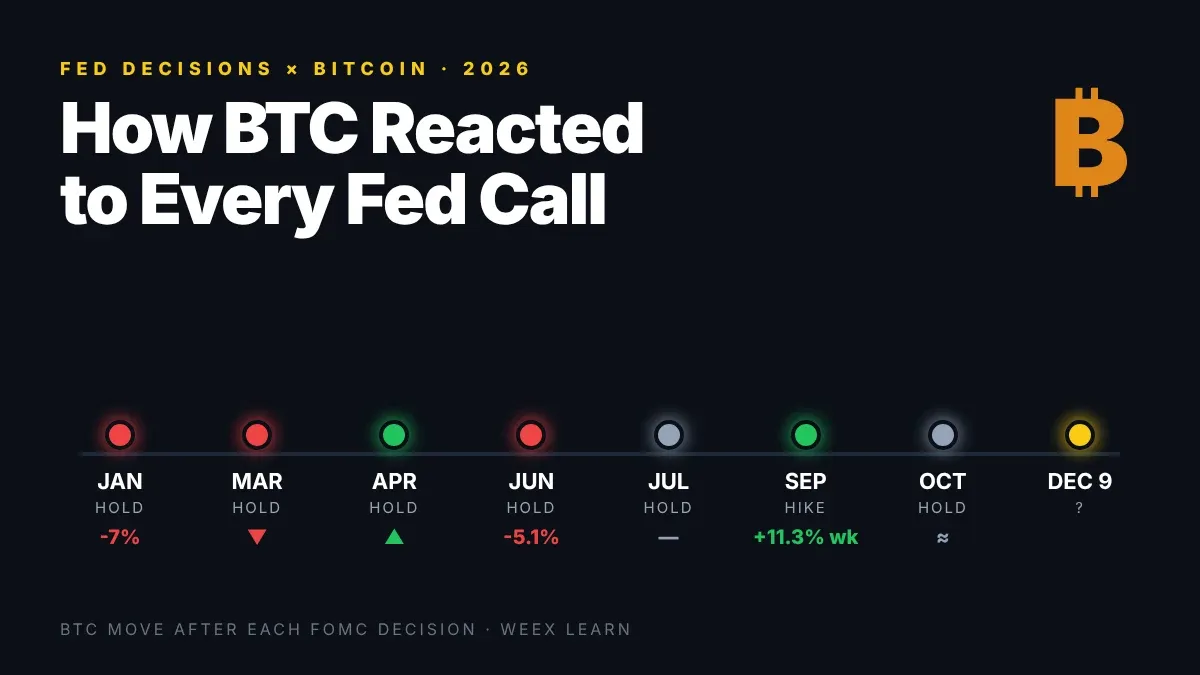
Fed Rate Decision Bitcoin: How BTC Reacted to Every 2026 Call

BTC Staking in a Crash: What It Protects and What It Does Not

WXT Burn Q3 2026: WEEX to Burn 65,228,631 WXT on November 16

ACKET Token Surges 1,000% After Jensen Huang Resigns: What Is Confirmed
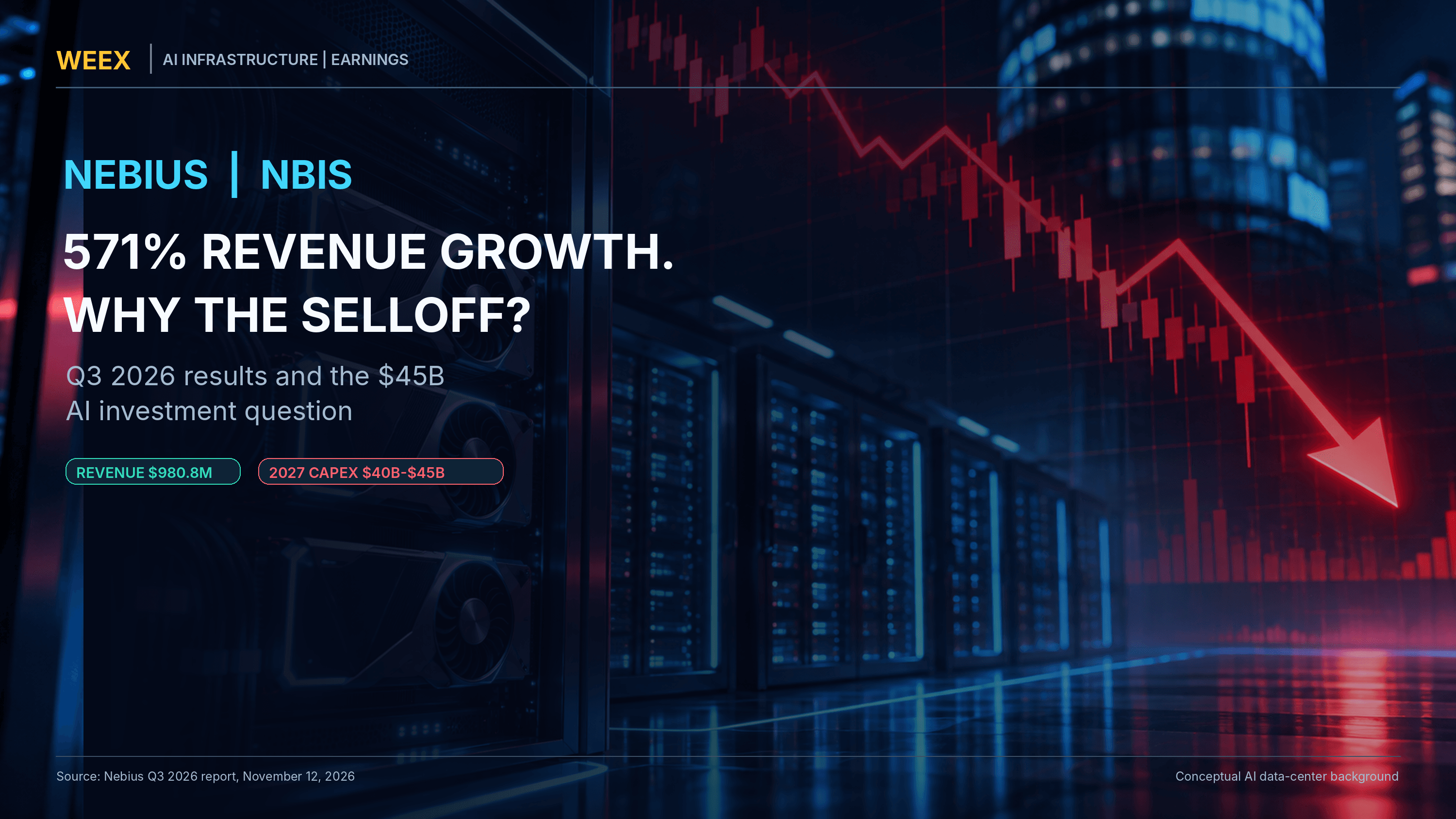
Why Did Nebius Stock Crash Despite 571% Revenue Growth? NBIS Q3 Earnings Explained

Bitcoin Falls Toward $70K: ETF Outflows, Liquidations and What Happens Next
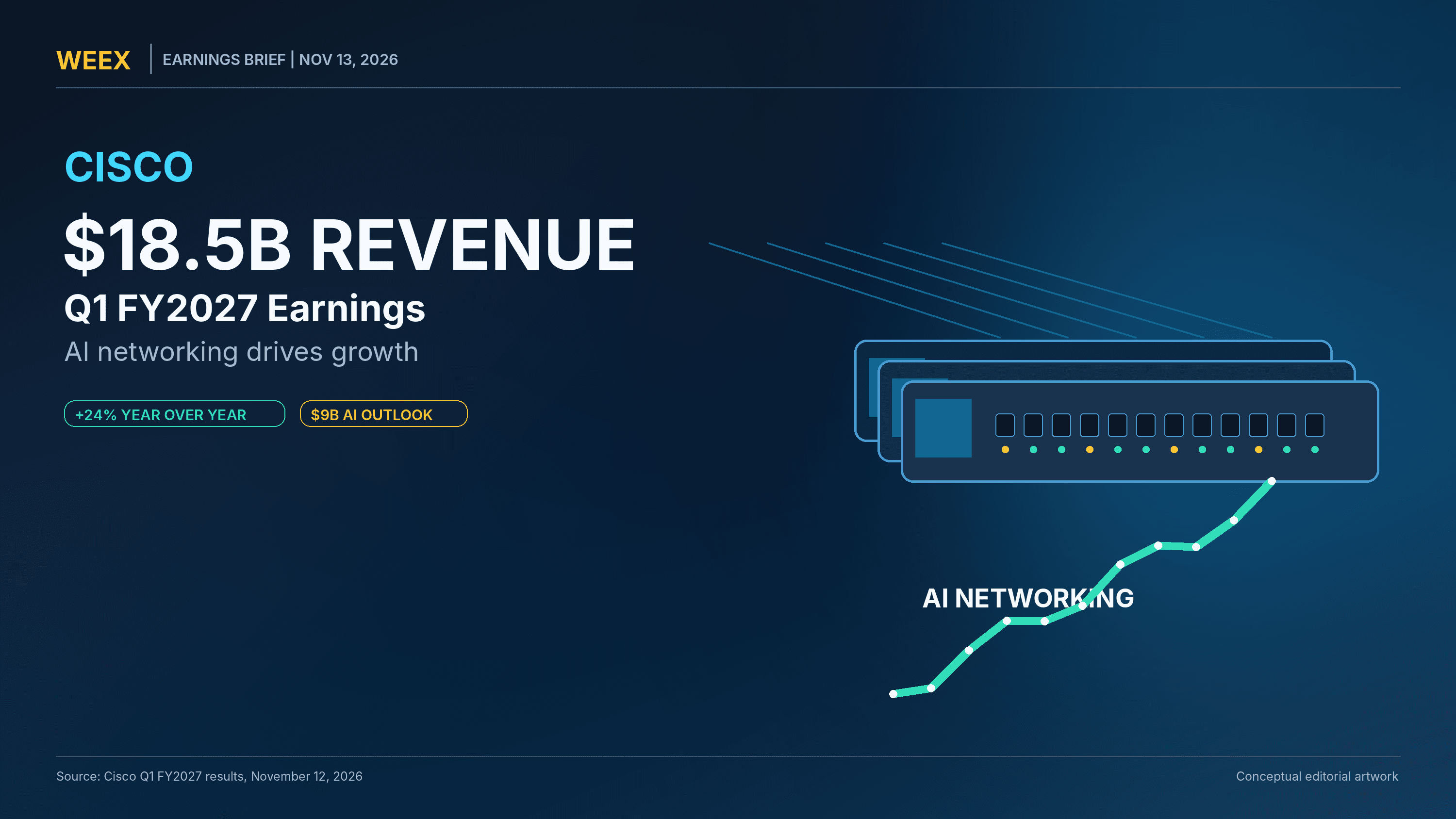
Cisco Q1 FY2027 Earnings: $18.5B Revenue, $9B AI Outlook and CSCO Stock Reaction
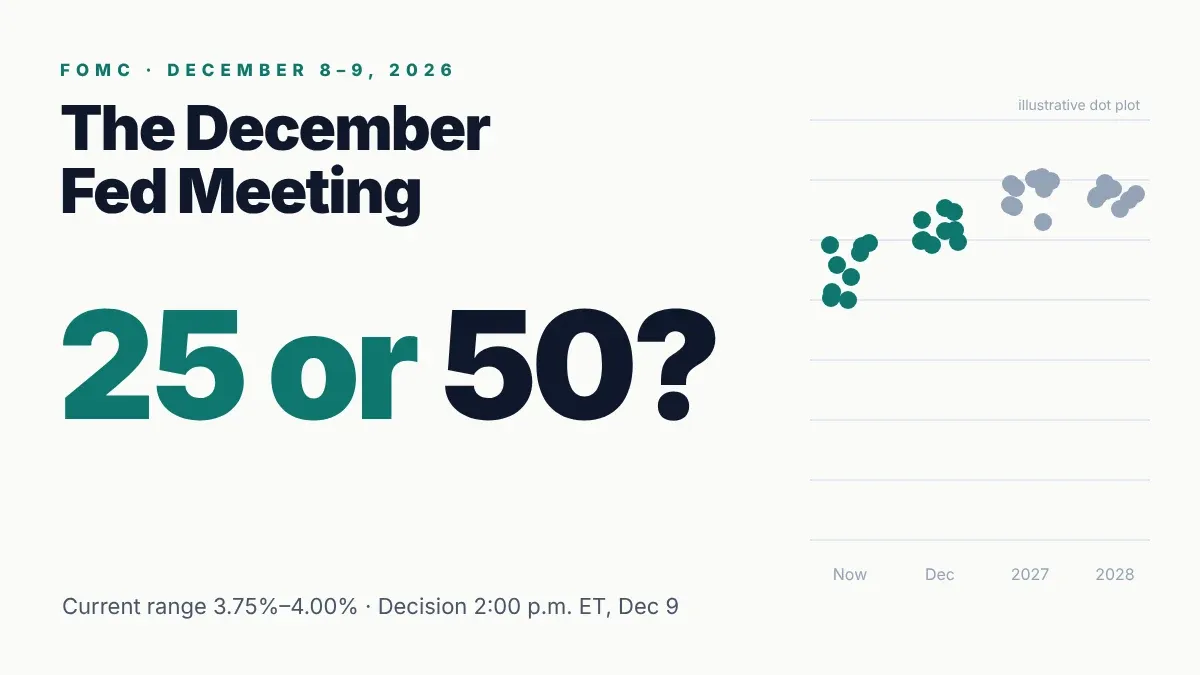
December FOMC Meeting 2026: Dec. 8-9 Rate Hike, 25 or 50 Bps?
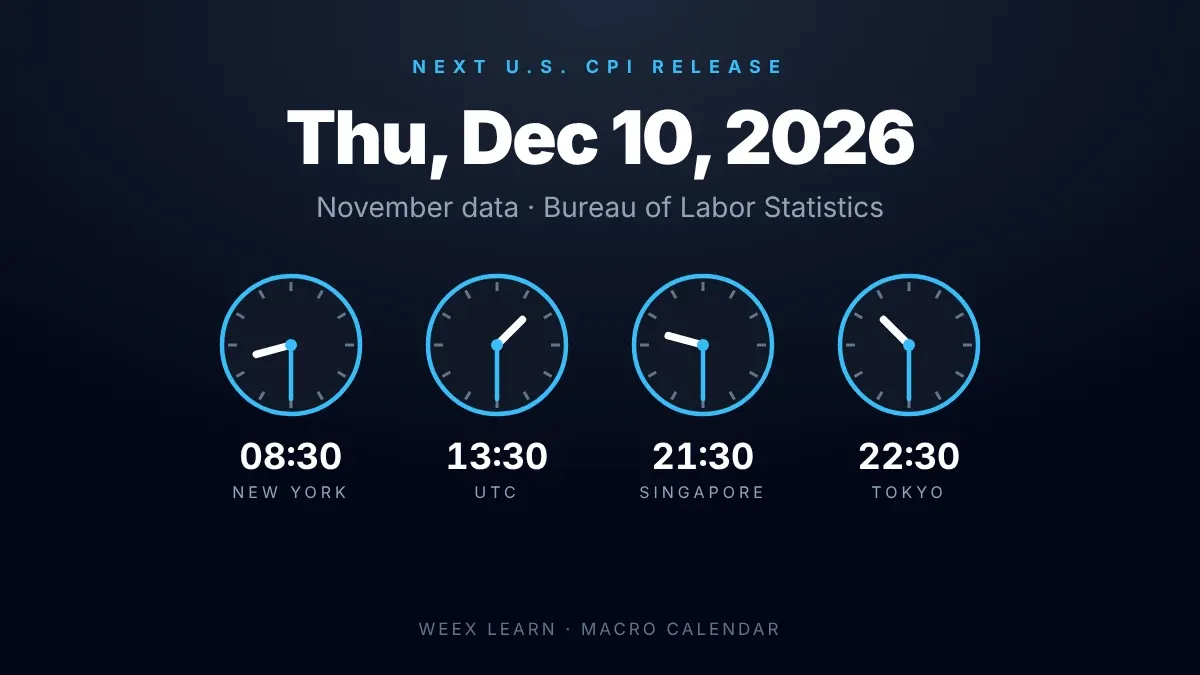
CPI Release Date: Next Report Dec. 10, 2026 at 8:30 a.m. ET
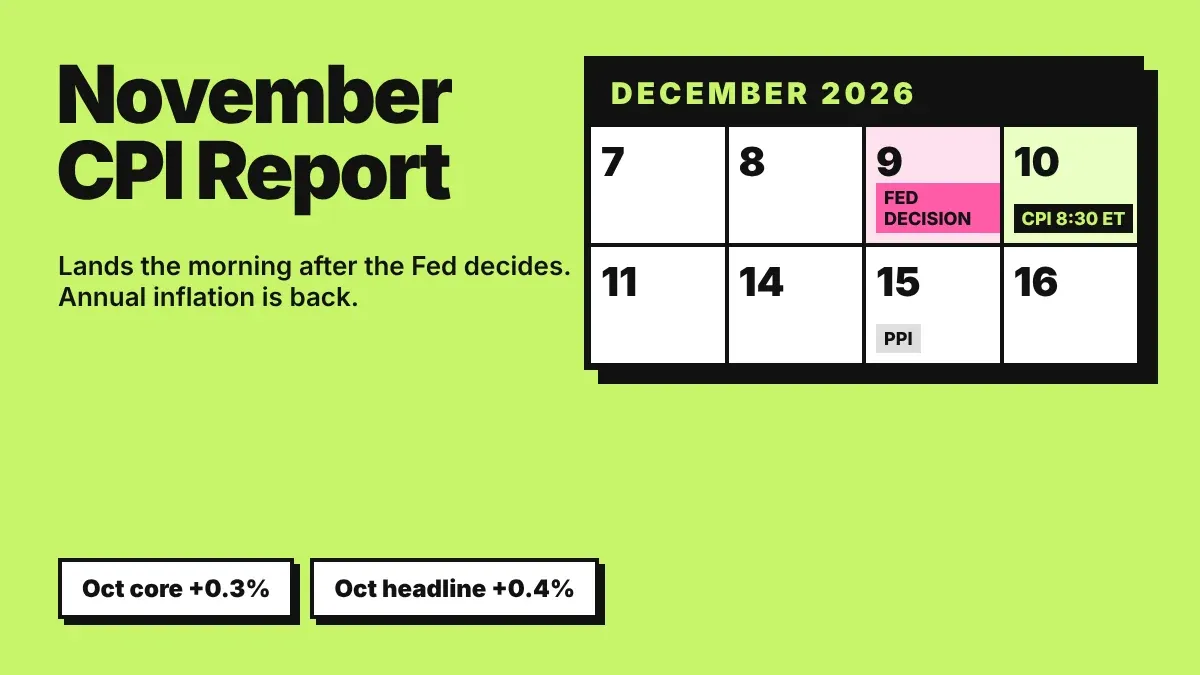
November CPI Report: Dec. 10 Release Lands After the Fed Decides
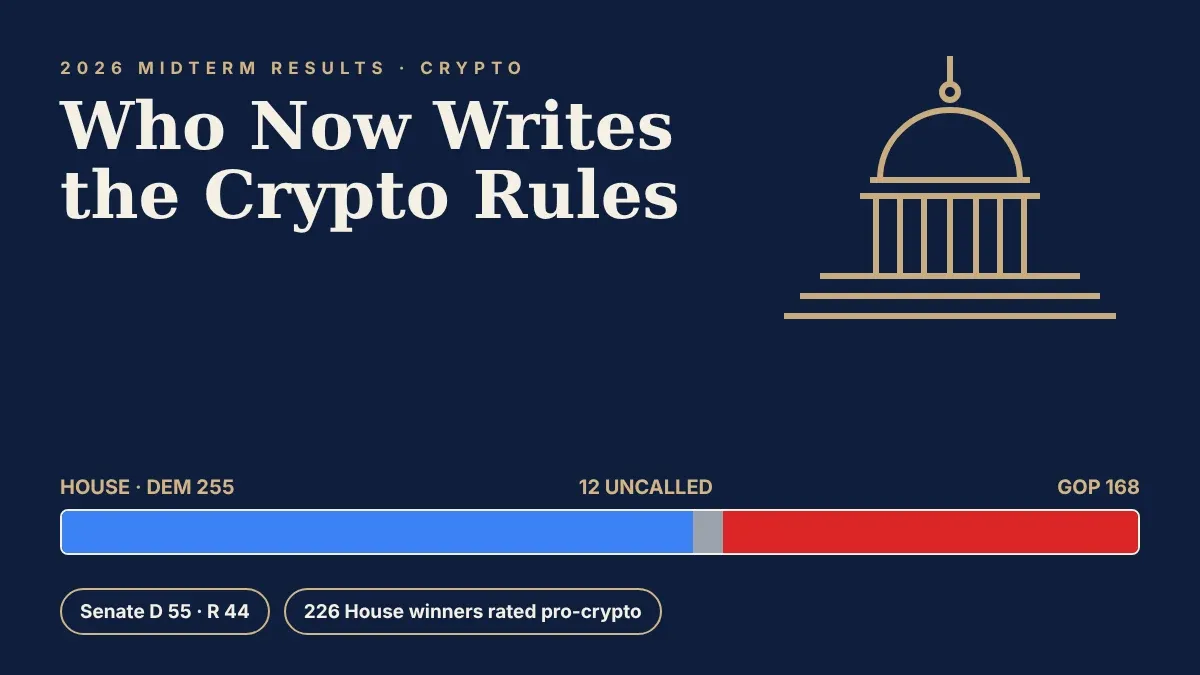
Midterm Election Results Crypto: Who Now Controls Crypto Policy

Midterm Elections Bitcoin Price: What 2014, 2018 and 2022 Show

Is Staking Crypto Worth It? What You Earn on WEEX Staking

MSCI Removes Strategy (MSTR): Will Index Selling Pressure Bitcoin?
DTCC Brings Tokenized Securities to Solana: Will SOL Demand Rise in 2027?

Jensen Huang Resigns as NVIDIA CEO: What Happens to NVDA Stock Next?

Rocket Lab's 100th Electron Launch: November 14 Window, Mission Details and RKLB Stock Outlook

What Is Project Faro? The $270M Bank Stablecoin Plan Explained

Stablecoin Supply Falls $14.2B in 30 Days: What It Means for Bitcoin
Binance Hack: $6.3B Laundering Trail and Recovery Progress
Is Strategy (MSTR) Being Removed From the MSCI Index? What Happens After November 30

Beginner-Friendly Crypto Exchanges With Simple Interfaces Ranked
Are Bitcoin Lightning Wallets Safe? 5 Security Warnings Since August
How to Buy ANT Stock on Day One: What Is Confirmed
Anthropic IPO: ANT Date, Price Range and Valuation
Jensen Huang Comeback Reports: Petition, War Room and Nvidia’s Response
Nvidia Earnings Date: Nov. 17, 2026 After the Bell, in Every Zone
Nvidia Earnings Preview: Q3 Results Land Days After Huang's Exit


