
Is Strategy (MSTR) Being Removed From the MSCI Index? What Happens After November 30

 Prefer us on Google

Yes. MSCI’s final November 2026 index review lists Strategy (MSTR) as deleted, and the change takes effect after the market close on November 30, 2026.
The deletion is an index change and not a delisting, and it does not require Strategy to sell any bitcoin. The size of the passive selling it could cause is disputed, with estimates ranging from about $2.8 billion to $8.8 billion depending on the source and the assumptions.
Is Strategy (MSTR) Being Removed From the MSCI Index?
MSCI was due to publish its final November 2026 index review shortly after 5 p.m. ET on November 11, according to Bitcoin Magazine, and CoinCentral reported on November 12 that the final list shows Strategy with the action “Deleted,” reported as a removal from the MSCI USA Index, with the change effective after the close on November 30. The index name comes from one outlet, and MSCI’s own notice should be used to confirm which indexes are affected.
MSCI is a global index provider that builds and maintains stock indexes, such as the MSCI USA Index, which many index funds and exchange-traded funds are designed to follow. When a company is added to or removed from an index, the funds that track it adjust their holdings to match, which is why an index change can create buying or selling pressure on the stock. MSCI reviews its indexes on a regular schedule, and the November 2026 review is one of those scheduled reviews.
The result was not a surprise. MSCI’s October 15 potential list had already marked Strategy as deleted, along with Yellow Cake, Metaplanet, Skel Fjárfestingafélag and Upexi. The final list kept Strategy and Upexi as deletions, and CoinCentral reported that Metaplanet leaves the Japan Small Cap Index on the same date, while the Ether treasury firm Sharplink was not deleted and sits on a watchlist.
Why Is MSCI Removing Strategy?
The removal follows new MSCI eligibility rules for companies that mainly hold investments instead of running an operating business, which MSCI announced on October 15, 2026, according to CoinDesk. The rules work in two steps. MSCI first checks whether a company has substantial operating assets, and a company that fails that test is then checked against five financial ratios, where being flagged on four or more makes it ineligible.
A current index member is removed only if it fails in both of its two most recent annual filing periods, while a non-member is blocked from joining if it fails in either one. CoinCentral noted that MSCI’s review documents gave no company-specific reasons. Strategy argues that it is an operating business with a software arm, that it reports its bitcoin treasury as a separate operating segment, and that treating it like an investment fund is wrong. Executive Chairman Michael Saylor and Phong Le called the treatment of digital asset treasury companies “discriminatory,” and the company has said a deletion would have no meaningful impact on its business.
The new rules replace temporary measures that MSCI had applied since October 2025 to companies whose digital assets made up 50% or more of their total assets, according to CoinDesk. Those temporary measures are ending, and such companies are judged under the new two-step screen starting with the November review. MSCI has not published company-specific reasons for deleting Strategy, so the explanation rests on how the rules apply, and on Strategy’s own position that it is an operating business.
Does Index Removal Mean MSTR Is Delisted?
No. Being deleted from an MSCI index does not remove Strategy from the exchange where its shares trade, and the stock continues to trade after November 30. A delisting is a decision by an exchange that ends trading of a company’s shares on that exchange, while an index deletion changes which stocks a particular index contains.
The practical effect is on funds that track the index. A fund that follows an MSCI index has to adjust its holdings to match the index, so funds tracking the affected index need to sell their MSTR shares around the November 30 close. The selling affects the stock and not Strategy’s bitcoin, because the index funds hold the shares and the company is not required to sell any of its bitcoin as a result. Decisions by other index providers are separate and are not covered by this MSCI announcement.
For a shareholder, the difference is practical. After an index deletion, the shares can still be bought and sold on the exchange, and the company continues to operate and report as before, while after a delisting the shares can no longer trade on that exchange. What changes with an index deletion is the demand from funds that track the index, and not the company’s rights, its listing or its bitcoin holdings.
-- Price
How Much Passive Selling Could the Removal Trigger?
The estimates differ by a wide margin. JPMorgan analysts estimated that an MSCI exclusion could cause about $2.8 billion in outflows from Strategy’s stock, according to CoinDesk, and Bitcoin Magazine reported that this estimate dates from an earlier digital-asset proposal and that JPMorgan saw up to $8.8 billion more if other index providers followed. Some outlets headline $8.8 billion as the amount tied to MSCI itself, and cryptonews.net referred to about $3 billion, so the $8.8 billion figure should not be read as the MSCI-only number. MSCI has not published its own estimate.
Strategy has argued that the effect is much smaller. The company says funds tracking MSCI indexes hold about 13 million of its shares, or about 3.1% of its basic outstanding shares, which is less than one day of trading volume, according to CoinCentral. That is the company’s own claim and has not been independently verified. All of these figures are estimates of possible selling, and none is a record of selling that has already happened.
Passive funds sell when the index changes and not because they hold a view on the company, and active managers are not required to sell. Estimates of the selling differ because they rest on different assumptions: which indexes are affected, how much of the stock each tracking fund holds, and whether other index providers make similar decisions. Forced selling from an index change is usually concentrated around the close on the effective date, which is November 30 for this deletion. An estimate is a range of possible selling, and the amount that actually happens can only be confirmed after the effective date.
How Did MSTR Trade After the Announcement?
Reports of the after-hours move on Wednesday, November 11 differ. CoinCentral reported a fall of about 2.6% to $119.06, noted that another report put the dip at 1.65%, and an external quote showed $120.02, down about 1.90% from the close, at 19:56 ET. The differences come from different times, venues and reference prices, so the move is best described as roughly 2% with the source named.
WEEX data adds a further reference. At 10:08 (UTC+8) on November 12, the WEEX US stock page showed 120.2 USDT with a Closed status as a reference quote, and at 10:09 the WEEX futures market showed 120 USDT with a rolling 24-hour change of -1.30%. A rolling futures change is not the same as the after-hours move in the stock. Strategy also holds 850,364 bitcoin bought at an average price of $75,456 as of November 8, according to Bitcoin Magazine, and with bitcoin near $73,900 on November 11 that was below the average cost, which is context for the stock’s sensitivity to the bitcoin price.
After-hours prices come from thinner trading than the regular session, so they can differ between data providers depending on the time, the venue and the reference price used. A rolling 24-hour change on a futures market also covers a different window from an after-hours move in the stock, which is why the figures above are shown with their sources and times. A fair comparison uses the same timestamp for every quote and names the source of each.
What Should Investors Watch Before and After November 30?
The first item is the November 30 close itself, since that is when index funds adjust their holdings and when any forced selling would be concentrated. The second is whether other index providers make similar decisions, because the larger $8.8 billion estimate depended on that. The third is any update from Strategy, including filings and its bitcoin purchase disclosures, to see whether holdings and plans change.
Bitcoin’s price and the company’s ability to raise capital are also part of the picture. The reports reviewed do not say that the deletion changes Strategy’s ability to raise money, so that question stays open. Readers should treat estimates of passive selling as ranges and check each number against its source and date, since the situation can change before November 30.
The key dates are easy to track. MSCI announced the new rules and a draft list on October 15, 2026, published the final November review on November 11, and the deletion takes effect after the close on November 30. Between now and then, the useful sources are MSCI’s own notice, Strategy’s filings and bitcoin purchase disclosures, and any announcement from other index providers, because each of them can change the size or timing of the selling.
How Can MSTR Be Followed on WEEX?
WEEX offers US stock spot products and USDT-margined US stock contracts, so MSTR can be tracked in the same place as other global markets. The MSTR/USDT stock page shows the stock product, which displayed a closed-market reference quote in the data above, and the MSTR/USDT futures page shows the contract, whose price keeps updating when the US market is closed. The Stocks tab in the spot market lists the stock products, and the WEEX TradFi page covers stocks, commodities, forex and indexes for readers who want to watch cross-market moves.
Index events can move a stock sharply around the effective date, and futures positions can be liquidated if the price moves against them, so leverage, fees and live prices should be checked before trading. For readers comparing platforms, WEEX also publishes a Proof of Reserves page, where users can review platform reserves and asset backing information. Nothing in this article is investment advice.
The stock product and the contract are different products, so each page should be read for its own trading hours, fees and terms. Around an index event such as the November 30 close, a reader can compare the two quotes at the same timestamp, check whether the stock page shows a closed-market reference quote, and read the rolling change on the contract as a separate measure. Leverage and liquidation settings should be checked before opening any contract position.
Conclusion
MSCI’s final November review marks Strategy (MSTR) as deleted, effective after the close on November 30, 2026. It is an index change and not a delisting, and it does not require Strategy to sell bitcoin. The size of the passive selling is uncertain, with estimates from the company’s own 3.1% figure to $2.8 billion and $8.8 billion, and the after-hours move was roughly 2% depending on the source. Each figure should be read with its date and source.
FAQ
1. Is Strategy (MSTR) being removed from the MSCI index?
Yes. MSCI’s final November 2026 index review marks Strategy as deleted, and the change takes effect after the close on November 30, 2026. CoinCentral reported the removal from the MSCI USA Index.
2. Is MSTR being delisted?
No. An index deletion does not end trading of the stock. It changes which stocks the index contains, so funds tracking that index adjust their holdings.
3. Does Strategy have to sell its bitcoin?
No. The selling comes from index funds that hold MSTR shares, and the company is not required to sell any bitcoin because of the deletion.
4. How much selling could the MSCI removal cause?
JPMorgan estimated about $2.8 billion in outflows, and up to $8.8 billion more if other index providers followed. Strategy says MSCI-linked funds hold about 13 million shares, or 3.1% of its basic outstanding shares. These are estimates and not completed sales.
5. Why is MSCI removing Strategy?
MSCI’s new rules screen companies that mainly hold investments. A company that fails the operating-assets test and is flagged on four or more of five financial ratios in both of its two latest annual filing periods can be removed. Strategy says it is an operating business and calls the treatment discriminatory.
This content is provided for general informational purposes only and doesn't constitute financial, investment, legal, or tax advice. Any events, rewards, online promotions, or related information mentioned herein should not be considered a recommendation, solicitation, or invitation to purchase, sell, trade, or otherwise deal in any crypto assets. Crypto assets are highly volatile and may result in loss. The availability of WEEX services, products, and related events may vary by region. You are responsible for ensuring that your participation is in accordance with applicable local laws and regulations.
You may also like

Are Bitcoin Lightning Wallets Safe? 5 Security Warnings Since August

How to Buy ANT Stock on Day One: What Is Confirmed

Anthropic IPO: ANT Date, Price Range and Valuation

Jensen Huang Comeback Reports: Petition, War Room and Nvidia’s Response
Nvidia Earnings Date: Nov. 17, 2026 After the Bell, in Every Zone
Nvidia Earnings Preview: Q3 Results Land Days After Huang's Exit

Powell Speech Bitcoin: Why Warsh, Not Powell, Moves BTC in 2026
Fed Rate Cut December 2026? Why Markets Now Price a Hike Instead
Fed Rate Decision Bitcoin: How BTC Reacted to Every 2026 Call

Nebius Cuts 2026 Revenue Outlook: Are Data Center Delays a Threat to NBIS?

BTC Staking in a Crash: What It Protects and What It Does Not

WXT Burn Q3 2026: WEEX to Burn 65,228,631 WXT on November 16

ACKET Token Surges 1,000% After Jensen Huang Resigns: What Is Confirmed

Why Did Nebius Stock Crash Despite 571% Revenue Growth? NBIS Q3 Earnings Explained

Bitcoin Falls Toward $70K: ETF Outflows, Liquidations and What Happens Next
Cisco Q1 FY2027 Earnings: $18.5B Revenue, $9B AI Outlook and CSCO Stock Reaction
December FOMC Meeting 2026: Dec. 8-9 Rate Hike, 25 or 50 Bps?
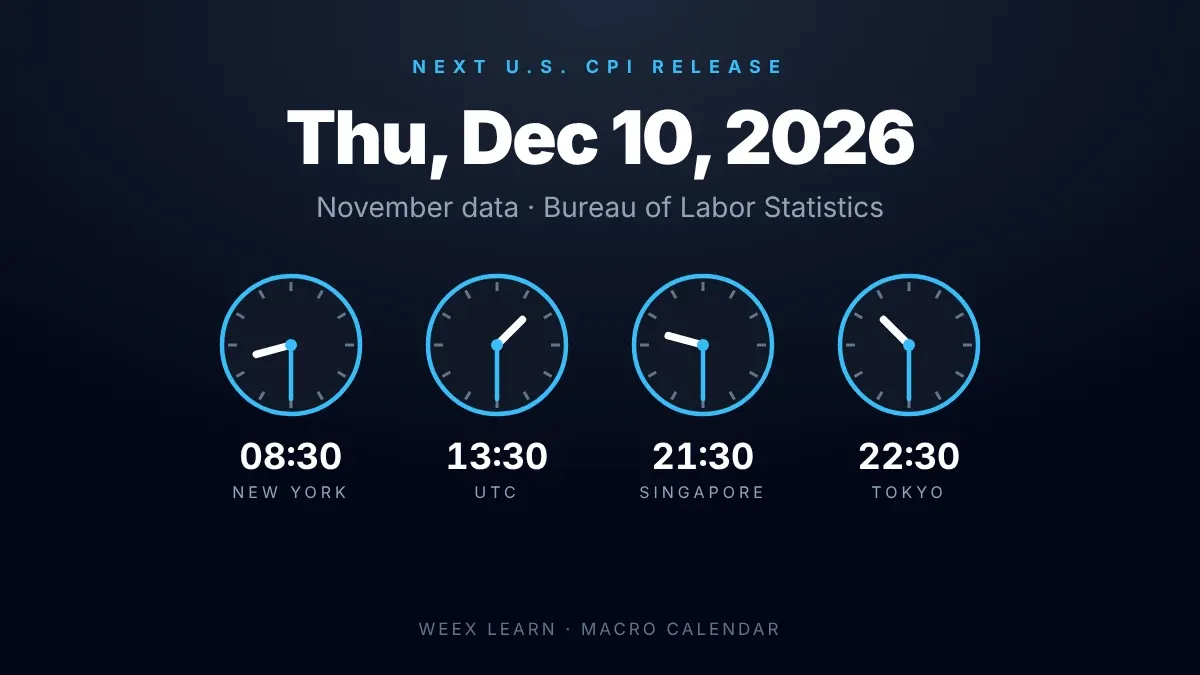
CPI Release Date: Next Report Dec. 10, 2026 at 8:30 a.m. ET
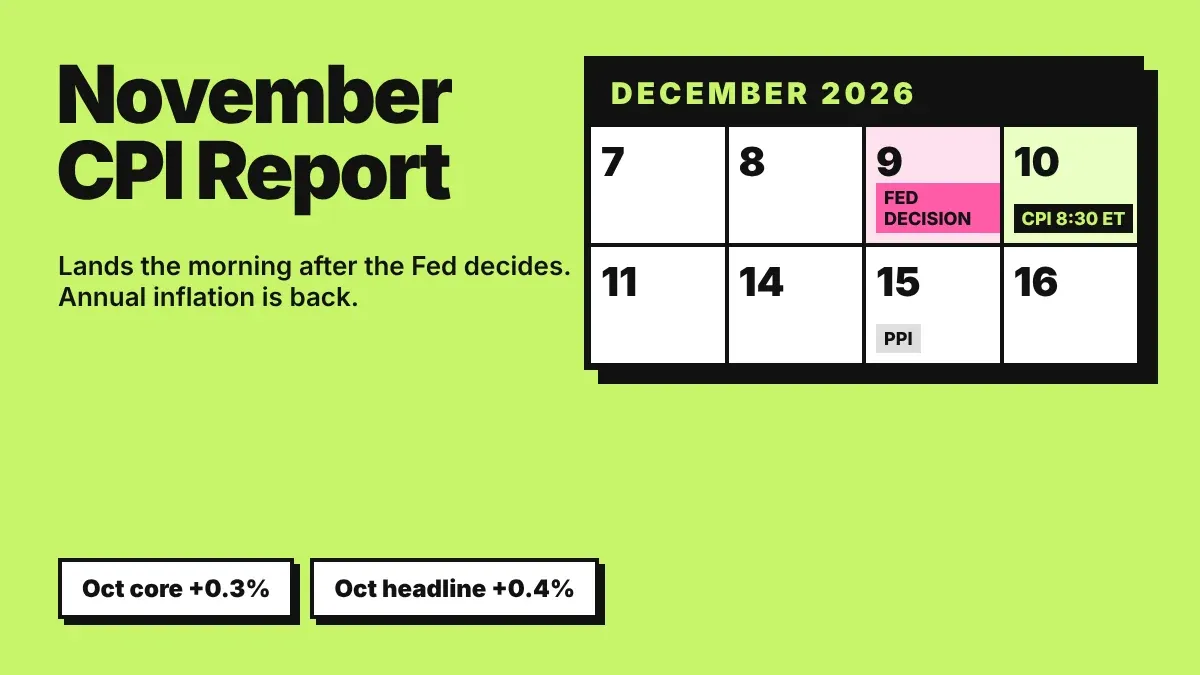
November CPI Report: Dec. 10 Release Lands After the Fed Decides
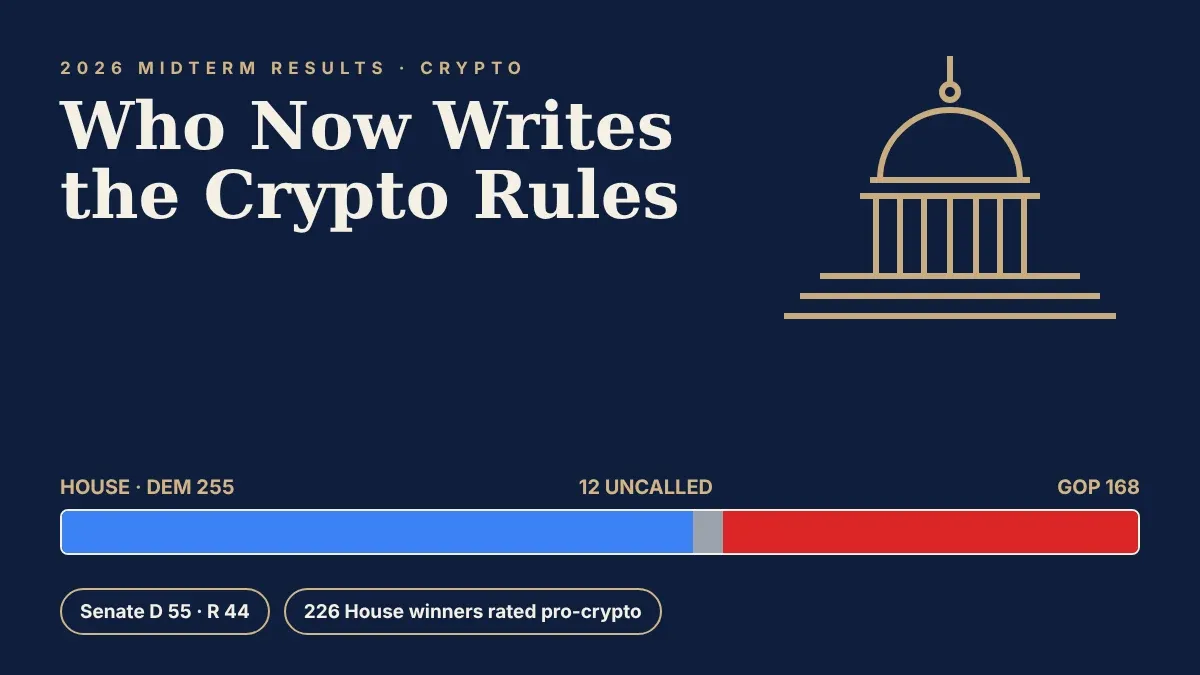
Midterm Election Results Crypto: Who Now Controls Crypto Policy
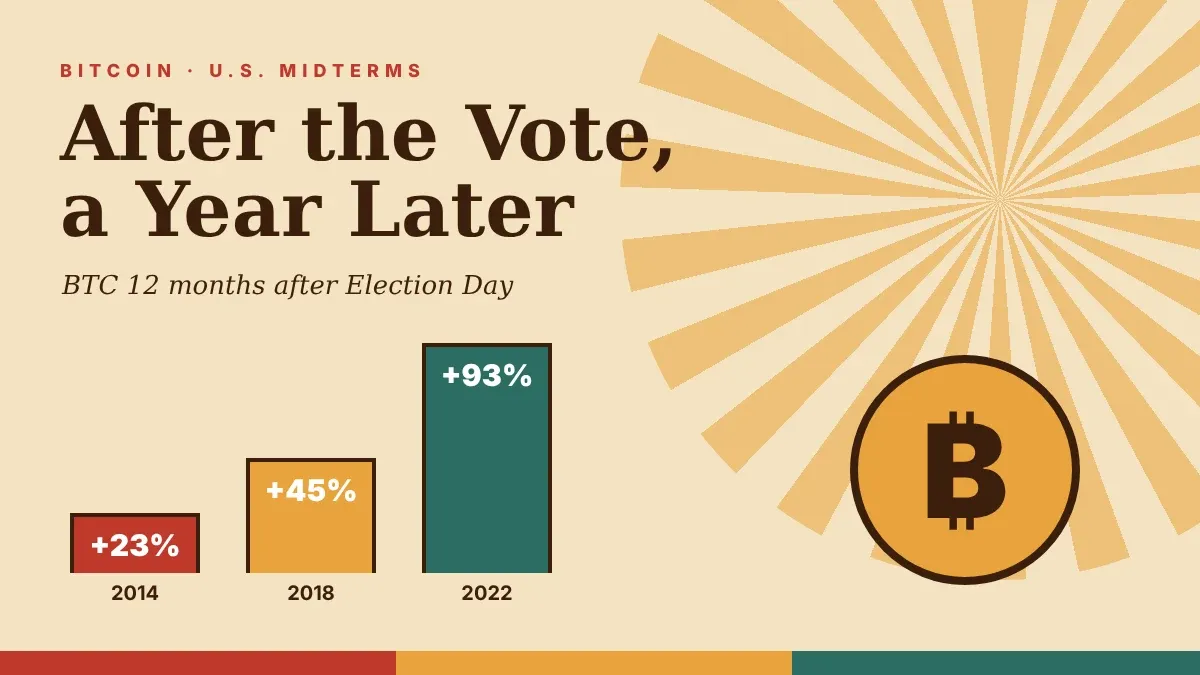
Midterm Elections Bitcoin Price: What 2014, 2018 and 2022 Show

Is Staking Crypto Worth It? What You Earn on WEEX Staking

MSCI Removes Strategy (MSTR): Will Index Selling Pressure Bitcoin?
DTCC Brings Tokenized Securities to Solana: Will SOL Demand Rise in 2027?

Jensen Huang Resigns as NVIDIA CEO: What Happens to NVDA Stock Next?

Rocket Lab's 100th Electron Launch: November 14 Window, Mission Details and RKLB Stock Outlook

What Is Project Faro? The $270M Bank Stablecoin Plan Explained

Stablecoin Supply Falls $14.2B in 30 Days: What It Means for Bitcoin
Binance Hack: $6.3B Laundering Trail and Recovery Progress

Beginner-Friendly Crypto Exchanges With Simple Interfaces Ranked
Are Bitcoin Lightning Wallets Safe? 5 Security Warnings Since August
How to Buy ANT Stock on Day One: What Is Confirmed
Anthropic IPO: ANT Date, Price Range and Valuation
Jensen Huang Comeback Reports: Petition, War Room and Nvidia’s Response
Nvidia Earnings Date: Nov. 17, 2026 After the Bell, in Every Zone
Nvidia Earnings Preview: Q3 Results Land Days After Huang's Exit


