
Rocket Lab's 100th Electron Launch: November 14 Window, Mission Details and RKLB Stock Outlook

 Prefer us on Google

Introduction
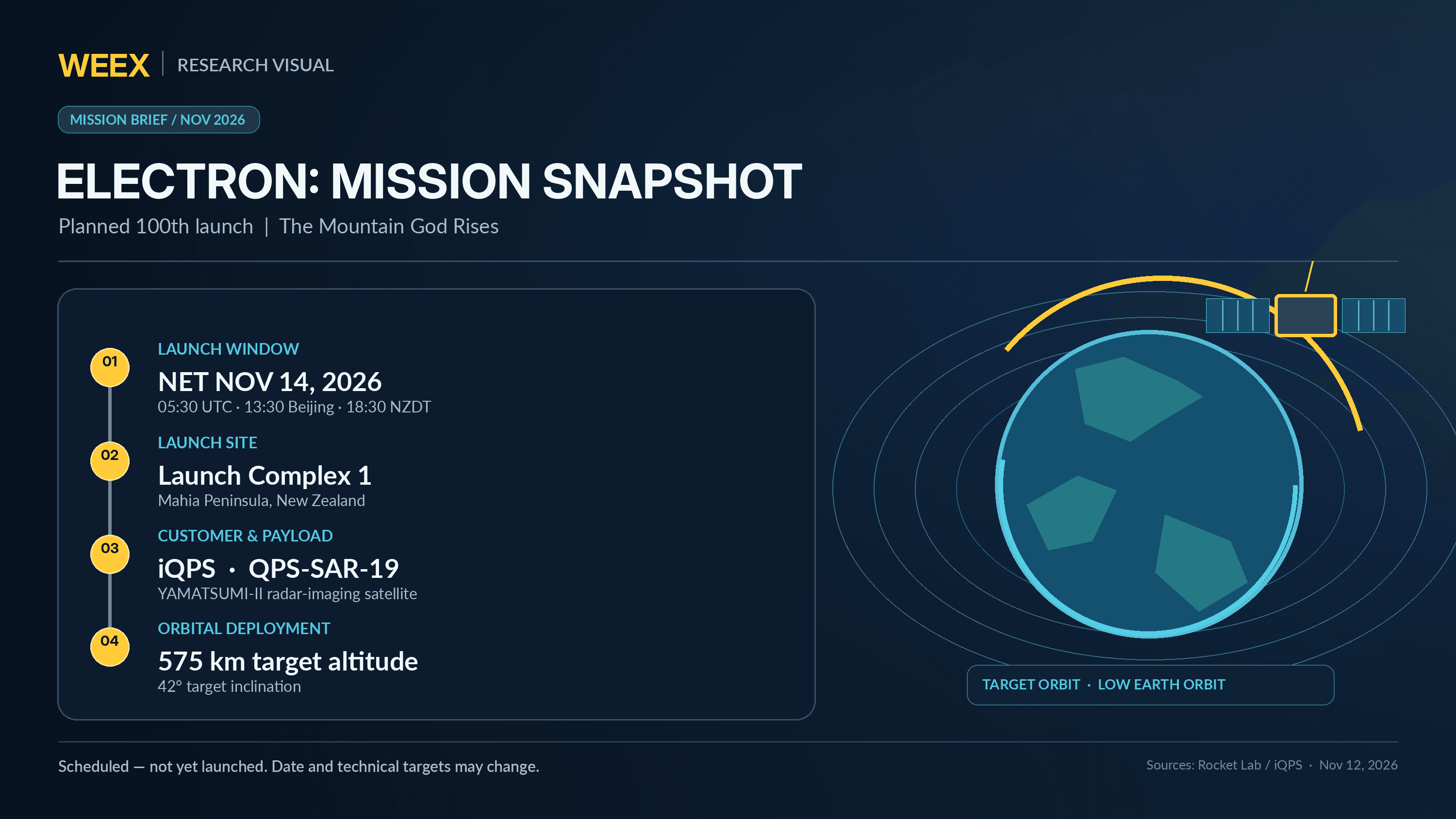
The Rocket Lab 100th Electron launch is scheduled for no earlier than November 14, 2026, with the company targeting a 05:30 UTC launch window from New Zealand's Launch Complex 1. Named The Mountain God Rises, the mission will carry a radar-imaging satellite for Japan's Institute for Q-shu Pioneers of Space (iQPS) into a 575-kilometer low Earth orbit. The flight would mark the 100th launch of Rocket Lab's Electron vehicle, a significant operational milestone for the commercial small-satellite launch industry. As of November 12, the mission remains scheduled rather than completed.
The Rocket Lab 100th Electron launch also comes during a period of strong reported financial and commercial activity. Rocket Lab posted record third-quarter 2026 revenue of approximately $268 million and reported a total backlog of $3.57 billion. However, while Electron has established a substantial flight history, the company's future growth also depends on its Space Systems business and the development of its larger Neutron launch vehicle. A successful 100th flight would reinforce Electron's operating record without resolving every uncertainty surrounding Rocket Lab's expansion.
For investors following the Rocket Lab 100th Electron launch, the relationship between mission progress and RKLB prices requires careful interpretation. A November 11 WEEX market snapshot showed an RKLB stock-related reference quotation of 61.84 USDT while RKLB perpetual futures traded at 63.14 USDT, up 15.72% over the preceding 24 hours. That futures movement should not be confused with a corresponding gain in Nasdaq-listed shares. This article examines the mission schedule, satellite payload, commercial implications, launch risks, and differences between RKLB-related trading products.
When Is Rocket Lab's 100th Electron Launch?
According to Rocket Lab's official mission page, The Mountain God Rises is scheduled to launch no earlier than November 14, 2026, at 18:30 New Zealand Daylight Time (NZDT). This corresponds to 05:30 UTC, 13:30 Beijing Time, and 14:30 Japan Standard Time.
The phrase "no earlier than" (NET) is important. It identifies the earliest currently planned launch opportunity, not a guaranteed liftoff time. Rocket launches can be postponed because of weather, range safety requirements, vehicle readiness, payload checks, or other technical conditions.
Rocket Lab 100th Electron Launch: Key Mission Details
| Item | Official Mission Information |
|---|---|
| Mission Name | The Mountain God Rises |
| Launch Vehicle | Electron |
| Milestone | Planned 100th Electron launch |
| Launch Date | NET November 14, 2026 |
| Launch Time (UTC) | 05:30 |
| Launch Time (Beijing) | 13:30 |
| Launch Time (New Zealand) | 18:30 NZDT |
| Launch Site | Launch Complex 1, Māhia Peninsula, New Zealand |
| Customer | Institute for Q-shu Pioneers of Space (iQPS) |
| Payload | QPS-SAR-19, YAMATSUMI-II |
| Target Orbit | 575 km low Earth orbit |
| Target Inclination | 42 degrees |
| Mission Status | Scheduled; outcome not yet confirmed |
Sources: Rocket Lab — The Mountain God Rises and iQPS Official Mission Update. Information checked November 12, 2026.
The launch was previously scheduled for no earlier than November 10 before being moved to November 14. iQPS confirmed the schedule change in an update dated November 3. This illustrates why the announcement of a launch window should be treated differently from confirmation that the rocket has lifted off or successfully deployed its satellite.
Rocket Lab states that its livestream is expected to begin approximately 30 minutes before the scheduled launch. Viewers should check the official mission page shortly before the window opens because the timetable remains subject to change.
[Insert Image 1: Electron mission timeline, payload and launch window]
Why Is Electron's 100th Launch an Important Milestone?
Electron reaching its 100th launch would demonstrate that Rocket Lab has developed a frequently used commercial launch system rather than a rocket dependent on occasional experimental flights. Reaching that flight count is particularly significant in the small-launch market, where operators must manage manufacturing costs, mission reliability, customer schedules, and a relatively limited payload capacity.
Electron's purpose differs from that of larger launch vehicles designed for heavy payloads or massive satellite deployments. Its commercial proposition focuses on dedicated access to orbit for smaller spacecraft, allowing customers greater control over deployment timing and orbital requirements.
This flexibility can be valuable for satellite operators that want to place spacecraft into specific orbital planes without depending entirely on larger rideshare missions. However, dedicated launches must also be economically competitive, especially when customers compare their cost with shared launch services.
What Does the Previous Electron Mission Tell Us?
Rocket Lab completed its 99th Electron mission, The Sea God Surveys, with a launch on November 3, 2026, in New Zealand local time. That mission deployed another iQPS radar-imaging satellite into low Earth orbit.
The company described it as Electron's 99th flight and its 20th mission of 2026. The upcoming 100th flight would continue this sequence with another iQPS payload.
The important operational observation is that Rocket Lab is launching repeatedly for an existing commercial customer. That supports the view that Electron has an established place in iQPS's satellite deployment strategy.
However, launch count and reliability are not interchangeable metrics. The 100th flight refers to the number of launches, not 100 consecutive successful missions. Evaluating reliability requires examining historical mission outcomes, failure causes, corrective actions, and the performance of the launch system over time.
Source: Rocket Lab — Mission Success: 99th Electron Mission.
-- Price
What Will Rocket Lab's 100th Electron Mission Carry?
The mission's payload is QPS-SAR-19, also known as YAMATSUMI-II, a synthetic aperture radar satellite developed by Japanese company iQPS.
Synthetic aperture radar, or SAR, is an Earth-observation technology that uses radar signals rather than depending entirely on visible sunlight. SAR satellites can collect useful imaging data at night and through cloud cover, making them valuable for applications where conventional optical satellites face limitations.
iQPS is developing a commercial SAR constellation intended to provide more frequent observations of locations around the world. Its published roadmap targets a 24-satellite constellation by May 2028, followed by additional expansion. These are company development objectives, not already completed deployment totals.
Why Does a 575-Kilometer Orbit Matter?
The mission aims to deploy YAMATSUMI-II into a 575-kilometer orbit with a 42-degree inclination.
Satellite altitude and inclination affect which areas of Earth a spacecraft can observe, its orbital period, and how it contributes to a larger constellation. A successful deployment at the intended orbital parameters helps the customer build the coverage pattern needed for its imaging service.
For an Earth-observation company, launching one more satellite can improve constellation capacity, but the actual commercial effect depends on whether the spacecraft completes commissioning, deploys its antenna, establishes communication, and begins producing usable imagery.
The difference between orbital delivery and a fully operational satellite is important. A rocket can complete its assigned deployment while the spacecraft still needs additional work before generating commercial services.
Why Is iQPS a Valuable Repeat Customer?
iQPS requires repeated satellite deployments to expand its constellation. Such customers can be particularly valuable to launch providers because a constellation is typically built through a sequence of missions rather than a single launch.
Rocket Lab's relationship with iQPS therefore provides evidence of repeat demand for Electron's dedicated launch capabilities. The 100th Electron flight also gives Rocket Lab an opportunity to demonstrate its ability to continue serving a customer whose program has substantial deployment requirements.
Nevertheless, repeated launches do not automatically establish the profitability of each contract. Actual margins depend on launch pricing, manufacturing and operating costs, contract terms, and the company's ability to sustain its schedule.
Source: iQPS — QPS-SAR-19 Mission and Constellation Plans.
What Does Rocket Lab's Latest Financial Report Reveal About Its Launch Business?
The significance of Electron's 100th flight becomes clearer when examined alongside Rocket Lab's financial results rather than as an isolated milestone.
Rocket Lab reported record third-quarter 2026 revenue of approximately $267.8 million, up 73% from the comparable quarter in 2025. Its total backlog reached approximately $3.57 billion at September 30, 2026.
A key distinction is that Rocket Lab is not exclusively a rocket-launch company. Its operations also include spacecraft manufacturing, components, and other space systems services.
Rocket Lab Q3 2026 Financial Snapshot
| Financial Metric | Reported Q3 2026 Figure | Interpretation |
|---|---|---|
| Total Revenue | $267.8 million | Up approximately 73% year over year |
| Launch Services Revenue | $53.1 million | Around 19.8% of quarterly revenue |
| Space Systems Revenue | $214.8 million | Around 80.2% of quarterly revenue |
| Total Backlog | $3.57 billion | Contracted future business, subject to fulfillment |
| Launch Services Backlog | $1.85 billion | Future contracted launch-related revenue |
| Space Systems Backlog | $1.72 billion | Future contracted space systems revenue |
| GAAP Operating Cash Flow | Positive $7.2 million | Positive operating cash generation for the quarter |
| Neutron First Launch Target | No earlier than 2027 | Development milestone remains outstanding |
Sources: Rocket Lab Q3 2026 Financial Results and Form 8-K and Rocket Lab Q3 2026 Form 10-Q. Figures rounded where appropriate.
The financial breakdown provides a useful perspective on the Electron milestone. Launch services accounted for approximately one-fifth of quarterly revenue, while Space Systems contributed roughly four-fifths.
This means that the company's valuation and financial performance cannot be explained by Electron's launch count alone. Rocket Lab also depends on spacecraft demand, component manufacturing, contract execution, acquisitions, and the future commercialization of Neutron.
Does the 100th Electron Launch Create New Revenue?
The mission is part of Rocket Lab's commercial launch activity, but it should not be treated as an entirely new revenue opportunity created by reaching the 100-launch milestone.
If the customer mission is already covered by an existing contract, its commercial value is associated with that contract and the related accounting requirements. Recognition of revenue depends on performance obligations and the applicable accounting method.
A successful launch can help fulfill contractual obligations, maintain customer confidence, and support future bookings. However, there is no verified basis for treating the number 100 itself as an additional revenue source.
This distinction matters when considering whether the event can change Rocket Lab's valuation. A symbolic milestone can strengthen market perception without necessarily altering the company's financial forecasts.
Could Electron's 100th Launch Push RKLB Stock Higher?
A successful launch could strengthen confidence in Electron's operational capabilities, particularly given the visibility of its 100th flight. Investors may interpret consistent execution as evidence that Rocket Lab can support recurring satellite deployment programs.
However, whether RKLB shares rise depends on more than the launch outcome. The market may already expect the mission to succeed, especially because Electron has an established flight history and the launch has been publicly scheduled.
A positive outcome can therefore be operationally meaningful without producing a large share-price reaction.
What Is the Difference Between a Launch Milestone and an Earnings Catalyst?
A launch milestone demonstrates operational execution. An earnings catalyst changes market expectations for future revenue, profitability, cash flow, or risk.
A completed Electron mission may contribute to both, but not necessarily to the same degree.
For example, investors might place greater financial weight on Rocket Lab securing additional high-value launch contracts, improving launch margins, expanding manufacturing capacity, or achieving important Neutron development milestones than on the numerical milestone of one additional Electron flight.
A delay or mission failure would also require context. A short weather-related postponement is not equivalent to a vehicle malfunction, and neither event automatically determines the company's long-term commercial viability.
Why Does Neutron Still Matter More to Rocket Lab's Growth Outlook?
Electron is Rocket Lab's established small-launch vehicle. Neutron is its larger launch system under development, intended to address a different market segment.
In November 2026, Rocket Lab disclosed more than $515 million in Neutron launch contracts signed during the third quarter. Its Neutron backlog reached 16 missions, while the first launch was targeted for no earlier than 2027.
Neutron potentially expands the company's addressable market by allowing it to compete for larger payloads and constellation deployments. However, the vehicle has not yet demonstrated routine commercial operation.
Therefore, Electron's 100th flight should not be interpreted as proof that Neutron's development, certification, and commercial execution risks have been resolved.
For a longer-term assessment of RKLB, investors need to distinguish the proven operating history of Electron from the still-developing economics and launch schedule of Neutron.
Source: Rocket Lab — November 9, 2026 Neutron Contract Announcement.
RKLB Futures Jump 15.72%: What Does the WEEX Price Snapshot Actually Show?
An RKLB-related price movement can attract attention ahead of a scheduled launch, but the type of financial instrument matters when interpreting the quotation.
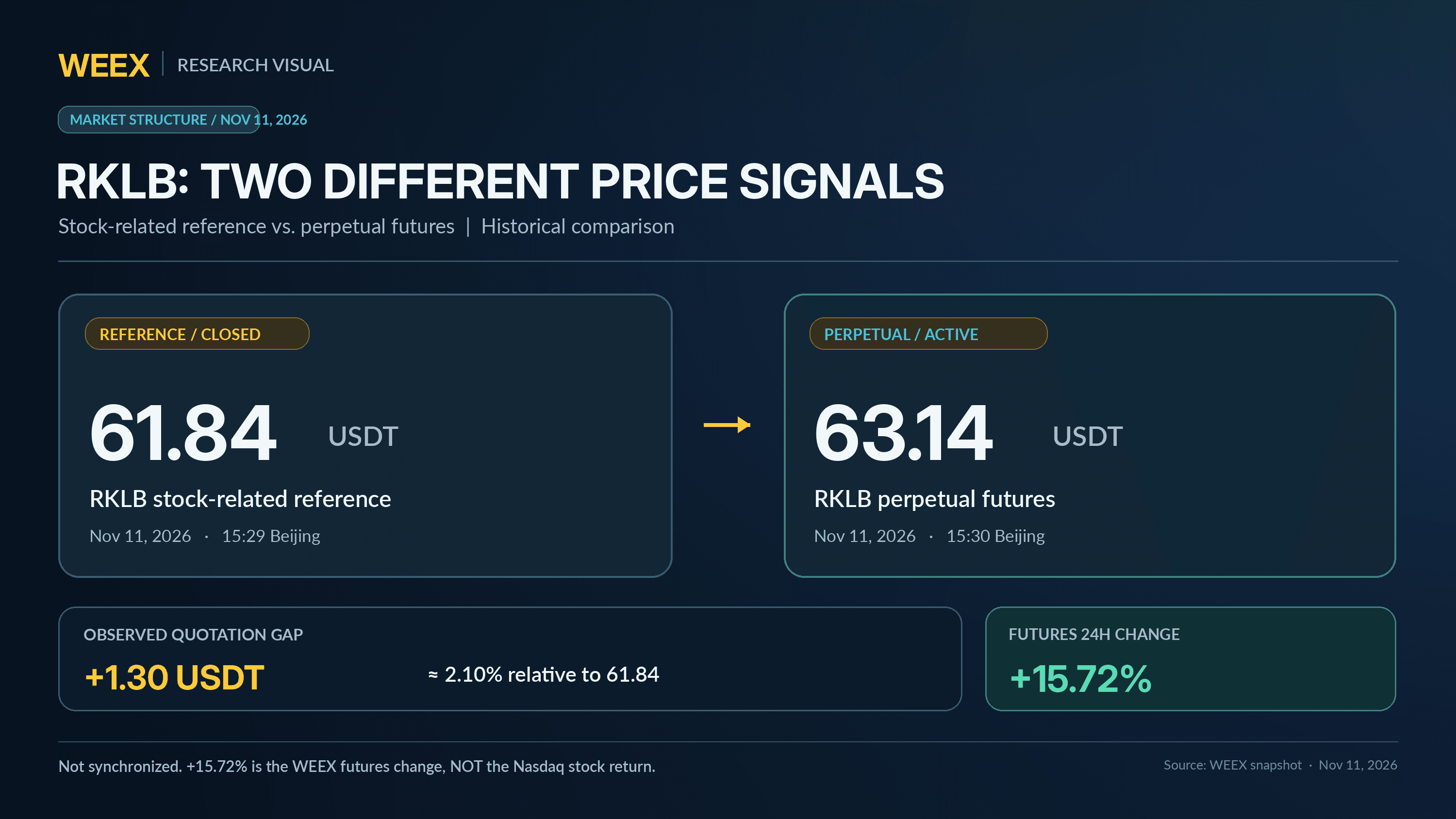
The WEEX promotional snapshot recorded on November 11, 2026, presented two separate observations: a stock-related reference quotation and a perpetual futures market quotation.
RKLB Market Snapshot — November 11, 2026
| Market Indicator | Recorded Value | Observation |
|---|---|---|
| RKLB Stock-Related Reference | 61.84 USDT | 15:29 Beijing Time; marked Closed |
| RKLB Perpetual Futures | 63.14 USDT | 15:30 Beijing Time |
| Futures 24-Hour Change | +15.72% | Rolling 24-hour futures-market change |
| Difference Between Quotations | 1.30 USDT | Futures above stock-related reference |
| Relative Difference | Approximately 2.10% | Calculated against 61.84 USDT |
Source: WEEX promotional market snapshot supplied November 11, 2026, at 15:29–15:30 Beijing Time. Relative difference calculated as (63.14 − 61.84) ÷ 61.84 × 100. This is a historical comparison, not a synchronized equity-futures valuation or a live trading quote.
The 2.10% difference requires interpretation. The stock-related reference was marked as closed, while the perpetual futures contract continued to reflect activity in its own market.
The two prices therefore should not be assumed to represent simultaneously executable instruments with identical settlement mechanics.
Similarly, the 15.72% increase was a change recorded for the WEEX RKLB perpetual futures market over its relevant rolling period. It does not demonstrate that Rocket Lab common shares gained exactly 15.72% during regular Nasdaq trading.
Why Can RKLB Futures Move Differently From the Underlying Stock?
Traditional U.S. equity trading follows defined exchange sessions, while WEEX stock-related perpetual futures may trade outside those hours.
When the underlying stock market is closed, futures participants may respond to new information, changing expectations, or other market activity without a simultaneously updated regular-session stock price.
Several factors can contribute to a divergence:
- The reference stock quotation may be stale outside regular trading hours.
- Futures-market liquidity and available order-book depth may differ from the underlying equity market.
- Funding mechanisms, spreads, and trading activity can affect derivatives pricing.
- Traders may price in upcoming events before the next U.S. equity session.
As a result, a futures premium does not automatically represent a risk-free arbitrage opportunity, nor does it guarantee that the stock will open at the same price.
WEEX's guide to tokenized stock backing and ownership provides additional context on why stock-linked tokens, perpetual futures, and ordinary shares should not be treated as interchangeable instruments.
What Could Delay Rocket Lab's November 14 Launch?
The most important near-term uncertainty is whether the mission proceeds as scheduled.
Rocket Lab's November 14 date remains a NET target. Launch operations depend on environmental conditions, technical readiness, and safety requirements. A postponed attempt is not necessarily evidence of an underlying rocket failure.
Investors should distinguish three broad scenarios.
Scenario 1: The Launch Is Completed Successfully
A successful flight would add another mission to Electron's operating record and, subject to confirmation, deploy the planned iQPS satellite.
The result could reinforce confidence in Rocket Lab's launch execution and relationship with repeat customers. However, the market response would still depend on what investors had already anticipated and on competing financial developments.
Scenario 2: The Launch Is Delayed
A postponement could result from weather, range conditions, or technical work requiring additional time.
The commercial consequences would depend on the reason for the delay, its duration, and whether the change affects customer commitments or future launch scheduling.
A short scheduling adjustment and a prolonged hardware issue should not be valued as equivalent events.
Scenario 3: A Technical Problem Prevents Mission Completion
A serious launch anomaly could lead to investigations, corrective work, and potential changes to the company's launch schedule.
The financial consequences could extend beyond the immediate mission through additional costs, customer concerns, or the timing of future launches.
However, any assessment would require verified information about what happened. Speculating about failure causes before an official investigation would be premature.
What Should RKLB Investors Monitor?
| Indicator | Why It Matters |
|---|---|
| Official Launch Window | Confirms whether the target date remains unchanged |
| Launch Status | Distinguishes scheduled, postponed, launched and completed states |
| Payload Deployment | Indicates whether the satellite reached its intended orbit |
| Customer Confirmation | Provides evidence of spacecraft contact and commissioning progress |
| Future Electron Schedule | Helps assess operational continuity |
| Neutron Development Updates | Relates to Rocket Lab's longer-term growth strategy |
| RKLB Equity and Futures Prices | Shows how different markets respond to verified developments |
These indicators provide a more useful framework than assuming a successful mission guarantees a higher stock price or a postponement necessarily causes a decline.
RKLB Stock-Related Products vs. Perpetual Futures: What Is the Difference?
Investors following Rocket Lab through a cryptocurrency exchange must distinguish the company's Nasdaq-listed common shares from stock-related digital products and perpetual contracts.
The underlying company is Rocket Lab Corporation, listed on Nasdaq under the ticker RKLB. Purchasing its ordinary shares through a securities brokerage creates an ownership interest in the corporation, subject to applicable laws and brokerage arrangements.
WEEX's stock-related trading products are different. Under its published product framework, stock tokens are designed to track the price performance of a referenced equity but do not constitute direct ownership of that company's common shares.
Perpetual futures are separate derivatives contracts that provide exposure to market price movements without transferring the underlying shares.
RKLB-Related Product Comparison
| Feature | Nasdaq RKLB Shares | WEEX RKLB Stock-Related Product | WEEX RKLB Perpetual Futures |
|---|---|---|---|
| Product Type | Corporate equity | Stock-linked digital asset | Derivative contract |
| Ownership of Rocket Lab Shares | Yes | No direct ownership | No |
| Shareholder Voting Rights | Generally yes | No | No |
| Price Mechanism | Equity exchange trading | Stock-linked product pricing | Futures contract pricing |
| Trading Sessions | U.S. equity-market sessions | Subject to platform rules | Subject to platform rules |
| Leverage | Depends on brokerage arrangement | Product-specific | May be available |
| Principal Risks | Equity volatility | Tracking, liquidity and issuer risks | Funding, margin and liquidation |
Source: WEEX Stock Futures and Stock Token Overview.
A key difference is that stock-linked exposure can diverge from ordinary equity prices outside traditional market hours. In addition, futures leverage can amplify price changes relative to the margin committed.
For example, in a simplified linear contract model, a 5% adverse price movement on a position with 5× leverage creates a theoretical loss equal to 25% of the initial margin before fees and funding, assuming the position remains open. Actual liquidation thresholds depend on contract parameters and margin rules.
This is why price direction alone is not enough when evaluating a position. Traders must also consider the instrument's market structure, transaction costs, leverage, and ability to exit at an acceptable price.
How to View and Trade RKLB-Related Products on WEEX
Users interested in following Rocket Lab's market performance can review the available RKLB-related products on WEEX. These instruments provide different forms of price exposure and should be considered separately from traditional ownership of Nasdaq-listed shares.
How to Access the RKLB Stock-Related Market
Log in to WEEX and open the RKLB/USDT Stock-Related Trading Page.
Review the available quotation, market status, trading conditions, and order-book liquidity. The interface may display a reference price when the underlying U.S. equity market is closed, but that reference should not be confused with an immediately executable Nasdaq share price.
If trading is available to your account, select the supported order type, enter the intended amount, and review the execution conditions and fees before placing an order.
WEEX stock-related assets provide exposure under their product rules. They are not ordinary Rocket Lab shares, and users should not assume they receive corporate shareholder rights.
How to Access RKLB Perpetual Futures
Users who understand derivatives can also review the WEEX RKLB/USDT Perpetual Futures Market.
The futures interface displays contract-specific information, including available prices, margin requirements, and relevant trading controls. Eligible traders may be able to take long or short positions depending on current platform rules.
Before opening a position, review leverage, margin mode, funding rates, order-book depth, and estimated liquidation conditions.
Rocket Lab's scheduled launch falls outside the ordinary U.S. stock trading session, making the distinction between closed-market reference prices and actively traded derivatives particularly relevant. Thin liquidity or rapid price movements can increase execution risk.
For more information about the structure of stock-related products, readers can consult the WEEX Stock Spot 2.0 Guide. Product eligibility and trading availability depend on the user's jurisdiction and the platform's current rules.
Conclusion
Rocket Lab's planned 100th Electron launch is an important operational milestone, reflecting the company's extensive experience in commercial small-satellite deployment and its ongoing relationship with Japanese radar-satellite operator iQPS.
The mission, The Mountain God Rises, is scheduled for no earlier than November 14, 2026, at 05:30 UTC. Its objective is to deploy the QPS-SAR-19 satellite into a 575-kilometer orbit. However, the mission remains an upcoming launch, and neither liftoff nor successful deployment should be assumed before official confirmation.
Financially, Rocket Lab's latest results show that the company is much more than an Electron launch provider. Its $267.8 million third-quarter revenue, $3.57 billion backlog, and expanding Neutron contracts establish a broader investment context. The 100th Electron flight may reinforce operating credibility, but future revenue, margins, and Neutron execution remain central to the company's longer-term outlook.
For market participants, RKLB stock-related prices and perpetual futures must be analyzed separately. The November 11 WEEX snapshot demonstrated a difference between closed-market reference pricing and active derivatives pricing, not a guaranteed indication of where Nasdaq-listed shares will trade next.
The most useful next evidence will be Rocket Lab's official launch updates, confirmation of mission completion, and subsequent commercial developments.
FAQ
1. When is Rocket Lab's 100th Electron launch scheduled?
Rocket Lab's 100th Electron launch is scheduled for no earlier than November 14, 2026, at 05:30 UTC, equivalent to 13:30 Beijing Time and 18:30 New Zealand Daylight Time. The mission is named The Mountain God Rises and is planned to launch from Rocket Lab's Launch Complex 1 in New Zealand. The date remains subject to changes arising from operational or environmental conditions.
2. What satellite will Rocket Lab carry on its 100th Electron mission?
The mission will carry QPS-SAR-19, also known as YAMATSUMI-II, for Japanese satellite operator iQPS. The spacecraft is intended to join a synthetic aperture radar constellation providing Earth-observation imagery. Rocket Lab plans to deploy it into a 575-kilometer low Earth orbit with an inclination of 42 degrees.
3. Will a successful 100th Electron launch make RKLB stock rise?
Not necessarily. A successful mission could reinforce confidence in Electron's operational performance, but the share-price response depends on market expectations, company valuation, broader financial conditions, and other developments. Because the mission is publicly scheduled, some expectations may already be reflected in market prices. A successful launch alone does not guarantee a positive trading return.
4. Why did WEEX RKLB futures rise 15.72% while the stock-related reference price was 61.84 USDT?
The November 11 snapshot compared two different market observations. The stock-related reference quotation was marked closed at 61.84 USDT, while WEEX perpetual futures were quoted at 63.14 USDT, with a rolling 24-hour change of 15.72%. Futures markets can react to developments outside regular U.S. equity trading hours, but their prices are also affected by derivatives-market liquidity and trading conditions. The futures increase should not be interpreted as an identical gain in Nasdaq RKLB shares.
5. Are WEEX RKLB stock-related products the same as owning Rocket Lab shares?
No. Rocket Lab common shares traded through a traditional securities brokerage represent corporate equity ownership. WEEX stock-related digital products are designed to provide price exposure under specific platform rules rather than direct shareholder ownership. RKLB perpetual futures are derivatives with additional margin, funding, and liquidation risks. Users should check each product's current terms before trading.
This content is provided for general informational purposes only and doesn't constitute financial, investment, legal, or tax advice. Any events, rewards, online promotions, or related information mentioned herein should not be considered a recommendation, solicitation, or invitation to purchase, sell, trade, or otherwise deal in any crypto assets. Crypto assets are highly volatile and may result in loss. The availability of WEEX services, products, and related events may vary by region. You are responsible for ensuring that your participation is in accordance with applicable local laws and regulations.
You may also like

Are Bitcoin Lightning Wallets Safe? 5 Security Warnings Since August

How to Buy ANT Stock on Day One: What Is Confirmed

Anthropic IPO: ANT Date, Price Range and Valuation

Jensen Huang Comeback Reports: Petition, War Room and Nvidia’s Response
Nvidia Earnings Date: Nov. 17, 2026 After the Bell, in Every Zone
Nvidia Earnings Preview: Q3 Results Land Days After Huang's Exit

Powell Speech Bitcoin: Why Warsh, Not Powell, Moves BTC in 2026

Fed Rate Cut December 2026? Why Markets Now Price a Hike Instead
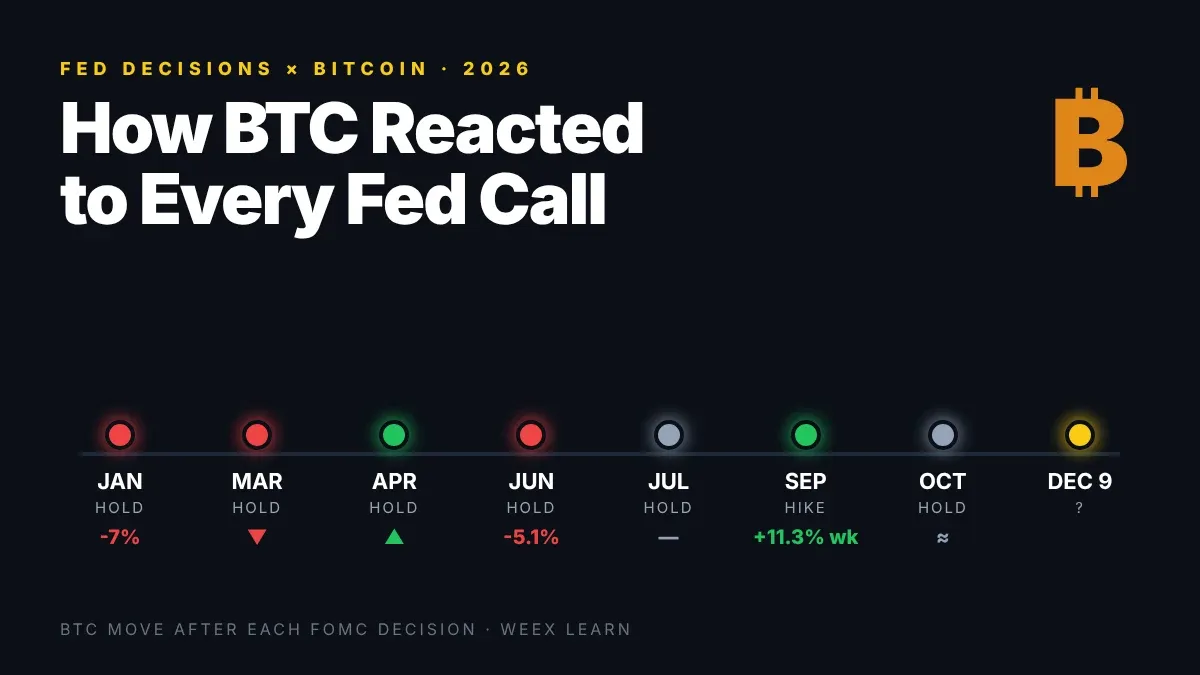
Fed Rate Decision Bitcoin: How BTC Reacted to Every 2026 Call

Nebius Cuts 2026 Revenue Outlook: Are Data Center Delays a Threat to NBIS?

BTC Staking in a Crash: What It Protects and What It Does Not
WXT Burn Q3 2026: WEEX to Burn 65,228,631 WXT on November 16

ACKET Token Surges 1,000% After Jensen Huang Resigns: What Is Confirmed
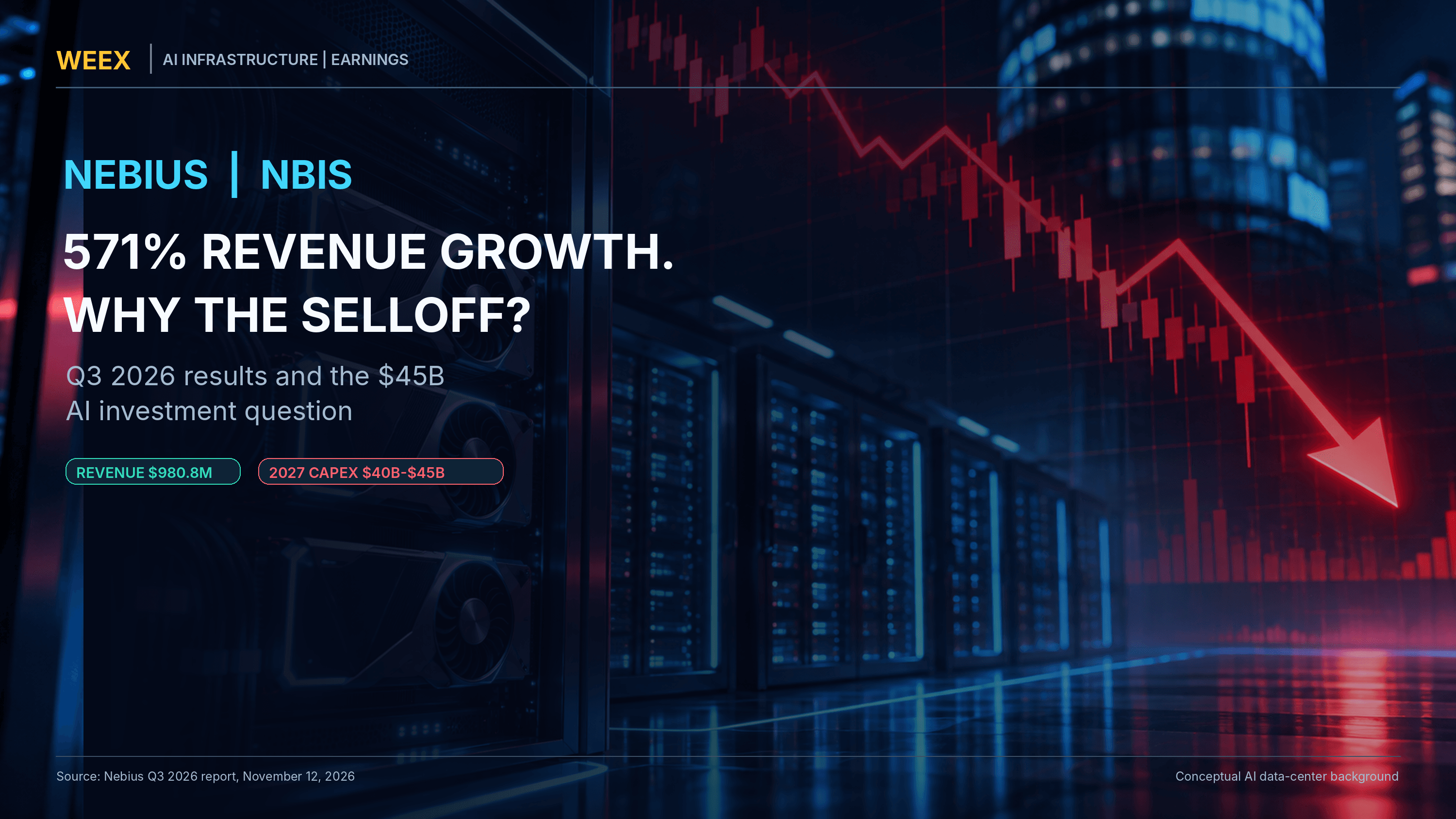
Why Did Nebius Stock Crash Despite 571% Revenue Growth? NBIS Q3 Earnings Explained
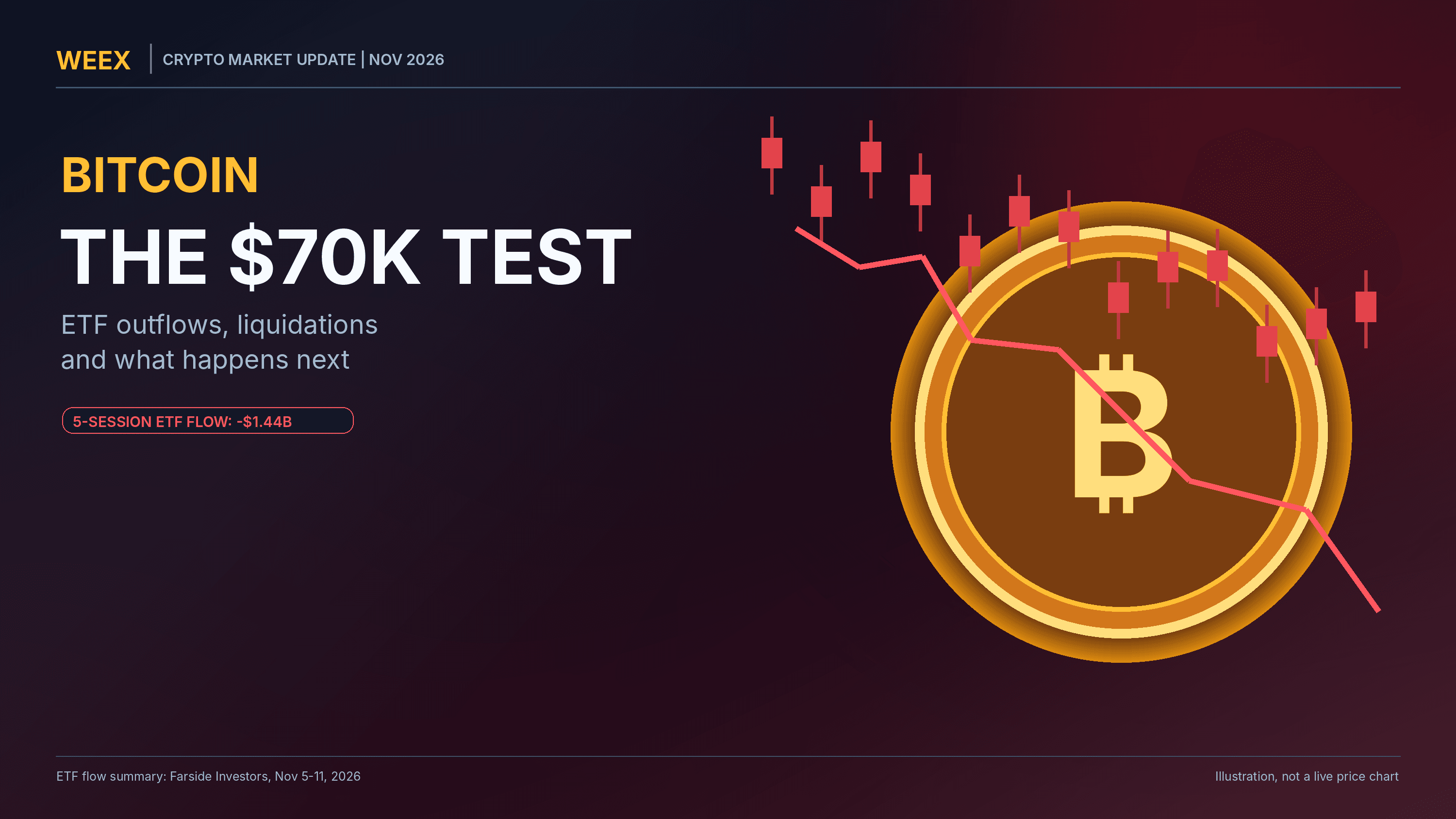
Bitcoin Falls Toward $70K: ETF Outflows, Liquidations and What Happens Next
Cisco Q1 FY2027 Earnings: $18.5B Revenue, $9B AI Outlook and CSCO Stock Reaction
December FOMC Meeting 2026: Dec. 8-9 Rate Hike, 25 or 50 Bps?
CPI Release Date: Next Report Dec. 10, 2026 at 8:30 a.m. ET
November CPI Report: Dec. 10 Release Lands After the Fed Decides
Midterm Election Results Crypto: Who Now Controls Crypto Policy

Midterm Elections Bitcoin Price: What 2014, 2018 and 2022 Show

Is Staking Crypto Worth It? What You Earn on WEEX Staking
MSCI Removes Strategy (MSTR): Will Index Selling Pressure Bitcoin?
DTCC Brings Tokenized Securities to Solana: Will SOL Demand Rise in 2027?

Jensen Huang Resigns as NVIDIA CEO: What Happens to NVDA Stock Next?

What Is Project Faro? The $270M Bank Stablecoin Plan Explained

Stablecoin Supply Falls $14.2B in 30 Days: What It Means for Bitcoin
Binance Hack: $6.3B Laundering Trail and Recovery Progress
Is Strategy (MSTR) Being Removed From the MSCI Index? What Happens After November 30

Beginner-Friendly Crypto Exchanges With Simple Interfaces Ranked
Are Bitcoin Lightning Wallets Safe? 5 Security Warnings Since August
How to Buy ANT Stock on Day One: What Is Confirmed
Anthropic IPO: ANT Date, Price Range and Valuation
Jensen Huang Comeback Reports: Petition, War Room and Nvidia’s Response
Nvidia Earnings Date: Nov. 17, 2026 After the Bell, in Every Zone
Nvidia Earnings Preview: Q3 Results Land Days After Huang's Exit


